
Translated material
The genealogy of hatred
The detention of the group "Netograd-2" shed light on "genealogy" and the roots of the nationalist movement in St. Petersburg
In St. Petersburg, from May to November 2014, 18 nationalists were detained, which created an extremist group called Nonograd-2 . Its participants, and these are young people from the so -called "dysfunctional" families, were particularly cruel to those whom they considered "not Russians." Human rights activists and investigators predict the emergence of new similar nationalist groups in the near future.
Participants in the nationalist group, which the media of St. Petersburg called "Netograd-2", attracted the attention of law enforcement agencies on November 4 last year, during the riots after the "Russian march". Then, at the Metro station "Udelnaya", several dozen nationalists beat migrants from Central Asia, then attacked merchants near the metro station. The next day, a dead migrant with fourteen stab wounds was discovered in Rybatsky.
... and somewhere they sit 14-15-year-olds who are already ready in the coming or in 2016 to start killing
Until November 21, seven members of the group were detained, of which five were minors. The investigation found out the details and circumstances of at least nine crimes they committed, mainly against citizens of Uzbekistan. In May, all these episodes were combined into one criminal case. At the same time, 19-year-old Denis Knyazkin was arrested. He was not the last of the group who was behind bars.
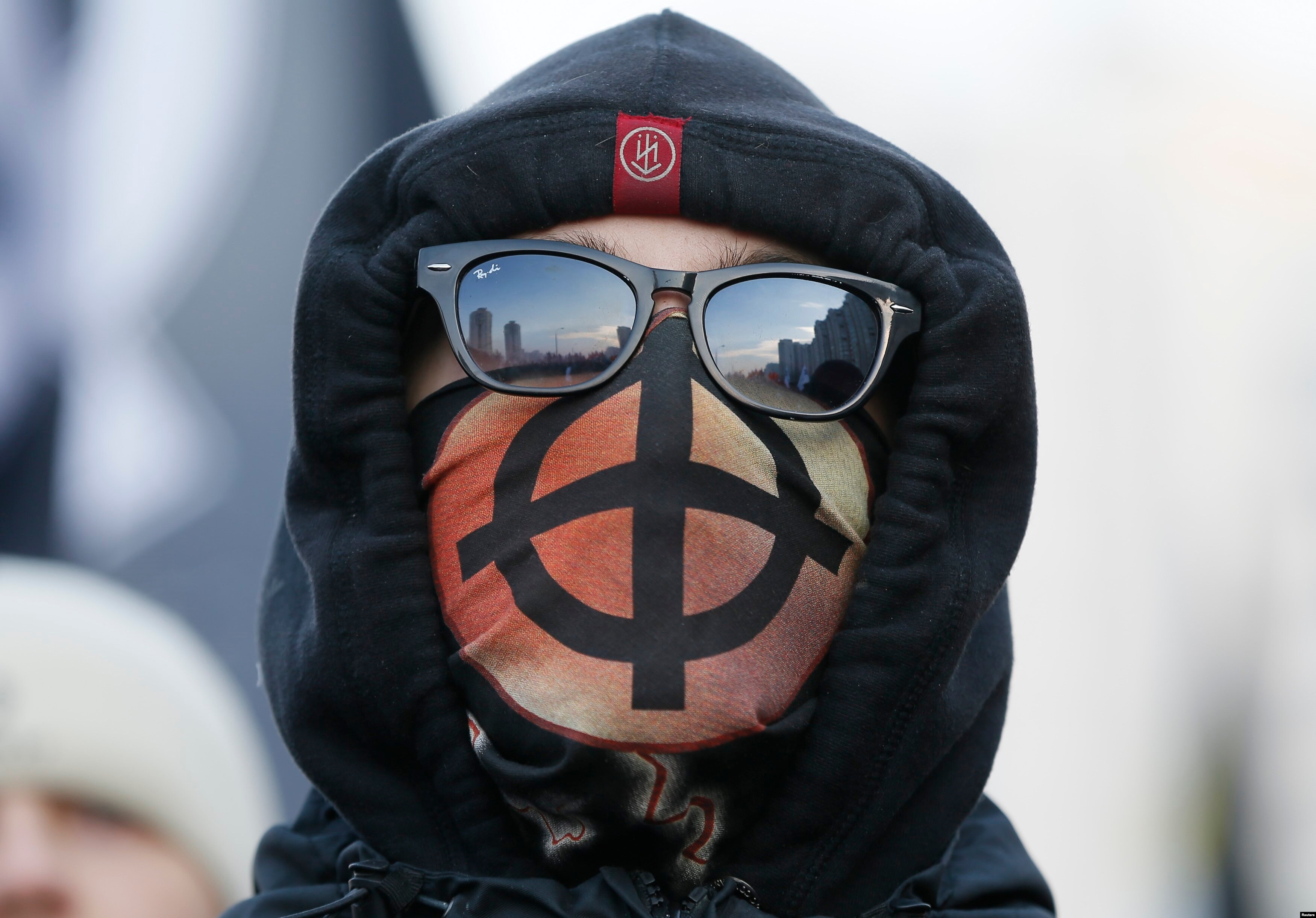
Arrests and detention continued until November. Today, 18 members of the group have been arrested or under subscription on the lower wizard. These are mainly adolescents, colleges and lyceum students, including two fifteen -year -old girls. Nationalists attacked migrants with knives in deserted places, always hiding their faces behind medical masks. Criminal cases have been instituted under the articles “Murder”, “Carrying out serious bodily harm” and “Fruitment of interethnic growth”.
The group was called "Netograd-2" due to the fact that its leader Denis Knyazkin tried to deploy a banner on the procession on May 1 with the inscription "Nenograd" . And the group received the number “two” due to the fact that in June in St. Petersburg a hearing in the case of the Nonograd nationalist group, which was headed by the Nazi Herman Hungarian, was already held. The participants of that group were also particularly cruel: they burned the homeless, exploded stalls, attacked the migrants with knives, set fire to the churches.
Deputy Director of the Agency for Journalistic Investigations Evgeny Zashenkov , who has long studied the environment of nationalists and personally familiar with some of them, sees some cyclicity in the emergence of such groups as Netograd-2. It all started in 2001, when in St. Petersburg Dmitry Bobrov, nicknamed Schulz, created the Schulz-88 group:
His slogan was: "We are working here and now. We say less, we’ll beat more in the teeth!"
-A certain fundamental leap in the St. Petersburg Nazi moved with the advent of Dmitry Bobrov. Before him, there were some marginal groups like RNE ("Russian national unity"), individual nationalists like Yuri Belyaev, from which it smelled of vodka. Dmitry Bobrov differed from them at least in that he was a skinhead, tried to be like an “Aryan”. His slogan was: "We are working here and now. We say less, we beat more in the teeth!" He was the first to publish a newspaper, organize the concerts of the ultra -right. When he was sent to the colony for six years in 2003, most of the participants in the "Nonfire-2" went to kindergarten. It is from the group of Dmitry Bobrov Schulz-88 that the branches begin to grow. For example, the Mad Crowd group, the backbone of which was composed by representatives of fan associations. As soon as the majority of this gang arrest, two former participants Dmitry Borovikov and Alexei Voevodin create their own group, which acts from the standpoint of outright radicalism, allowing the murders of foreigners. Subsequently, many branches come from her. The members of the Schulz -88 group beat people, members of the Mad Crowd group began to break their bones, and the Borovikov -Voevodin group began to kill.
Participation in the events in the east of Ukraine of the radical part of Russian nationalists can legitimize extremism in the eyes of part of the population of Russia
According to Evgeny Zashenkov, all this happened before 2006, when 14 people from the Borovikov -Voevodin group were detained. Dmitry Borovikov was shot by detention. For thirteen murders, including Nikolai Girenko, an ethnographer, Alexei Voevodin received a life sentence. And then after the "group of Borovikov - Voevodin" the group "Netograd" appears:
- These, unlike predecessors, exclude the word "terror" from their program, but continue to kill. And now we see "Netograd-2". Until November 4, 2013, no one heard about them. As soon as they were taken on November 21, they began to work with them, and they began to tell a lot. It turned out that they also systematically killed, beat people, printed some leaflets.
Evgeny Zashenkov advises to prepare for the emergence of new nationalist groups that will be even more cruel and aggressive:
-Now we are talking, and somewhere the 14-15-year-olds are sitting, who are already ready in the coming year or start killing in 2016. And they will go out to kill. The police are doing what the police are doing. She reacts to crimes. But the policeman will never be able, and he does not have such a task, engage in sociology, the study of this phenomenon. It seems to me that if there was a group of competent people who would analyze this phenomenon, they would feel and see all these trends and signs. Not in order to call "02" and say where the police should come, but in order to work with these people somehow. Because otherwise it will continue. Any subculture that is fueled by social and migration problems is now, plus to everything, will experience a strong influence of economic difficulties. When you want to eat, you become angrier.

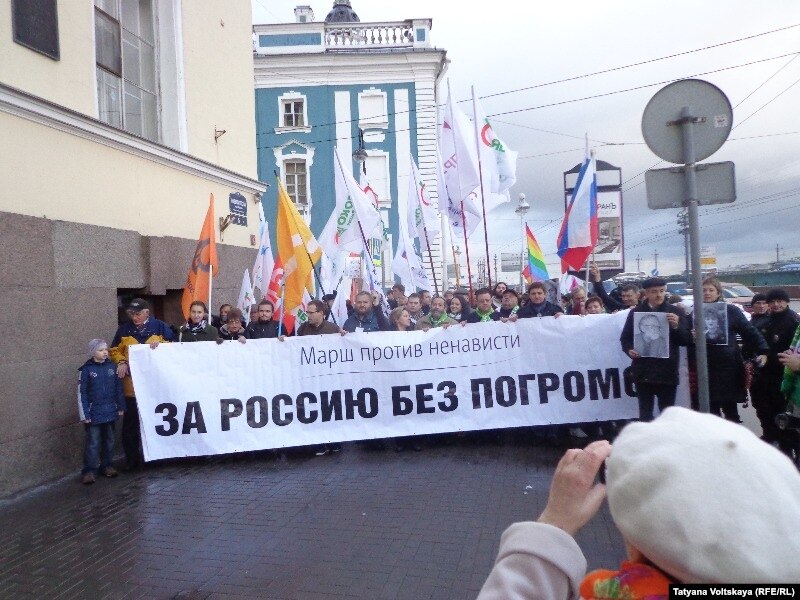
An experienced St. Petersburg human rights activist, the initiator of the annual “march against hatred” of the memory of scientist Nikolai Girenko , who was killed by nationalists, Alexander Vinnikov sees the main danger to Russian society in the onset of nationalist extremism:
-What is happening in the southeast of Ukraine, and the participation in these events of the most radical part of Russian nationalists can legitimize radicalism and extremism in the eyes of a significant part of the population of Russia. It is with this, in my opinion, that the increasing aggression and cruelty of these people is associated. And their insolence. Of course, I cannot make a forecast about how far this process will go. But, in principle, the intolerance of society to nationalist extremism, which has been brought up by us over the past years, is now irreparable damage.