
Translated material
The devaluation of Putin
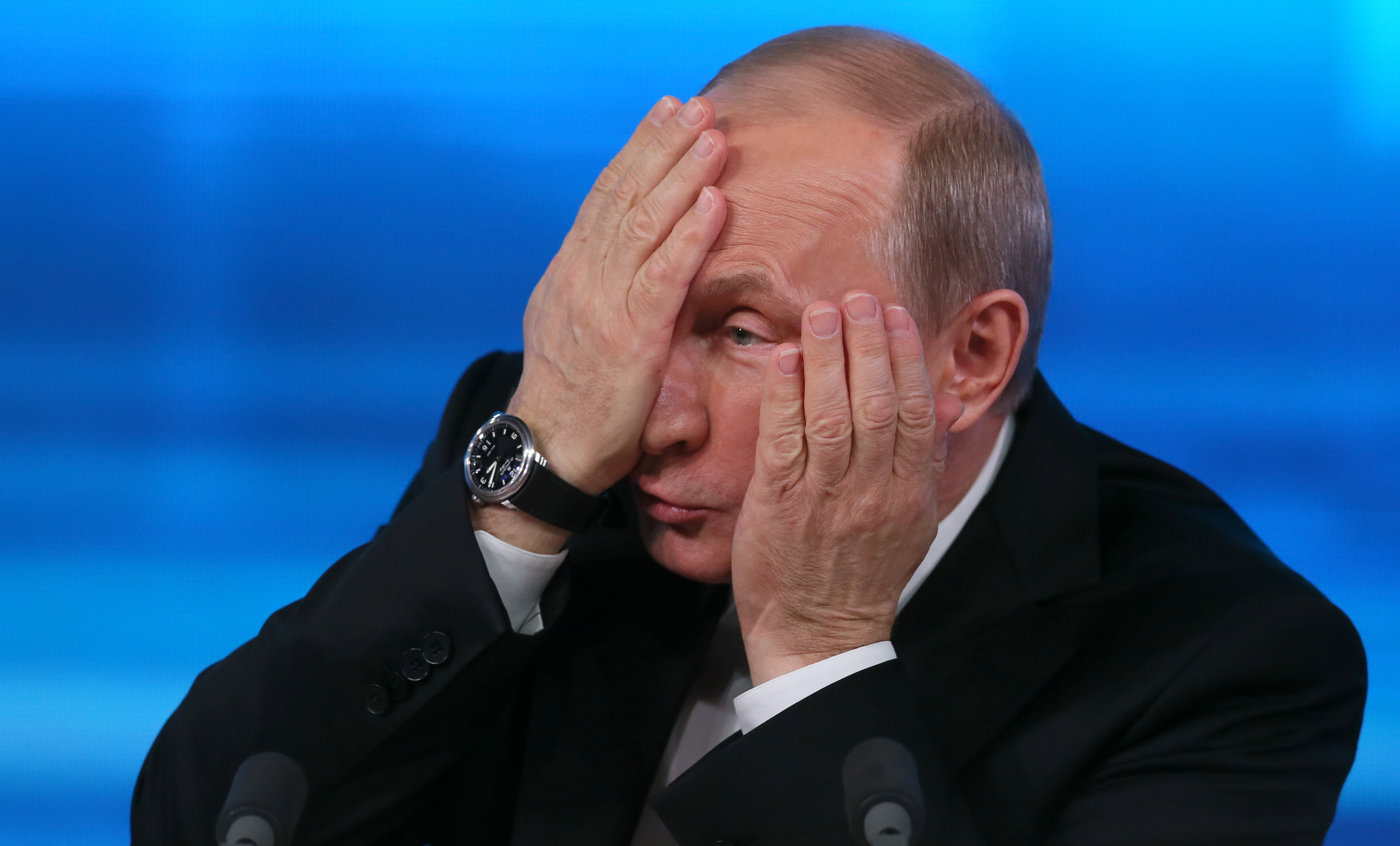
The main problem of the president before the annual press conference is the depreciation of his statements due to discrepancy with business
On Thursday, Russian President Vladimir Putin will give another “big” press conference for Russian and foreign journalists, already the tenth in a row. A year ago, Putin’s communication with reporters lasted more than four hours, although the main episode was the main one after its end - when the president spoke about the pardon of Mikhail Khodorkovsky. The opinions of the experts of experts surveyed Radio about whether it is worth waiting for such sensations this time, diverge.
Some believe that Putin will calm the people in conditions of rising prices, inflation and collapsed ruble, others believe that the Russian leader can answer the main question of today: is Russia ready to get out of the confrontation with Ukraine and recognize that the war in the east of this country was a mistake. It is known that the president on Thursday will finally speak out about what is happening with the Russian currency-this was indirectly confirmed by his spokesman.

A year ago, the president’s communication with reporters lasted 4 hours and 4 minutes - during which time Putin answered more than 70 questions. If you compare Putin’s words with the reality of 2014, then much of what he said came true on the opposite. So, speaking of the possibility of entering Russian troops into Crimea, Putin recalled interethnic conflicts in Abkhazia and South Ossetia, noting that "nothing of the kind has happened in Crimea." Despite the fact that the interethnic conflict on the peninsula did not begin after the victory of the Maidan, Russian troops entered the Crimea in the spring, after which the referendum was held on the accession to Russia, which formed the actual annexation of this territory. Speaking about the support of compatriots abroad, Putin said that "Russia is not going to wave a saber and bring troops somewhere." Now, Russian regular troops, according to numerous certificates, are directly involved in the armed conflict in the Donbass, although Moscow does not recognize this at the official level. The president’s words about the preservation of direct elections of mayors - “mayors, of course, have only to choose” did not come true. In 2014, the State Duma adopted a law on the reform of local self -government, and today the mayor’s elections are canceled in many large Russian cities , for example, in Ulyanovsk, Astrakhan, Yaroslavl . One of Putin’s few year’s few year’s statements, which turned out to be true, is the threat of “covering” the import of Ukrainian goods into Russia if the Ukrainian authorities sign an association with the EU , this has happened in the field of food, now, for various reasons, the supply of almost all types of Ukrainian food products is prohibited to Russia.
Dramatic discrepancies between the words and affairs of Putin greatly devalued any of his possible statements - both Western leaders and Russian experts indicate this. This also applies to the upcoming “big” press conference of the Russian president on Thursday, political scientist Mikhail Vinogradov believes:
- The first intrigue concerns the intonation and the main topic, whether he will talk about the results of the year, which considers it successful for himself, or will make the emphasis on anxiety expectations related to the economic situation, trying to bring down passions among the population and the elites. In the first case, this will be a kind of final on the presentation of the achievements of 2014, in the second - a conversation about new challenges. Separate “chips” and quotes, of course, will be a surprise, but there will be no big and serious expectations from this press conference. In 2014, there was a certain devaluation of applications, therefore, foreign partners of Russia and many within Russia react more to actions than statements, because the statements are usually softer and the actions are tougher.
Foreign partners of Russia and many within Russia react more to actions than statements, because the statements are usually softer, and the actions are tougher
Putin has to decide: to maintain a gap between conciliatory statements and sometimes hard actions or reduce this gap. He will have to take into account the fact that 2014 has become the year of the celebration of radicals of different views-both the Posoputin and anti-Putin. The latter say: here, they say, we warned, and you, "moderate", have not seen how the situation would actually develop. Therefore, the foreign audience will inevitably react primarily to some emotionally negative statements and believe them more, and the positive and softening first to test. Putin will have to keep this in mind, but I do not see any intention to aggravate rhetoric on his part. On the other hand, we also do not see the intentions of the emphasized mitigating steps. It seems that there is a certain mitigation of the situation around the same Ukraine, but we do not receive the guarantees that the Russian course will become different in a month, and probably Putin is not interested in being some guarantees. He wants to keep his freedom of hand, which means that any statements will not be accompanied by prescribing the mechanisms of their execution, ”says Mikhail Vinogradov.
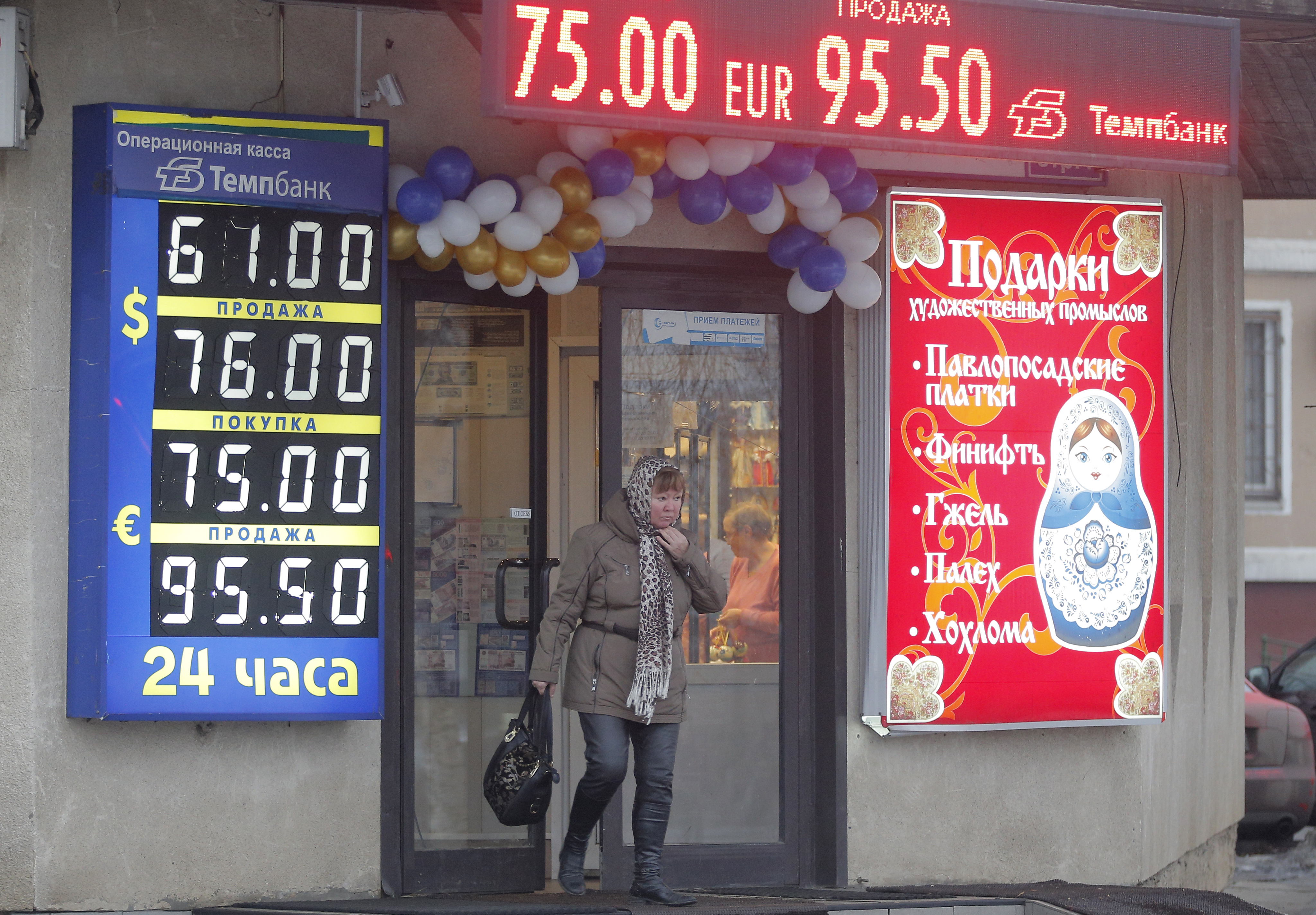
Putin traditionally begins each of its “great” press conference by listing economic indicators, which should indicate the successes of Russia over the past year. This year, many of these indicators seriously worsened-due to sanctions imposed against Russia, falling oil prices and the follow-up of the ruble that followed. For example, GDP growth, which last year amounted to about 1.5 percent, this year, according to the forecast of the World Bank , will be 0.5 percent. However, many experts are sure that he will be close to zero. Inflation, which in 2013 amounted to 6.6 percent, in 2014 , according to the forecast of the Central Bank, will be 10 percent. According to the director of the International Institute of Political Expertise, political scientist Yevgeny Mintinko , Putin will try to reassure people while communicating with journalists, saying that in fact nothing terrible in the economy is happening:
-First of all, Putin’s “large” press conferences are such a session of group psychotherapy on TV. Therefore, as I suppose, the main result should be a psychotherapeutic effect. I would not expect any economic sensations, because, judging by the message [of the Federal Assembly], while there are no measures yet any system package. Since the deterioration of the economic situation has already begun to influence the lives of ordinary people, some cardinal measures and initiatives are needed, but, as I understand it, now there is no some strategy for leaving the crisis.
Putin's large press conferences are such a group of group psychotherapy on TV
Rather, there is a set of some measures that were voiced in the President’s message. I do not exclude that some more holistic economic policy of the authorities will be published closer to the spring of 2015, ”says Evgeny Minkchenko.
In assessing the main tonality of the next “big” press conference of the president with Yevgeny Mingchenko, Mikhail Vinogradov agrees. According to him, Putin, being sure that the economic crisis will not shake his power, will try to convey this confidence in society:
- It seems that Putin is inwardly confident that the last crisis has passed for him unscrewed, and this time is also lucky. This also coincides with the public opinion, which rather compares the current situation with the crisis of 2008 or 1998, when everything was quickly resolved. Society does not yet really imagine that the crisis can be medium-term and rather comparable with the beginning of the 90s. Most likely, Putin believes that the “curve will take out”, the sanctions will soften or the import substitution will give something, and will intonationally make soothing gestures. Although the questions about why Putin gives signals to the currency market, and the market does not hear these signals, these issues and parts of political and business elites will arise, ”says Mikhail Vinogradov.
Political scientist Evgeny Nilov , unlike other interlocutors of Radio Liberty, believes that Sensations can be expected from the "big" press conference, for example, Russia's refusal of claims to the Donbass:
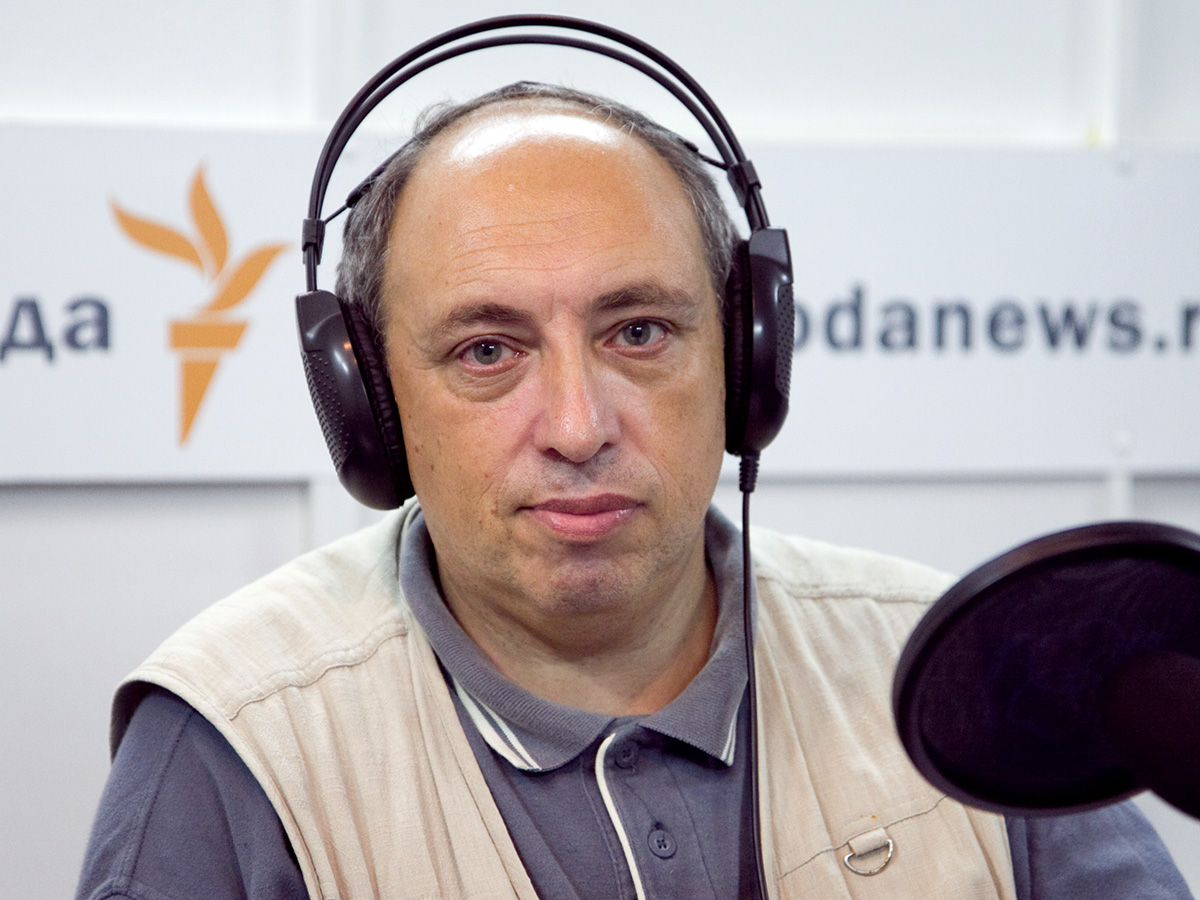
- I am waiting for sensations, because now there is a number of very multidirectional impulses. Putin should finally explain whether Russia is ready to stop the Donetsk adventure, go to a real compromise, and get out of the state of the beginning of the new Cold War with the West. Otherwise, he must say that the struggle against Western civilization begins, "we ask us to unite around us all who oppose Western values." Either Russia begins "Orthodox jihad", or from this Klinch comes out with an attempt to reduce both reputation and financial losses as much as possible. Apparently, the decision has already been made, but which is difficult to say. December 4 [in the message to the Federal Assembly] signals were too veiled, this time there will be questions, they will have more clear answers. From my point of view, the arrow of the scales now more shows a compromise. I think he will say two things: firstly, that the costs are not as great as enemies and panickers painted, that there are internal resources, that a little more, we will pull up the rear, pull up discipline and put things in order, besiege speculators, support producers and so on.
Either Russia begins the "Orthodox jihad", either comes out of this clinch with an attempt to reduce both reputation and financial losses as much as possible
On the other hand, he will say: "Well, what to do, we challenged the world evil, it requires costs, just as our ancestors were not afraid of Hitler, did not be afraid of Napoleon, Kaiser, did not be afraid of anyone and withstood, so we can withstand." These two messages will be given, but what the balancing and dosage will be between them, I can’t predict, because it depends on the radical choice. Now Putin needs to make the most responsible choice. Whether to consider what happened in March and April, this “cotton rebellion” in Donetsk and Lugansk by an annoying mistake - as, for example, they recognized about Cuba in the Soviet Union, about the Berlin crisis, about the war in Afghanistan: yes, an annoying mistake was made, let's correct it together. Either the path to increase confrontation with the West, the "closure" of Russia and so on was chosen. The course for fascization, relatively speaking, because at the end of this there will be, of course, fascization, ”Evgeny Nilov is sure.