
Translated material
Finno-hail
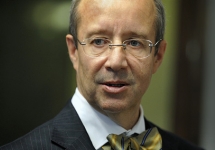
Russia pursues a policy of assimilation of the Finno-Ugric peoples living on its territory. According to Interfax, this was stated by Estonian President Toomas Hendrick Ilves, speaking at the ceremony in the village of Obonitsa in the southeast of the country, which was declared the cultural capital of Finno-Ugers for 2015. In this village, the people of Setu, related to Estonians.
The Estonian language, like Finnish and Hungarian, are the official languages of the European Union, Ilves recalled. In Norway, Sweden and Finland, the parliaments of the Sami people are formed. In Latvia, the language and culture of Livas are being revived.
“At the same time,” the President of Estonia continued, “we see how the construction of the port of Ust -Luga in the north -west of Russia on the shores of the Gulf of Finland destroys the village of Vroy - we hope that not the whole people,” we see how in recent years Russia has ceased or limited the provision of education in the Finno -Ugric peoples, which accelerates their assimilation, the disappearance of their culture. ”
In February 2014, the organizations of the Finno-Ugric peoples living in the Leningrad Region Voda and Izhora announced the threat that their future expansion of the port in Ust-Luga and the construction in the neighborhood of new industrial enterprises. NCO Fenno-Ugria sent a public appeal to the Riigikogu (parliament) and a number of Estonia ministries in connection with this problem, asking, in particular, to draw the attention of the EU departments.
According to the 2010 census, 64 representatives of the Dia and 266 - Izhora lived in Russia. These are the closest relatives of Estonians. Their disappearance was contributed to the repression and policy of Russification.