
Translated material
Colta.ru
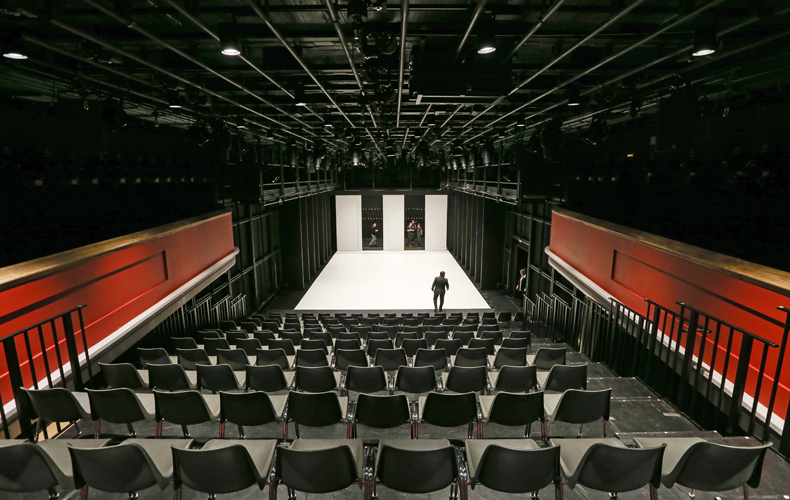
The latest Moscow “place of power” Stanislavsky , which opened last week, did not call only the lazy - and, it is worth admitting, Khudruk Boris Yukhananov and director Marina Andreikina, and in fact there is something to be proud of. Even if the Bamonda had not shown the premiere of the “bacchanes” of theodoros Terzopoulos, and for the purity of the genre were limited to excursions in the updated space and the story of plans for the upcoming season, the effect of the revision, taught by the founder of the “workshop of individual directing” within the walls of the former Moscow Drama Theater named after K.S. Stanislavsky, would be almost no more impressive. Now, at the very start, it's just time to evaluate Grand's majesty Spectacle Electro Theater in its entire correspondence fullness - not being obliged to correlate the beauty of the plan with the artistic effectiveness of its implementation. The pathos of the Yukhananov project is difficult not to get to the: nothing proportionless to the wonderful transformation that the mossy Moscow gBUK has once been mired in straightening and routine is experiencing today, in the recent history of the metropolitan scene, has not yet occurred. Yukhananov gave “Stanislavsky” something more than the new body (spatial comfort and the illusion of the infinity of architectural volume came to replace the communal claustrophobia) and the new identity (secular gloss Plus the fundamental art program) - he granted the theater carefully thoughtful saving mythology , which sits on the newborn as glued.
Mythology - but by no means not only her.
Getting acquainted with the overcoming “Stanislavsky”, the first thing you find in the Yukhanan of the strong-willed quartermaster, the builder and the owner of the theater in one person, which has still hidden under the mask of the chrysophage, the eternal Enfant Terrible and the patented mystifier . The conversation about the software policy proposed by the Hudruck is usually reduced to the discussion of only one of the elements of the strategy - working with Romeo Castelculi , Hainer Göbbels and other iconoclasts of the European scene, although there is just nothing extraordinary in such a vector of development: in the end, the emergence of these artists in Russia was prepared and predetermined by the consistent integration of the domestic theater in Russia The actual world directing is the only question is that the mobile “Stanislavsky” courageously decided on a similar challenge earlier than large repertoire hospitals. The cooperation of the electric theater with the main Russian composers of the generation of forty -year -olds looks much more visionary and potentially substantial: by combining them in the opera series “Ships” (simultaneously allowing themselves to realize themselves as an aesthetic community ), Yukhananov gives the dramatic workshop a chance to take communion intellectual and artistic tension, distinguishing today's new Russian academic music - And completely unheard of for the modern domestic theater. The consequences of the historical meeting of these two parallel realities can be more than promising - it is even strange that no one thought before the idea of such an alliance before.
Yukhananov gave “Stanislavsky” something more than a new body and new identity - he granted the theater carefully thoughtful saving mythology, which sits on a newborn as a glove.
The hand of skillful tactics is also felt in the very first gesture of “Stanislavsky”-making a decision to open the electric derivative by the production of not anyone, namely Theorodoros Terzopoulos, Yuhananov, it seemed well, he knew well what he was doing. You can’t find special freshness in this programmark during the day with all the desire: over the twenty -odd years that have passed since the time of the Moscow debuts of the Greek director, the Terzopoulos has become, as they say, a great friend of the Russian theater - who oversaw the theater Olympiad, which set up an updated Alexandrinka in Tsim, and reached their Russian Russian wanderings already to the Urals. If desired, “Stanislavsky” probably could come in with a stronger trump card - but it was strategically important to start the new life of the electric theater not with the spectacular start of dust in the eyes, but with full -fledged investment to the future: the terizopoulos, as you know, is primarily an outstanding teacher, the author of his own system of acting trainings, a meeting with him is a mandatory experience for the troupe, which in the coming years is in the coming years. It is ahead to encounter a series of powerful professional challenges. Against the backdrop of the fiasco, other newly -made arts that burn on the fires of their own ambitions, the sober pragmatism of Yukhananov cannot but arouse respect - and close attention to the further steps of the Stanislavsky.
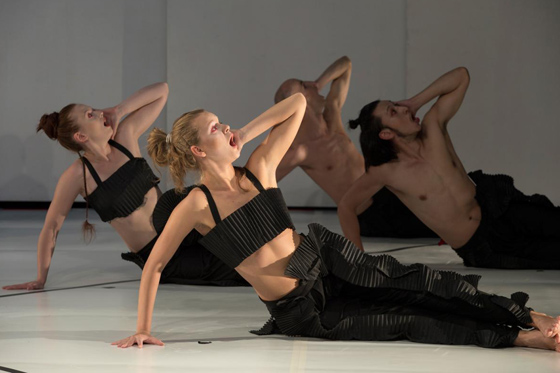 © Electrotheater "Stanislavsky" scene from the play "Bacchanchi"
As for the premiere itself, the worship of the troupe, which has passed the seven circles of the Terzopulosovsky fitness, who spoke quite to the theatrical language quite torture on the new for itself and ultimately jumped over his head, makes you forget about a sense of some fatigue, not once and not two visits when viewing the “bacchanes”. Is it worth thinking about the fatigue of the director's style, or is it still a feeling of some d éj à vu it makes sense to write off the fatigue of the audience perception (after all, the terizopoulos has released two new performances in Russia only last season)-God news, especially since in general, the “bacchanes” look quite representative and musical design, agricultural protagonist Elena. Morozova in the role of Dionysus, the joy of recognizing the translation of Innocent Annensky-not to mention the surchartic for Russia of the beginning of 2015 about the insult of the feelings of believers and a clouded mind. Yes, perhaps in its new work the terizopoulos is decorative a little more than usual - but in the context of the applied value of the “bacchanes” for the future of “Stanislavsky”, this is nothing more than a particular.