
Translated material
Prisoners of the flag
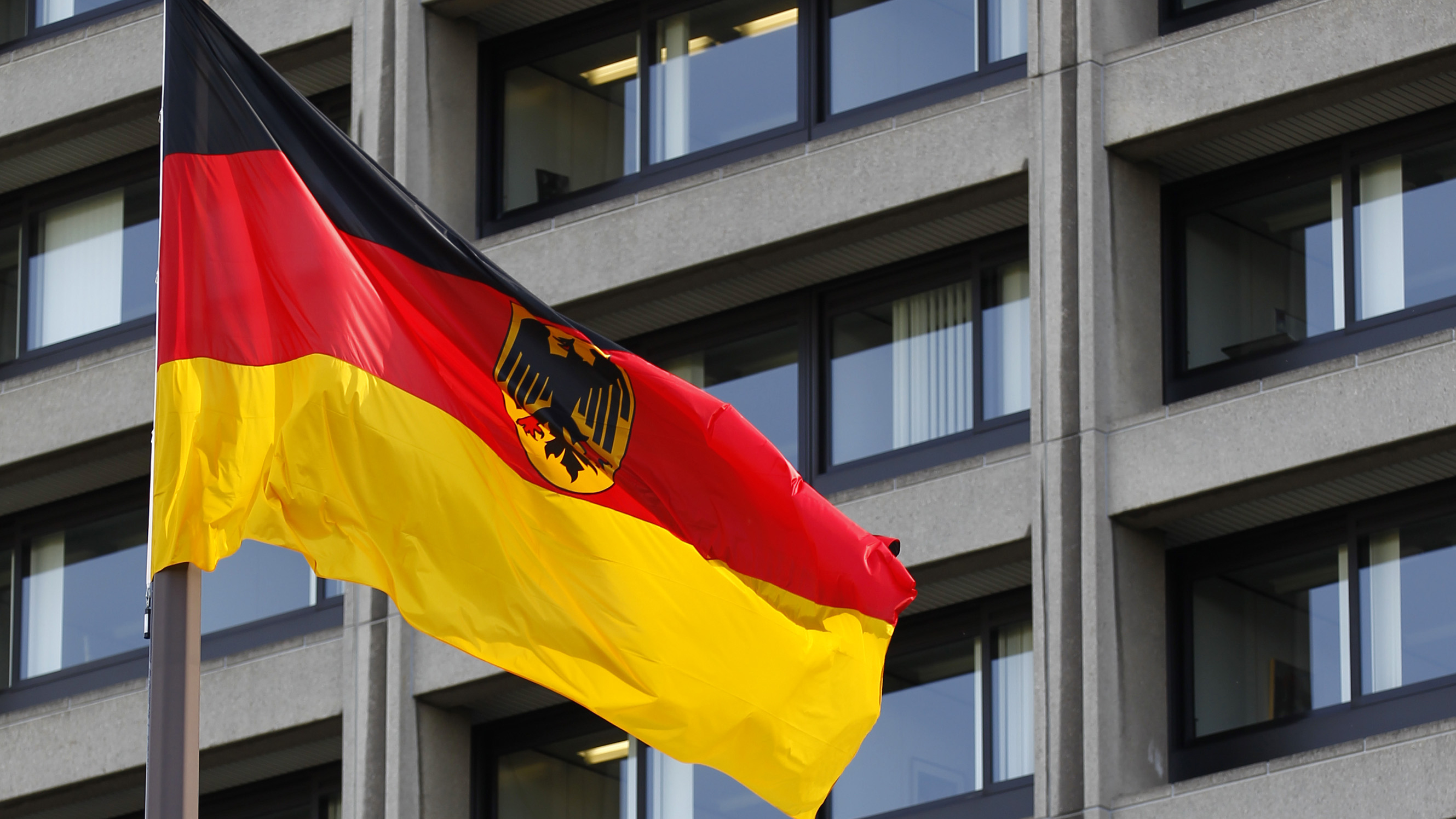
Political repressions in Kaliningrad. Does the German flag really humiliate Russian citizens? The program involves defenders and friends of the three political prisoners
Alexander Podrabinek: The space of freedom in Russia is noticeably narrowing. What has recently been normal today is considered criminal. The country's sliding into authoritarianism occurs so quickly that even laws do not keep up with repressive practice. And this is that the State Duma works like a frantic printer! Laws that limit the rights of citizens are issued in an inconceivable amount and with incredible speed. However, the lack of suitable laws does not stop those who put political expediency above justice.
In March last year, two political activists from the Committee of Public Self -Defense - Mikhail Feldman and Oleg Savvin -, together with his Moscow comrade Dmitry Fonarev, were publicized on the FSB Office in Kaliningrad in Germany. As they themselves later explained to the Novaya Gazeta, it was not so much about Germany as about Ukraine. This was a action against the incentive to the Russian authorities of separatism in the southeast of Ukraine. The flag in Kaliningrad - German until 1945 - was posted "by analogy" with what is happening in the Crimea: if you can wave the flags of a foreign country there - then why is it impossible here?
The space of freedom in Russia is noticeably narrowing. What has recently been normal today is considered criminal
The flag was not hung on the ceremonial, not under the roof, and not even on the main building of the FSB - here it is, this is an old solid four -story building made of red brick. No, the flag was hung on the wall of a plain two -story house on the other side of the street, near the entrance to the service garage of the FSB. Here is the bracket, where red flags were attached to the Soviet holidays earlier, and then German was attached. At 7 in the morning. There were neither passers -by nor other witnesses of this “terrible crime”. There are neither photos nor video recordings of this event, with the exception of, perhaps, entries from the video cameras. However, witnesses by the beginning of the court, of course, will be found. For Russian justice, this is not a problem.
The authorities sensitively caught the political pathos of the protest action, but there was nothing to plant people. There was no suitable law. Then, at first they were put under administrative arrest for 10-15 days, supposedly for “obscene abuse”, and then charged with hooliganism.
Friends of the accused, the case of hooliganism seems wild.
Ekaterina Tkacheva : Misha Feldman was a journalist, I know him as a man of fundamental, honest, intellectually developed. He had five scientific publications. That is, this person does not look like a terrorist or a bully, he is in a pre -trial detention center by a misunderstanding. Fonarev was a student of the press of the press, also a smart person, has an analytical mindset. Both of them are brave people who protect their beliefs.
Alexander Zhidenkov: The gates are located quite far from the FSB corps. The uninitiated public is completely incomprehensible that this is the Gate of the FSB. At dusk on March 11 there, they say, a German flag flickered - of course, no one saw him, this could not be offended. We wanted to show you the banners of the European Union and the German banner, which hung for several months in the city center. Today it was removed - probably to wash.
The country's sliding into authoritarianism occurs so quickly that even laws do not keep up with repressive practice
Alexander Podrabinek: Article 213 of the Criminal Code - about hooliganism - "rubber", under this article you can bring anything, anyone and not bother with the search for evidence. Such is the practice that has developed back in the Soviet years. Then it was applied with might and main to dissidents and, in general, to unreliable citizens. Today it is again applied to human rights activists.
Says the coordinator of the Kaliningrad public self -defense committee Anna Maryasina .
This is a classic goal of a public event - to draw attention to some problem, to what is happening in Ukraine
Anna Maryasina: Our organization is a human rights movement that acts absolutely legally and openly. Savvin and Feldman are active participants in the movement. Street actions are one of our main directions. We held the “Russia without Putin” action, the action in defense of political prisoners and a series of shares in support of the Maidan. We cannot take responsibility for this act of hanging the flag, because we learned about it in retroactively, our friends did not consult with us, but we are completely clear to us the meaning and purpose of this action. This is a classic goal of a public event to draw attention to some problem, to what is happening in Ukraine. It is significant that the investigation decisively refuses to consider the case in this perspective. At first, when the guys were detained, I suggested, I could say, demanded that I be interrogated, wanted to clarify the situation, but the investigator dodged. They needed a criminal case, here only administrative ... They have their own plans.
Alexander Podrabinek: All three are sitting in the pre -trial detention center. They face a term of up to 7 years in prison. This is a completely real term for today. It was under this article that Maria Alekhina and Nadezhda Tolokonnikova from Pussy Rio T were convicted several years ago.
Biologist Mikhail Feldman is 43 years old, manager Oleg Savvin - 26 years old, student Dmitry Fonarev - 23 years. The court’s decision on their arrest states that they hung a German flag "as a symbol of the need to withdraw the Kaliningrad region from the Russian Federation and join the European Union, thereby grossly violated public order."
On the basis of which the court made such conclusions is unknown. What was violated by public order, and who suffered from this is incomprehensible. Why are their actions qualified as hooliganism - the riddle of the investigation. Says lawyer Maria Bonzler .
I think it would be honest if they said that the guys insulted the federal security service as a social group consisting of power
Maria Bonzler: If you qualify it under the article “Hooliganism”, then they should, hanging this flag, offend the feelings of entire social groups. At first they “insulted the feelings of the entire population of the Kaliningrad region”, hanging the flag of Germany allegedly as a symbol that the Kaliningrad region should leave Russia and go under the jurisdiction of Germany. But then it became clear that part of the population of the Kaliningrad region may not be offended by this, so at the moment they "insulted all the veterans of the Great Patriotic War." But how can I insult veterans of the Great Patriotic War, hanging the flag of modern Germany, I do not know. Unless - those veterans who, after 70 years, hate all the Germans combined, including infants. In my opinion, we do not have such.
I think it would be honest if they said that the guys insulted the federal security service as a social group consisting of power. But this, of course, did not reach their arrogance. Therefore, I think that the court will be very interesting - we will see how they will prove that they insulted all veterans.
Alexander Podrabinek: The decision on attracting as accused in tragic expressions describes a perfect crime. "... Fulfilling the conceived and acting intentionally, Savvin and Fonarev expressed his hands among themselves and after Feldman stood his feet on the closed hands of Savvin and Fonarev, lifted the feldman above the surface of the earth."
I just see Mikhail Feldman soaring over the most western region of Russia.
"At the same time, the latter, in fulfillment of his criminal role, placed the flag of the Federal Republic of Germany in a flagpole, located on the wall of the Russian FSB in the Kaliningrad Region, which was also prepared with him."
The situation might seem absurd and even comic, if not for a real prison conclusion, in which there are already three accused
After such a dramatic description of the events, the investigator Udalov proceeds to the conclusions: “By his actions, Feldman M.V., Savvin O.S. and Fonarev D.A. in a rough way violated public order, deprived citizens of public calm, showed obvious disrespect for passers -by, which became non -wise eyewitnesses ... illegal actions, deeply insulted and humiliated the feelings and political guidelines of citizens of the Russian Federation.”
How the flag of Germany, with which Russia is not at war and maintains normal diplomatic relations, could humiliate the feelings and political guidelines of Russian citizens is also unknown. The situation might seem absurd and even comic, if not for the real prison conclusion, in which three accused are already located. The symbolic gesture has already turned around for them with a prison camera, and ahead of the court is still ahead.
How the flag of Germany, with which Russia is not at war and maintains normal diplomatic relations, could humiliate the feelings and political guidelines of Russian citizens is unknown
To the act of Feldman, Savvin and Fonarev, the public has different relations. Some consider this a boyfriend, others - stupidity, others - a beautiful gesture and a courageous act. However, everyone agrees that a criminal case for this reason is absurdity.
The coordinator of the Committee of Public Self -Defense Anna Maryasina believes that in the case there is an element of provocation.
We have a persistent feeling that there is an element of provocation by the FSB
Anna Maryasina: Society reacts quite clearly precisely to the detention. The action of the flag hanging itself causes a different reaction, some perceive it with enthusiasm, some with skepticism, some laugh, they say - stupidity. But the fact that they have been concluded for this for 10 months - this, of course, causes indignation. Local media are silent about this, that is, they obey the same order as the whole thing. The point, as I have already said, of course, custom -made, absurd, ridiculous, stupid, ugly. On the one hand, everyone understands this: not only we, but they, too, are prosecutors, judges, and investigation. On the other hand, we have a persistent feeling that there is an element of provocation by the FSB, because three days before the flag was posted, the guys were monitoring. It seems that they expected something more extremist than hanging the flag, and then did not know what to do with this, drew up a protocol that they molested passers-by, cursed obscenities. They were concluded, then released, then they were still imprisoned, as if they were thinking about what to do. Feldman, when he was free for some time, said that after the detention near the flag he was taken in the car employees of the Center of E, and one said: "Here - for three days it grazed, and now it is not clear what to do." As if nothing came of it ...
Alexander Podrabinek: Staying in the investigative isolator will not seem sweet to anyone, but for the prisoners on whom the investigation exerts pressure, life in prison can turn into hell. It is known that Oleg Savvin asked him to transfer him from the common cell to single, and he was refused this. Apparently, he is surrounded by prisoners configured against him. This is at best. And at the worst-he fell into the so-called press cameraman, where investigators knock out the necessary testimonies from the arrested with the help of criminals.
Maria Bonzler: It’s difficult for the guys there. Different asocial, sick people were specially planted to them. In the chamber drafts, cold. The guys struggled with this as they could: complained, starved on various occasions. Nothing good: there is a prison.
Alexander Podrabinek: Such an acute reaction of power to a peaceful symbolic action indicates the revival of Soviet repressive practice in Russia. Then they also persecuted for the torn Soviet or posted not Soviet flags.
During the time of socialism in Lithuania, Latvia and Estonia, young people who dared to hang out in public places, most often in schools, the former flags of their states - still independent, not occupied by the Soviet Union. Then the political protest was punished according to articles on anti -Soviet agitation and propaganda or slander for the Soviet system.
In Lithuania in 1977, a group of students was tried in the case of the Soviet flag, torn from the hostel of Vilnius University. Leonas Paulavichyus was sentenced to one and a half years in prison. His classmate Richardas Pikelis expressed repentance and received a year and a half of imprisonment. Another student after interrogations was released and soon excluded from the Komsomol.
A few years earlier, the high school student Vitautas Abrutis was interrogated by the KGB for giving the flag of pre -war Lithuania on the school building. During service in the army, he signed a statement about the abandonment of his beliefs. Despite this, in 1980, Abrutis was arrested and put in the KGB Vilnius prison. He was charged with "the spread of knowingly false fabrications defaming the Soviet state and social system", they tried and sent for two and a half years to a general regime camp in Yakutia.
In 1969, in Latvia, nineteen -year -old Heydan Birut was convicted of a year and a half in prison for hanging the National Latvian flag.
The red-white-red flag was not forgiven for the participants in the day of commemoration on November 18, 1969. People who came to the cemetery that day raised the national flag at the grave of the First President of the Republic of Latvian, Janis Chakst. The nearby graves were decorated with red and white flowers and lit candles on tombstones - a row of red, a series of white, a series of red. The police detained 10 people in the cemetery. True, after eight days the detainees were released.
In Soviet times, national flags appeared where there was a lively national consciousness. Of course, such a place was Ukraine, especially its western regions.
Such an acute reaction of power to a peaceful symbolic action indicates the revival of Soviet repressive practice in Russia
In 1972, nine young people from the village of Rosokhach of the Chertkovsky district of the Ternopil region created an underground organization to struggle for the independence of Ukraine. They torn Soviet flags from the houses, and on the night of January 22, 1973 they hung out 19 slogans: “Freedom to Ukrainian patriots!”, “Shame on the policy of Russification!”, “Long live the growing Ukrainian patriotism!”, “Freedom of speech, printing, rallies!”, And in addition, four yellow-blue flags.
After a month, everyone except the minor Peter Vitiv was arrested by the KGB. Vladimir Marmus, Vladimir Senkiv, Mikola Marmus, Petro Vinnichuk, Mikola Slobodyan, Mikola Lysy, Andrey Kravets and Stepan Sapelak were convicted of anti -Soviet activities and the creation of an anti -Soviet organization. None of them even appealed the verdict in the cassation instance. Everyone was serving a conclusion in political concentration camps in Mordovia and in the Urals.
Police captain Mikhail Dyak from the Ivano-Frankivsk Region was a member of the underground organization "Ukrainian National Front" , which consisted of about two hundred people from several regions of Ukraine. The organization published the underground magazine "Volya and Homeland", distributed leaflets and samizdat.
On the night of October 30, 1966, Captain Dyak distributed fifteen brochures in the villages, hung a yellow-blue flag sewn in the village in the village of Goshiv, and in the city of Bolohov, he smeared a monument to Lenin with a bear lard. All city dogs immediately gathered at the monument, which for a long time and amicably barking at the leader of the world proletariat smelling of the Bear.
In March of the 67th, Mikhail Dyak was arrested, he fled from custody, he was again caught, tried and sentenced to 12 years in prison for treason and anti-Soviet activities.
In May 1972, the 18-year-old Roman Kalapach and 17-year-old Lyubomir Starosolsky were hanging at night in the city of Stabnyk one yellow-blue flag on the balcony of the House of Culture "Shakhtar", and the other in the city center, in a flowerbed, breaking out a previously red Soviet flag there. In order for the stalk to go tightly into the metal pipe, they wrapped it with copper wire.
In the morning, the KGB and the police arrived, but, seeing the wire, they were afraid to remove the flag, deciding that everything was mined. Sapers called. Until two in the afternoon, the flag hung, and many people came to look at the symbol of independent Ukraine.
In February next year, both were arrested for anti -Soviet activities and abuse of the Soviet flag. Kalapach was sentenced to three years of camps, Starosolsky - to two.
The war with flags was always fed in Russia. Russian tricolor was prohibited in Soviet times
The war with flags was always fed in Russia. And not only with the flags of the occupied countries. The Russian tricolor - the current state flag of the Russian Federation - was banned in Soviet times. Everything that was until October 1917 was considered unreliable, or even anti-Soviet, the tricolor was the flag of Russia under the Provisional Government. In addition, he was later one of the flags of the ROA - the Russian Liberation Army of General Vlasov . This is even reflected in the hym of the Vlasov army.
In the days of the collapse of communism in the Soviet Union, the tricolor became a flag of renewal for some time, a symbol of change. Первыми его вынесли на московские улицы члены Демократического Союза – политической организации либерального толка, лидером которого была Валерия Новодворская. За свои протестные акции под этим флагом члены Демсоюза регулярно подвергались избиениям и получали по 15 суток административного ареста. Первый раз они вынесли на улицу трехцветный флаг 6 марта 1988 года.
Это было на площади Маяковского, нынешней Триумфальной. Рассказывает член Координационного совета Демократического Союза Эдуард Молчанов .
Российский флаг, флаг свободы, флаг независимости, флаг цивилизованного развития России сейчас стал флагом агрессии, доморощенного национализма. С ним воюют и убивают на Украине
Эдуард Молчанов: На Координационном совете мы приняли решение организовать митинг, посвященный Февральской революции. Это было в 1988 году. Мы организовали митинг 6 марта (это 23 февраля по старому стилю). Накануне я посетил на Никитской магазин "Ткани", купил там ситца, всю ночь шил два флага. Когда пришел сюда, все было оцеплено, вокруг стояла ограда. За оградой – толпа, несколько тысяч человек. Внутри ограды – милиция. Я с трудом пробрался в эту сторону, присел, вынул из-за пазухи флаг, собрал палку, нацепил и поднялся, стал махать, как бы символизируя начало митинга. Обычно нас милицейские кордоны не сдерживали, мы их прорывали. Что было дальше, я не помню. За оградой прыгал милиционер, пытаясь схватить флаг. Я махал флагом, а он так смешно прыгал, доставал. Потом он меня стукнул палкой по голове, я очнулся только в автобусе, был уже в который раз арестован.
Мое отношение к российскому флагу нынче – весьма противоречивое. Российский флаг, государственный флаг, флаг свободы, флаг независимости, флаг цивилизованного развития России стал флагом агрессии, доморощенного национализма. С ним воюют и убивают на Украине. Не знаю, как к этому относиться. У меня чувство брезгливости, и в то же время я вспоминаю, с каким торжеством я когда-то его поднял, полагая, что это символ новой России.
Александр Подрабинек: С утверждением в 1991 году триколора в качестве государственного флага России приключения его не закончились. Оппозиционная деятельность под этим флагом категорически не приветствовалась. В 2010 году около 20 человек пострадали за свою приверженность новому государственному символу. 22 августа, в официально отмечаемый День государственного флага, они решили пронести трехцветное полотнище по Новому Арбату. Шествие было запрещено, его участников задержала милиция.
Рассказывает один из задержанных – Лев Пономарев .

Лев Пономарев: Дело в том, что я отвечал за проведение митинга, который был согласован в годовщину победы над путчем. Когда митинг закончился, я сказал: все, ребята, расходимся. А потом я смотрю – группа лиц схватила огромный российский флаг, метров на 20 или 30, – и пошла сюда. Ну, думаю, хорошая идея. Я присоединился и шел вместе с ними. Но нам заблокировали дорогу, перед нами встал ОМОН. Cтали говорить: вы мешаете прохождению граждан. Как обычно – всякую ерунду говорят.
Видеосюжет: Идут люди с огромным государственным флагом России, скандируют: "Это наш флаг!", "Россия будет свободной!". Дорогу им преграждает ОМОН.
Александр Подрабинек: Борис Немцов еще долго, но абсолютно тщетно пытался убедить майора милиции, что поведение властей по меньшей мере абсурдно.
Видосюжет: Борис Немцов разговаривает с милиционером: "Товарищ майор, это ваш флаг и мой! В заявке было ясно написано: митинг, пронос флага. Мы никому тут не мешали, вели себя спокойно. Вы вообще понимаете, что делаете? Вы знаете хоть одну страну, где запрещено носить государственные флаги в День государственного флага? Вы вообще понимаете, какие приказы выполняете? Это наш государственный флаг – почему вы нам запрещаете его носить? Я – защитник Белого Дома. Мы с тех пор всегда носим флаги! В прошлом году нам запретили, омоновцы набросились на ребят, всех свинтили, – в результате опозорили Россию на весь мир. Это позор России!" (Майор милиции тихо отвечает что-то невнятное. Слышны крики митингующих.)
Александр Подрабинек: В России отношение власти к своим флагам – трепетное, а к чужим – болезненное. Особенно если это не просто чужие, а враги. Таким врагом для российской власти и значительной части россиян с недавних пор стала Украина, ну и, соответственно, украинские символы – двухцветный желто-голубой флаг и даже сами цвета – сочетание желтого и голубого.
В России отношение власти к своим флагам – трепетное, а к чужим – болезненное
Доходило до абсурда. В августе прошлого года в Москве полиция задержала рабочих, красивших опоры линии электропередачи высокого напряжения. Задержала потому, что опоры были выкрашены в желтый и голубой цвета. Работяг утащили в полицию, составили протоколы неизвестно по какой статье и отпустили.
На фоне этих невинных малярных работ раскраска шпиля высотки на Котельнической набережной в Москве, да еще и вывешенный на ней же украинский флаг выглядели масштабной диверсией, почти актом агрессии. Шпиль высотки раскрасил в желтый и голубой цвета ранним утром 20 августа прошлого года украинский руфер Григорий по прозвищу Мустанг. Он же повесил на конце шпиля украинский флаг, который гордо развевался над столицей России до 10 часов утра. Потом флаг сняла бригада верхолазов.
Сам Мустанг сделал на высотке селфи, отснял небольшой видеоролик, а затем благополучно исчез из столицы. Полиция поймать его не смогла, зато задержала четырех бейсджамперо в, решивших прыгнуть со своими парашютами в то же самое утро с той же самой высотки. Покорители небоскребов прыгнули и приземлились практически уже в полиции.
Их задержали за вандализм, предъявив обвинение "по факту осквернения высотного здания". Теперь они в ожидании суда находятся под домашним арестом, а Мустанг издалека пытается убедить следователей, что ребята здесь не при чем, а сделал это все он сам, в одиночку и без помощников.
Следователи делают вид, что ему не верят, и предлагают приехать в Москву, чтобы дать показания. Руфер Григорий ехать в Москву почему-то не хочет. Свое эксклюзивное видео он продал прокремлевскому новостному агентству LifeNews за пять тысяч долларов, а вырученные деньги передал украинскому батальону "Донбасс", сражающемуся с боевиками на востоке Украине.
На многочисленные вопросы, почему он продал видео именно прокремлевскому изданию, Мустанг издевательски отвечает: "Дело в том, что LifeNews первый раз делает вклад в победу свободы, победу добра над злом. Они лишаются девственности в таком деле".
Однако вернемся в Калининград. Скоро будет уже год, как трое молодых людей сидят за сущую безделицу – за вывешенный на городском здании флаг другого государства. И это в XXI веке, в цивилизованной стране?
Год может показаться не таким уж большим сроком, особенно в молодости, когда впереди вся жизнь. Но для родных арестованных это слабое утешение. Тамара Федоровна Фельдман – мать обвиняемого Михаила Фельдмана.
Тамара Фельдман: Миша мой сын, – неконфликтный, умный, очень справедливый, добрый человек. Он писатель, написал роман, сейчас пишет романы в СИЗО.
Александр Подрабинек: О судебных перспективах этого дела говорит адвокат обвиняемых Мария Бонцлер .
Мария Бонцлер: Нельзя же за такие мелочи держать ребят в тюрьме! И им еще грозит срок. Многие считают, что это дело адекватно делу Pussy Riot, оно абсолютно политическое. Сейчас невозможно что-либо прогнозировать в этой стране. Но я считаю, что приговор будет обвинительный, а какой именно, это будет зависеть от той степени идиотизма, в которой наша страна будет находиться на момент вынесения приговора.