
Translated material
"One manipulation - and you will not sweat"
Why Rusnano invests in Western pharmacological developments
In Russia, they continue to discuss Kagocel - a popular antiviral agent that appeared thanks to Rusnano (read more about this in the Medusa cards ). Another company founded by the state corporation - Novasedika - is engaged in portfolio investments in the Western Pharmaceutical Market, and is also going to produce its own drugs using nanotechnology. The company is based on Rusnano's money (which means that the money of the Russian budget), while 51% in it belongs to the American investment company Domain Associates LLC. In an interview with the Medusa specialist, Ilya Zhegulev, the general director of the RMI Partners (runs Novasdik), Vladimir Gurdus, told why the company invests in Western developments and how it works in the conditions of the Sanction War.
- The governor of the Kaluga region Anatoly Artamonov has great hopes for pharmaceuticals. Can pharmaceuticals to some extent pull out the regional economy-or the economy in general?
-You know, I definitely do not undertake to reason in terms whether something can stretch out the regional economy. I propose to think in the categories of market and consumer behavior. There are certain industries that have a relatively low risk of decline in crisis. These are industries associated with nutrition and healthcare. Here, perhaps, are two areas in which no crises affect the expenses of the population.
- More garbage collection.
- Yes, also, probably, garbage.
-Warren Buffet, in my opinion, said that the people will always eat ...
- To be treated ...
- Buffett said : "People will always eat, shit and fuck."
- Warren Buffete knows better. Well, and be treated, of course.
- Of course, these are the same consequences.
- Therefore, the pharmaceutical industry in any crises is only growing. It can grow at different pace, but continues to grow. Last year, Russian pharmaceuticals grew up, and in the one before. The same is medical services. People go to hospitals, clinics. When something hurts you, you are not up to the crisis, you need to recover. Therefore, I believe that the development of pharmaceuticals is a very important segment in any economy in which there is an aspect of national security. I think any sanctions in the field of pharmaceuticals are very unlikely. The location after the states begin to apply sanctions in the field of human health against each other, there should simply be a war.
- It will already be a biological weapon.
- Nevertheless, this is an element of national security - from the point of view that the country can make the necessary medicines for itself. Well, for example, if painkillers disappear from pharmacies and hospitals - this will be the effect of an exploding bomb; About the same number of victims and injured. Therefore, in many regions, pharmaceutical clusters are now being created. And the program that was adopted some time ago - “Pharma 2020” - is quite successfully implemented. There are investors investing in this money, there is a market, there is a rather high competition in this market. That is, in principle, it is a living and active area of human knowledge.
- You have a joint project with an American company. Did he have any problems after imposing sanctions? As I understand it, companies recommend reducing cooperation [with the West].
- You know, I am sure that American investors in this matter consulted with people who can give the correct recommendations on compliance with the country's policy. However, [American company] Domain remains in the project. They confirmed their interest in this business. This suggests that you and I just discussed: in pharmaceuticals, some sanctions are the last step before just starting with rockets to shoot.
- How do Americans influence management?
- The American partner has 51%, Rusnano has 49%.
- It turns out they control?
- The management of the company is carried out by the board of directors, the chairman of the board of directors is Chubais Anatoly Borisovich. And we, in principle, do not have situations in which someone is trying to “head” someone. All decisions by shareholders are made using consensus. Therefore, it is not worth saying that someone can impose a will for someone. Can't. All decisions - some of them are long, but, nevertheless, are accepted by both shareholders.
- Is there any criticism that Rusnano, sponsored from the Russian budget, is included in the company in which the main shareholders are Americans?
- This is already a Russian company. She pays taxes in Russia and creates jobs in Russia, and also creates medicines for Russian citizens, so there are, of course - there are no problems in this regard. And all that we do is aimed at developing Russian pharmaceuticals.
- And there were no recommendations about buying these 2%, [to get a control package]?
- I do not know anything about this. I think that the issue of joint -stock shares is a matter of readiness to accept the risks of financing the company. Since this is a startup, that is, it is an investment project, one who is ready to invest more has a large share.
-As far as I understand, how did you start not with Russian projects?
- Yes.
- And why?
- Today, the venture development market, unfortunately, is far from Russia. In Russia, these are isolated cases. It is not so easy to find goals and projects for investment. This is the first.
- This is generally the problem of "Rusnano", as I understand it?
- This is the problem of everyone to invest in Russian developments. There are extremely few projects that could be invested in.
Second. If you want to invest, you are always waiting for a return to invested capital. In order to receive a return to the invested capital in pharmaceuticals, you need to focus not only on the Russian market, which is 2.5% of the world pharmaceutical market - you need to have exits to other, larger markets. Because the development of drugs is an expensive thing. And recording it only within the framework of its own “collective farm” will not work. Even within the framework of such a large country as Russia, it is difficult, because to develop a new pharmaceutical product you need to invest a lot of money. Therefore, we started with investments in the West. What are we doing? When buying a share in the development company, we receive intellectual property rights to Russia, which we are “landing” in “Novamedic”. This is a prerequisite in our transactions. Naturally, it complicates the investment process for us.
- Still.
- Because the company does not want to share the rights to its developments. Everything that has such a venture company has (as a rule, it is small-10-20 people), all its value is the rights of intellectual property, with the help of which it will later earn its millions or billions of dollars. Therefore, this complicates negotiations. We could not carry out some investments precisely because there was no way to carry out a transference of technology. We consciously go to such a restriction, because we have a mission - to bring innovation to Russia. That's why I had to abandon something, although these were interesting transactions that promise good ladies, a good return to investment. But we work in specific conditions and solve specific problems.
- And what was interesting to bring that when using these intellectual rights, is it already in Russia?
-Look, the development of a new medicine is 8-15 years. We tried to enter the developments that have already lived for some period of time at the stage of clinical research. Today, there are already three companies on the market of those 17 that we have invested. And these are the markets of America, Europe and Israel. Now we are certifying these developments.
- Are these American, European and Israeli companies?
- Yes. We are now obtaining permission to use these drugs in Russia. And I hope that if everything is safe, the first of these developments will appear in Russia next year. These are developments in the field of ophthalmology, dermatology and women's health.
- Which?
- For example, this is an innovative technology for the treatment of age -related deterioration of visual acuity, which is relevant for most people over 50 years old. This is a new word in refractive surgery: just a few minutes, and you again read your favorite newspaper. Or a special device that treats hyperhidrosis, that is, abnormal, increased sweating, which complicates the lives of millions of people in the world. This is such an interesting development. One manipulation - and you will not sweat. And not because the dead do not sweat.
- The American device?
- American, yes. And the third development in the field of women's health. This is such a unique intrauterine device, built on the basis of an absolutely original innovative platform for effective delivery and slow release of any hormonal drugs, for example, supporting artificial fertilization or for the treatment of endometriosis. Or for contraception. This technology is unique. It reduces side effects and has a high degree of reliability, including to prevent unwanted pregnancy. Or vice versa - helps to take out the child. Depending on which the drug is based on the platform, which is the essence of this development.
- Just another step in the world of contraceptives.
- Well, everything that happens in the world is steps. Much is an upgrade of what has already been. But there are original things. We assume these three developments next year to bring to the market. We do not have to sell everything ourselves, maybe we will give something to partners. And the term for withdrawal to the market of the main part of the development is 2017, 2018 and subsequent years. There are drugs that are supposed to be taken to the market after eight years, after nine.
There is a group of people who have developed a drug for the treatment of hepatitis C, which last year reached a circulation of $ 12 billion. This is SOVALDI - a very expensive drug that costs 80 thousand dollars in America. We have nothing to do with him. If they had, they would already be happy. So, the company that developed this drug was bought for $ 7 billion. Moreover, the drug has not yet been brought to the market.
- Didn't you buy?
- We did not buy.
- You do not have that kind of money. Then where are you?
- It was bought from the Big Pharma ( Big Pharma, the term uniting the largest manufacturers of world drugs - Pfizer, Novartis, Merck, etc. - approx. Medusa ). Now this drug is already on the market. So, the developers of this drug opened a new company that develops the next generation of drugs for the treatment of hepatitis. Not to enter such a story from our point of view would be simply wrong!
- And, this is exactly the case when it is necessary to enter at the first stage, because the latter is too expensive?
- Well, not that it is necessary. It was just an opportunity. We understand that these people were already very successful - it means that our investments will pay off.
- So, these people, who sold a ready -made company for 7 billion, calmly sold you not for expensive intellectual rights?
- Yes, we were given the rights of intellectual property to Russia.
- And for how much?
- Yes, not for any. They transferred for free - for investments.
- And in Russia did you find companies with developments in the late phase that you should invest in?
- Unfortunately no. Therefore, we went the other way. We hired our own team of developers, connected them with the scientific centers that are available in Russia. And we ourselves finance the first developments.
This is done, in principle, the company "Big Pharma". They take some formula, the molecule and begin to invest in it. So we are doing the same now. We take the drug, it is already in the clinic, at the stage of clinical trials; If everything is fine, then in a year the first its own development will appear, protected by patents. And we can go to the world with her, and sell it in America.
This is faster than a portfolio investment, because the formula is already ready. And with the help of nanotechnologies, we achieve an excess of the physicochemical properties of the molecule, opening new opportunities for use, with greater efficiency and safety.
- If we talk about Russian companies: what is the main trouble and what did you manage to do on the local market?
- There is no trouble. If we are talking about innovative companies ...
- Well, the first trouble, I see that there are no projects at the stage of clinical trials.
- Yes, there are really few of them. Although there is. But basically, Russian developers are focused on the generic market, they create biosymilers, biologically similar drugs. There are few innovative pharmaceuticals in Russia, because there are few developers focused on innovative ideas.
- What did you find?
- We did not find any ready -made ideas. Therefore, we invest in our own developments.
- Have you collected scientists and are developing everything yourself?
- Absolutely. We do not invest in some kind of separate company ICS so that innovators are sitting somewhere in Yekaterinburg and developing some birch bark insole. We do not do this.
- In the western markets you are just venture investors ...
- Yes, only we are still attracting to Russia the rights of intellectual property to develops - in the world of venture capitalists no one else does.
- ... And here you are an ordinary pharmaceutical company.
-Yes, only with a focus on R&D development ( present in mind the R&D, research and experimental design developments-approx. Medusa ).
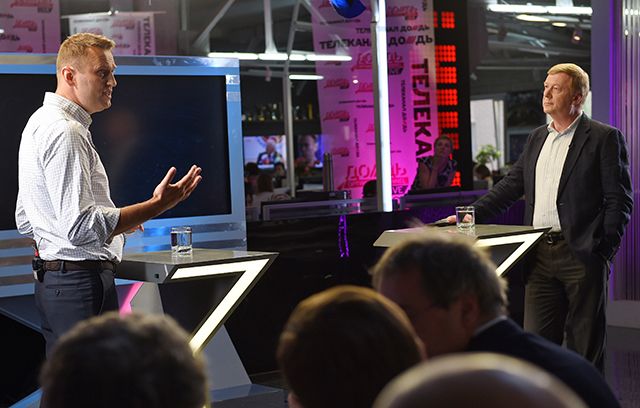
- Recently, the debate of Anatoly Chubais with Alexei Navalny about the efficiency of Rusnano passed. What can you say regarding your sector, what is its effectiveness?
- Our sector is promising. If we talk about financial efficiency, our project is designed for IRR [return to invested capital], exceeding 20%, which is a good investment. This is not a margin of 20%, this is not an income of 20%, it is a return to invested capital. This is a more complicated thing. You invested a certain amount. She returns further and brings you income in a certain time perspective. Therefore, this is a good investment in many respects. I think that many investors would love to invest such a project.
- Do you mean your Russian developments or your venture investments?
- In venture developments, the expected return is much higher, but the fact is that not all venture developments will be effective. Therefore, if we invest in early development, then it should be 70% in it and the cost of capital is much higher. But at the same time there is a risk that it will “collapse”, and this money simply will not give a return. If compared by the portfolio, then venture investments, in general, are more profitable than investments in the company. But this is normal, because in the venture industry risks are higher.
- Given what is happening in the country with the economy, what are your planning horizons? What will happen to the crisis?
- So far, the economy of the Russian Federation is reduced. This does not mean that investment projects do not need to be implemented. This means that the niche is narrowing for effective investments. Consumer demand will decrease, the purchasing capabilities of the population will decrease. And all this means that, launching, say, a new investment project, you should focus on the fact that your market is reduced, the potential market is reduced.
- And for what time it will still contract?
- Don't know. Today, this, unfortunately, is not quite economic forecasting. This is rather political and economic forecasting.
Ilya Zhegulev
Saint Petersburg