
Translated material
The benefits of obscurantism
278 new laws - during the spring session, 1615 legislative novels* - from the beginning of the work of the State Duma of the sixth convocation, elected in December 2011. Who is the beneficiaries of the legislative process - analyzed The New Times
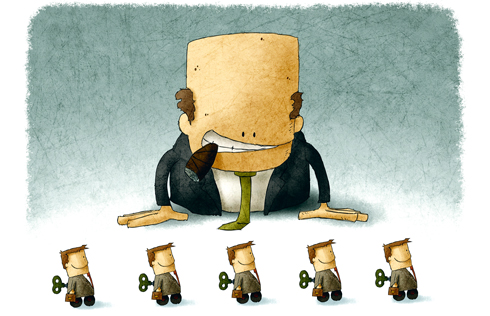
In order to maintain a place within the collective bureaucracy, the deputies are ready to demonstrate loyalty to the two ideas about the activities of the State Duma in any way with equal frequency in public space: what it is an unsystematic “frantic printer”, operated by deputies crazy or eager for public attention. Or that this is a “rubber seal” deprived of its own subjectivity, stamping everything that is sent from the government and the Kremlin.
From the outside, the work of the Duma may look chaotic, irrational and frivolous or reduced to one plot about the “ban on everything”, but for the power groups themselves and actors - participants in the process - we are always talking about increasing, reducing and redistributing the power resource. Behind every new law - be it a law on the creation of a new district court or an amendment to the rules for walking internal water transport - is a question about the authorities. And in the Russian political system, the power (administrative) resource is material resource.
Punishers and law enforcement officers who are generally interested in the constant adoption of new laws? Whatever the content of the legislative norm, a certain power body (ministry, service, prosecutor) will monitor its execution and punish its non -performance. In this sense, the very instability of the legal field is frequent unpredictable changes in laws - in the interests of the state and not in the interests of a citizen. This, among other things, explains the continuous process of correcting the corrected: as soon as the bill becomes the law, new changes begin to be made to it immediately.
Thus, the current law “On non -profit organizations” was adopted in 1996 and has changed 63 times since then, including within the sixth convocation - 30 times. From the point of view of society, the new legislation on foreign agents is motivated unambiguously: these are repressions directed against horizontal civil activity. But who turned out to be the beneficiary of this activity? Answer: The Ministry of Justice of the Russian Federation, which is maintained by a register of foreign agents. Few people remember how boring and inconspicuous this department was a few years ago: in two years of shock law enforcement, the ministry actually turned into a power department - the “Prosecutor General for NGOs”. For the bureaucratic structure, repressive powers are new full -time units, additional budgetary funds, media delivery, and most importantly, an administrative currency for inter -plane trade.
The administrative exchange in the Russian political system belongs to the collective bureaucracy, whose distribution between the branches of the authorities is as conditional as the distribution of deputies in factions within the Duma itself.
However, this does not mean that in the process of discussing laws there is no clash of interest groups - just these groups are not divided by departmental and fractionation affiliation. Classic example: the annual struggle around excise taxes on alcohol, which is played with each federal budget. At this time, the Duma is divided into two parties: a batch of beer and a batch of vodka - the first lobbying for an increase in excise taxes on strong alcohol, the second - on low -alcohol drinks. In the old days, the batch of beer was more likely to be liberals, because breweries were the fruits of new foreign investments, and the party of vodka was rather communists, since the production and transit of alcohol was the business of the governors of the central regions - the former “red belt”. The third party invariably makes up the Ministry of Finance, interested in replenishing the budget at all costs. Political differences were largely erased, but battles with the participation of deputies, industry unions and presses are still played in the Duma every fall.
Under the carpet, the main plots of the parliamentary session are significantly different when viewing outside and inside. Meanwhile, the collective bureaucracy, parliamentary, government and Kremlin, is always busy only. What occupied it, first of all, in the first half of 2015?
The current chairman of the State Duma, Sergei Naryshkin, has more foreign policy ambitions than any of its predecessors. Under his leadership, the State Duma became much more noticeable in the international arena: institutes of inter -parliamentary cooperation served as instruments for this. On the Russian side, this was called "not to interrupt the dialogue" and "to inform your position using all structural sites."
The whole previous year was the dramatic correspondence and mutual calls of Naryshkin and the chairman of PACE Ann Brasser, adopted and rejected invitations to PACE sessions, the deprivation of the Russian delegation of the voting right and its demonstrative departures from the meeting hall. It seemed that after the Minsk agreements the policy of dialogue was supposed to go easier, but then Naryshkin was refused to enter Finland. Following him, the entire Russian delegation refused to go to the session of the Parliamentary Assembly (except for the deputy Nikolai Kovalev), and the Assembly adopted an unpleasant resolution on Russian aggression in Ukraine. Nevertheless, neither from PACA nor from the OSCE, Russia did not leave, delegations plan to continue to ride everywhere where they let them go, and the Chairman of the State Duma continues to insist on “continuing the dialogue”. So that such a policy does not look suspicious within the country, it has to be compensated by the most loyist statements and articles about American colonialism and miserable clowns.
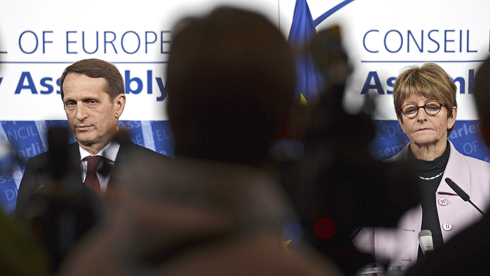
For a whole year, Sergei Naryshkin conducted a dramatic correspondence with the chairman of PACE Ann Brasser in the struggle for the main thing after the reform of the budget process of 2005-2007, the Duma lost a significant part of its influence on the distribution of budget funds, ceasing to be any significant negotiation partner for the government, business and regional lobbyists. Who does not manage money, there is nothing to talk about with what. But the economic crisis forces the government to constantly redraw the budget, and this requires deputy participation.
The leadership of the Parliament and the Budget Committee of the State Duma saw their chance and all the first half of 2015 did not leave attempts to use it. The Duma, for example, achieved from the government regular reports on economic policy and deleted a point from the anti -crisis plan submitted in January, allowing the government to change budget painting at their own discretion, without agreeing with parliament, the deputies managed to conduct a certain amount of their own amendments to the budget.
The crown of the Duma budget reconkista was to be the adoption of an amendment to the Budget Code creating a parliamentary commission for the redistribution of budget allocations. The commission was supposed to be formed by deputies and senators on a parity basis and to consider the movements of funds within the budget in the inter -seal period. The project was made by Sergey Naryshkin and the chairman of the budget committee Andrei Makarov on the last day of the session, being prepared the day before at night. The Minister of Finance Anton Siluanov then said that the supraculation body invading the authority of the government is being created - however, the Duma approved the project in three readings at once. But already on July 8, the law was rejected by the Federation Council, which is extremely rarely enjoying this right (only the 18th case for the entire sixth convocation).
But the continuation follows: the issue of the budget commission will be again considered in the fall. This will not affect the general direction of budget policy: social expenses will be cut, and the military will grow. However, it is important for insiders not how the money is distributed, but who distributes it.
The pre -election maneuvers , unlike consumers and interpreters of hundreds of polls, the imperious incumbents themselves are not mistaken regarding the scale of their own popularity and folk love. All legislative preparations for the 2016 election campaign are reduced to measures to limit citizens' access to polling stations and narrowing the field of their choice (this is the only meaning of the election transfer from December to September). Another direction is the legalization of an organized police violence, designed to protect the newly elected from voters (new rights to the police to accelerate mass shares and the FSIN - to suppress prison riots). And the fact that voters can again be indignant, as it was in 2011, judging by lawmaking initiatives, no one doubts.
Not only the bills mentioned above are aimed at solving this problem, but also the law on the “right to oblivion”, which allows to hide potentially dangerous information about candidates and parties (by the way, there is an additional proposal of the FSB to classify information about real estate owners); and lawmaking, which can be generally called "confiscation" (for example, the law on the bankruptcy of individuals transferred to the fall); And even the law on the amnesty of capital (new millions will come to the stagnant economy).
Traditionally, all potentially unpleasant innovations for the voter are accepted before the start of the elected campaign. Although it would be more logical to be afraid of not news about the adoption of a new law, but the very effect of its action - however, lawyers, apparently, believe that by that time everyone will already forget who accepted it all, and a generalized “government” will be guilty anyway.
The issue of the issue does the State Duma have its own political interest - not like a bureaucratic anthill, but as an independent political entity? Since “independent” sounds almost like “opposition”, it is difficult to believe in the Duma independence to the Duma independence. All studies note a decrease in the level of direct corruption: “arguments in suitcases” no longer bring “arguments” to the hunting series ( more details on page 30).
In fact, the form of payment has changed - with a proximity to important rooms - and sources: commercial lobbyism dissolved in the lobbying department of the departmental.
Under these conditions, the deputy’s interest, like any official, is to preserve himself within the collective bureaucracy that distributes all earthly goods in Russia - positions, real estate, money, immunity from criminal prosecution. It doesn’t matter if you will get a mandate in a new convocation or a place in the ministry or state corporation - it is important to show sufficient loyalty so as not to fall out of the list of admitted ones. This largely explains the prohibitive rage and the public seizures of propaganda madness from people who do not at all make the impressions of inadequate in private communication.
The price of the issue has been seriously increased: since the “foreign man” has become for members of the ruling elite inaccessible or inadequate, they have no other security source, except for membership in the power system. The same system is, in a paradoxical way, and the main source of danger - it gives benefits, but it can take them away, and with them - life and freedom.
* Source: Information base of Assocles, www.duma.gov.ru
Photo: Shutterstock, Patrick Hertzog/AFP