
Translated material
Forget the "mockingbird"
Harper Lee released the second novel in 55 years
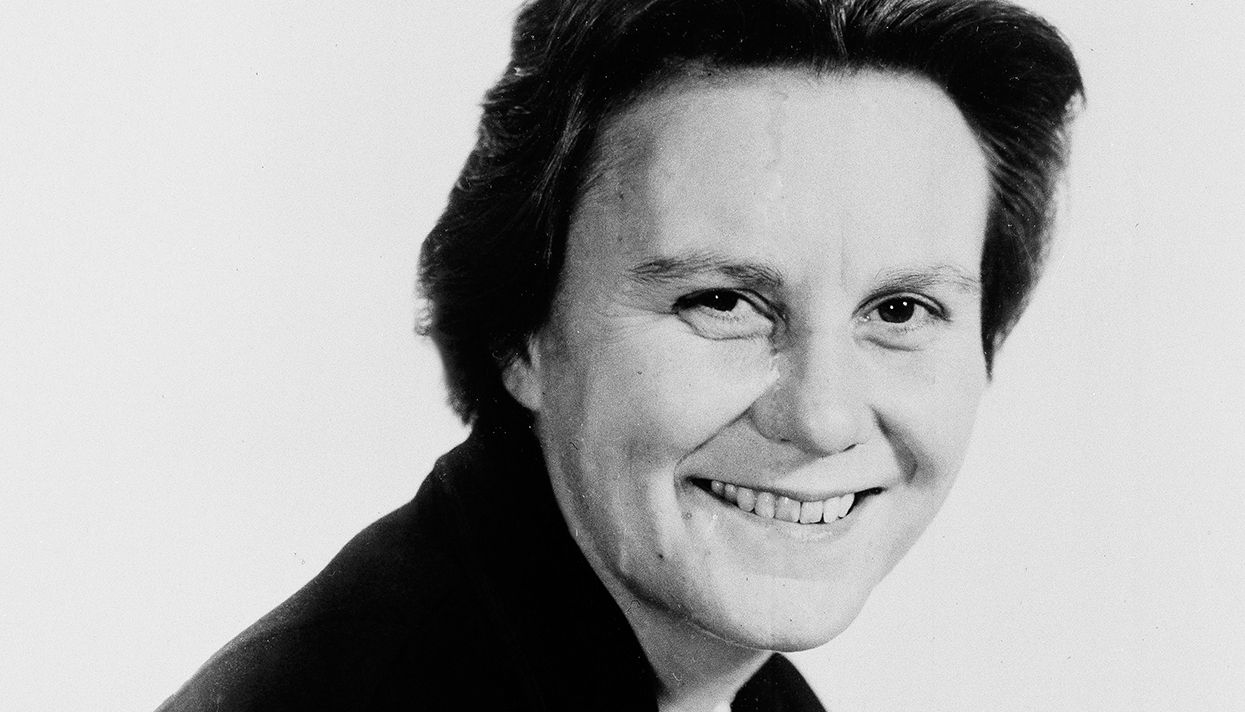
In the USA and Great Britain on July 14, the most long-awaited novel of 2015 appeared on the shelves of bookstores: “Go Set a Watchman” by 89-year-old writer Harper Lee. No matter how trite it sounds, but the book really produced the effect of an exploding bomb and seriously upset many readers. At the request of Medusa, journalist Julia Stutina , who read the novel, talks about why three hundred pages of fiction were perceived so seriously.
Harper Lee, for starters, should be known about the new novel. Firstly, the name “Go Set a Watchman” is a quote from the Old Testament, namely part of the verse from the book of the Prophet Isaiah (Isa. 21: 6). In a synodal translation, this fragment sounds like “go, put a watchman”, and the verse is the whole way: “For the Lord told me: go, put a watchman; Let him say that he will see. ” So for the sake of convenience, we (until the novel is translated into Russian) will be called the book “Watchman”. Secondly, chronology. Harper Lee published her first and until recently the only novel in 1960 - the book “To Kill A Mockingbird” (in the Russian translation of Nora Gal and Raisa Oblonskaya - “Kill the Minge”). For the 55 years that passed between the “Mockingbird” and the “watchman”, Lee printed three articles, one essay and one open letter. The writer carefully avoided the appearance in public, interviews, lectures and other events. Moreover, in 2011, a replica allegedly uttered in the press: “I said everything I wanted and I will not repeat myself.” And suddenly in February 2015, the largest publishing house Harpercollins announced that he had an authorized manuscript of another Roman Harper Lee and was going to publish it.
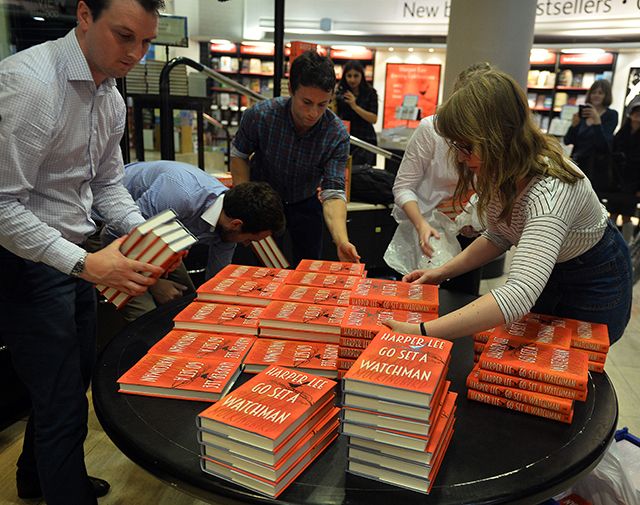
According to Harpercollins, the first circulation of the book was two million copies. Publishers around the world have not seen such a stir since the seventh Harry Potter in 2007. Simultaneously with the release of American and British publications, transfers to the Spanish, Korean, Finnish, Dutch, Danish, Norwegian, Swedish and German languages received translations into bookstores. In the United States, the number of pre -orders for the watchman began to grow after on July 10 The New York Times published the first review of the novel. It was written by Michiko Kakutani, an angry, sarcastic and extremely influential critic. The text of Kakutani is quite complimentary, but, as it turned out, the main thing in it is a spoiler. It turns out that Atticus Finch, one of the most beloved book characters in America and the most positive cinema of all time, is not at all what the readers of the Mockingbird always considered him. He is a racist.
This is the main surprise that Roman presented. In the United States, where almost half a century boys are called Atticus in honor of the Fincha lawyer, the stronghold of justice, and “kill the mockingbird” is included in the school curriculum, the readers were struck on the spot. However, judging by the speed of sales, they are going to figure out everything themselves. We will follow them and we (if possible without spoilers).
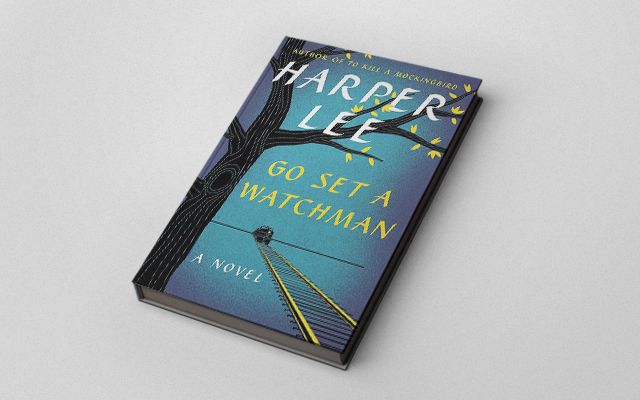
Novel
Harper Lee first wrote a “watchman”, and already from it with the active participation of Tey Khokhoff, editor of the Lippincott publishing house, a mockingbird was filled in two and a half years. When the Mockingbird was released in 1960, he immediately became a sensation. A year later, Harper Lee, a 35-year-old debutant, received a Pulitzer Prize for Roman. In the publishing world, no one had and there was no doubt that it was Khokhoff that made the book that readers love not only in the United States, but throughout the world, from the original manuscript. In her memoirs, Tai Khokhoff wrote that in every line Harper Lee felt the “spark of a real writer”, but the book was not ready for publication, because “it was more reminiscent of a collection of stories, rather than a reflected novel.”
Harpercollins publishing house reported that the Watchtower is released almost without editorial ascension - with the exception of completely necessary corrections. Thus, we have really the source material of the Mockingbird. Jin Louise in the “watchman” is 26 years old, she is smart, sarcastic, impatient, deeply feeling young woman who came from New York to visit an aging father in her native Mimbam, Alabama. Opening the novel, the reader will immediately make sure that Tey Khokhoff is right: there is no doubt or something - a writer of great talent. Moreover, this is a writer from the south, and they have a special talent of the narrator. In the “watchman” it is not difficult to see the influence (in a wide, good sense) of Faulkner: the first chapter of the novel about the trip to Mecomb is so detailed that one cannot help but think about his city, the neighborhood of the district of Yoknapatof. Literary kinship with flanner o'onnor also has no doubt. In the text of the novel there is a direct reference to the “ruined wind” Margaret Mitchell, and this list can be continued, but there is no need.
The wit and accuracy of observations are the strengths of Harper Lee. But in the "watchman", unlike the "mockingbird", much less piercing lyricism, with whom the writer turned to her childhood, but much more dry and extensive dialogues. There are many autobiographical moments and little psychologically justified plot movements. The terrible truth about the Atticus opens Jin Louise in such a way that it is completely incomprehensible who could call the heroine the eyes of the eyes: or rather, it would be impressive. And even the next episode immediately after this episode is a comic excursion into the past, telling about the absolute, on the verge of phenomenal, innocence of Jin Louise, does not convince in everything that concerns the world around her. With all that, the outcome of the novel is deep. In the “Mockingbird”, Jin Louise learned to look without prejudice on people far from her life, whether the recluse Arthur “scared” Radley or black Tom Robinson, according to the test of Atticus: “You really learn a person when you get into his skin and look in it.” In the “watchman” she has to re -look at her own father - her deity and ideal - with all his insurmountable contradictions, and rapidly grow up, losing illusions.
Intrigue
89-year-old Harper Lee since 2007 has been living in the nursing home in Monrovil , Alabama (this is Makekob of her books). Over the years, the writer was led by her older sister Alice, who died at the end of 2014 at the age of 103. In 2011, Alice Lee publicly stated that her sister, after the stroke of the stroke, was blind, deaf and sign anything if she is asked by the one she trusts. ” So when in 2015 the Harpercollins publishing house announced the preparatory publication of the “watchman”, many had doubts that Harper, who had refused to publish more than half a century, suddenly made such an unexpected and dramatic decision on his own.
The representative of the Harpercollins publishing house admitted that no one communicated directly with the writer: correspondence was conducted through Tonya Carter, lawyer Harper Lee, and literary agent Andrew Nuremberg. Even the widely cited letter Harper Lee, in which she expressed joy from the upcoming publication, the publishing house also received through a writer’s lawyer. The honor of the opening of the manuscript of the “watchman” belongs to Tone Carter, but she set out the history of the find in two versions, which does not add trust in any of them. According to one version, the manuscript was found by accident, and according to the second - as a result of systematic searches for several years.
Moreover, Andrew Nuremberg, and Tonya Carter made it clear that there is another Lee manuscript - the third, also a novel and also connected with the Fincha family. Friends and acquaintances of Harper Lee, who were interviewed by The Washington Post reporter, Nily Tucker, unanimously deny the possibility of the existence of such a text. And many suspect that in reality it was not allowed to publish the “watchman” and was deceived.
Policy
Whatever the story of the publication of the “watchman”, one cannot but admit that the publishing house chose the moment for the release of the novel the most successful. Over the past year, many events have occurred in the United States, crossing out the hope that the “pure” era has come: riots in Ferguson, death of the police of Eric Garner and Walter Scott , the shooting of black parishioners in Charleston. President Obama at the funeral of Senator, who died in Charleston from South Carolina, Klementi, Pinkni, made an outstanding speech , in which, in particular, he spoke of America’s “original sin” - slavery - and the need to overcome it with everyday mental work. This is very consonant with the ideas of Jin Louise Finch in the novel “Go Set a Watchman”.
Julia Stratotina