
Translated material
Monopoly of a leisurely driving
What became the “Russian railways” over 10 years of the reign of Vladimir Yakunin
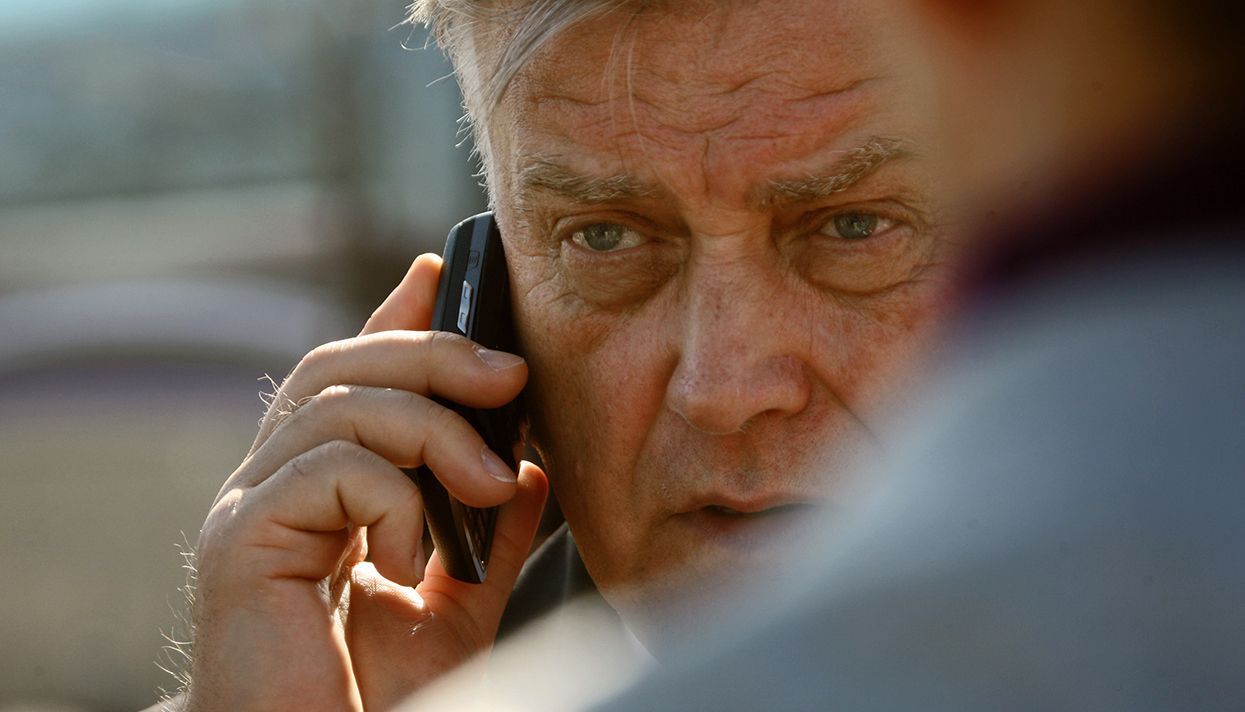
Vladimir Yakunin, who announced an ambulance a few days ago, has been led by Russian Railways for 10 years. According to the reform plan of the monopoly, which was developed in the early 2000s, it was assumed that Russian Railways would only receive money for the use of railway tracks and infrastructure, and private traders will be carried out. It was not possible to bring the reform to the end by 2015-not least due to the opposition of Yakunin himself. On the instructions of Medusa, the journalist of Echo of Moscow Ilya Rozhdestvensky studied the state of the monopoly and what the current president of Russian Railways will leave behind.
Infrastructure
The length of the communication routes over the past 15 years has not changed much: in 2000, their length was 86.1 thousand kilometers, in 2014-86.3 thousand.
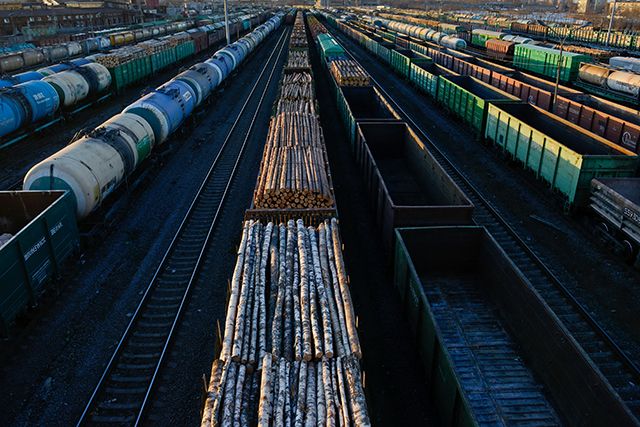
In Russia, there are about 1.2 million cargo cars, they transport 1.2 billion tons of goods annually. For comparison, in the USA and Canada about 700 thousand wagons transport almost three billion tons. The logistics of the transportation was developed even under the state plan, but since then much has changed - the market has been reoriented for export, raw materials sometimes drive through the whole country, and the infrastructure was unable to cope with the current conditions. The average speed, if we take from the moment the loading starts to the moment the wagon is unloaded, is 15 kilometers per hour . In 2012, it fell to 9.1 kilometers per hour.
Another infrastructure problem is the presence of “narrow places”, territories with low throughput. “We have 20 percent of railway lines passes 80 percent of the cargo flow, and 80 percent of the remaining lines account for 20 percent of the cargo flow. Therefore, due to the shortage of funds, the Russian Railways investment program mainly develops these 20% of the main transport corridors, ”the head of the railway research department of the Institute of Natural Monopoly Problems Vladimir Savchuk explained to Kommersant. All these shortcomings are beaten by carriers: oil workers, coal miners, metallurgists, in general - the main Russian exporters.
The average age of locomotives is 27 years, their wear is approaching 70%. Unlike freight cars, almost all locomotives in the country are on the balance of Russian Railways. The “Russian railways” have no money to update the park (and even more so in the conditions of sanctions), but private traders are not yet allowed for public roads. In April 2014, Prime Minister Dmitry Medvedev approved a plan for the development of competition in railway transport until 2016, in accordance with which local carriers were supposed to appear. It was planned that they would transport goods on public routes for their locomotives, but the pilot project was never launched .
Finance
Despite the monopoly position, Russian Railways remains surprisingly ineffective from a financial point of view: 2014 the holding completed with a net loss of 99.3 billion rubles, 2013-with a loss of 198 billion rubles. At the same time, the company regularly asks for money from the state. If in 2015 Russian Railways received 30 billion rubles, then for 2016 it has already been asking for 140 billion rubles. According to the Accounts Chamber, for 2012-2014, Russian Railways replenished her authorized capital from the country's budget in the amount of 190.2 billion rubles, that is, she received more than all other companies. These funds, believe in the Accounts Chamber, were spent ineffectively.
“Officials who go to meetings to President Putin say that after 2012, mentioning Yakunin’s requests with them, he is expressed like this: Yakunin“ dripping ”,“ aches ”or“ groans ”. The manner of solving problems due to personal friendship with the president is good when it is not abused, ” says journalist Konstantin Gaaza. However, if you look at the spending of Russian Railways, then it is impossible to say that the monopoly is poor. The company purchases cars at a price of 35% higher than the market, spends money on the Olympics in Sochi, the Lokomotiv football club and the transportation of shrines from Greece, and also buying unprofitable energy objects.
Tariffs for freight transportation
The main business of Russian Railways is the transportation of goods, not passengers. In 2014, the company's total income amounted to 1.79 trillion rubles, of which less than 200 billion had been for passenger transportation.
The tariff system for cargo is now arranged in such a way that the company carries cheaply, others are expensive. In other words, at the expense of only goods, Russian Railways subsidizes the transportation of others. At the same time, the share of low -income cargo (coal and building materials) is growing, and highly profitable (oil cargo and metals) falls. The problem, the sources of Kommersant, are said , is that Russian Railways cannot decide on the strategy: to be a commercial structure and act according to the laws of the market or to be a state monopolist and to defend socially significant projects.
This is also due to the fact that Russian Railways does not understand what directions and what cargoes to fight. Market participants are also unhappy with the lack of a transparent decision -making mechanism: one plant can receive a discount when transporting goods, and the other will not be able to count on a similar order at the preference.
Corruption
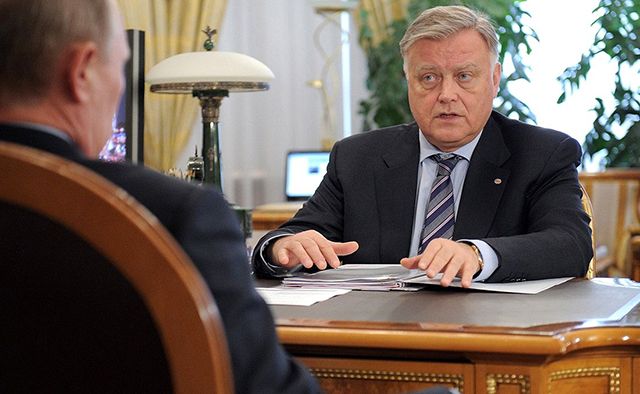
Under Yakunin, Russian Railways paid billions of dollars to private contractors who hide their final owners and do not appear at the registration address. According to Reuters, from 2010 to 2013, only two companies took part in more than $ 340 million in more than $ 340 million-the MPCTRARTRAS ALS and Transsectionavisavtomatics. They were registered on the same day with the same person acting on behalf of the owners, the information about which is not disclosed; accounts were opened in one bank; Once they submitted applications for participation in the Russian Railways tender with a difference of one minute.
Another of the largest beneficiaries of Russian Railways tenders is the “MetskStroyenergo”. From 2007 to 2013, the company received almost a billion dollars from the state monopoly. She transferred most of the funds to unknown dubious companies - for example, Legatt. She paid 115 million dollars, although the Legatta income by then amounted to $ 3,800 a year.
In turn, the Slon publication managed to find out that almost a third of the Russian Railways contracts falls on a group of people who may be associated with Yakunin adviser Andrei Krapivin. In 2012-2013, they won tenders more than 200 billion rubles.
The Corruption Fund Alexei Navalny accused Vladimir Yakunin and his son Andrei on corruption at once by several episodes. So, from January 1, 2014, work on laying a geogrid used to strengthen slopes and paths cost Russian Railways billion rubles. Navalny claimed that the infratech company, which is controlled by Yakunin, is holding a monopoly on these works through a chain of Cyprus offshore.
Yakunin Jr., according to the FBK and Reuters, earned $ 500 million with a hotel network, most of which are in the station territories. The lands were allocated through the structures of Russian Railways, and financing was provided by the Pension Fund "Blagodity", in which Russian Railways employees store their money. Finally, the Cyprus company VIY, on which the majority of Yakunin’s assets are recorded, owns a business for the sale of railway tickets with a margin. This company belongs to the Russian company UFS - an exclusive intermediary, all sites selling tickets are used by its services. There is a margin when booking hotels through the Russian Railways website.
According to Forbes, not only Yakunin Jr. earned cooperation with Russian Railways. Business on the railways also makes the nephew of Vladimir Yakunin Kirill Amosov - he rents out a half -wagons to Russian Railways.
Electric trains
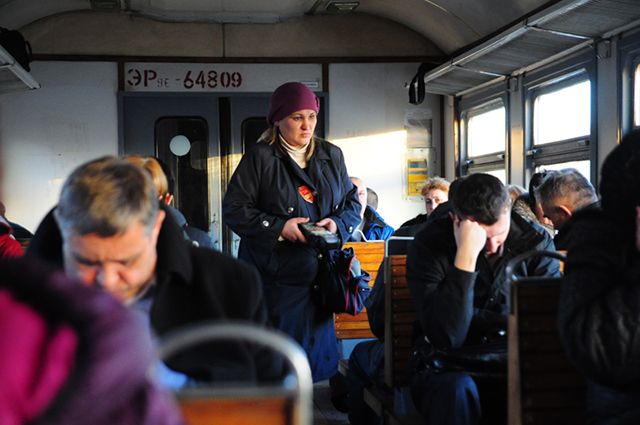
Another pain point of Russian Railways is suburban transportation. They are mostly unprofitable. Until 2011, they had to pay exclusively by the State Monopolis (in 2009, she lost about 25 billion rubles on electric trains, in 2010- more than 29 billion). In 2011, the reform began: 26 subsidiaries were created in the State Monopolis, which were transferred to suburban transportation - the so -called suburban passenger companies, PPK. The meaning of the reform was that now the regional government was a customer and was supposed to pay for trains. Each year, the “daughters” of Russian Railways concluded contracts with officials and provided them with the calculation of the cost of transportation. After that, the local authorities decided how much passengers would pay, and how much they would have to compensate for the local budget. At the same time, Professor IE Business School, Maxim Mironov, claims that a break -in (“economically justified”) Russian Railways tariff is overstated at least, and with some additional savings, four times.
It was not always possible to agree to agree. According to the results of 2013, there were no problems only in the 21st region. In six regions: Moscow and the region, St. Petersburg, Adygea, Astrakhan and Ryazan regions-such high tariffs were in force that compensation was not required from the budget. In 15 entities, compensationwas paid in full. In other regions, the "daughters" of Russian Railways received only part of the money. So, the governor of the Vologda region Oleg Kuvshinnikov claimed that he did not trust the calculations of the northern suburban passenger company. “About 80–85% of expenses falls on the maintenance of rolling stock and its rental from the mother company. These are the numbers opaque for us, we do not recognize these numbers, ”he said .
Conflicts took place in almost all regions, and the expenses of passenger companies became the subject of discussions. For example, in 2012, the central PPC paid 68 million rubles for cleaning, in 2013-196 million . Obviously, in the year in the train, it was not three times cleaner.
At the beginning of 2015, 300 trains were canceled in 39 regions - this, of course, caused the discontent of those who traveled in them. President Vladimir Putin had to intervene in the situation, but it is likely that in 2016 everything will happen again.
During the reform of suburban transportation, several errors were made. Firstly, all regions were transferred to one model, which turned out to be effective only in Moscow and St. Petersburg. In other cases, suburban passenger companies turned out to be an unnecessary superstructure, and it would be easier to carry passengers along socially significant routes by simply adding a couple of stops to a regular long -distance train and attaching a wagon with a suburban tariff to it.
Secondly, it was pointless to create routes to the airports, replicating Moscow experience: in most cases, passenger traffic is several times lower, and in the regions of transportation in these areas they soon began to close.
Thirdly, the regions have no mechanisms for coordinating their interests during interregional transportation, that is, it is quite difficult to order the desired route. So, in January 2015, the cancellation of the electric shock Moscow - Gagarin was announced: the Smolensk region “did not order” them, although Muscovites probably need this direction. Finally, the division of transportation into distant and suburban was mistaken,notes the economist, head of the Laboratory of the Institute of National Economic Forecasting of the Russian Academy of Sciences, Kirill Yankov. He proposes to cancel this separation and align economic conditions for suburban and long -range routes; highlight socially and economically significant routes and approve the integrated plan of transport services for the population; change the tariff statement system; Save PPC only where there are profitable routes.
Other projects
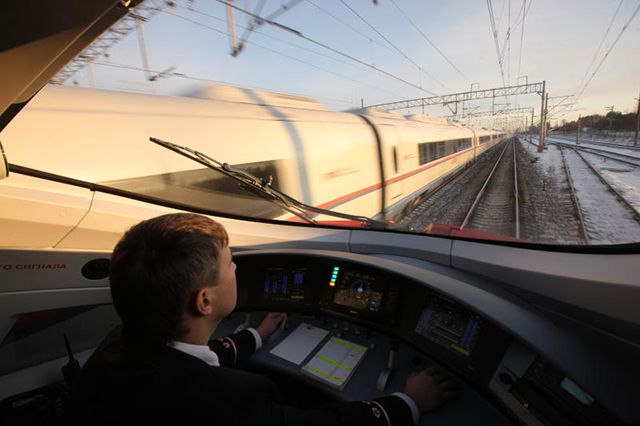
In 2009, the first high-speed trains appeared in Russia-Sapsans began to run between Moscow and St. Petersburg. Then Allegro appeared to Helsinki. At the same time, they decided not to build ways for high -speed traffic in Russian Railways, so I had to put all the freight trains bypassing. As a result, the path of goods between Moscow and St. Petersburg increased from 660 to 1110 kilometers.
Under Yakunin, the construction of special high -speed highways was actively discussed - first from Moscow to St. Petersburg, later from Moscow to Kazan. The first project is frozen, the second is still in the initial stage - in June 2015, Vladimir Yakunin said that it would take two years to design the highway, five years for construction. The estimated amount of investment is a trillion rubles, so it is likely that taking into account the crisis and this project will be postponed .
Other large -scale construction sites (with the exception of BAM reconstruction) remained only on paper - for example, a tunnel through the Bering Strait or a high -speed railway to Beijing . Against this background, Russian airlines first overtook Russian Railways according to the number of passengers (excluding suburban transportation). For comparison, in 2000, Russian Railways transported five times more passengers.
Whom the government will appoint a monopoly by the new head of the monopoly, but it is obvious that it should be an outstanding manager. He has to simultaneously increase the company's effectiveness, purify public procurements from dubious transactions, conduct railway reform, establish interaction with the population, regional authorities and carriers of goods, as well as cleanse the company's reputation from Shubeads and other heritage of Yakunin.