
Translated material
RUBLE-2016
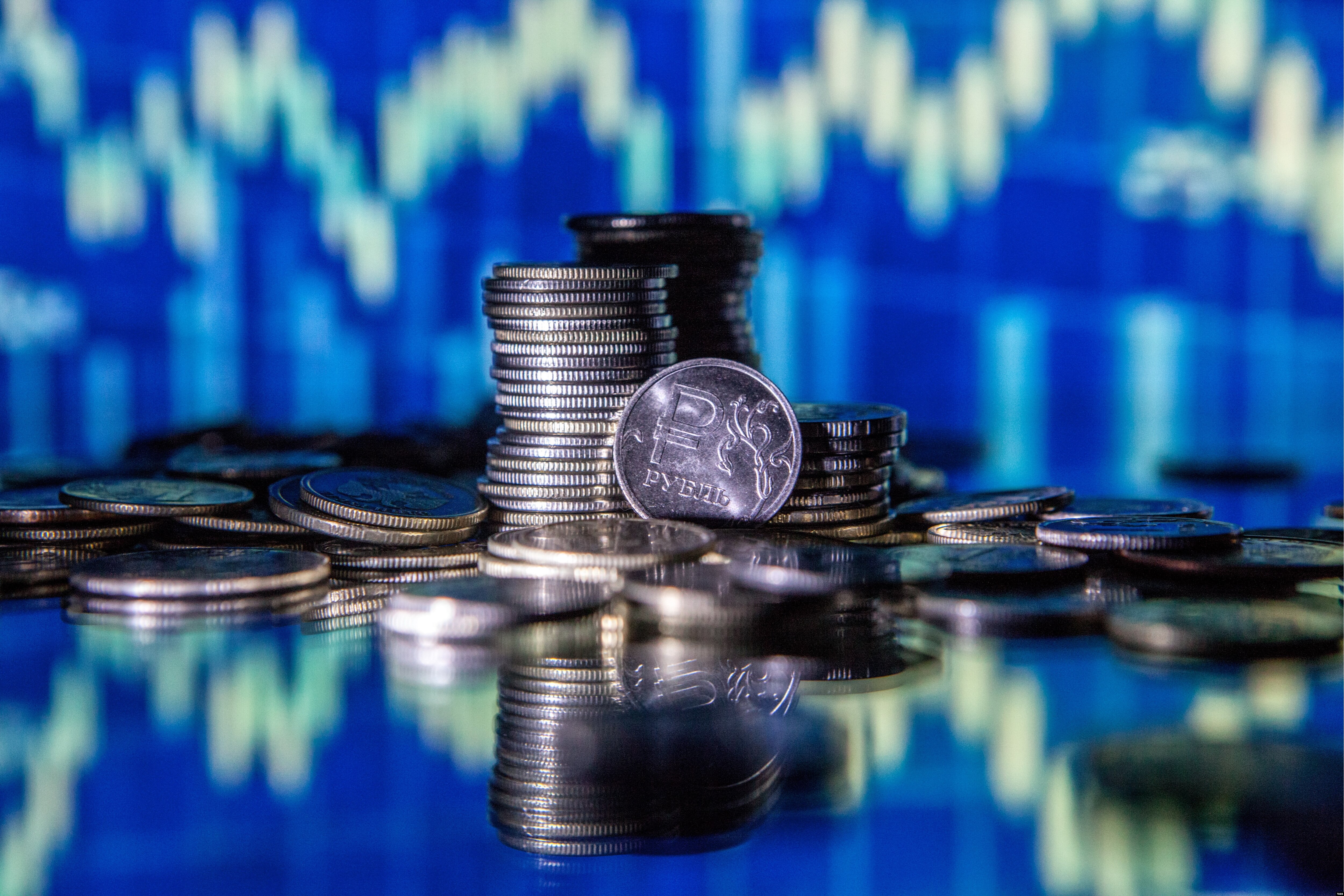
“The market devalizes it twice as fast as it should have been with such a fall in oil prices”
World oil prices have again fallen to 12-year minimums. The last time the Brent barrel cost $ 32, like on Thursday, January 7, only in April 2004. The next exchange rate of the ruble in his fairway fell on Wednesday below the level of 75 per dollar - for the first time during the period from December 16, 2014, the peak of the last time of the currency crisis in the country . And from a new fall, against the background of the oil sharply in just a day, it was saved only by the fact that the exchange in Moscow is closed from Thursday-trading will be resumed only on January 11. The oscillations of the exchange rate of the ruble in recent days were especially sharp: the volumes of foreign exchange trading against the backdrop of the holidays in Russia were 3.5-4 times smaller than another 29-30 December, and the ruble exchange rate is traditionally most vulnerable to any news. Especially - to news from the oil market. However, according to the expert, recently, at ordinary exchange trading, the ruble has become more quickly faster than it could be expected based on the dynamics of oil prices .
In 2014, Brent oil oil, to which the price of the main Russian export oil Urals is also tied, was doubled by half, and the ruble to the dollar is 1.8 times. Thus, the difference in the rate of their fall was 1.1 times. In 2015, the price of Brent fell by one third, and the exchange rate of the ruble to the dollar - by one quarter. That is, the weakening of the ruble to the dollar during the year was already 1.3 times smaller than the oil itself fell.
In the meantime, we are most likely “at the bottom” somewhere, and no positive signals are visible to the economy.
In the early days of the New Year, its price falls lower: the level of 32.16 dollars per barrel, marked on the morning of January 7, a month ago seemed unlikely - at least so soon. And if we assume that the current rate of the decline will remain, it is possible that the decline in prices and up to $ 30 per barrel can be the work of the coming days. However, by the middle of the day on Thursday, oil rose again - by almost 1.5 dollars.
Nevertheless, if you tryto present the oil rates corresponding to such prices, or even even smaller, the level of the ruble exchange rate to the dollar in the coming months, to what extent could it help, for example, the use of the gap in their decline in 2015 - the same one is 1.3 times? Or, with a sharp drop in oil prices, this ratio will not stand out?
Natalia Orlova , chief economist of Alfa Bank, Moscow:
- I imagine differently the correlation of oil and the ruble course. After the ruble was released in “free swimming”, a change in oil price per 1 dollar per barrel gives a change in the market exchange rate to the dollar by about 1 ruble. In this case, when oil prices fall, to $ 30 per barrel, the rate can decrease to 80 rubles per dollar - if you proceed from the fundamental “equilibrium” value, and, according to my calculations, at 50 dollars per barrel it is approximately 60 rubles per dollar. Nevertheless, if the oil is cheaper further , this proportion can somehow change. In the meantime, we see that the foreign exchange market, relatively speaking, “excessively” reacts to a decrease in oil prices, and as a result, the ruble devaluation turns out to be more than that, which, in theory, should correspond to this decrease.
In the short term, for 2016, in any case, this is a factor of not support, but rather, additional pressure on the ruble.
To comply - based on the calculated by both the Central Bank and many experts, the “fundamentally sound” level of the ruble course?
Natalia Orlova:
- With the transition to the policy of the “floating” ruble exchange rate, the change in oil prices for every 10 dollars per barrel gave a change in the “fundamental” exchange rate to the dollar by 5 rubles. And this ratio is still stable: it is determined both by the dynamics of the money supply in Russia and the state of its common payment balance. However, the foreign exchange market reacts differently: the change in oil price by $ 10 per barrel leads to a change in the exchange rate of 10 rubles to the dollar. That is - twice as much. And “fundamentally” he “should” would react to a change of only 5 rubles.
Dmitry Plekhanov , Researcher at the Institute of Complex Strategic Research, Moscow:
- If earlier many market participants expected at least stabilization of oil prices at certain levels, now there are more and more gloomy assessments. To some extent, this affects the expectations of the foreign exchange market. Therefore, here it is hardly possible to expect a certain critical situation only due to a drop in oil prices - without taking into account other factors. The decrease in oil prices will still greatly affect the ruble exchange rate, but it is unlikely that the ratio will be as linear as it was with a sharp drop in oil prices - from a level above $ 100 per barrel to current levels. In my opinion, this influence gradually will decrease.
Natalia Shilova , chief analyst of Binbank, Moscow:
- In addition to the dynamics of oil prices, it is necessary to take into account the scale of the outflow of capital from Russia. At the same price for oil, it doesn’t matter - $ 30 or $ 40 per barrel, which determines for the ruble, it will be exactly how intensively both enterprises and the population buy currency or transfer their savings into it. According to the results of 2015, the net outflow of capital in Russia is supposed to amount to about $ 50 billion. In our calculations, we tried to lay the forecast outflow in 2016 by about 5 billion smaller. In this case, if we talk about the price of oil of $ 30 per barrel, the rate may be in the range of 80-90 rubles per dollar.
The vast majority of the country's population lives in the “ruble zone”, that is, people spend money in rubles and also save it in rubles. And, despite the entire devaluation of the last two years, they continue to save in rubles.
Demand for currency by Russian companies that have external debts and obligations, which, in fact, became the main reason for the currency crisis in December 2014, in 2015 decreased sharply. On the one hand, its main source has now become for them the currency repo-loans of the central bank (on the key to certain types of securities), and not the foreign exchange market itself. On the other hand, it is worth recalling the “agreement” of the financial authorities with exporting companies about the more or less uniform sale of their currency revenue in the market. Yes, formally, the agreement expired on March 1, 2015, but it is unlikely that anyone will undertake to say that they have already forgotten about it ...
In addition to these two, what other factors in Russia in Russia would you call the currency?
Dmitry Plekhanov:
- Reducing the total external debt of companies and banks. From the peak levels of mid -2014, it decreased by October 1, 2015 by about 210 billion dollars, that is, by 30%. And this repeatedly blocks the volumes of the currency that the Central Bank provided banks on foreign exchange repostates. In addition, part of the company's currency debt was refinanced by them in the domestic market, which also reduced their needs for additional currency - for current payments on external debts. These problems, of course, are preserved, but still some solutions were found. And this significantly reduced the pressure on the Russian currency market.
Natalia Orlova:
- In 2014, with a gaining rate of ruble devaluation, everyone sought to transfer their ruble funds into currency. Therefore, the surge of demand for it was exciting . And in 2015, this excitement came to naught ... The amounts of ruble funds from companies have not changed much, while the ruble rate fell more than half. In these conditions, the factor of the purchasing capacity of companies, their ability to expand their foreign currency accumulations, becomes determining.
Natalia Shilova:
- Reducing the demand for currency from the importing companies. After all, imports to Russia were reduced by about 40%. Due to the devaluation of the ruble, it became too expensive-both for the population and for enterprises. Accordingly, currency companies-importers to buy new foreign goods are now required much less than before. Compare: in the fall of 2014, the total volume of commodity imports in Russia amounted to $ 26-27 billion per month, now-$ 16-17 billion.
If earlier the population had at least an incentive to buy currency in order to place it on their currency deposits, now such operations are already not much different in terms of profitability from the purchase of cash currency.
The demand of the population for currency was also sharply reduced in 2015. According to the statistics of the Central Bank, on average for some months, it turned out to be about 1.5 times smaller than in 2014 or in 2013. And in some-even 2-2.5 times smaller. The main reason is obvious - sharply fallen real incomes of Russian families. But what else?
Natalia Orlova:
- The strategy of the population’s behavior in 2014, partly manifested in 2009, is that in a crisis it rather prefers to spend its accumulations on the purchase of long-term goods than on the purchase of currency in order to somehow safe from the risks of accelerating inflation . And in 2015, we also saw that the population as a whole was definitely not inclined to increase the level of savings. It rather tries to maintain its own consumption - as far as possible in conditions of high inflation.
Dmitry Plekhanov:
- 2015 for Russian families went under the sign, even a small, but still “eating” reserves. And in such conditions - not until the expansion of savings. In addition, exchange rates in banks in banks have declined sharply: if at the beginning of the year they were on average about 5% per annum, then by the end of the year they fell to about 2%. Therefore, if earlier the population had at least an incentive to buy currency in order to place it on their currency deposits, now such operations are already not much different in terms of profitability from the purchase of cash currency. At the same time, the average level of rates on ruble private deposits in banks remains high-11-12%.
In the meantime, we see that the foreign exchange market, relatively speaking, “excessively” reacts to a decrease in oil prices, and as a result, the ruble devaluation is twice as large.
Natalia Shilova:
- We buy a currency in order to either go abroad, and foreign trips are now sharply risen in ruble equivalent, or for the purpose of savings. According to Bank of Russia, the share of foreign currency deposits in the total population of the population is now about 27%, gradually approaching 30%. But, in my opinion, it is unlikely that it will even reach 35%... The vast majority of the country's population lives in the “ruble zone”, that is, people spend money in rubles and save them in rubles also. And despite all the devaluation of the last two years, they continue to save in rubles. What, in principle, is normal ...
And, say, the rapid increase in the Central Bank of its bets in December 2014 - against the background of the currency crisis - sharply reduced the demand of the population for currency: with the profitability of ruble deposits under 15-20% of the per annum, many people were ready to abandon the accumulations in the currency. And, in my opinion, the low “potential” of the transfer of their savings into dollars or euros will further limit the demand for currency by the population.
At the same price for oil, it doesn’t matter - $ 30 or $ 40 per barrel, which determines for the ruble, it will be exactly how intensively both enterprises and the population buy currency or transfer their savings into it.
The first quarter of each year is traditional - the period of both the strong total payment balance of Russia, and minimal payments on external debts (simply in view of the features of their annual schedule). In your opinion, can this, in principle, become a certain factor in the greater “stability” of the ruble to new drops in oil prices?
Natalia Shilova:
- I think yes. Import is traditionally reduced, while export remains more stable in the first months of each year. Accordingly, certain additional volumes of currency in the market that are able to support the ruble can occur. Of course, this is not a fundamental factor, not the beginning of a certain trend of strengthening the ruble ... Nevertheless, we can expect a certain strengthening of the ruble for purely technical reasons.
Natalia Orlova:
- For the dynamics of the currency course, there are really two main factors - oil prices, as well as the sanctions and repayment factor of corporate external debt, will combine them into one. It is difficult to predict the oil price, but, of course, it can rather decline or, at least, is unlikely to be quickly recovered in 2016. As for the movement of capital, Western financial sanctions have not been lifted, there are not even signs of some kind of relief of sanctions restrictions. And the foreign exchange market is still under pressure from the very need for debt payments. In other words, whatever the price of oil, Russian companies will still be forced to acquire currency, since they now have no previous opportunities to refinance their currency debt in foreign markets. Therefore, I think, in the short term, for 2016, in any case, this is a factor of not support, but rather additional pressure on the ruble.
From the peak levels of mid -2014, the external debt of companies and enterprises decreased by 30%.
Dmitry Plekhanov:
- Indeed, judging by the statistics of the currency market in Russia, all periods of the most significant fall in the ruble exchange rate occur in the second half of the year. And for the first two quarters, even the average growth rate of the ruble course over the past 10-15 years is positive. Although, of course, this does not mean that some negative events for the market cannot happen in the first half of the year.
Today, most analysts expect to continue the economic recession in Russia in 2016. Official grades proceed from the fact that, they say, the peak of the crisis has already been passed. But in order for this to be so, at least two or three more or less sustainable growth should pass. In the meantime, we are most likely “at the bottom” somewhere, and no positive signals are visible to the economy . Even according to official estimates, the improvement in 2016 is more than statistical: due to slowing inflation, the indicators of real salaries will improve, that is, taking into account the increase in prices. It is also possible that enterprises will again begin to replenish their warehouses, which they sold in 2015. All this will have a significant impact on the dynamics of the ruble course at the beginning of the year, and the indicators of the first quarter, in fact, will determine what will be in 2016 with the Russian economy in 2016?