
Translated material
"The army is humiliation"
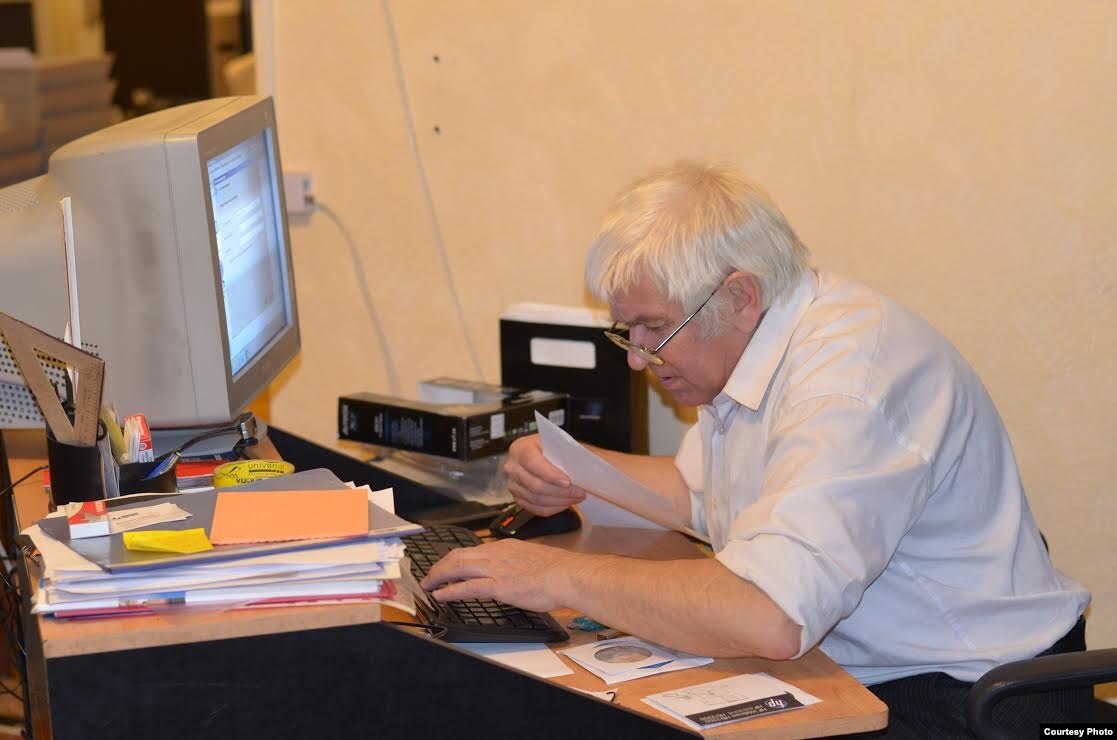
Human rights activist Vladimir Alekseev - about the horrors of the draft service and many years of struggle against army arbitrariness
Radio Liberty represents a series of essays about the Russians who make the life of many of their compatriots at least a little better: these people, often alone, oppose bureaucratic lies, rudeness and arbitrariness. For this, as a rule, they earn labels of the Fifth Column or Foreign Agents. They rarely “glow” in the media, but win in the courts, win in the struggle one on one with the system.
Vladimir Alekseev stands at the origins of one of the most famous Russian human rights organizations - "Soldiers' mothers of St. Petersburg" , which has been defending military personnel for 25 years. The story of Vladimir Alekseev is a story about how an ordinary person, defending the rights of his own son, rose above his separate problem and felt the need to help other people who fell into the same situation.
The experience of the winners
Vladimir Nikolaevich from a simple family. His father, a carpenter with three grades of a parish school, took a street and picked up in childhood. In his youth, he landed in the builders of the White Mocornal, only the craft saved from death: I did not have to dig the ground and roll the car, because the carpenters were appreciated. As soon as he returned, in 1937-the army, then the Finnish war. “Father told,” Vladimir Alekseev recalls, “that the three of them went on the attack with one rifle. And he said: do not think that the white hemispheres of the“ cuckoo ”were shot, Finnish snipers: the relations between soldiers in the quilted jackets and officers in short fur coats were disgusting.” After the Finnish-the Great Patriotic War, the Leningrad Front, reconnaissance of the Marine Corps, a heavy concussion-and again in the artisans: he reached Berlin with the 13th Air Army, built aircraft layouts for it, which caused the enemy fire.
Tole gave the order of the Red Star and a valuable gift-the Volga GAZ-24A. He received the order, and a valuable gift was grabbed by a member of the military council
Apparently, the distrust of the army order began to take shape in Vladimir Alekseev under the impression of the stories of his father, who, having passed two wars, remembered only one person - intelligence commander. After the battle, he ordered to dig up from the funnels of his fighters alive or dead, and thereby saved his life to the father of Vladimir Nikolaevich. The father was skeptical of everything else, and when Vladimir himself joined the army, his father constantly visited him there, looked at him - was everything in order. "Some believed that everyone was inspired by the victory, they wore Stalin in their arms, and in our family they were generally silent about Stalin." It was not sacred - one grandfather fought for the whites, he died in 1922, the other joined the red, but not by convictions, but so as not to dispossessed.
Vladimir Alekseev himself worked in the defense industry and observed a lot of evidence of what he heard from his father from childhood:
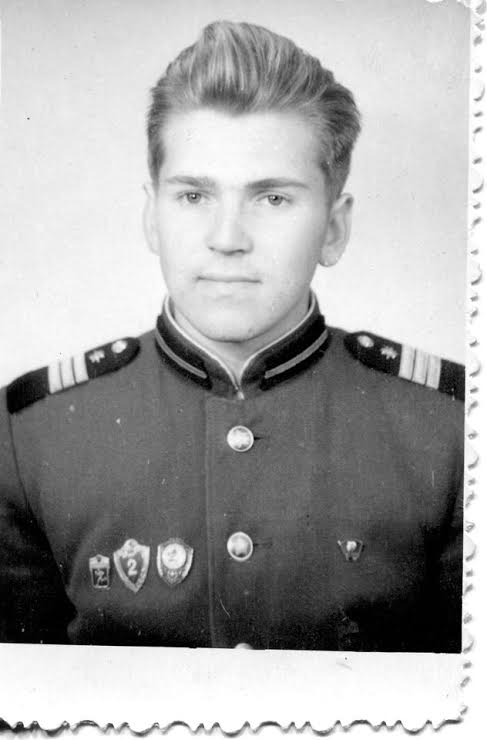
- I have strengthened the Soviet armed forces at the military factory for 22 years. Over ten years, we have provided the one hundred latest submarines with navigation systems. I had a chance to work in the Technical Administration in the Pacific Fleet. I did not have time to come, a submarine sank. One crew came from swimming, passes the boat to another crew and staff officers, and suddenly water poured into one compartment, it had to be lifted up, and the boat went to dive. The command gave the order to go to the open sea, and the boat commander did not obey and went to shallow water, so the boat sank at a depth of 40 meters. The Japanese offered to raise her in 24 hours. Our evacuation only on the third day, and the first to rush to the exit were staff officers. Tolya Salashenko was engaged in evacuation - he saved 120 people, and 16 sailors died in a torn compartment.
Tole gave the order of the Red Star and a valuable gift-the Volga GAZ-24A. He received the order, and a valuable gift grabbed a member of the military council. And the boat commander, who made the only right decision, was convicted, and he died in places of imprisonment. So I already saw there to the military as a consumable. I saw a tendency - at all costs to hide any emergency. We still do not know the truth - what happened to Kursk and Komsomol . And as before they dragged everything from the army, providing all kinds of higher ranks, so now they drag, everything remained as before.
From this moment, everything changed: they began to cling to him, provoke, humiliate
That is why, when the son of Vladimir Alekseev was drafted into the army, he visited him every month, as his own father once made. The son graduated from a music school in the pipe class, he was offered to serve as a musician at some school, but to spend the night at home. But the son wanted to serve as everyone: "He finished the radio policy, there was military training. So all the guys were eager for Afghanistan, such was propaganda! But by this time, the war, fortunately, was over." Vladimir Alekseev recalls that in his youth he had no warlike mood at all. Probably the memory of the horrors of the Great Patriotic War was still fresh. But for his son, the war again fed the Fleur of romance.
In the very first days in the barracks, the son became a witness to beating. A criminal case was opened on this fact. The victim was identified in a psychiatric clinic, the investigator interviewed his son as a witness, and he told about everything he saw. And from this moment everything changed: they began to cling to him, provoke, humiliate. In the end, he received the strongest blow to the head, so he was speechless. The command tried to hide this, it was impossible to understand for three weeks where the son of Vladimir Nikolaevich was. Finally, he was placed in a garrison hospital. Father came to the unit - he was afraid that his son would be stuffed into a psychiatric hospital instead of treatment. In the characteristic, they wrote that it was a drunkard and a drug addict, that he studied in vocational schools somehow.
- When I saw all this, it got me. I immediately went to the prosecutor's office of the air defense of the Moscow Military District. I was asked to state everything on paper, and I set it out - clearly, in 16 points. With the same request, I turned to other instances. Remember the bully that was changed to Luis Corvan, - Vladimir Bukovsky ? I did not know him then, later I met him. But this technique was developed by him. And although I did not hear about her then, but acted as if according to his instructions. And my question was resolved precisely due to the fact that one instance responds so, the other contradicts this answer, the third contradicts the first first - and you can play on these contradictions. As a result, the injury (physical and mental) was recognized, however, it was not possible to achieve the initiation of a criminal case. Everything turned out due to the fact that I achieved to put my son in a civilian clinic, and not in a military, which was very difficult. There he was conducted a psychiatric examination, concluded that he was mentally healthy, thereby protecting him from a premises in a psychiatric hospital. And then the military wanted to shove my wife and my wife ...
From private to public
If not for the story of my son, I would now be in the forefront of the patriots and urged to go to Syria!
The first, intensive stage of salvation of his son took eight months from Vladimir Alekseev. During this time, he plunged into army problems with his head, met many people who found themselves in a similar situation, as well as those who participated in the investigation of the causes of injuries in the army. He realized that people are very necessary for support, we need an organization that could be applied to the issues of abuse in the army. Then Vladimir Alekseev met with human rights activist Sergei Sorokin, who also began his way in public activity with the protection of his own son: "He then worked at the soil science and once a week gave people to get together, write appeals, and conduct consultations." Then Vladimir Alekseev came to the newly emerging committee of the Russian soldiers' mothers. At this time, he learned a lot, in particular, to correctly draw up letters and appeals to officials. True, he believes that the beginning of this skill was supposed to be at school: “The mother and literature were taught to us by the mother of the Strugatsky brothers. She lived in our house, and I individually prepared for her exams for the seventh grade for a year, she taught me how to correctly and clearly express my thoughts.”
The struggle for his son lasted three years and, in a sense, turned into a way of life. "If not for this story, I would now be in the forefront of the patriots and urge to go to Syria!" - says Vladimir Nikolaevich. After the problem with his son was solved, his wife told him that it was time to calm down. But by that time, Vladimir Alekseev had already realized that the problem was systemic in nature, and could no longer stop. The solution of a personal problem was for him a launching pad for the transition to another level - public.
The main reason for the conflict is that a soldier cannot fulfill his duties, after which they begin to spread rot
- I started with appeals and requests that I made through the Leningrad House of Officers, but then I saw that the same woman was working there, who was engaged in mobilization during the war, and her installations have not changed since then. And I also realized that at that time not only the first real human rights organizations arose, but also parallel, created by state structures to divert attention and imitation of activity. By this time, I already knew several mothers of the dead troops well. And in October 1991, we found ourselves at the same conference with human rights activist Ella Polyakova. And we decided to establish an organization to protect the military. On November 10, we gathered in the premises of the Kalinin administration on Lenin Square, determined our goals and objectives, in early January we held the Constituent Assembly, and in February 1992 we received constituent documents.
We must talk about the constitution, about the laws, to teach them how to use
So the "soldiers' mothers of St. Petersburg" appeared. Then, according to Vladimir Alekseev, a long search for methods of work began, and the main emphasis was on protecting the health of military personnel and conscripts. "I already understood that they were rowing into the army, despite the state of health. And the main reason for the conflicts is that the soldier cannot fulfill his duties, after which they begin to spread rot."
At first, both Alekseev and other employees consulted people by personal phones for hours, the numbers were transmitted by "sundress radio". Then a tiny room appeared - seven or eight meters, where many people were stuffed.
“At first they did not even know how to help all these people,” recalls the daughter of Vladimir Nikolaevich, Olga, who is now also working in the organization. - They gave them medicines, listened, cried with them. Then they had the opportunity to talk with people in the Great Hall, and Ella Polyakova, father and other employees, intuitively came to the fact that we need to talk about the constitution, about the laws, teach them to use, and also tell people about their own experience. Now it has turned into a permanent seminar "The Experience of the Winners", but its foundations were laid even then.
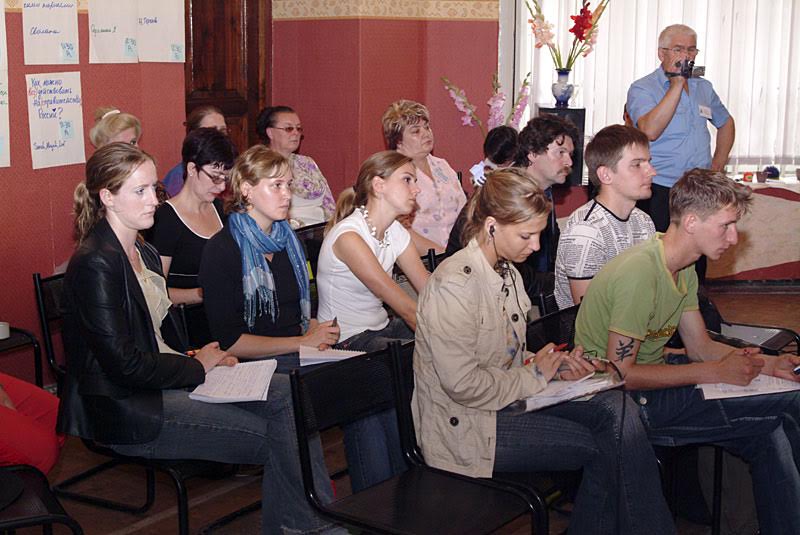
At the dawn of the existence of the "soldiers' mothers of St. Petersburg" in the organization, according to Vladimir Alekseev, there was no division of duties - everything did everything. And he himself talked with people, answered calls, participated in trainings, went to military units. These trips were especially dramatic during the first and second Chechen campaigns. "It was scary to watch in Kamenka how mothers came to feed their children, without even thinking that they would find themselves in Chechnya tomorrow." And soon many parents of soldiers who disappeared in the war or were captured began to come. Vladimir Alekseev, along with his colleagues, encouraged them, explained to them that they did not commit a crime when they save their sons, handed out cards of Chechnya. After such meetings, many fathers and mothers were united and went to Chechnya to look for their children and often found them, sometimes with the help of Chechens. In fact, they did this for the state that sent the soldiers to the war, but did not help them if they disappeared or were wounded and were captured.
Today, Vladimir Alekseev, who worked for many years by the electrician, took care of the computers of "Soldiers' mothers", the administration of the network, service office equipment: "So that the guys work well, they need to create conditions," he says. But this does not mean that he is engaged exclusively with "pieces of iron". He now answers phone calls, meets with people who come for help.
Barracks as an uninhabited island
The protection of the rights of conscripts and military personnel even more raised the meaning of the family in the eyes of Vladimir Alekseev:
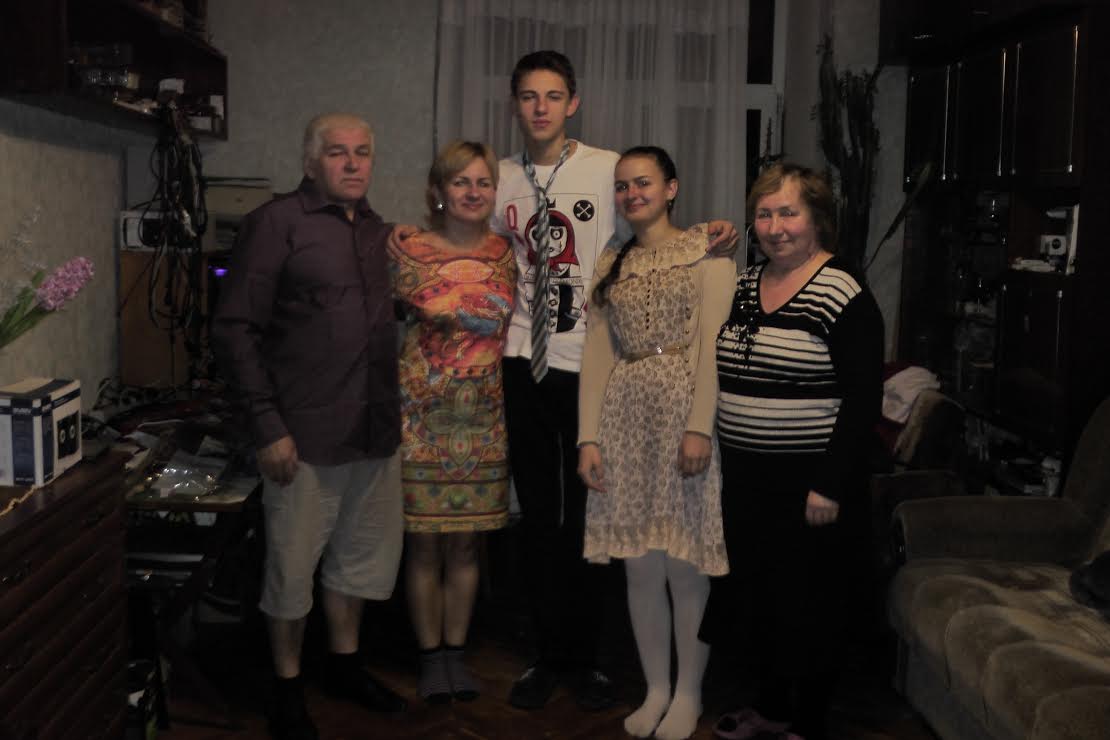
- We understood that without a strong family there can be no healthy state. After all, if the family is humiliated and no one is defending, it means that the state can destroy the same way as this family. I remember the story of Julia Avdeeva, in 1994 she pulled out her son-servant who fell into a difficult situation, already from Kaliningrad, bypassing all the borders. Such is the persistence of the mother, the willingness to protect her son. And ten years later there was a completely different story - Roma from Kamenka. He was terribly beaten, so the intestines had to be removed, and in the end he died. Here his mother did not want to do this. In general, the most important problem is the readiness of parents to take responsibility and protect their children.
According to Vladimir Nikolaevich, the entire army system is built on humiliation. After all, how can you force a person to pick up a machine gun and kill? Only pre -humiliating him:
You will be sponsors, it means that everything will be fine with your son, you won’t - your problems
- During my service, the soldiers have not yet been crippled, but even a restriction in the elementary right to relax at least once a week, to come to your relatives and friends - this is humiliation! When I was in Kamchatka during the service, I realized what is torn from the family: as on a uninhabited island, where the probability of surviving is very small. The barracks - this is such an island where a person is deliberately torn from his roots. And he must always feel the feed and support from them. Without it, he quickly becomes a victim of not only an unstable relationship, but also all kinds of extortion: they demand someone to put money on the phone, then they demand that they bring something from the house-paint, for example, for repair-this is now called sponsorship. You will be sponsors, it means that everything will be fine with your son, you will not - your problems. And if there is no one to intercede for a person, he will be humiliated once, and then he will humiliate him.
At first they beat a person, and then, in order to hide traces of bullying, throw it out of the window, allegedly he did it
Vladimir Alekseev does not get tired of repeating that the main thing for him is the question of a person’s personal responsibility: if he is not ready to make efforts to solve his problems, he will fail. And he saw his task in the organization primarily in preparing a person who came to human rights defenders for help, to get down to business himself and was ready to bring him to the end. To do this, it is necessary to explain to him what opportunities are, what methods are developed, what are the laws that protect a person.
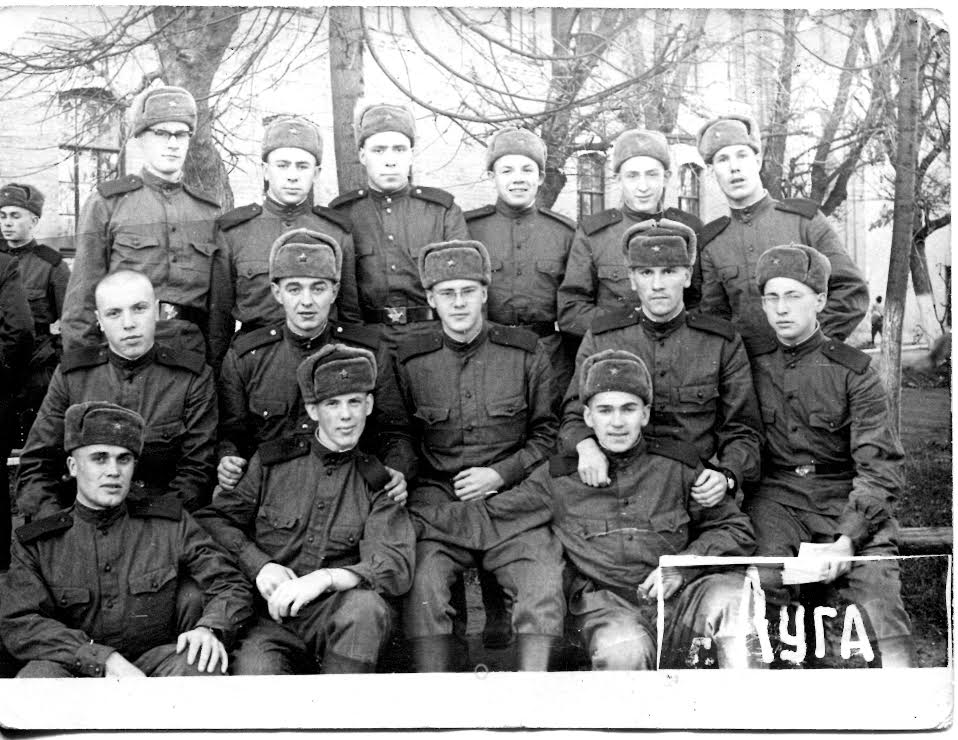
“Recently, the general“ hobby ”has gone in the units,” Vladimir Alekseev continues, “first they beat a person, and then, in order to hide traces of bullying, they throw it out of the window, allegedly he did it. Last year, a soldier was put in a nightstand in Kamenka and dropped from the third floor. A couple of weeks ago, the parents came from Luga - their son also fell from the third floor, received a compression fracture of the spine, supposedly he jumped out, but I did not believe it: they forced them. Yes, in some places in the army they created better conditions, showers set up, places where the footcloths can be washed, but violence and humiliation did not obsolete. The state needs cannon fodder so that a person goes without hesitation where he was sent, but they gave the command to shoot - shooting. Look, here in Syria there was a case with a contractor - he only concluded a contract, and suddenly the Ministry of Defense declares that he hanged himself, and a lot of hematomas on it.
Vladimir Alekseev does not build illusions that "soldiers' mothers" are able to cope with this alone - especially considering that for a year they were on the lists of foreign agents and that the financial situation of the organization is very difficult. Everyone should act in this direction - both the state and society. In the meantime, Vladimir Nikolaevich grins, "the largest patriots are mothers who still continue to give birth."
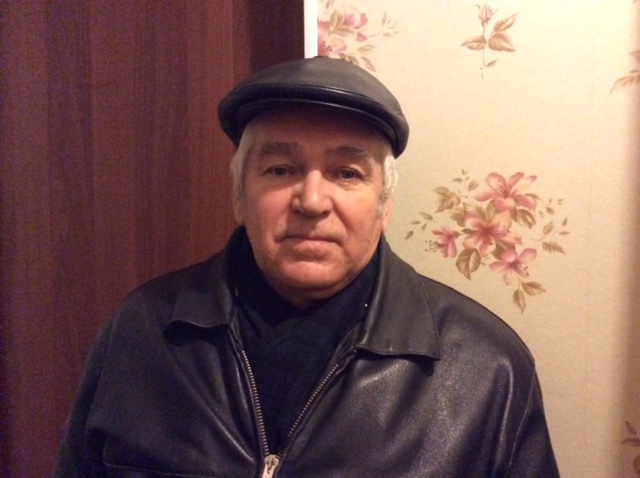
Vladimir Alekseev is 72 years old. Once he became a human rights activist during protection against army arbitrariness of his son, now protects the rights of his grandson Nikolai to an alternative civil service. His statement was not considered on time, and then refused without explanation, the courts will now be coming. It helps not only to the grandson, but also to other "alternatives", for example, Kostya Petrov from Jehovah's Witnesses, whose statement refused exactly the same. Помогает не только молодым людям, приходящим в организацию, но всем, кто оказывается рядом.
– У нас в округе, в садоводстве нашем, только двое пошли служить, один вроде нормально служит, другого пришлось комиссовать через полгода с "опущенными" почками. В чем дело – непонятно, то ли тяжести поднял, то ли застудил, то ли избили.
Просто так забрать беглеца не удастся, все будет только по закону
По словам Владимира Алексеева, ему часто приходится принимать звонки от родителей, чьи сыновья в армии заболели и не получают нормальной медицинской помощи. А также встречаться с молодыми людьми – сыновьями тех, кому "Солдатские матери" помогли 25 лет назад. Или с командирами, которые приезжают за своими сбежавшими солдатами и хотят вернуть их в часть, где будет легче надавить на них и заставить отказаться от своих заявлений, поданных в прокуратуру. У Владимира Николаевича всегда хорошо получается в таких случаях объяснять, что просто так забрать беглеца не удастся, что все будет только по закону и что договориться с "Солдатскими матерями" не получится.
За эти годы организация очень изменилась, в ней появились профессиональные юристы и психологи, которые оказывают людям квалифицированную помощь. Специальных знаний у Владимира Алексеева нет, но и сегодня он продолжает передавать свой опыт тем, кто пострадал в армии от пыток, убежал от унижений и издевательств.
А еще Владимир Николаевич понял, что сейчас правозащитники продвигаются от одного конкретного дела к другому, от проблемы к проблеме, а пора бы уже заняться предупреждением этих проблем – лечить не симптомы, а причину болезни. И что до этого снова предстоит долгий путь – быть может, еще более долгий, чем путь от помощи самому себе до помощи ближним.