
Translated material
Give a grove of the ruble!
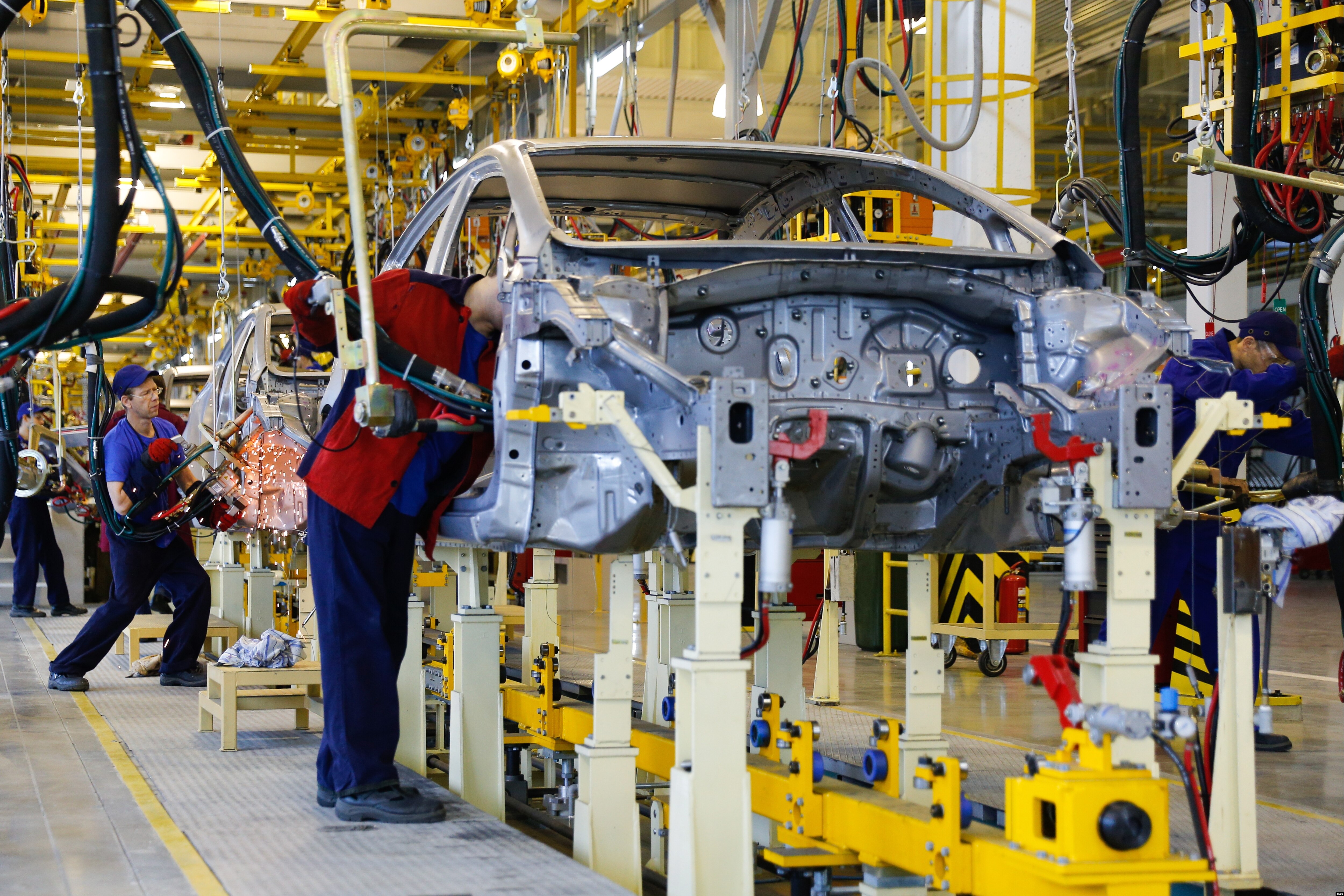
In Russian industry - spring exacerbation of optimism. Why would it?
Experts of the Yegor Gaidar Institute of Economic Policy in Moscow, regularly calculating the so-called “industrial optimism index”, noted a sharp increase in March, although in February this index was at a 6-year minimum. Special surveys of industrial enterprises in Russia revealed not only a sharp increase in their expectations in terms of production volumes in the coming months or demand for their products. Even more amazing in the current conditions of the decline in this demand are the forecasts of the enterprises themselves to expand the personnel they need .
“Industrial Optimism Index”, regularly calculated at the Gaidar Institute for enterprises of Russian industry for more than 10 years, has constantly declined in recent months, having reached an absolute minimum in February from the end of 2009. And suddenly in March he rose sharply, which became unexpected for the experts themselves.
What can be connected with such a sharp change in the enterprises of their prospects for the near future, says Sergey Tsukhlo , head of the Laboratory of Conjunctural Polls of the Institute of Economic Policy named after Yegor Gaidar:
- I think the enterprises saw that the main indicator for the Russian economy is the national currency , showed signs of strengthening. And since, according to their estimates, strengthening the ruble is necessary for the growth of domestic demand for their products, and for the growth of investments, and to reduce costs, they believe that this strengthening can give a chance to revive industrial production. Nobody saw no other factors in late February - early March. We saw only the strengthening of the ruble following the increase in oil prices.
The results of your polls show that enterprises suddenly spoke with might and main about plans to expand their own output in the coming months. This is all the more surprising in conditions when no signs of the restoration of demand for their products in the country are visible. How do you explain such a phenomenon? Maybe the enterprises see something that is not visible to others?
- No, I think they see the same as everyone else see, since the ruble devaluation, starting from December 2014, reduced demand for Russian products. All purchasing activity - the population, and enterprises, and the state - has sharply declined. Since ruble income fell, in the conditions of “failure” import substitution, all Russian customers have to pay more rubles for that products that cannot be replaced by Russian analogues. And now, when the ruble began to strengthen, they, respectively, have more rubles for the purchase of Russian products. For the last 25 years of Russian economic reforms, this kind of change is a sign of a certain revival of the economy, increasing expenses and enterprises, and the state, and the population for the purchase of goods, services and investments.
The state of the Russian economy depends on the ruble exchange rate at all as the economic theory teaches: that the weakening of the national currency leads to the revival of internal production. Alas, we do not observe such a revival.
You regularly monitor the processes of import substitution in Russian industry and talk about its “failure”. Last year, you noted a reduction in plans for its further expansion by enterprises, that is, import substitution, in fact, was more and more shifted towards imports. However, by the end of 2015, against the backdrop of the next “wave” of the ruble devaluation , the enterprises measured their plans for new procurement on imports. What has changed in this part now? This is all the more interesting against the background of the dynamics of the ruble in recent months. Recall that during the period from mid -December, he first fell into the dollar by 20%, and then gradually played all these losses and now returned to the levels of the beginning of December ...
- We once again asked the enterprises the question, what, in their opinion, interferes with import substitution? And, unfortunately, the enterprises reported that the main problem of import substitution for Russian industrial enterprises that enter the markets of machinery and equipment, raw materials and materials have now become even more rigid and more mass. This is a banal absence of Russian analogues . And if in January or August 2015 62% of enterprises were informed about this problem, then, according to the latest data, 67% is already faced with it. In second place is the quality of Russian analogues. This prevents import substitution by 42% of industrial enterprises. And in such a situation, it seems to be preferable for them to strengthen the ruble. It would allow them without a catastrophic growth of costs to still buy the import that cannot be replaced by Russian counterparts. Enterprises directly told us about this in December 2015, when we asked what change, in their opinion, would be the most preferable to them? In all cases, enterprises believe - after a whole year of devaluation that they need to strengthen the ruble .
It is unlikely that the enterprises will welcome inflationary incentives for the economy. Other measures are more relevant for them.
In general, according to your last estimates, can we talk about changes in the expectations of enterprises in terms of restoring demand for their products in the country? Their own current forecasts were much more optimistic in this part than a month ago, when, on the contrary, they were full of pessimism ...
- Yes, that is so. It is quite possible to say that enterprises hope for reviving demand for their products in the coming months. And again, in my opinion, this is due only to the fact that the ruble is strengthened. And with the expectations that against this background, all potential buyers of Russian industrial products will buy it more actively.
Back in February, enterprises very negatively evaluated the factor of stocks of finished products in their own warehouses - in the context of the fallen demand, they rapidly grew, which is natural. And suddenly - a sharp improvement in these assessments in March! .. Maybe they managed to sell part of these reserves? Or is it only about the expectations of enterprises that can change again?
- I think this is connected, first of all, of course, with a fundamental change in their expectations in terms of demand. And, as a result, a revision of assessments of stocks of finished products. At the same time, the physical volumes of accumulated reserves themselves could not change in March, compared with the levels of February. But since enterprises expect the growth of demand for their products, they considered it possible that even these reserves may not be enough for them. For this reason, they also reviewed their previous reserves, and production plans, including to replenish those very reserves of finished products. Improving the entire set of these indicators, which we track monthly, suggests that the industry is clearly positive for the coming months and in terms of demand for its products, and in terms of production at its enterprises.
Enterprises are enough managers, accountants or bosses of all levels, but qualified workers who once produced Soviet vocational schools will clearly not be enough.
The last forecasts of the enterprises themselves regarding the plans for expanding the staff look even more amazing. Just a month or two ago, almost 80% of Russian industrial enterprises, according to your estimates, determined the then number of own employees as “sufficient in connection with the expected changes in demand”. Which was very consistent with the decline of this very demand in the country. And suddenly - so sharply changed forecasts in March. What, according to your ideas, can the current optimism of enterprises in this part be based on, that is, in terms of labor market?
- If we talk about the labor market, then even in the crisis of 2015 there was no crisis growth of unemployment in Russia. Which seems to be very pleased with the ministries of economic development and social development. And the enterprises, since in March they revised their own forecasts of future demand, realized that those employees that they had in January-February would already be enough to ensure the growth of production predicted by them. For this reason, they, apparently, decide to recruit new workers. Or, at least, to abandon recent practice, when they did not interfere with the dismissal of existing ones. I think that this is again due to the expectations of the growth of demand for their products in the next 2-3 months, at least. What will happen next, in the middle of the year or in the second half of the year, is difficult to predict. Since everyone again realized that the demand for Russian products and the state of the Russian economy as a whole depend on the ruble exchange rate not at all the way the economic theory teaches: that the weakening of the national currency leads to the revival of internal production. Alas, we do not observe such a revival. In the best case, we do not see the same sharp crisis decline as in 2008-2009. And the enterprises realized that it was better for them to recruit workers, first of all, qualified workers who are deficit ... They have enough managers, accountants or supervisors of all levels, but qualified workers who once released Soviet vocational schools will clearly be enough.
The main problem of import substitution for Russian industrial enterprises has now become even more stringent and more mass - the banal absence of Russian analogues.
The government now argues a lot about various forms of expanding financial stimulation of economic growth in the country at the expense of the state. On the one hand, there are arguments that, they say, other sources are not yet visible. On the other hand, there are a lot of fears in the inevitable acceleration of inflation in this case. And this, in turn, will destroy any production plans - at least six months, at least two years in advance ... In this context - how do enterprises evaluate the potential of financial incentives by the state in the current situation? Or do they have their own priorities regarding what the state’s anti -crisis measures are called?
- We can indirectly judge this by what anti -crisis measures they realize today themselves ... And the enterprises are primarily busy with the fact that they reduce their own costs, look for more profitable suppliers, due to which they try to restrain their own prices. And therefore, I think they are unlikely to welcome the inflationary incentives for the economy. Other measures are more relevant for them. In 2016, they primarily talked about the need to reduce the tax burden. What we, unfortunately, did not see during 2015 - rather, reverse processes were observed. And the enterprises say about the strengthening of the ruble, which is fully confirmed by our polls - both last year and 2016.