
Translated material
The fun of the sad will cook
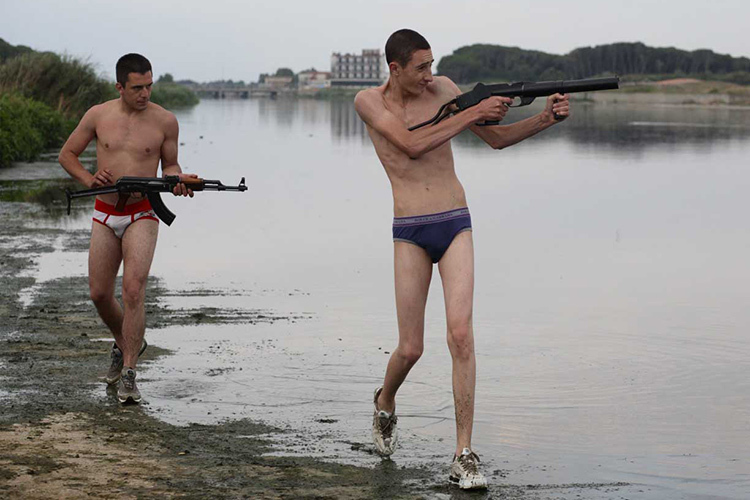
Today in Moscow (and then-in St. Petersburg and Novosibirsk ) the festival of new Italian cinema Nice begins. Among the array of folk comedies in the festival program there is a large arthaus block - a retrospective of Matteo Garron . A separate bonus to it can be considered the chamber drama "Chlorine", designed in the style of new serious realism.
Retrospective Matteo Garron
The dwarf Peppino, a skilled stuffed man, fell in love with the beautiful Valerio and invited him to become his apprentice. Jeweler Don Wittorio promised to take young Sonya as a wife if she stops eating. Lyuchano's fishman went to Rome to the pilgrimage, but escaped to become famous, and instead only embodied his fate for the old proverb: woe to the one who puts a penalty for himself at his own expense.
Filmography of Matteo Garron seems to be a colorful mixture: two chamber stories about the oddities of love (“taxidermist” and “first love”), a large-scale fresco from the life of the Neapolitan Mafia (Gomorrara ”), the tragicomedy of reality show in modern Italy (“ reality ”) and the baroque film adaptation of the collection of non-appropriate fairy tales Fairy tales ”, in the Russian rental -“ terrible fairy tales ”). Yes, and what could be in common between the story about the king, who raised a flea the size of a cow, and a leisurely narrative about the role of the mafia in the daily life of modern Naples. Relatively early paintings seem too restrained and chamber in comparison with late canvases, where everything is entirely a wide panorama and multi -figure compositions.
However, all this ostentatious motley is deceiving. Almost every picture of Garron speaks of things very similar and very sad. His world is a world in which most people chases illusions, and mutual love is impossible. Already in the early films there are enough both. Liliput Peppino from the “taxidermist” is hopelessly in love with the waiter Valerio. This is not even about an erotic attraction, but about the desire to just be with a loved one. Alas, all that remains for him is to be content with the appearance of friendship, not the last role in which large cash payments play. Sonya from “First Love” experiences feelings for Vittorio, but her feeling is as pointless as Peppino's love. Vittorio is obsessed with the desire to remake her body, to fly out of Sonya something new.
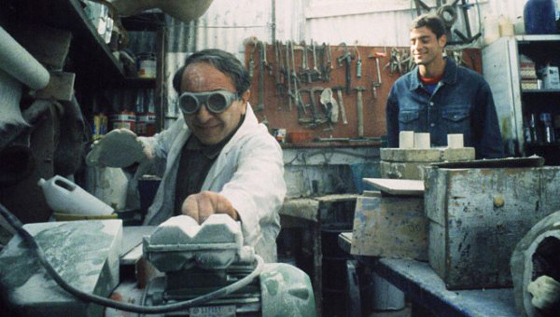 © Nice Frame from the movie "Taxidermist"
“Gomorrara” may seem with a completely different, political film, a journalistic statement-not without reason the film ends with the credits telling about the size of the crimes of the Neapolitan Mafia. However, Garron leads a double game in the picture. The actions of the mafia are dissolved in everyday life, the viewer will hardly find in the picture the usual romantic fleur, which always accompanies stories about organized crime (from the “godfather” to “cops”), his place is occupied by work. The mafia is banal: This is what allows her to penetrate all spheres of life. But this banality is not obvious to many heroes of the picture. Young guys from industrial suburbs seek to become criminals, copying the heroes of classic gangster films. The clash of these fantasies with reality cannot end in anything good. The desire to penetrate the world of serious men with pistols (which actually turn out to be half -dead unshaven types in sebaceous T -shirts dancing to bad music) is very expensive.
Any reckless desire for glory is expensive. Luciano from Reality is obsessed with the idea of becoming a member of the popular reality show. The fixation of everyday Neapolitan life (some of the actors migrated to the “reality” from “Gomorrah”) slowly gives way to such notes of a madman. It begins to seem to the hero that he is surrounded by sub -observers, who should verify the veracity of what he said during the casting. And now his crazy dream turns into a barrier separating Luciano from family and friends.
However, the Italian everyday life of “reality” is quite crazy and without reality shows agents. The film begins with the passage of a luxurious carriage, taking the groom and the bride for a richly furnished wedding. Detail in the spirit of the film "Bitter"; However, she portends “terrible fairy tales” with all their princesses who want to get married and younger old women. The film adaptation of three stories from the first European fairy -tale collection, “Tales of Tales” by Jambattist Bazile, the picture of Garron is significantly different from the original. All accents are shifted. The ridicule of human extravagance (Basile in his collection laughed at people who strive to appear, and not to be) the impossibility of love is added again. The characters of the film receive motivations that the heroes of the Italian fairy tale did not have. A stupid old woman, who wants to become beautiful by any means, turns out to be a sad woman who was bored with her sister. Orc from the forest is really in love with the princess. Queen-mother from a fairy tale about two wonderful babies, Basil calmly remained somewhere on the sidelines of the plot, goes to a crime, if only to find love to his son.
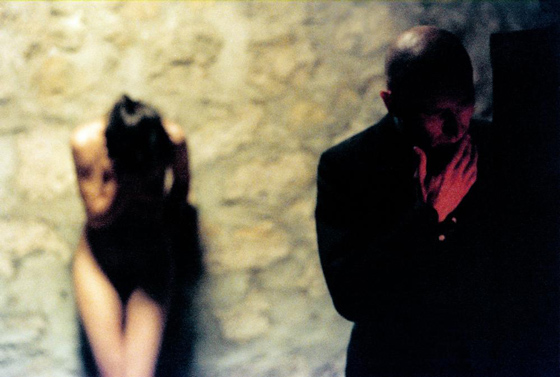 © Nice Frame from the film "First Love"
Garron sacrifices many fabulous details, mercilessly removing the speakers of the doe, magic myrteous bushes and wonderful brothers, capable of spitting out the whole sea, killing extra characters with a cold hand and bringing the conflict to the limit. He often sacrifices even irony, which played in the fundamental principle of almost the main role.
As a result, his princes and princesses are not much different from the sad Peppino and the unfortunate Sonya. What could become fun for the cook (such is the subtitle of the book Bazile), brutally loses its fabulous halo and turns into reality.
"Chloro" ("Cloro")
Director Lamberto Sanfelich
A seventeen -year -old girl with a rare name by Jennifer (mother was a fan of the series "Dallas") is engaged in synchronized swimming. But mom dies, and Jenny leaves the warm Ostia to the north, to the mountains - to the small house of the uncle, where you can’t use the bathroom. Jenny has a sick father (a mixture of depression and insanity) and a brother who goes to a younger school. Jenny independently writes him to study with a strict director and goes to the work of the maid at the local hotel. The only outlet for this time in Jenny's life will be a pool in the basement of the hotel, where she will secretly train at night. Chlocation is not only a disinfector for plumbing, which is used by cleaners at the hotel, but also the chlorinated water of the pool.
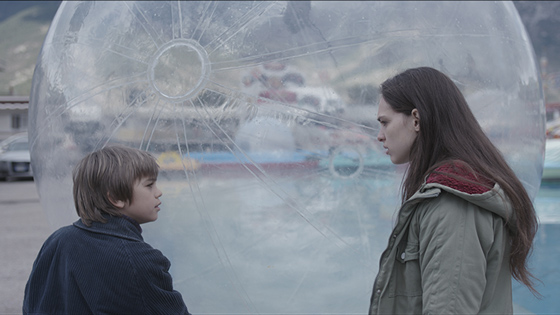 © Nice Frame from the movie "Chlorine"
The debut of Lamberto Sanfelich entered the program of the Berlin Film Festival, and this is really quite strong work - largely thanks to the operator Michel Paradisi, who beautifully removes mountain landscapes, greens, symmetrical water exercises and actress Sarah Serayokko (Jenny), with a movieogenicity that could envy an Andzhenya Jolie.
The drama about the growing up of a girl, on whose fragile shoulders, a burden of responsibility for a family suddenly fell, was shot in the best traditions of European chamber film realism, starting with a conditionally new Romanian wave and, of course, Alichi Rorvacher and ending with Ruben Silund and Jessica Hauser. True, Sanfelich has completely no caustic irony inherent in the latter directors and a magical dimension characteristic of Rorvacher. While the Paradisie camera in love in love demonstrates the uniform outfits of Serayokko (leggings, hoodies and scarves), the director is trying to look behind the facade of sports endurance: what is hidden behind stubborn runs, night training in the pool and a fleeting novel with a hotel guard, Serb Ivan? The desire to become a champion? Self -realization? Fleet from cruel and dull reality? The desire to free yourself from family obligations? Probably all at once. Sassensa also adds the fact that Jenny all the time has to hide her father’s incapacity from the school director, otherwise she and her brother will be immediately stolen in the boarding school. But the sad “chlorine” is full of peculiar peace, comfort and unshakable faith in a happy outcome: despite all the hardships, we will win - and no matter what. Probably, this is exactly what life seems to be seventeen.
Subscriptions to the festival of new Italian cinema for readers Colta.ru - here