
Translated material
SK qualified violations during the privatization of Yukos under three articles of the Criminal Code
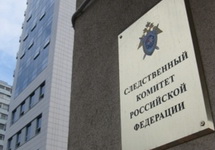
The Investigative Committee qualified violations committed during the privatization of Yukos, under three articles of the Criminal Code, including as causing property damage and abuse of official powers. According to Kommersant, this became known from the complaint of spokesman Mikhail Khodorkovsky Olga Pispanen, who was in the case as a witness.
At the end of March, the UK reported already identified violations during the privatization of the oil company. According to the department, to participate in the investment competition and the collateral auction, the Khodorkovsky team presented the Laguna CJSC and CJSC Reagent, claiming that these companies are independent legal entities.
The “Laguna” won the competition and the auction, but the payment for shares, according to investigators, was made at the expense of the Menatep bank, since “Laguna” did not have their money. At the same time, Menatepa was not returned to the “Menatep”, which became one of the reasons for his bankruptcy.
In turn, Mikhail Khodorkovsky, having acquired Yukos shares at a low cost, promised to invest 359 million dollars of investment funds in the development of the oil company. However, this, according to the SK, was not done. According to the investigation, the shares were received by Khodorkovsky "free of charge, for other people's money, which means they were stolen." In turn, offshores were used to withdraw shares from Russia, funds were not invested in Yukos, and therefore, their rights as investors were not violated, according to the UK.
The actions of the "participants in the criminal group" were qualified as causing property damage (Article 315 of the Criminal Code), and officials who "did not stop violations in the course of the privatization of the oil company in time," as abuse of authority (Article 285 of the Criminal Code). In addition, the materials of the new investigation contains Art. 315 of the Criminal Code (failure to fulfill the court decision or other judicial act).
At the end of March, Khodorkovsky stated that Yukos was acquired in accordance with the laws in 1996 in Russia. According to him, he does not consider the purchase of Yukos or the subsequent departure of the company by order of Vladimir Putin. “But I bought, like all the others, according to the then laws, and I took it away from Putin’s friends, killing Aleksanyan’s prison and breaking the fate of dozens of people,” the ex -head of Yukos wrote.
Prior to this, the official representative of the IC Vladimir Markin said that Khodorkovsky did not pay a penny for the purchase of Yukos shares , and the Investigative Committee will soon be ready to prove it. "This is the case when" well, they still know. "But they can’t prove. This is the case when everyone knew, investigators worked in this direction and are already close to the evidence that this is so. We already have certain evidence in the form of documents," he said.
In December 2015, the Investigative Committee announced the verification of the legality of the acquisition of Yukos shares by investors who filed claims for the recovery of $ 50 billion from Russia. Later, as part of this case, searches in the apartments of Open Russia employees were held in Moscow.
On December 17, it became known that the Paris Court of Appeal rejected the request of Russia to suspend compulsory execution in France by the decisions of the Hague International Arbitration to recover the lawsuit of former Yukos shareholders. The GML GML GBRALLTAR Law Company, who was called the court’s decision with its victory, which will continue to pay a penalty to property belonging to Russia.
In July 2014, the arbitration court in the Hague recovered about 50 billion dollars from Russia in the lawsuit of the former shareholders of the Yukos. Since Russia did not start paying to the plaintiffs, in June 2015, the arrests of Russian property began in various Western countries. So, Russia's assets were arrested in France and Belgium . The shareholders also filed applications for executive measures in a lawsuit in the courts of the United States, Great Britain and Germany , since in these countries, unlike France and Belgium, property cannot be arrested without sanction.