
Translated material
Silovik outside the clans
Sergey Ivanov from the successor Putin turned into a clerk
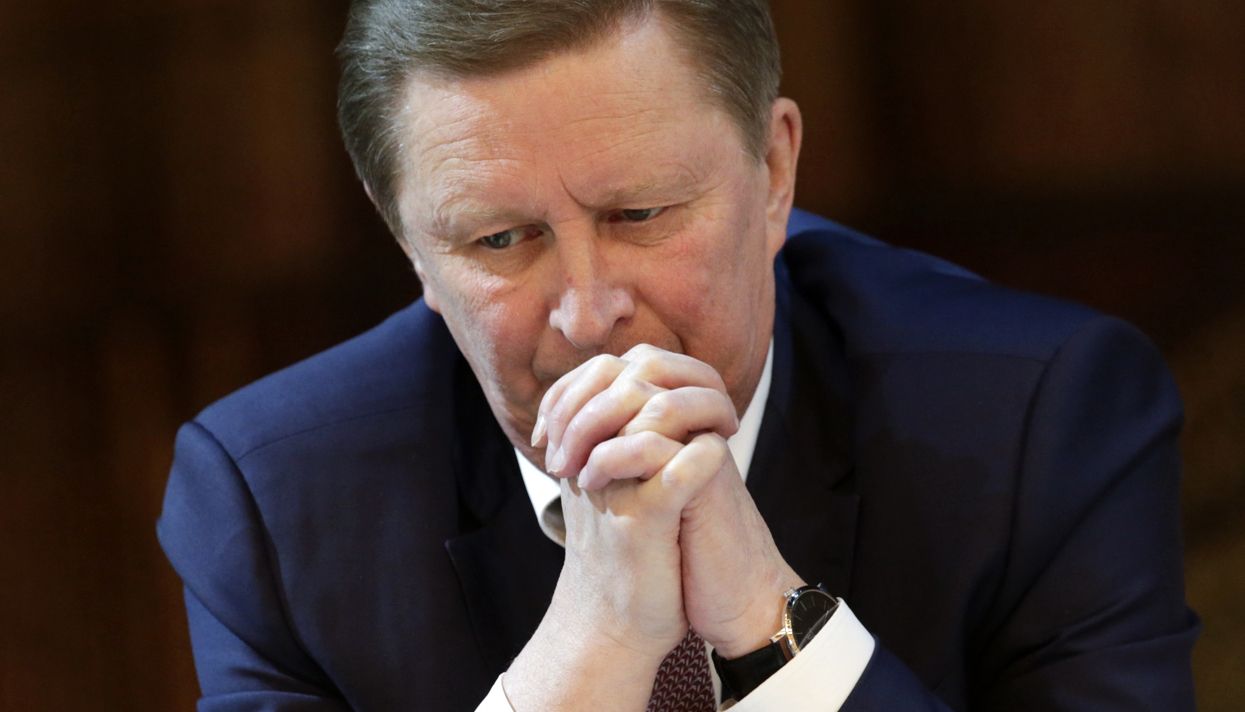
On Friday, August 12, Russian President Vladimir Putin dismissed the head of his administration Sergei Ivanov - the former deputy Ivanov Anton Vaino was appointed in his place. Apparently, this ended the big political career of a man who was the first civilian at the head of the Ministry of Defense, and in 2007 he seriously claimed to change Putin as president of Russia. The special correspondent of Medusa Ilya Zhegulev tried to figure out how and why Ivanov’s career did not develop: the official refused to adjoin any groups in power, and at some point completely lost interest in work.
In the summer of 2007, Sergei Ivanov, then working as the first deputy prime minister, was considered the main favorite for the post of next president of Russia. In June, July and August, polls from the Levada Center showed that, if the elections at that moment had been voted for, more people would vote for his alleged competitor, Deputy Prime Minister Dmitry Medvedev.
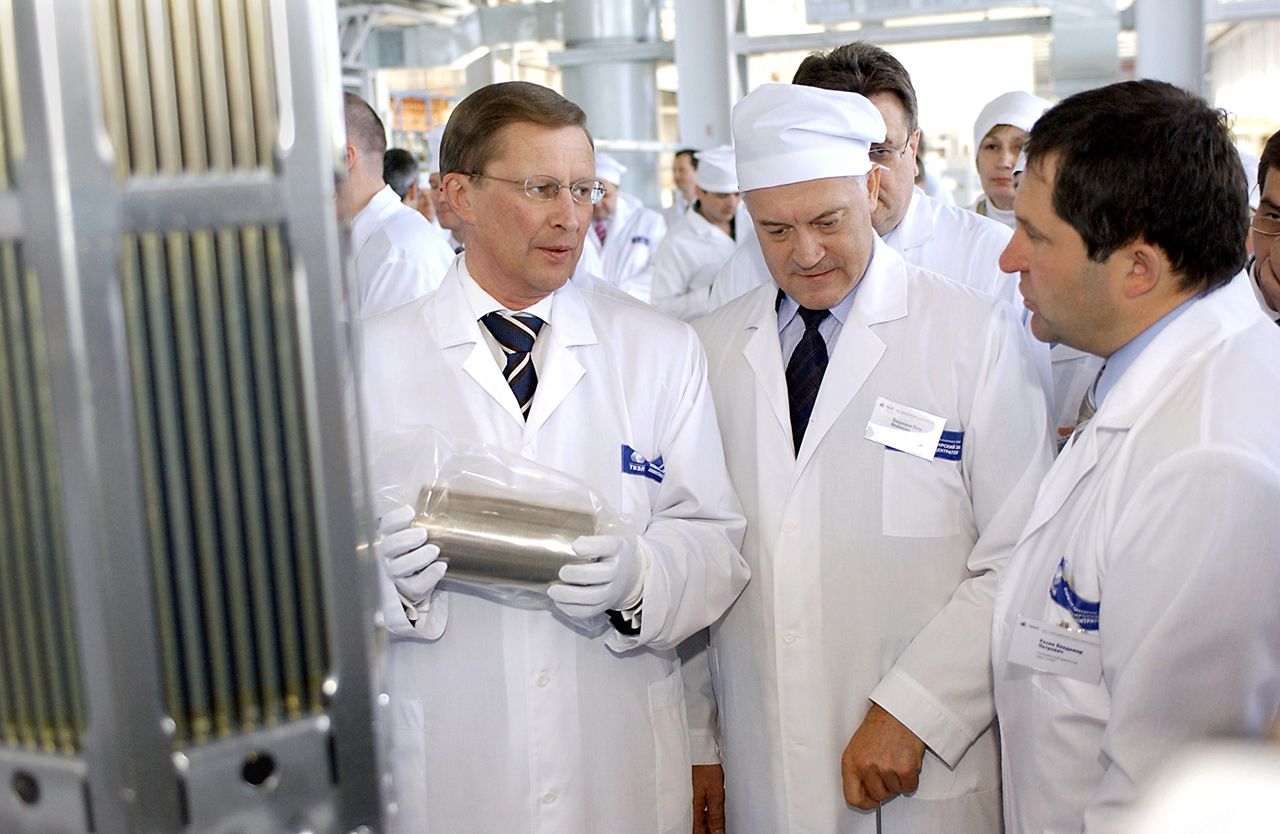
In the early 2000s, he became the first civilian Minister of Defense in the history of the country, Ivanov seemed confident in himself: he was at ease, in a western jacket, attended industrial production and held meetings on the distribution of billions of budgets. It seemed that competition with Medvedev was real and that Ivanov wins her. However, according to the source of Medusa, who worked in the presidential administration, in fact, Putin never considered Ivanov seriously: “It was a game. The only thing that interests Putin was that Medvedev would not be too obvious as a candidate. ”
At the same time, Ivanov was familiar with the then and current president of Russia much longer than Medvedev. For the first time they met when Putin was 23 years old, in the Leningrad department of the KGB. Ivanov later served in intelligence (in particular, in Finland and Kenya); Putin was engaged in work, which was considered less elitist in power structures - first within the country, and then in a friendly GDR.
Having become the head of the Federal Security Service in 1998, Putin remembered the old acquaintance (at that time he was an employee of the foreign intelligence service)-and pulled him to Moscow. At first, Ivanov worked as his deputy in the FSB, then, when Putin went to increase, he took the post of secretary of the Security Council. In the book “From the First Person”, Putin said that Ivanov is one of his closest associates, and mentioned that he had “a feeling of elbow” with him (as well as with Medvedev and current Secretary of the Council of People's Commissars of the Council of People's Commissars.
In 2001, Ivanov headed the Ministry of Defense and led the department for six years-with varying success. According to the source of Medusa, the widely advertised military reform was practically failed; Other experts evaluated it somewhat better - but mentioned that the changes in the army in any case were not as radical as at the next minister of Anatoly Serdyukov. Ivanov reduced the service life in the army to a year - however, at the same time he struggled with delay in general and with military departments in universities in particular. Sources in circles close to Ivanov said that he was not very comfortable in a military position; The interlocutor of Medusa also confirmed that the official wanted to "get out" from his post.
In the status of Deputy Prime Minister and fighter for presidential candidate, Ivanov took his winning topics-innovation, industry, space. But he had enough politically weak sides. By and large, Ivanov was outside the clans - he kept aside both from the liberal wing in the power and from the so -called security forces. Despite his past in intelligence, which made up the “power” wing employees of the Presidential Administration Igor Sechin and Viktor Ivanov, as well as the general prosecutor Vladimir Ustinov, the colleague did not like a colleague.
It is generally accepted that it was Ustinov who initiated and contributed to the broad publicity of the “Sychev case”, for which Ivanov was criticized a lot. On the other hand, according to the source of Medusa, Alexei Gromov, who worked as a press secretary of Putin, sincerely believed in the great political future of Ivanov. According to the interlocutor of Medusa, the PR support of the Deputy Prime Minister was the initiative of Gromov, and not Putin, who did not promise Ivanov and never spoke about the possible presidency with him. Gromov, according to the memoirs of the source, personally advised Ivanov on PR; "He put his soul into it."
Analysts wrote a lot about the fact that Putin ultimately made a choice in favor of Medvedev, because he believed that Ivanov would not give him his position. According to WikiLeaks files , Putin did not trust Ivanov very much and wanted to choose a weaker figure for the role of the successor. The interlocutor of Medusa confirms this version: “He burned out then because of this situation. He believed that he was becoming president. And the world is not without good people - and the administration of [the president] was transferred that [surrounded], Ivanov’s portfolios were already divided. ”
Political scientist Gleb Pavlovsky, on the contrary, believes that in the choice of Medvedev “there was no personal point”. Putin “wanted to conduct a progressive experiment, and for him there was a drawback that Ivanov is a general,” Pavlovsky noted in a conversation with Medusa (in the 2000s-one of the main Kremlin political technologists).
As a result, on December 10, 2007, Vladimir Putin supported the candidacy of Dmitry Medvedev in the upcoming presidential election. Sergei Ivanov remained working in the government, where his boss soon became the same Putin, who moved to the post of prime minister.
The circle of duties of Ivanov at this post was rather narrow-he oversaw the issues of the military-industrial complex, while he did not take any participation in the large-scale economic reform of the army, which was started by the new Minister of Defense Anatoly Serdyukov. In essence, Ivanov’s activity in the government was inconspicuous - they again remembered him only in December 2011, when Medvedev appointed him to the head of his administration instead of Sergei Naryshkin in the midst of protest rallies that began after the parliamentary elections. This personnel idea, reports the source of Medusa, belonged to Medvedev personally - the old competitors did not hold evil on each other, and Ivanov seemed more decisive than Naryshkin, who was afraid to call the authorities once again so as not to disturb.
I Ivanov had high hopes - it was necessary to collect the administration that had been collapsing together. Putin, who returned to the president’s chair in May 2012, believed that Ivanov was capable of this. At the same time, Gleb Pavlovsky argues, "it was already impossible to remain a political figure under Putin [at this stage] - it was necessary to turn into a quiet manager."
In addition, Ivanov did not have a relationship with Vyacheslav Volodin, who was appointed deputy Ivanov and who was supposed to oversee the domestic policy in the presidential administration (in particular, deal with the raging protest movement). “The glades were divided: if Volodin was doing something, Ivanov does not climb there,” says the source of Medusa. “However, for the presidential administration, domestic policy is the main thing, and if the leader does not deal with it, it looks rather strange.”
Putin’s hopes for Ivanov’s organizational ability were not justified. “Gradually, all processes began to go around him,” says the interlocutor of Medusa. “The head of the presidential administration has the right to say on some important issue that he is not in the know, but if he is not in the know all the time, they just stop calling him.” According to the source, Putin became clear that Ivanov was not engaged in his job responsibilities and did not want to make decisions, instead, traveling "on some senseless business trips."
“If he sat still and pouting his cheeks, it could still save him,” the source argues. “But he was engaged in abstract things.” Putin defends the Tigers, and Ivanov has his own project ( since the spring of 2011, Ivanov is the chairman of the supervisory board of the Euro -Asian Center for the Study, Preservation and Restoration of Leopard populations - approx. Medusa ). ”
The interlocutors of Medusa say that Ivanov began to treat work when in November 2014 in the United Arab Emirates, his eldest son Alexander, who worked as deputy chairman of Vnesheconombank, died. According to the source of Medusa, close to the presidential administration, children for Ivanov were more important than personal enrichment: “It is difficult to imagine that he was roofing a business, however, he really promoted children.” Sometimes this activity aroused conflicts with colleagues - so, according to the interlocutor of Medusa, actively against the arrival of the youngest son of Ivanov (Sergey), his head German Gref opposed Sberbank; To make Ivanov Jr. to the second person in the company, it took personal intervention of Vladimir Putin.
The political scientist, who worked in the government of the government in the late 2000s, notes that Ivanov himself had long been resigned; This hypothesis has been expressed today by other experts. The interlocutor of Medusa does not confirm this information, but says that in recent months the official has practically stopped going to work.
One of his last political intrigues, according to the source, was the appointment of Irina Yarovaya chairman of the State Duma Committee on Security and Combating Corruption (Ivanov’s lobbying abilities are generally evaluated highly - last year he led the rating of the main lobbyists of Russia, compiled by the “independent newspaper”). According to Gallamov, they resisted Yarova and Volodin, and the secretary of the United Russia General Council Sergey Neverov - but still won Ivanov, who in this intrigue was on the same side with the “power block”.
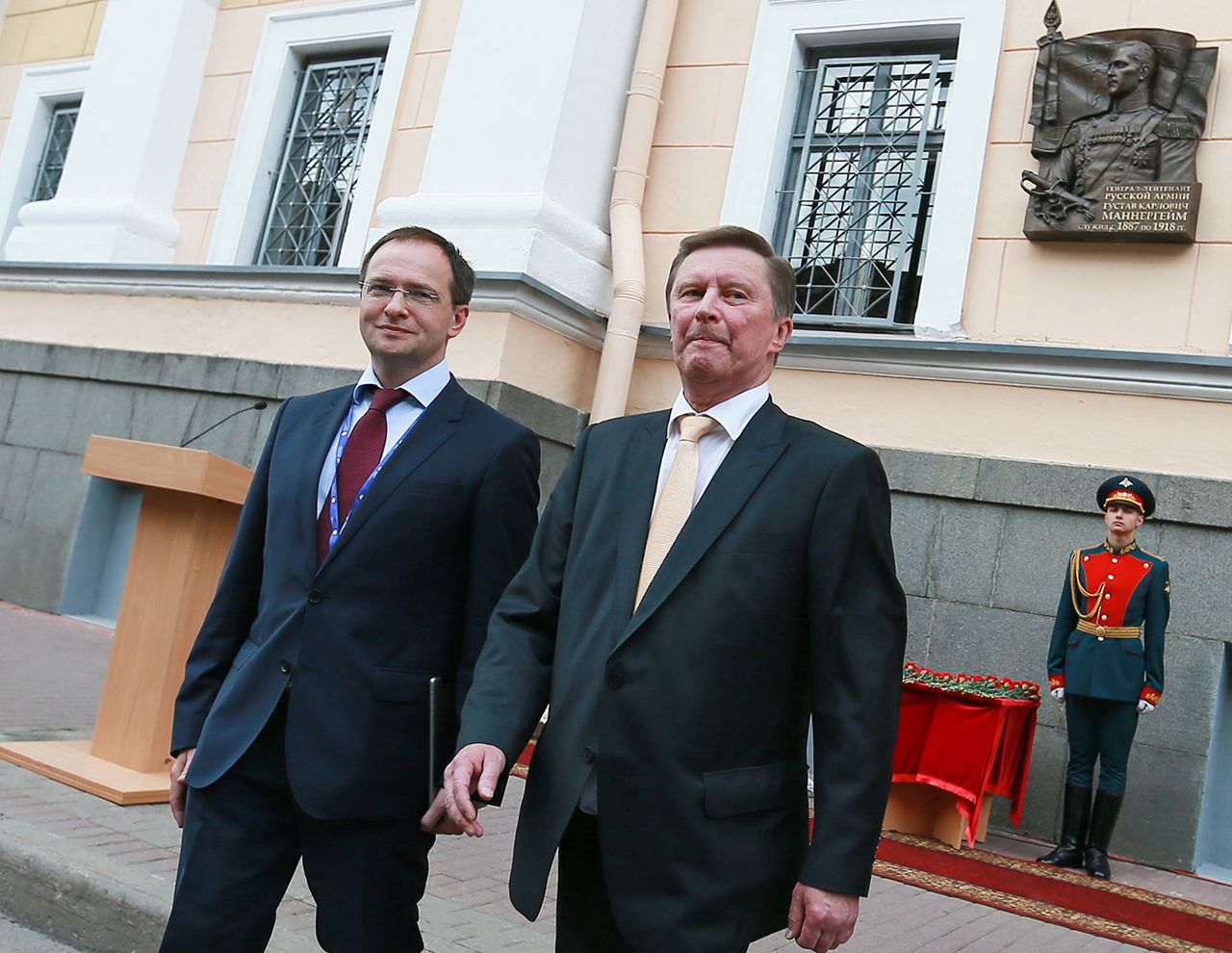
Which served as a specific reason for Ivanov’s resignation is not completely fully. Journalist Konstantin Gaaza believes that Putin’s patience finally overwhelmed the story with an unskilled examination of the Law on Weapons (as a result, Medusa discovered discrepancies between the text of the law adopted by parliament and what the president signed). She was supervised by Ivanov and his predecessor Naryshkin, now working as a speaker of the State Duma. The scandalous installation of Karl Mannerheim’s memorial plaque in St. Petersburg, which was also lobbied by the former head of the AP, also had a scandalous installation of the memorial plaque of Karl Mannerheim, affected the positions. Gleb Pavlovsky believes that Ivanov’s resignation is a sign of the general political weakening of the presidential administration and evidence that "such an institution as the circle of Putin's political friends has ceased to exist."
The new appointment of Ivanov - now he will be a special representative of the president on environmental protection, ecology and transport - this is not just an honorable resignation: the official of the official for business trips has been taken into account, and his reverent attitude towards animals (once at a meeting of the Russian Geographical Society, Ivanov interrupted the speaker , proposing to give the prize to the author of the Leopard photograph of the Leopard).
Anastasia Chernobrovina, adviser to the President of the Russian Geographical Society for Information Policy, says that Ivanov is very tender to ecology. “Our leopards were on the verge of extinction, but Ivanov did a lot for them and always tells about this with a trepidation, with pleasure and great pride,” she says.
Chernobrovina is sure that the appointment of Ivanov is not a decrease, "because the ecology must be devoted a lot of time, and Ivanov is meticulous, and if he takes on something, then thoroughly." The last thing Chernobrovin remembered about Ivanov was a meeting on waste disposal: “This is a serious and very difficult topic on which he makes a very serious emphasis.”
The material was prepared with the participation of Ilya Azar.
Ilya Zhegulev
Moscow