
Translated material
Budget for a year
The government can again prepare the next budget for only one year. This was reported to Vedomosti by officials from three federal departments. The fact is that all problems are visible on the “three -year -old”, and even in 2017 a budget with a deficiency of 3.2% deficiency specified by the Ministry of Finance is almost unrealistic.
In order for the three -year budget to be at least a little realistic, it is necessary to understand whether taxes after 2018 will be changed, what kind of pension system will be in the country - and now the discussion only goes on these topics.
Meanwhile, at least publicly, Prime Minister Dmitry Medvedev spoke to return to the three-year budget. In April, speaking in the Duma, he said: "We must return to three -year planning, this gives us a more clear vision of the prospect."
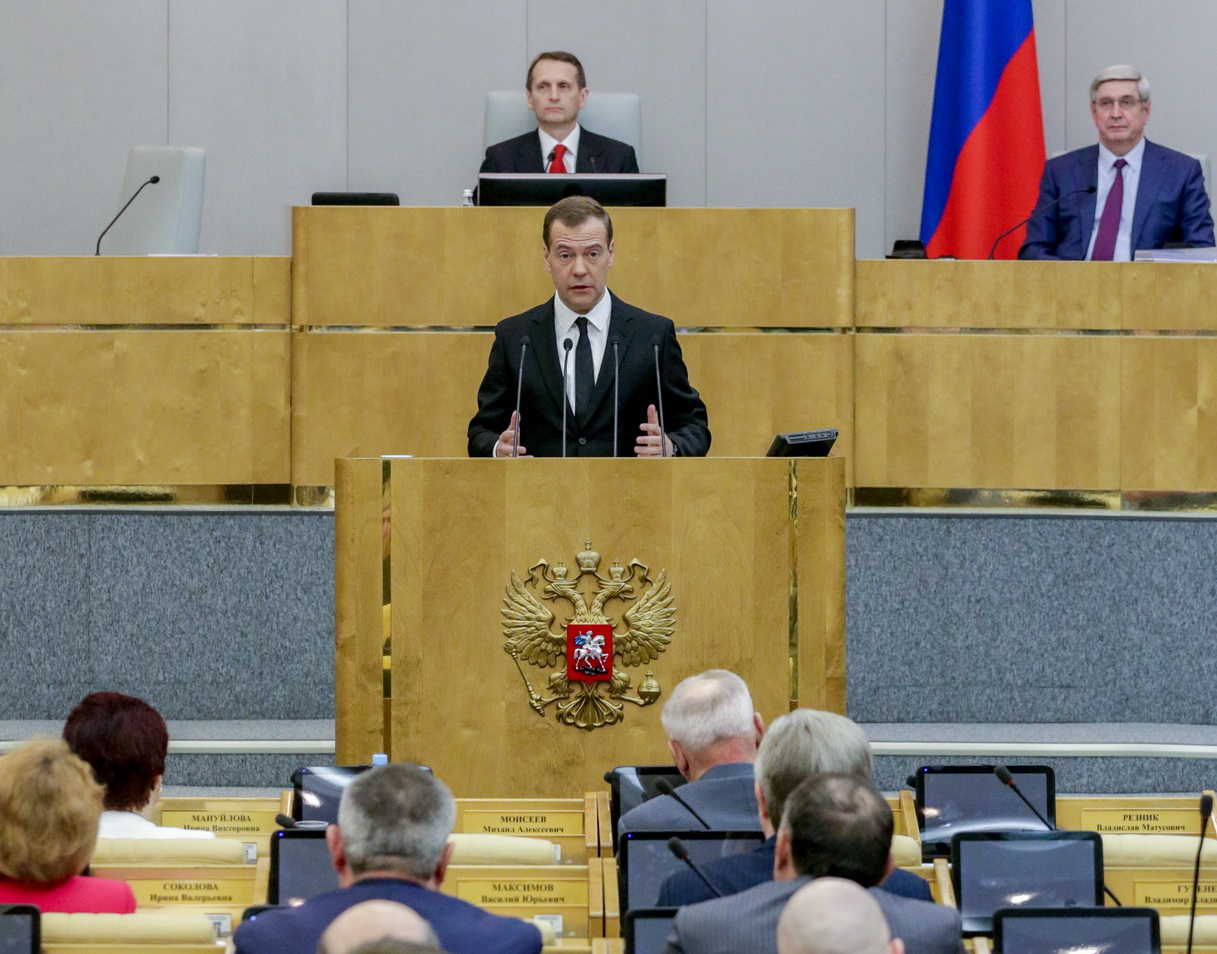 The performance of Dmitry Medvedev in the State Duma. April 2016. Photo: duma.gov.ru
  Natalia Timakova. Photo: government.ru
The Ministry of Finance categorically rejected the very possibility of discussing the idea of refusing a three -year budget. Prime Minister Natalya Timakova also stated that all budget meetings and all documents are prepared for 2017–2019.
Be that as it may, the budget will be extremely problematic. It is expected that in 2017, there may be even less income than in 2016, one of the federal officials told Vedomosti. So even if it is possible to freeze expenses at the current level, the deficit will still increase.
But maintaining costs at the current level is already a very difficult task. So, for example, a one -time payment to pensioners, which should replace indexation, as it turns out, will also result in a penny.
Deputy Prime Minister Olga Golodets said that the funds that the government will spend on payment to Russian pensioners in early 2017 will exceed the amount that would be needed for additional indexation of pensions in the second half of 2016.
“For the pre -indxation of pensions, starting on September 1, in accordance with the law, we needed 137 billion rubles. The one-time payment scheduled for January will require 215 billion rubles, which is higher than previously planned costs for the upcoming period, ”the Deputy Prime Minister said.
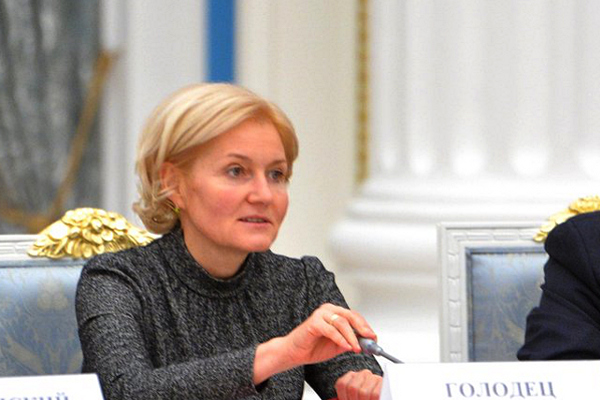 Olga Golodets. Photo: kremlin.ru
According to Golodets, a one -time payment not only completely covers the preyindexation for the mentioned period, but even exceed it. According to the Deputy Prime Minister, the “problem” is that the payment will affect all categories of pensioners, while the prendexplant would only afford payments to non-working pensioners.
At the same time, Golodets did not answer the question why, in this case, the prendexplant was replaced by a one -time payment. She only noted that "it was necessary to find very rather big funds for the budget."
Meanwhile, according to RBC calculations , the imprisonment of pensions in 2016 for the 2015 inflation rate would require about 500 billion rubles (plus indexation expenses in the second half of this year for about 130 billion rubles). Replacing preindexation for one -time payment will allow the authorities to save about 200 billion rubles.
It is expected that in 2017, pensions will be indexed by inflation in the previous year - but it will also be easier to do, since inflation is quickly reduced. This year, the pensions of non -working Russians were increased in the first half of the year by 4%, it was planned to make a decision on dopyindxation according to the results of the country's economic development in the first half of the year.