
Translated material
Hacker Evgeny Nikulin is contained in Prague prison "Pankrats"
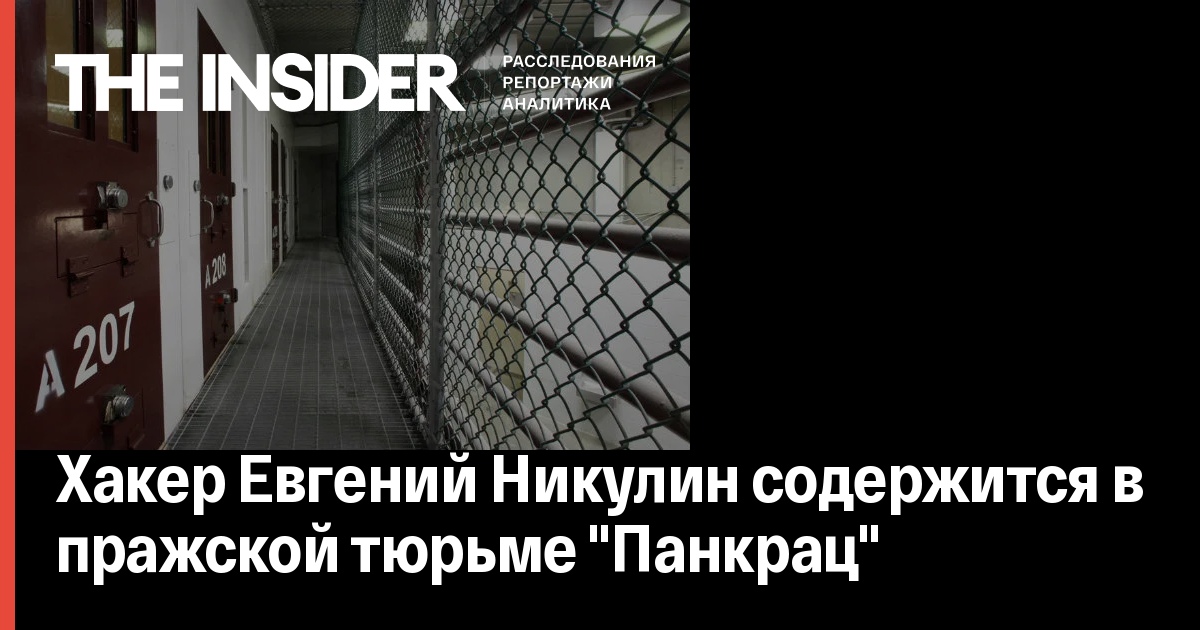
Russian Yevgeny Nikulin, detained in the Czech Republic on suspicion of cyber attacks on American servers, is contained in the Prague prison Pankrats. As TASS reports , a source in Prague announced this.
“Evgeny Nikulin is in preliminary imprisonment in the Pankratz prison. New information in his case may appear in the coming days, ”said the agency’s source.
The Pankratz prison is located in the Prague quarter of the same name. It was built at the end of the X X century. It may contain 858 prisoners.
As The Insider previously found out , Nikulin, perhaps, already had problems with the law in his homeland. A person with similar personal data (that is, with the coincidence of the name and year of birth - and such a person in Moscow only one) was detained in 2009 by employees of the capital's ATS of Koptevo for large fraud.
As follows from the operational summary of the Moscow Central Internal Affairs Directorate of Moscow, “Yevgeny Aleksandrovich Nikulin, fraudulently, having entered confidence, took a password for the Webmoney virtual wallet from Minsk P. Tatyana Aleksandrovna (born in 1989) and withdrew 111,136 thousand rubles from the account”. Nikulin was introduced into the criminal file cabinet of the Main Investigative Department of the Ministry of Internal Affairs in Moscow, but the further fate of the criminal case was unknown, it was not possible to get a comment from the investigator who conducted the detention.
From other sources, it turned out that 10 years ago the same Nikulin lived with his parents and older brother in Moscow on Kantemirovskaya Street and worked in a branch of the 13th Mosgortrans bus park. Then, information about the place of work was not indicated.
The 29-year-old hacker Yevgeny Nikulin was detained in Prague with the support of the FBI employees. According to LinkedIn , a hacker may be involved in hacking this social network. However, the participation of the FBI suggests that Nikulin can also be involved in one of the two Kremlin hacker groups - Fancy Bear or Cozy Bear. The fact of detention under a criminal article can also explain how the hacker was in the service of the Russian authorities.