
Translated material
Fake thaw
Yuri Saprykin about the new series of Channel One "Mysterious Passion"
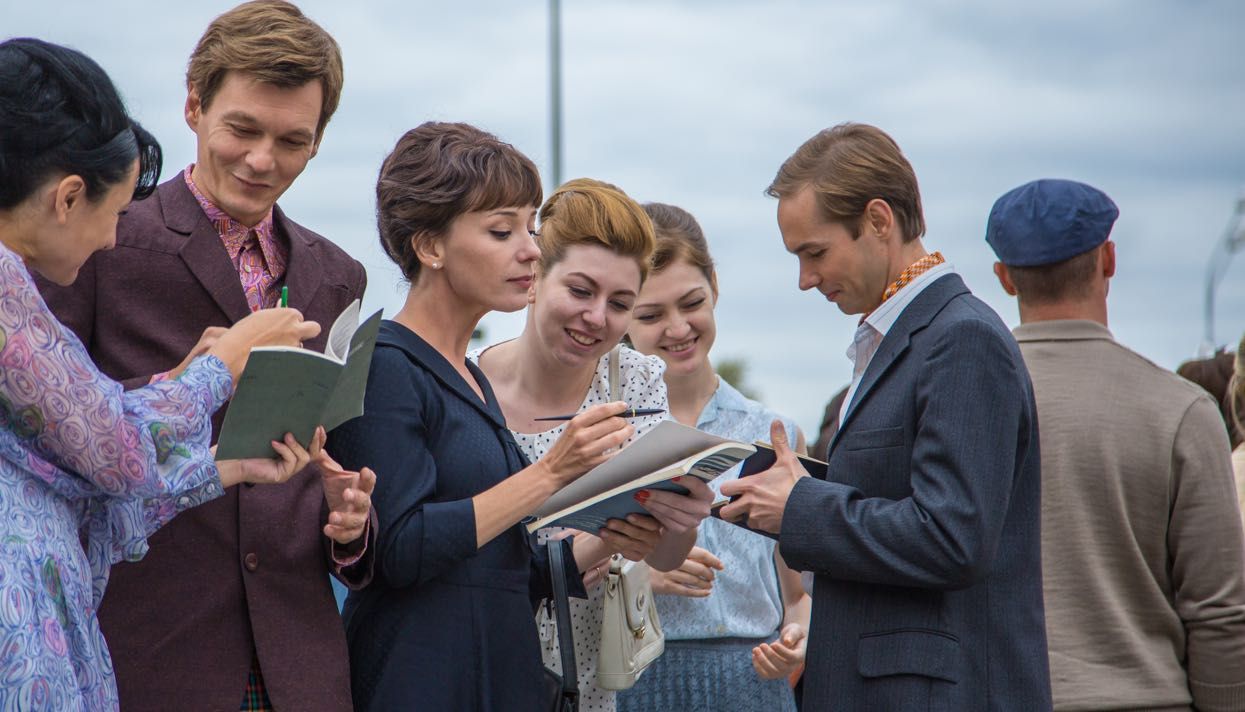
The first channel continues to explore the topic of the 1960s-after the “thaw” and “Faritsa” there was released by Constantine Ernst and Denis Evstigneev the series “The Mysterious Passion” based on the novel by Vasily Aksenov, which acts conditionally disguised sixties like Aksenov himself, Robert Rozhdestvensky, Andrei Vedsensky and Andrey Vedsensky and Andrei Vedsensky and other cultural figures. At the request of Medusa, Yuri Saprykin watched the series and did not find it neither mysterious nor passionate.
The viewer of the series “Mysterious Passion” at least in one respect can survive the same feelings that its characters, they also everywhere searched for signs of a thaw (or its end). Party bosses are in the art of an incomprehensible to the people, writers who criticize the local orders offer to bring from the country, the gloomy types in civilian clothes are watching each hero-and everything is presented as if there is something bad: that such a series, which has not found a place in the airtime grid for more than a year, comes out on the first this fall, and is drawn to see the sign. Not otherwise than methodologists and technocrats decided to hint to the enemies of everything new that their time ended - and did not find a way better than passing on them to them through the series about Voznesensky and Yevtushenko, where they were bred under pseudonymers.
Thanks to the thaw or regardless of it, by all formal signs, “mysterious passion” is really an event: is it a joke, the first big statement in the cinema is not just about the abstract sixties, but about the Late-Soviet-Soviet writers known throughout the country: Voznesensky-Evtushenko-Restain-Akhmadulin and further according to the list; What is called, based on real events. As in the novel by Vasily Aksenov, who was the basis of the script, everyone is encrypted under transparent pseudonyms; Unlike the primary source, the cutting eyes of nicknames, all these Nella Ahho and Kukush Octave, were neatly taken into the background. In general, the main property of the series: if in the Aksenovsky memoirs the memory does not speak so much as it ultimately, mocks, splashes out long-standing grievances and jumps along the line of time in all directions, then in the series all sharp corners are prudently cut, and the events were built in chronology: born-born, he was reduced. The main character is also determined-this is Vaxon-Aksenov (Alexei Morozov), and the main storyline-he loves one, and is married to the other.
The multi -figure Aksen's feuilleton has turned into an autobiography and at the same time melodrama: the esthete and the Aksenov pijon here is mostly dramatically silent, casts a look at the ladies from undergrowth and is expressed by phrases like “I love you, stupid!” (Everything looks as if the name of the series does not mean a quote from Akhmadulina - “To betrayed mysterious passion” - but a completely unambiguous desire, pushing Vaxson into the arms of two women in turn). Attention to difficult female destinies is not the only thing that the “Rossiya” channel is jammed with the products of the channel: a somewhat dusty picture, calm, without unnecessary fanaticism, attitude to details (Mark Avrelov - Nagibin rides the same “Moskvich” as the hero of Tsyganov in the “thaw”), as if composed of Radio Relax FM Radio FM. At the funeral of Pasternak Tushinsky - Yevtushenko (Philip Yankovsky), confidentially gaining friends, tells them: “The purpose of the work of self -giving, not hype, is not success”; In another stage, the daughter pulls the hand of Oktava-Okujava: “Look, dad, the girl is crying!” “The ball flew away,” the poet remarks melancholy. From time to time, the aged Aksenov (Kulagin) appears in the frame with comments of this variety: “The thaw is a symbol of freedom” or “Joseph Brodsky is a poet who was judged for parasitism because he did not work anywhere.”
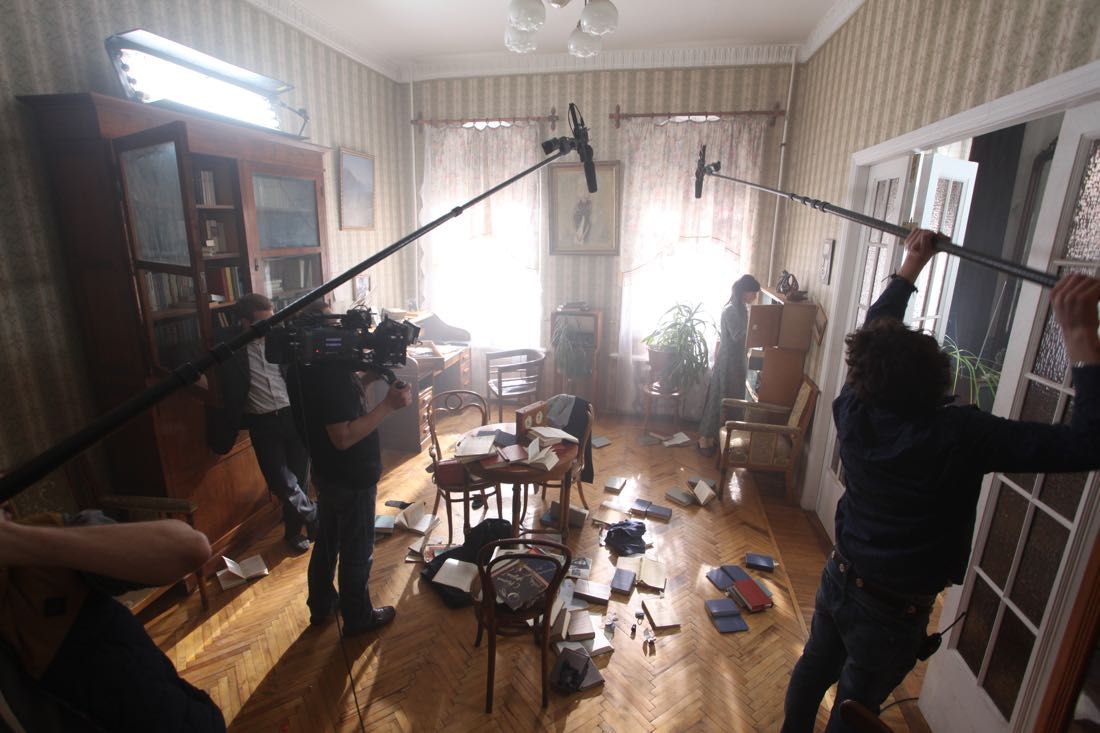
Speaking a textbook banality and sequentially listing events from the school history textbook, the authors of the series demonstrate how to recreate the story without reporting it. In other words, how you can take an amazing time, filled to the top with new ideas and discoveries, with its back in the 60s iconography, with the tradition of his display on the screen-from the Ilyich outpost to the “thaw”, and at least to the series “Once in Rostov”-and tell about it in the aesthetics of the magazine “Caravan of Stories”. The heroes hidden under recognizable pseudonyms are completely deprived of at least some drama and depths-in life you can’t say that they survived the war, and someone sent their parents to the camps. It is not clear what their mismatch with the surrounding reality is, where is delight and where despair came from - in general, rather prosperous young people, letting them in the scenery of Stalinist Moscow.
Strange as it may seem, the young Brodsky (Arthur Besweight) turned out to be better than others - perhaps because the young Brodsky did not shoot the Khutis, and there is nothing to compare the hero with. The most significant thing that can happen to these people is if someone left someone or got away with someone. Sometimes the bosses yell at them, but it is worth pronouncing an angry internal monologue and again see his beloved, as life is getting better. They often pronounce the word "freedom", but it seems that this refers to freedom to go to Koktebel. The main conclusion that can be made from what is happening on the screen is not about how the creative person is imposed on top of non -freedom, but that in any incomprehensible situation, burning about moral discrepancies with the authorities, this person will accept a three -room apartment from it in Kutuzovsky (and this is normal). The purpose of creativity is dedication and Peredelkino cottage.
A lot of complaints can be presented to the last novel by Aksenov - this is a book with a strange story, sometimes balancing on the verge of decency, but there was definitely passion in it. The author has not yet brought all the scores with his characters, did not help, did not love, did not understand the dramas experienced jointly. All this was carried out in the series for brackets - according to the logic of events, in the remaining five episodes, the first processes over the dissidents are also waiting for us, and letters to the leaders, and “tanks go in truth”, but there is no doubt that in the finale everything will take hands, friends. As for the dangerous rhymes with the present, which could lead to seditious thoughts - the author of this text once had a chance to go to the hairdresser the next morning after the execution in Novocherkassk was shown (in the series “Once in Rostov”), and the employees of the institution, having discussed what they saw, came to a consensus: “What a terrible time! And it’s good that it ended. ”
Yuri Saprykin
Moscow