
Translated material
With a step speed
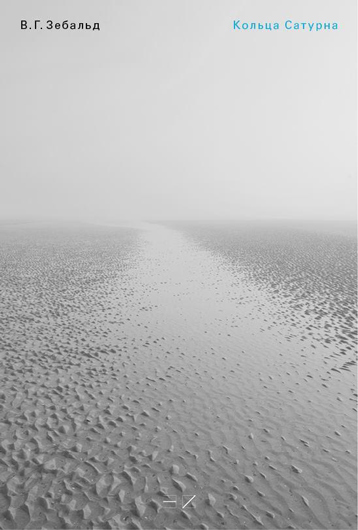
The texts of V.G. Zebalda, through the efforts of the “new publisher” of beginners to live in Russian, a certain reputation has developed a little for a year: they are perceived as something compulsory (“who does not have Zebald, that SUCKS ,” as the publisher Alexander Ivanov remarked ) and at the same time frighteningly licked: Sit down by the window and listen to the noise of great ideas. Contrary to this cloud of Associations, Zebald does not impose itself and does not require itself to correspond, its dimensionality and courtesy make you rather recall the book from the family library, Defo or Swift - authors belonging to an era, which are still able to equally believe in the validity of Providence and the strength of the human mind. This text causes an almost physical feeling of peace, dimensionality, smoothness, his rhythm is commensurate with the reader, it seems to be at home in it. “The Rings of Saturn” is a book about a walking journey, and the narrator’s speech seems to move at the speed of the human step, now and then reducing the move in order to dwell on the next story.
The author, or storyteller, for those who have not yet been in the orbit of Zebald, is important to explain that the text with all his breaks and retreats is built as an endless stream of author’s speech, be a long walk, it could be told from beginning to end - so, the narrator of the “Saturn’s rings” in August 1992 goes on a hiking on the county of Suffolk, as is specified in the first fake - the first fake is specified. "To get rid of the feeling of emptiness that has gripped me." Similar is treated like this: the route of movement runs along colorless plains, heather wastelands, dull gray landscapes. The cities and estates where the author stops has long survived the best times, there is nothing in the tourist sense of the attrague, they are fundamentally unfortunate. This evenness, indistinguishability of space creates a special relationship with time: the smallest little one, and a blade of grass, and a forest, is a trigger here, a tapapolating storyteller in a particular story (with a title or lowercase letter).
The connection can be direct: here is the city, there was once a busy resort, or a fishing fishing, or a chain of patrol towers, now desolation and quiet (in which the story of crafts and towers sounds especially loud). Sometimes a small detail launches a chain of associations, and the story flies along it, as if along the mountain slope: here is a bridge along which a small railway lineup was once walked, and the outlines of the Chinese dragon could be distinguished on the steam locomotive body-this is a sufficient occasion to dwell on the details of the uprising of taipines, opium wars, the reign of the Empress of SI, the history of silkworm in the Chinese-to With an elegant movement to return at the end of the path to a steam locomotive that has long disappeared from the stage. Sometimes the connection of the visible image and the story hiding behind it obeys the strange logic of sleep: “Powerful heap clouds sailed from the west and slowly pulled a gray shadow above the ground. Perhaps this haze reminded me that a few months ago from Istern Daily Press, an article about the death of Major George Windem Lenstreinger ... ” - and history is already flying at all pairs to a barely distinguishable character, which is pulled out by the author’s eyes from the universal haze, like a note from a newspaper in a moment to plunge into oblivion.
 © New Publishing House, 2016
The world along which the narrator is moving (we do not know how equal to the writer Zebald) is in decline, everything that has already happened to him has already happened, gray-white tones in which his landscape is painted is the dust of time, the ashes of empires, the story falls into this dust, as in unsuccessful sand. According to the real, or fictional character, the author tells about the flea, in whose dreams sand storms raged, and the covering all the sand seemed to him like the likeness of his own dulling, as he thought. “At such moments, it seemed to him impossible any future writing, moreover, everything written before seemed to him a continuous lie, a series of most unforgivable mistakes, the consequences of which cannot be predicted.” Memory in this world is not just a natural modus of existence (if everything has already happened once, it remains to read traces and dig out the sandpaper from under the sand), but something like moral duty: analyzing the chemical composition of these soils, the narrator inevitably sees the same “a series of unforgivable errors” on the dashboard. These places are abandoned not because “they were not spared by time,” in a sense, this punishment for innocently spilled blood, for kilotons of deaths and megavatts of suffering, on which there is a dilapidated civilization. Podoaries of victims are not a consequence of random excesses, but the very essence of history: "We always involuntarily transfer the disease of human mind to another species, which we consider the lower and deserving destruction." In the "Rings of Saturn", we, looking around, see not the ruins, but the nameless mass grave, and the author, and simply human virtue is to at least identify her presence, not to turn a blind eye to her.
English ships, burned down in a sea battle with the Netherlands, German cities, burned down under the bombs of the British Air Force, the atrocities of the Croats of the Ostash, Genocide in the Congo, in Ireland, in China, these are pages torn from the conventional version of history, these are exactly those millions of victims that did not find the intercessor, voice capable of knowing about suffering and be heard. The storyteller-zebald voluntarily takes this role, the wasteland of Suffolka turns out to be a universal portal directing it to temporary layers, where you can still distinguish someone else's soundless scream. Sometimes the victims are deprived of the right of voting in a literally physiological sense: one of the most amazing fragments of the “rings” is dedicated to herring-the narrator describes the wonderful details of its devices, the inaccessible ways of migration and the technology of its killing in their everyday life; At the end of the 18th century, only Dutch sailors caught up to six billion individuals per season.
“It was believed that a special physiological organization of fish protects them from fear and pain - but, to be honest, we do not know anything about the feelings of herring.” In the project of the “common cause” of Nikolai Fedorov, as you know, this is simply about the resurrection of the dead - the most amazing thing in this idea is that everyone needs to be resurrected. Zebald's gaze is obviously indistinguishable: if you lived and suffered, you are worthy, if not mourning and perpetuating, then at least mentioning a square centimeter on a blurry granular photograph, which breaks the typographic text of the “rings”. This work is obviously doomed: “We perceive only scattered lights in the abyss of ignorance, in the universe filled with deep shadows” - but the more absurd, the more necessary.
It seems that the pathos of Zebald is somewhat akin to the current Russian projects to restore historical memory, the “return of the names”-but, firstly, there is fundamentally there is no pathos in his text, and secondly, in this logic it is impossible even to raise the question of the localization of these suffering, about the eras and people who deserve more memory; In his memorial universe, there would be a place for the victims of any repression and laid - schismatics, Pugachevites, sectarians, Cossacks, Voguli and Votyaks; His memory is not a project, but a method.
Zebald seems to show how to extract unexplored stories from the ground - and, perhaps, for Russia this skill is even more valuable than for a saffol. Zebald approaches his subject with the impassivity of the natural scientist; It is fascinated by artifacts of the era of the victorious mind - diagrams, anatomical atlases, drawings of fortifications in Austerlitz; But for the narrator, this is not an exhaustive way of describing reality, but rather a certificate of powerlessness of the Ruio - the fortress built according to the latest rules will be also corroded by the wind and covered with sand, like everything else.
The natural scientist of the XVII century Thomas Brown finds a universal pattern of being in Quinkunks - a chess manner formed by the correct quadrangles and the intersection points of their diagonals; He sees this sequence in dead matter and in many living beings. Zebald, trying to distinguish between the trajectory of the movement of everything that exists, distinguishes differently: “The story of each creature, the story of any community and the story of the whole world does not move along a beautiful arc, soaring upward, but in a certain orbit, which, having reached the meridian, leads down into darkness.” We are doomed and unwittingly work for this doom: by twisting the gears of civilization, it is easy not to notice how they break someone's bones. The only reasonable strategy is disobility, separateness, “Return of the ticket”; Just as Thomas Brown (or Borges, whose shadow occurs on these pages) is the classification of outlandish and fictional creatures, Zebald fills his catalog, the census of eccentrics, dissidents, outcasts jumping from the universal machine of reproduction of suffering, from the Mayor’s newspaper note, who lived in a room with a manual peto and a manual peto and Setting a day and night in his own dug pit, to the British consul of Roger Keissement, who sent reports to the Center about the atrocities of the Belgian colonialists in the Congo, and then went to help the Irish rebels; "The inhibition, enslavement, operation and extermination of those who were beyond all was removed from the centers of power."
It is possible to consider the interweaving of the lines that form the internal structure of the “rings” endlessly: in the documentary of Grant Ji “Patience”, one of the researchers of Zebald demonstrates the scheme for the interaction of the motives and characters of the book - it occupies a whole wall. Perhaps the most magnetic and difficult to have a symbol of “rings” flickers already on the first pages, and in the final it is revealed in a powerful polyphonic fugue. To decipher what silk means for Zebald, it would not be a dictionary, but a dream book: silk here is the same secret pattern hidden in the civilization of damage, a metaphor for writing and research, a symbol of silent destruction; Nothing and all at once. The reader could notice the contradiction that did not fall into the orbit of Zebald yet: he was promised comfort and peace, but all in this book - secret ciphers, the trajectories of universal decline, coffin, cemetery - is more of fear and a thrill. Well, the combination of these properties-anxiety and smoothness, a feeling of measured, but unquenchable movement control, ordinary things as signs of something incomprehensible-are familiar to anyone who goes to bed in the evening; This text in a sense is woven from the fabric of our dreams. This is not a walking tour, but a flow that carries you through the layers of time, a stream in which incomprehensible correspondences, a ghost ship flicker. And the most disturbing, anxiously popping up in memory, as always in a dream, are random, which do not have the values that can only be said that they were: the Chinese quail, which is restlessly rushing about in the cage, or the beetle, which sounds silently along the mirror surface of the water, in the black shine to another.
V.G. Zebald. Saturn rings. Translation from German Ella Wengerova. - M.: New Publishing House, 2016. 312 p.