
Translated material
"I refuse to be a vampire"
An interview with Natalia Pivovarova, Dean of the Theater Faculty of GITIS, about the conflict at the university and rector of Grigory Zaslavsky
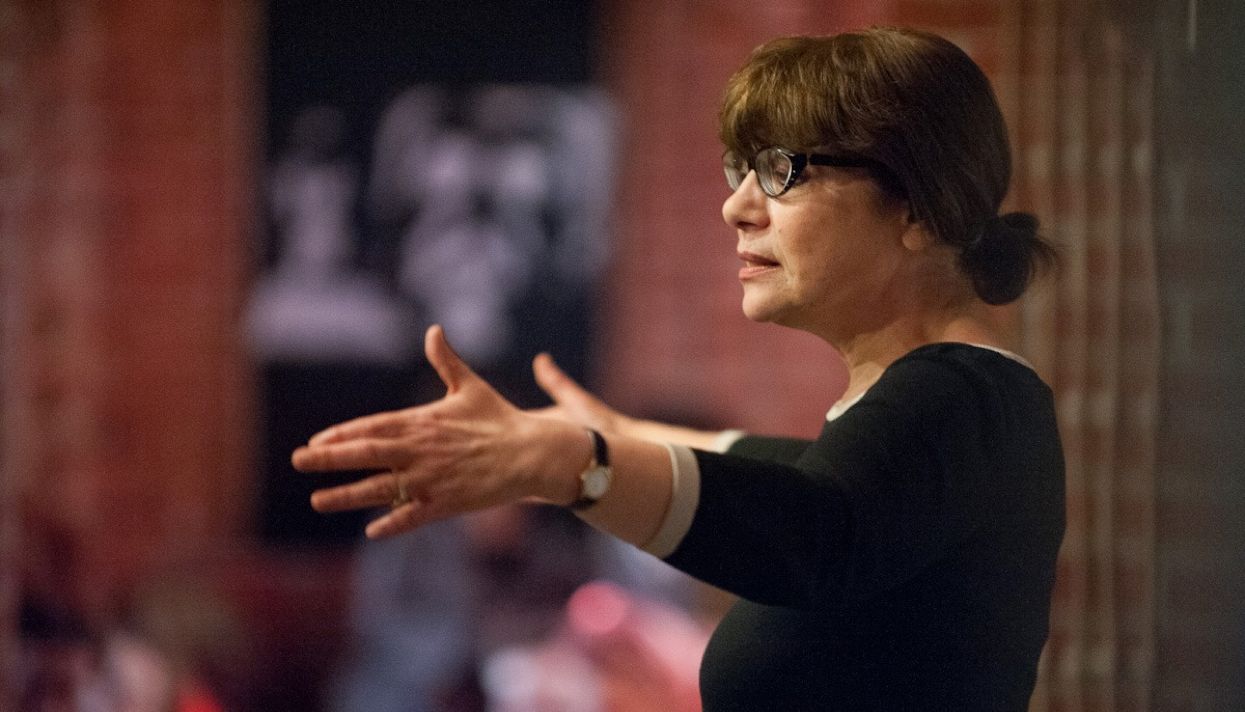
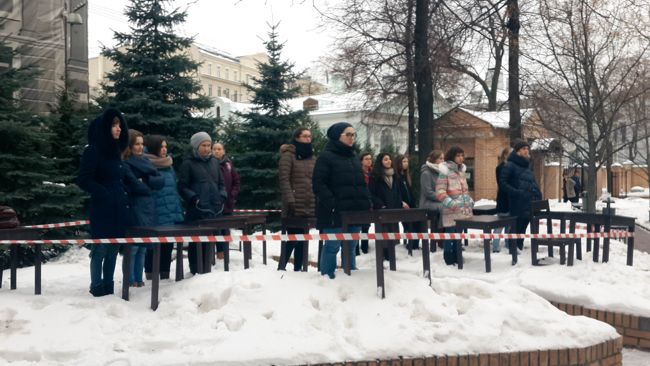
In December 2016, it became known that the rector of GITIS Grigory Zaslavsky decided to unite the theater and production faculties. At the Academic Council, who took place without the dean of theaters, Natalya Pivovarova, voted for the unification. However, many theatrical critics, Pivovarova herself and students who arranged a protest performance was opposed to a possible merger. In an interview with Medusa, Zaslavsky said that the Theater Faculty is in a crisis. Medusa talked with Natalya Pivovarova about the crisis, relations with the new rector and the real successes of the Taatroved students.
- The appointment of Grigory Zaslavsky by acting rector in May 2016 was a surprise to the teachers of GITIS?
- Of course, it was a surprise. Already if only because a person graduated from the institute in 1993 and was not directly connected with GITIS in any way. In addition, he never held a leading position at a university, and this is very important. He was not the head of the department, Dean, the head of some unit, and so on. The life of a large complex institution requires experience.
-Were there any other candidates for this position?
- I assumed that Dmitry Vladimirovich Trubochkin, a professor at the Department of History of the Foreign theater, could become the rector. But to be honest, I thought that before the election, the duties of the rector would be fulfilled by Karina Levonovna Melik-Pashaeva, who led GITIS since 2009. I could not imagine that she would be removed immediately after the 70th anniversary and appoint someone else.
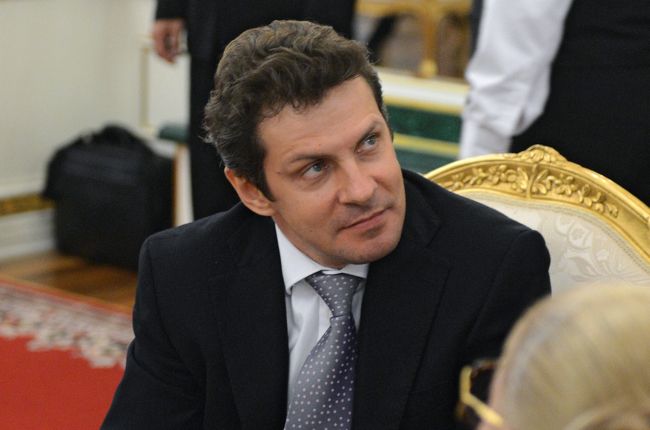
- How have the relations of the rector of GITIS and the Ministry of Culture have developed in recent years? Is it possible to say that now they began to cooperate more?
- Karina Levonovna had a huge administrative experience, thanks to which a lot of good things occurred at our university. In difficult conditions, GITIS passed licensing and accreditation - this was just on the eve of her departure. Now this connection, of course, has become much closer, because Zaslavsky has long been a participant in working groups, expert councils at the Ministry headed by Vladimir Medinsky. He, of course, is his own person for the ministry. This is just a fact.
- In an interview with Medusa, Grigory Zaslavsky talked quite a lot about the crisis in GITIS. Is it possible to say that he was presented as an anti -crisis manager? Is there a crisis in GITIS?
- To say that GITIS in a crisis is simply funny. I don’t understand why our rector needs it. But here we need to recall that now we have the country, as it were, not on the rise. Naturally, any system wears out. Any institution requires constant updating - meaningful, thought out, with the definition of goals, objectives, and the study of a possible path. And none of our teachers and students never thought that the system of our education is ideal and does not require innovations. Requires.
Zaslavsky is not a crisis manager, he was represented as a graduate of the Theater Faculty, a famous critic, social activist. And, by the way, despite the fact that we have prohibited ideological propaganda at the institute, Grigory Anatolyevich Zaslavsky was recommended by the Academic Council of GITIS as a person who has repeatedly expressed his consent with the policy of the state regarding the accession of Crimea.
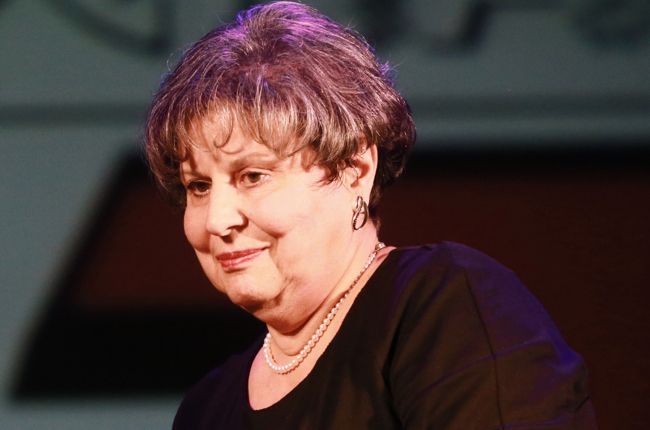
- About 80% of teachers voted for Zaslavsky. Any campaign work was conducted at the institute?
- Probably no, I don't know anything about it. But it is clear to everyone that it is not always possible to say right away what the new leader will be. Any person, and a complex person, having come to a new job, can change - after all, his entire coordinate system in a particular space changes. Many thought about this then.
Now I understand that the rector has huge ambitions: he is a bright graduate of the Theater Faculty, and at the same time he was once not taken to graduate school-and now he is the rector. The story is famous. A new position is always the beginning of a new life.
I got the feeling that in my soul Grigory Anatolyevich sees himself as a reformer of the scale of Stolypin - of course, I am a little ironic here. Perhaps the creator of the new path. Now we are talking about the fact that GITIS should turn into the best theater university in the world, which in itself, of course, is beautiful, ambitious. But then it is necessary to hear a different voice, respect the position of people who gave to GITIS, pedagogy all their lives. They are professionals. How to decide on fundamental reforms without advice with them? How not to ask for advice?
- Zaslavsky said in an interview that he decided to unite the faculties in August. Did you know about it?
- Of course not. At the same time, Grigory Anatolyevich claims that the ministry - as our founder - should not have learned about this from the newspapers and they needed to tell about the plans for the reorganization of individual divisions of GITIS in advance. But for some reason, our rector believes that the people with whom he work, who have built GITIS in recent decades, can learn about such important changes from the press.
Or Grigory Anatolyevich says that sometimes, due to a large number of discussions, many things cannot be realized. But GITIS, any other theater university, and a healthy community as a whole can exist only in a dialogue. Harmony needs a convention. And how not to talk about their plans with people professionally interested, how will they then live in GITIS? “But the boyars are in charge, not for us a couple”? On the third hand, Grigory Anatolyevich says that they do not want to understand him, do not think about words, do not hear their meaning. What am I asking a rhetorical question: where was the opportunity to hear you? Did they give us time to discuss your plans?
- Is it possible to consider the scientific council at which voting for the unification of the faculties took place, legitimate, if the heads of the departments, the Dean of the Theater Faculty and other teachers were absent for various reasons?
- The problem here is not legal, ethical. There was a quorum. But the head of the department of the foreign theater, Alexei Vadimovich Bartoshevich, the famous Shakespeared with a world -famous man, who has been working in GITIS for more than 50 years! How could you not warn him? This is not a mistake. The question is that if you announce in a month that such fundamental issues will be resolved on the scientific council, then of course, work begins during this month, preparation for discussion, acquaintance with provisions, offers, and so on. And it so happened that the scientific council voted “for” - because, it seems to me, he was simply misleading. It was a secret and lightning -fast operation.
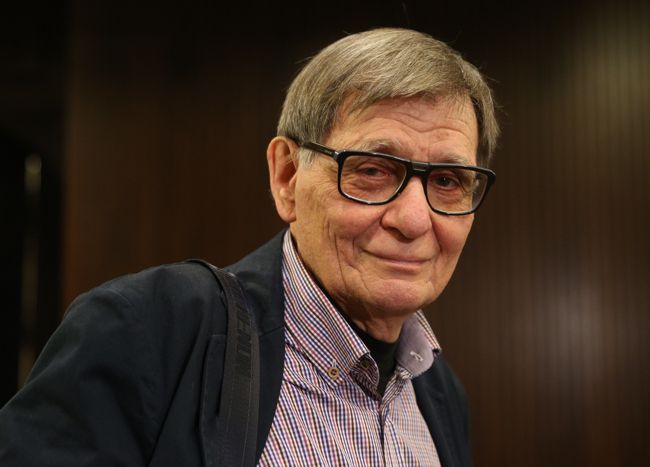
The situation was presented as if an agreement between the faculties had already been reached, but in fact no one simply knew anything. Well, if, for example, I will hear that the acting and directorial faculties will decide to unite and they allegedly mutually want it, then I most likely will not express any arguments against-even if they arise with me.
By the way, now there is a process that is corny called the “use of an administrative resource”: an interview with Grigory Anatolyevich is posted on the GITIS website, while opponents are devoid of any opportunity to be heard at their institute. More than 1000 people signed a letter against the unification of faculties, the Commission of the Union of Theater Workers on Education came to the same opinion, leading theater scientists of the State Institute of Art Autonomance and so on.
- According to the rector, the theater faculty is in a crisis. Do you think it is?
- This thought is apparently intentionally replicated by our rector, he repeats it in his interview on the radio, television and in conversations with the academic council. The idea of the crisis of GITIS is imposed, and, in my opinion, this is the most harmful and unjust definition of the life of our faculty. By the way, I’ll say that this situation can ruin the future set of applicants to us.
To be honest, the Faculty of Theater Faculty, in my opinion, is now in the prime, and not in a crisis. Well, look, today we spend at least 10 conferences per year at the faculty, in which leading teachers, the country's largest directors take part: Vasiliev, Torobnichko, Shapiro, Serebrennikov, Bogomolov, Yuhananov, Karbauskis, Mirzoev, Butusov, Kolyada, Wolfhils, leading critics and many others. Our students have been working at all the main festivals for the past ten years: “Golden Mask”, “Seasons of Stanislavsky”, Net, “Territory”. They also produced the Golden Mask newspaper for many years - the entire GITIS theatrical faculty has connected to its creation - now it exists electronically. Our students win theater ministerial contests, Olympiads, go to all kinds of festivals with our teachers. And get gratitude.
On the other hand, our teachers have tremendous loads: doctors of sciences and professors have 800 lecture hours a year - they publish books, write scientific articles, drive throughout the country with lectures, reports, leading expert councils, seminars of critics, discussing the performances of Russian theater, hold round tables and more. After all, we report on science every year, and there have never been any complaints against us. Vice versa. In addition, seven doctors of science work at our small faculty - this is the highest class! Listen, this is incredible, but we are told that teachers have exhausted their potential. Yes, do not believe, friends, it's just a mistake.
- Grigory Zaslavsky said that over the past year, only one dissertation was defended at the faculty. This is true?
- I specifically did research work on this subject. All data from the GITIS website. Over the past 12 years, 36 dissertations have been defended at the Faculty of Theater Faculty, we had years when five people were defended. But after the crisis, of course, the number of defenders fell - is it possible to survive on a scholarship? Grigory Anatolyevich said about this.
I personally have graduate students who are ready for dissertations, but due to the fact that they are forced to work, they simply do not have time to sit down and finalize their text. Speaking specifically, in 2016, three dissertations were defended at the Faculty of Theater Faculty, and not one, as Grigory Anatolyevich constantly reports. For a humanitarian university, for theater studies, this is a serious figure.
Then the competition of applicants. Here Alena Yuryevna [Karas] this year gained a course and almost set a record: 5.75 people per place. And over the past eight years, the average figure of applicants is 4.365 people per place. And these are real numbers, because in Moscow there is no more theater faculty and no one takes the documents from us after the first exam, as this can happen at other faculties. Consequently, to argue that the theatrical studies have one person in a place for the theatrical studies - this, it seems to me .... Well, to put it mildly, it somehow does not correspond to reality.
Grigory Anatolyevich claims that the teachers of the Theater Faculty did nothing to overcome the terrible crisis. Who are these madmen? In fact, we think differently. And for this the heads of the departments are responsible. I trust them.
- What about employment?
-Zaslavsky said that we have 10-12%employed. And here I have several questions at once. Firstly, since in our country now there is no distribution system, to ask graduates questions about where they work, neither university nor the state has the right. There are other bodies for control. So I think. But our former students love us, so they honestly answer us all questions.
Usually we collect information in September-October: at that moment someone may not work yet, and in November to find a place, and someone got a job in September, and in October has already quit. I looked at the lists of students since 2004-we have known them all in person and by last name-and realized that we, as in the whole of GITIS, are 80-90% employed. Someone works freely, someone works under a contract, someone works as an editor on television, an editor in the museum, in the theater. Not all of them are “famous” people, but it cannot be said that every year we get a hundred outstanding actors, ten outstanding directors. Funny. This does not happen in any profession. At each course we have one or two acting criticism, the same amount of science, the rest work in the culture system. And it seems to me that this is brilliant.
- Did I understand you correctly: do you think there is no crisis?
- Understanding the crisis as the most important, often a turning point, which requires active introspection, is necessary for absolutely everyone. Just do not need to understand the crisis as a call to “wet in the toilet”, deprivation of us budget places and just closing. No, we will still live. In general, it seems to me pointless to say that one faculty will become the donor of another. According to the rector, the Faculty of Theater Faculty needs, of course, in the renewal of the circulatory system. Yes, we all need a lot. But I refuse to be a vampire.
- Did the rector represent a specific program of unification of faculties?
- No. The rector promised students that he would present them a program that would be widely discussed by all interested parties, because among the producers there are a lot of people who did not support the union. But so far this has not been done, and it turns out that students will be a kind of experimental rabbits. Grigory Anatolyevich himself says that it can, in a few years, we will understand that this is the wrong path and again disconnect. But it’s more logical to immediately understand whether it is necessary to unite. And here I believe that common sense will triumph, and also the logic of our rector, who does not want to work in a conflict situation.
- That is, do you think that after the new academic council, the decision to unite the faculties will be canceled?
- I really believe that Grigory Anatolyevich will not go to a cardinal measure, will not allow marriage by captivity, and we will be able to explain to members of the academic council the need to cancel the December decision.
- Is it possible to say that you have a personal conflict with the rector?
-Rather, these are some minor disagreements, at the level of the Facebook post. It seems to me that this is absolute nonsense, except for our worldview disagreements, but I have already talked about this more than once. Of course, we are on different sides, if not barricades, then the relationship, perceptions of many political, social and of course, theatrical processes. And this is normal. The constitution allows. But if the institution is not a place for expressing its political positions, then I would like this situation not to escalate. We work for students. And we all do not care what our future is.
- Do you see an opportunity for further interaction?
- Undoubtedly. And I really hope that Grigory Anatolyevich understands that it is necessary. In order to work productively, you need to work in a team. Perhaps it will be so.
-Why did Grigory Zaslavsky still need to unite faculties?
- I do not want to talk about possible reasons again, all this is unproven for society. The matter is different - why Zaslavsky still did not offer all his program to unite - substantial and conceptual, in which he would explain to all of us genuine reasons.
I won’t be surprised if the idea of unification was born in the ministry, someone thought: tired of these independent theaters. Although I am sure that until recently, no one thought intensely in the ministry about the Theater Faculty.
- That is, these independent theaters that you talked about really interfere with the Ministry of Culture?
- Well, they interfere so much. But the Ministry of Culture does not at all hide its priorities. The state cultural policy talks about a lot today. After all, it was simply not for a very long time - this state cultural policy. But now there is, but "there is no censorship." There is no censorship, but the policy appeared.
- With what mood will you go to the scientific council?
- Herzen has an amazing idea that "only that revolution is good that ends with parliament." The Theater Faculty is 85 years old, we have excellent traditions: I think we will be able not to lose our independence. I really hope that on the scientific council they will give a word to everyone, and we will try to explain our position to the GITIS community. And they will hear us. And they will believe us. Because we worked honestly for many years. I really hope that all of us will prevail not interpersonal relationships, but wisdom and love for GITIS.
Sasha Sulim