
Translated material
Why in Latvia the Russian language will never be state
Five years ago, a referendum on language passed. How was it?
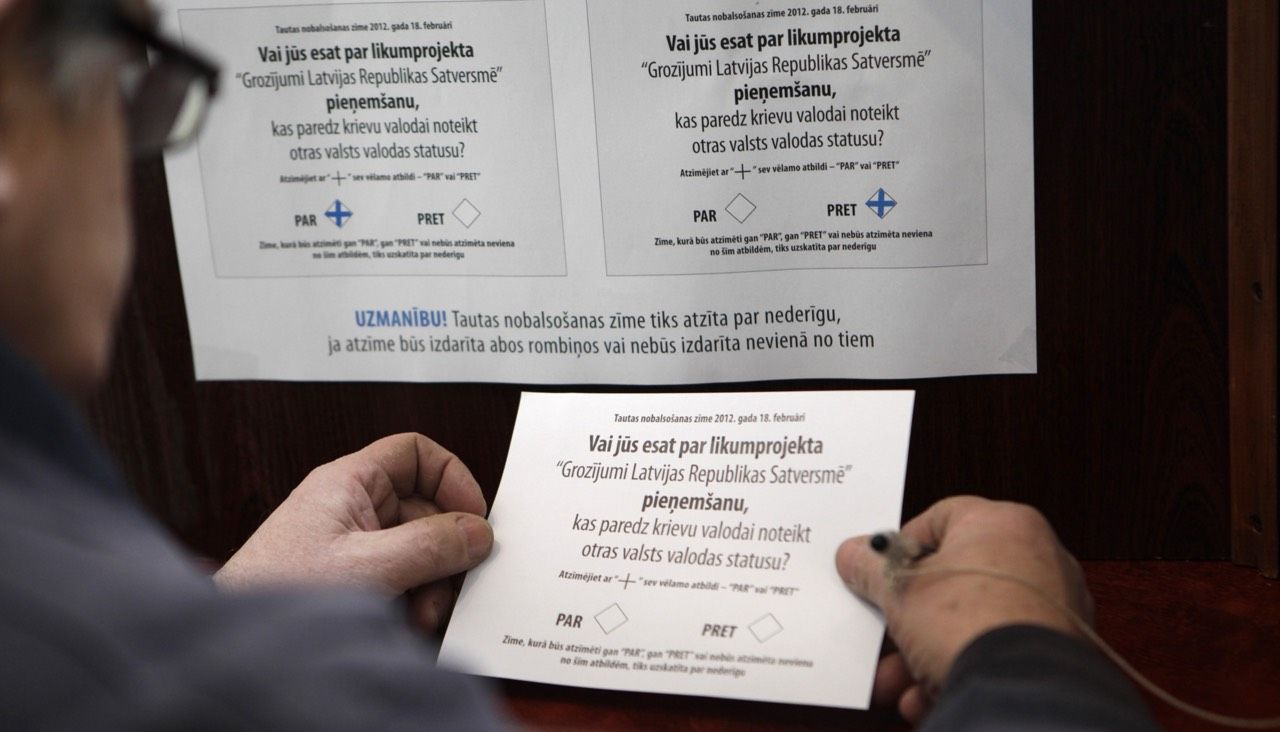
Five years ago, on February 18, 2012, a referendum was held in Latvia to grant the Russian language the status of the second state. More than a million people participated in the vote, this is 70% of the country's population with the right to vote (such a large turnout before only once happened - during a survey on the independence of Latvia from the USSR in 1991). Latvian language as the only state was supported by more than 800 thousand people. About 270 thousand voted for the Russian. At the request of Medusa, Latvian journalist Alexei Gusev tells about how such a referendum has become possible and to what consequences.
Country Country
According to the Central Statistical Directorate of Latvia, less than two million people now live in the country. More than 60% of the population - Latvians, 26% - Russians; There are also Belarusians, Ukrainians, Poles and representatives of other nationalities. The state language in Latvia is only one - Latvian. All office work is carried out in Latvian, all employees of state and municipal institutions are obliged to know it. The same requirement is presented to employees of private companies who work with people - in stores, schools, clinics. For the conclusion of an employment contract with a person who does not speak the language at the proper level, the employer can be fined from 140 to 350 euros. For a repeated violation during the year, the employer can pay up to 1400 euros, the employee himself - from 280 to 700 euros. Compliance with language norms is monitored by a special body - the center of the state language. Its functions and status are reminiscent of Russian Rospotrebnadzor or other inspection body.
The current Latvia is considered the successor of the Latvian Republic, founded on November 18, 1918 and existed until 1940. The country, recreated in 1991, took the constitution of the first republic, and only the people who lived here until 1940, and their descendants received citizenship. Moreover, while Latvia was part of the USSR, more than a million people entered it. In 1995, they were offered to go through the naturalization process - to pass an exam for knowledge of language and history and gain citizenship. Some did this, others left the country - but until now, almost 230 thousand “non -citizens” remain in Latvia, which have not passed this procedure; They do not have the right to vote in all elections and cannot work in state bodies.
In Latvia, there are two communities de facto that can be called “Latvian” and “Russian-speaking”. They exist in different linguistic, cultural and information spaces. According to politicians in power, this is the price that had to be paid for the restoration of the country's independence. One of the leaders of the Moderate Right Party “Unity” , the deputy of the Sejm and his speaker during the referendum of 2012 Solvita Abultin says that without the Latvian language as the only state Latvia would not exist at all. “The Latvian language is the basis on which our state was created in 1918. Of course, people of different nationalities always lived in this territory, they managed to unite around the Latvian state. And if we want to preserve our national state, then the status of the language should remain unchanged, ”said Aboletin“ Medusa ”.
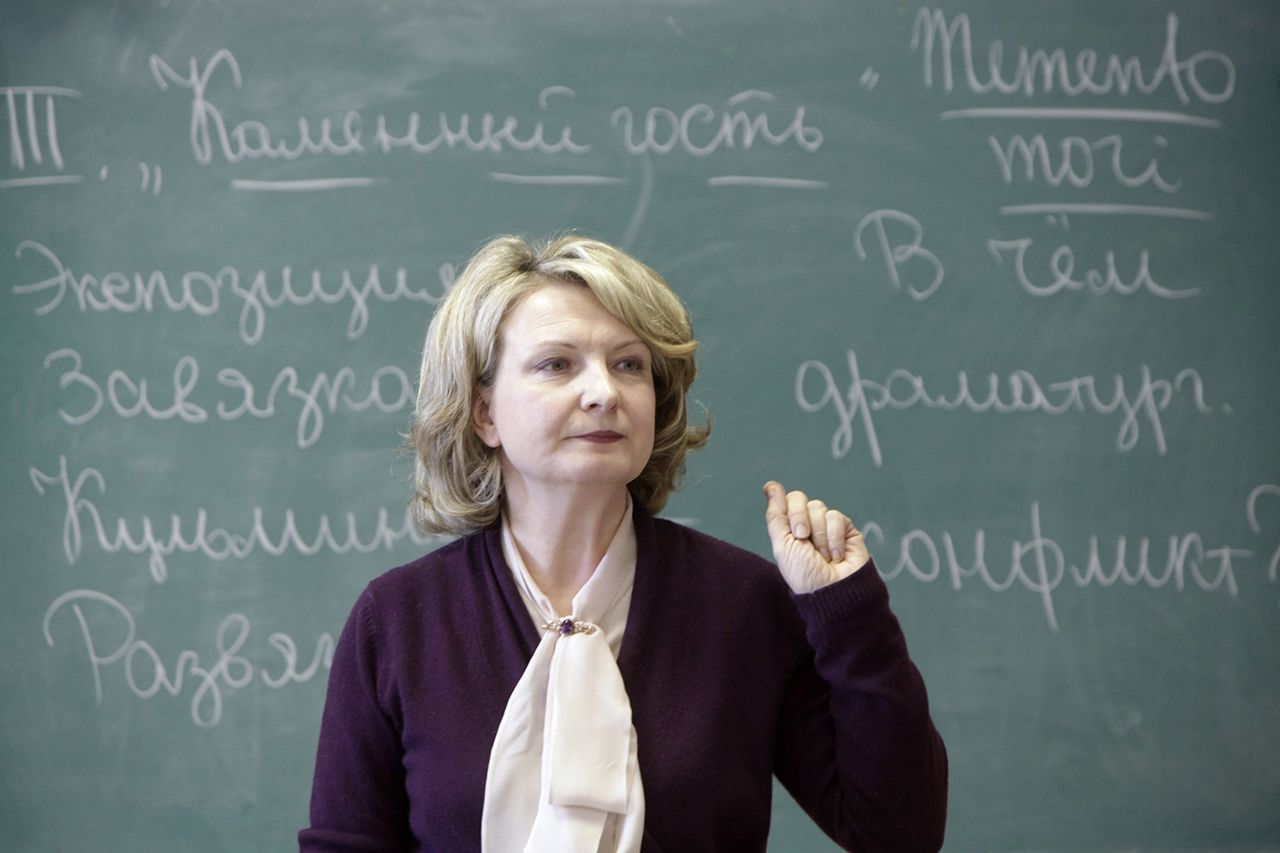
Opponents object that the state language should not prevail over human rights. The legal consultant of the Parliamentary faction of the Consent party Elizabeth Krivtsova says that it is possible to protect Latvian identity without statehood based on the language. “The question is what is primary. In Europe, since the Great French Revolution, the greatest achievement is a democratic structure and recognition that a person is more important than the state. Entering [in 2004] into the European Union, we followed the criteria of the rule of law, not national identity, ”she says. According to Krivtsova, the Russian -speaking minority is now limited in its rights.
In Latvia, the opinion is that if a person has not integrated over the years of independence and has not learned the language, then he obviously will not do this. Deputy of the Sejm from the "National Association" Edwin Shnore believes that Russian -speaking minorities themselves do not want to belong to Latvia as a state. “We say a lot about the fact that at first everyone very much supported the creation of independent Latvia, and then part of the society was allegedly deceived and they, they say, were offended. No, at the 1991 referendum, 411 thousand people voted against the independence of Latvia. These people wanted to leave everything as it is - the Soviet Union and the hegemony of the Russian language. Some of these people still live here, ”Schnore Medusa says.
Referendum of direct action
The 2012 language referendum had several organizers, but first of all it was the merit of Vladimir Linderman. Linderman is the former commissar of the Latvian branch of the National Bolshevik party Eduard Limonov ( in Russia this party was recognized as extremist and is banned back in 2007 ). In Latvia, he was accused of storing explosives and the preparation of a coup, so in the mid-2000s he was in Russia. In 2008, Linderman was forced to leave Moscow. He was taken into custody in Riga, but he won the courts - and the most difficult accusations were removed from the activist. Once at large, Linderman became one of the leaders of the Society “For the Native Language”, which the beginning of the collection of signatures for amendments to the Constitution - on giving the Russian language the status of the second state.
Linderman in Latvia has a stable reputation of the pro -Russian activist. The ruling politicians directly called him an extremist and socially dangerous element, and the Latvian intelligence services suspect that Linderman’s activities are funded from Moscow. The activist himself in a conversation with Medusa denies this.
“I rented an apartment in Moscow Forstadt ( not the most prosperous area in the center of Riga - approx. Medusa ), near the railway. According to official necessity, a deputy of the Riga Duma from the “National Association” appeared in my house. And he and I ran into the stairwell. He had such a sincere surprise on his face, he asked me: “What, Putin did not have enough money for you to buy a normal apartment?” He never believed that I live there. I decided that this was some kind of conspiratorial apartment. It is easier for them to believe in Russian spies than the existence of the problem of Russian -speaking in Latvia. ”
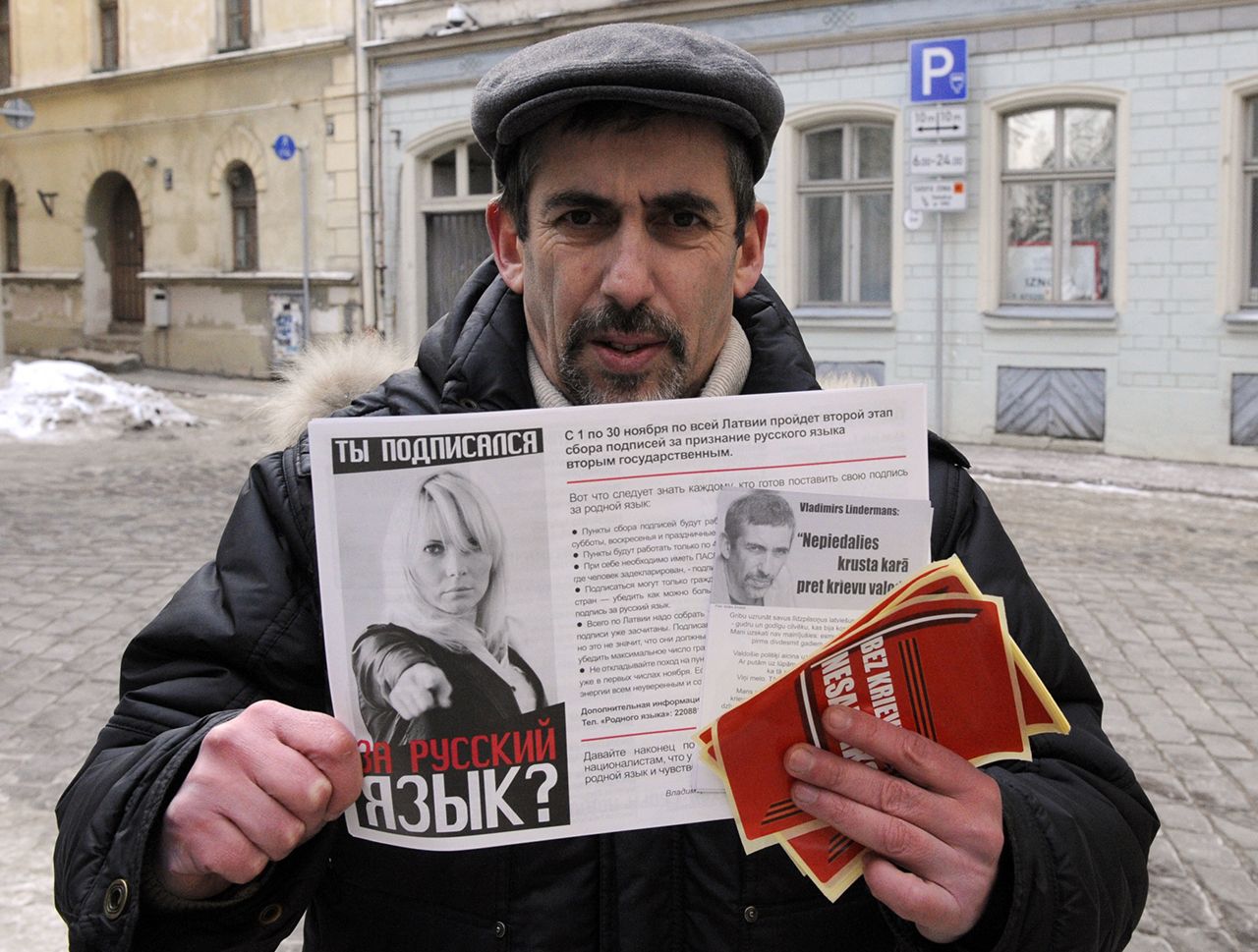
Linderman recalls that partly the idea of a referendum on the status of the Russian language occurred to him as a “response” to a referendum, which tried to conduct a “national association”. Back in 2010, it began to collect signatures under the initiative - to translate all budget schools where representatives of other nationalities study, completely into the state (Latvian) language. Now, as then, in Latvia there is a bilingual model in which 40% of subjects are taught in Russian, and 60% in Latvian. This suits all ruling parties, except for the “national association”, which consistently advocates education only in Latvian.
Referendums at that time were organized in three stages. First, activists needed to collect 10 thousand notarized signatures, independently covering all expenses. The authors of both initiatives managed to do this. Then, in accordance with the then acting law, at the second stage of the signature, the Latvian Central Election Commission began to collect. This stage lasted a month, and during this time it was necessary to collect about 150 thousand signatures - 10% of all who have the right to vote. The collection took place at polling stations throughout the country and was carried out at the expense of budget funds. And then the supporters of the “national association” lost - they did not reach the right number of signatures. The third stage - the referendum itself - did not take place.
The idea of state Russian turned out to be more viable. The referendum was supported by the most popular Russian politician in the country (even then the mayor of Riga) Neil Ushakov. Having signed, Ushakov noted that he personally continues to play for Latvian as the only state language. The referendum, according to the mayor, is a way to indicate the problem of excluding national minorities from the country's political life. Then this signature will become an occasion for other parties not to join the “center of consent” by Ushakov in the coalition. Solvita Aboltine from “Unity” and now says “Medusa”: “[Signature for Russian] is one of the political errors that are so simply not forgotten if they are forgotten at all.”
Linderman indicates that Ushakov proceeded for rational considerations when he signed - did not want to lose the support of the Russian -speaking electorate: “Ushakov sensitively monitored his mood in society, and he simply realized that a significant part of the voters would not understand him if he did not subscribe. After all, whoever says what, most voting for Ushakov are Russians. He did what was politically profitable and necessary. ”
Ushakov himself refused to talk with a “jellyfish” about a referendum.
Like it is barricades
For the Russian as the second state, much more than 150 thousand signatures were collected, the issue was submitted for a popular vote. “In my political biography in Latvia it was the highest point,” recalls Linderman, “and the whole Russian movement was at the peak. It was a celebration of disobedience and proof of our existence here. ” Most of the Latvian electorate perceived what was happening as a threat. All the ruling partiesannounced that the goal of the organizers of the referendum was a split in society, and called on citizens to vote against Russian as a second state. Politicians at that time said that the referendum is the impudence, and they called for to go to the sites to protect the Latvian language, "as if it were barricades."
On the voting day, February 18, 2012, in many areas it was necessary to survive in order to vote. The turnout exceeded 70%. There was only more once in the latest history of the country-in a survey on the withdrawal of Latvia from the USSR in March 1991. Then 84% of the population participated in the vote.
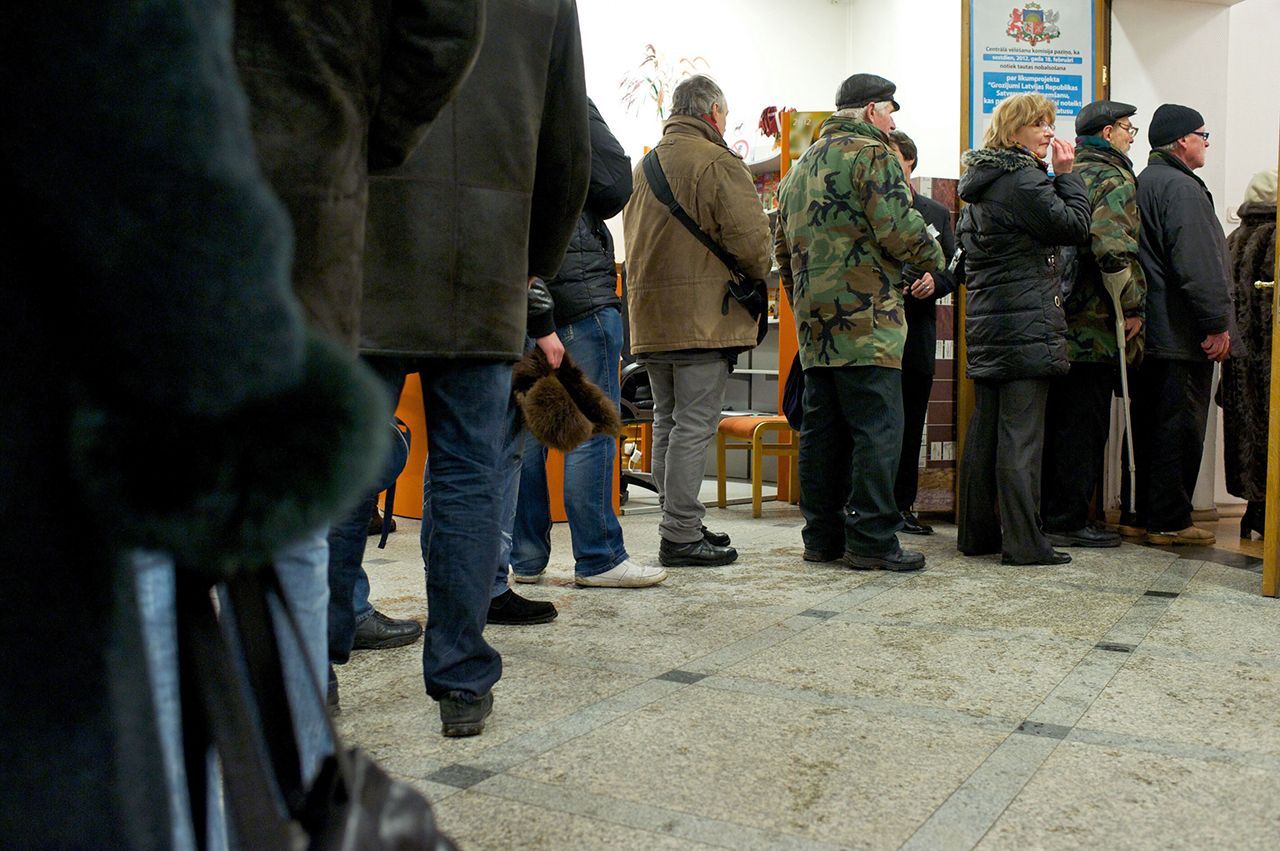
About 75% of referendum participants voted against Russian as the second state. The number of those supported the Russian language approximately coincided with the number of Russian -speaking citizens who have the right to vote. In addition, the Russian language won the eastern part of the country, including in the second largest city in Latvia - Daugavpils. The country's prime minister Valdis Dombrovskis, who worked then, made a statement where, in particular, he said that the collection of signatures and the referendum "unfavorablely influenced a sense of belonging to Latvia, red-hot society."
His party’s colleague Solvita Aboltin says that the most dangerous in the referendum was that the democratic tool was used to undermine stability in the country. “And five years ago, and today democratic methods are used to shake the foundations of our state. Then everyone asked me - 270 thousand [man] voted for the Russian language, this cannot be ignored that you will change? But then and now, for me, those 800 thousand who opposed the changes in the Constitution, showing themselves as responsible citizens of their country. I am sorry that we did not find ways to stop the process ( a number of deputies of the Sejm tried to stop the referendum in the Constitutional Court - approx. Medusa ). This referendum threw us back somewhere. At that time, in parliament, my colleagues began to speak demonstratively in Russian, the same thing happened with sellers in stores. ”
This will not happen again
The referendum significantly changed political layouts in Latvia.
Vladimir Linderman tried to transform the “for native language” movement into a political party that would compete for the votes of Russian -speaking citizens with a more moderate “consent”. The new party failed. In the elections to the local government in 2013, the party was supported by a few units. For example, in Riga "for the native language" collected only 0.3% of the vote. Linderman himself was not in the list of candidates, since he is a "non -citizen." “Participation in these elections was optional,” the activist admits, “of course, I wanted to get a more decent result. But the main task was to create an organization that could further influence the fate of the state. This did not work. "
After this unsuccessful experience, Linderman ceased to participate in the political life of the country. Special services continue to be actively interested in him - now the Latvian security police are investigating two criminal cases against him.
Parliament has significantly changed the referenda law. Now, in order to launch a popular vote, the organizers of the referendum themselves must collect 150 thousand signatures of citizens of the country - the state with financing no longer helps. The procedure has become more expensive and more complicated, and so far there has been not a single referendum in Latvia since then. Changes in the Law on referenda were criticized by the Ombudsman of Latvia, Juris Jansons. According to him, amendments limit human rights. Nevertheless, the Constitutional Court ruled that the new version of the law is legitimate.
“Before the language referendum, the issue of the Russian -speaking minority was simply ignored by the ruling elites,” says lawyer Elizaveta Krivtsova. - Universal vote made it possible to raise this topic to the highest level. And as a result, the authorities began to ban everything. A reactionary wave went, it became worse than it was, but it does not eliminate the problem. ”
The parliament also changed the constitution, adding to the preamble, which refers to unchanged state values, including the language. They cannot be reviewed even by general voting. Therefore, in modern Latvia, the 2012 referendum would be recognized as contradicting the country's main document. “We needed a preamble,” says the deputy from the National Association Edwin Schnore, “if only because our main values are in jeopardy. Show me at least another state of the European Union, where a referendum on state language will go. The situation is completely abnormal. In the capital of her country, the Latvian nation was in a linguistic minority. We accepted the preamble to do at least something about it. ”
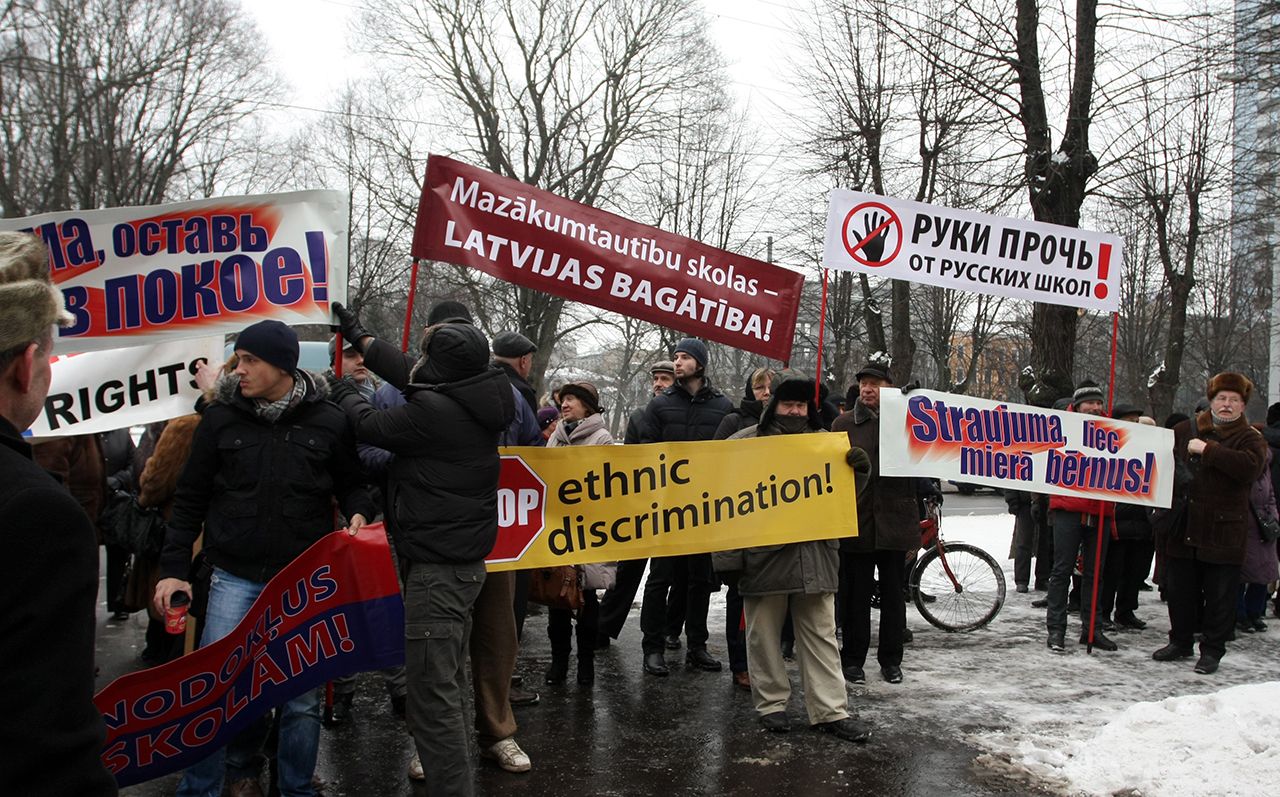
The "National Association" continues to insist on the translation of all schools into the state language. But the government has so far been limited only to amendments to the law on education on the loyalty of teachers. From January 1, 2017, according to the law of the teacher, it can be dismissed if it is proved that he is not loyal to the state. While the law has not been applied, it is also disputed in the Constitutional Court.
However, many politicians are calm about bilingualism in the country. Among them are one of the most popular politicians of the country, the mayor of Ventspils and the leader of the party of Latvia and Ventspils ( collaborates with the presiding "Union of Green and Peasants" now in the government ) Aivar Lembergs. “The referendum did not share anyone, but simply stated the state of Latvian society [at that time],” Lembergs says in an interview with Medusa. - Yes, our society is divided by ethnicity, but this did not start with a referendum, but at least with school reform ( in 2004 it increased the number of subjects in Latvian in Russian -speaking schools - approx. Medusa ). I believe that the politician should speak with the voter in the language that this voter is understandable. Therefore, I never had problems in order to speak Russian. And the use of the Latvian language is reduced just in state departments, and it is supplanted not by Russian, but by English. For example, the World Bank made a tax report in Latvia, and no one could transfer it within a month [from English to Latvian]. Like, it makes no sense to translate. This is the disrespectful attitude to Latvian as a state. ”
Alexey Gusev, Riga