
Translated material
100% Sale
In last year's final material about the state of art in Russia, Natalya Serkova identified three trends that she noticed on the domestic art scene. Colta.ru asked her to speak in more detail for each of the three points. In the final part of this small trilogy, the author again speaks of the present and future, as well as the two types of fiction and the voice of objects.
Continuing the topic of speculation, which I affected by me in the second text of this small three -part investigation, I would like to dwell on how a speculative approach helps to formulate some criteria of art, which can really be called modern according to our team . The problem of access to this time has already been described briefly today: it is completely unclear where the present is located, and in this regard its operational characteristics remain completely unclear. The theorists of speculative poetics interpret the present as produced, who, who, like a science fiction read, is already in our minds, which means, as found in the language, it has already happened. We do not have access to the past and, as soon as we try to construct this access, we actually re-recover the past as a new-worshiping, which is not related to any of the three times, which can become either a goal forever lost, or another version of tomorrow. In any case, the point from which we speak is not located in the present, but is always somewhere on the other side of the observed. While contemporary artists are actively using the materials surrounding us every day, the very principle of assembling such materials that ultimately determines how well-collected speculative assembly-rescuing comes into the game.
The present, verified as a grateful successor of the past, contains one irreparable and decisive flaw: it, as a legal law, is adopted for reality itself, while the present -spontaneous present can never be completely distinguishable from fiction.
For the refusal of an attempt to speak, in particular, in particular, a popular commercial galleries (and finally who came to us and rapidly gaining momentum) is actively criticized-the so-called zombie-formalism is an abstract painting that spread among beginner artists, which looks as effectively (and recognizable), which chooses the decorative way of talking about the materials and non-hcherte of personal experience or elementary silence. The claim of critical Western intellectuals to zombie formalism, in essence, lies in the fact that the apologists of this direction abandon the attempts to construct the most speculative future that, carried out here and now, can bring us out of the bad infinity of a capitalistly tinted life with a characteristic sweet-token dope. They refuse him in accelerationist potency, for the market of contemporary art filled to him thanks to him accelerates exactly so that, without overwhelming and not feeling indigestion, only to make another turnover of their flywheel. Zombie-formalism shows us such a present that we already know, which means, strictly speaking, he tells us not at all about the present and, moreover, not about the future.
The present, verified as a grateful successor of the past, contains one irreparable and decisive flaw: it, as a legal law, is adopted for reality itself, while the present -spontaneous present can never be completely distinguishable from fiction. “Modernity is an operational fiction,” says Peter Osborne, this is its inalienable property: after all, in order to become, modernity combines all three times, direct access to which we do not have. Forming modernity, we work with virtually fictional material, and if something is recognized by us as an undeniably “legal” and cannot become another fictionality on our path, it means that it belongs not to modernity, but to such a timeless time in which any speculation is melted. In this sense, the not so -called dominant ideology that collects reality is truly fiction (which the left discourse is trying to no avail each time), but something that always remains at least on the little finger abroad of legislative verification. And in this case, the task of contemporary art is to constantly keep in itself this fiction that cannot be instantly approved as a legal content of reality. In order to be called modern, it is not enough to speak art about the modern problems in the actual language of philosophy-it needs to construct himself so that each time not to be identified within the already learned one. Fiction itself becomes a medium that is able to turn around within the framework of an artistic statement, and this, of course, is not about the use of fantasy in order to hang something to the ceiling, but about being able to split the present itself, constantly falling into the darkness of the granted.
Any art that can easily be transferred to the shopping center and become learned by it cannot be called modern.
And while capitalism in TOTE hovers, as always, that we breathed, which we breathed, its parts as part of the whole strive to present ourselves as a fiction. The modernist construction of millennial Reichs and totalitarian machines remained in the past - we are constantly observing how particles of the capitalist whole (from a network supermarket to the UN or presidential administrations) are working on their own merger, regularly polyphonically updated and flickering. The inconsistency of translated ideas, the inconsistent inconsistency between the prescribed law and the legislative action, the visible absence of logic and the supposedly obvious mistakes in management, the stage playing out of folklore stereotypes, the translated grotesque and the absurdity of behavior and speech, finally, the active use of achievements of the art of the twentieth century (some of which were transferred) - all this, being produced, is immersed, being produced by one way We as simultaneously participants and spectators of these processes in the zone of constant indifference of what is really happening. It is this behavior that makes any political discourse truly modern, often more modern than its criticizing art. In this sense, we are always surrounded by art just because his language as one of the most fruitful speculative languages along with the vulgarized language of philosophy is woven into the fabric of everyday life by almost all: actors of politics, market, and designers of playgrounds of the north-west of Moscow. I go to the shopping center and see the sculptures of Alexander Kolder in the windows of stores, Pete Mondrian and Morris Luis on the patterns of skirts, the installation of Tarrel in the brilliant and color design of the floors and, finally, at the very top of Molla - an exhibition of Duchan's rotor relief, inept cardboard unknown to me by an unknown author. Girls buy skirts, and mothers allow their children to run among copies of rotor relief on aluminum stands; The audience instinctively assimilates plastic finds, half a century ago scandalous.
Now, they may object to me that this, of course, is not Mondrian and not Colder at all, that the context is completely different and no shopping shopping center has never tried to present us as such. But these will be the objections of those who completely deny the importance of aesthetic perception as one from which any study of any object begins: the path that can end with gliding the object along the periphery of the look or deep rational analysis, but can never be made without this first clash. That is the fact that Mondrian and Colder, albeit slightly modified, but still clearly recognized, get along well inside the logic of retail space, suggests that this art is no longer able to produce the above schism. On the Sunday visitor of the shopping center, this plastic is built into the core of what is an indisputable reality of life for him, and he, having come to the exhibition of the new “young”, will do nothing more than the same operation himself. In this sense, any art that can easily be transferred to the shopping center and become learned by it cannot be called modern. Indeed, only such an art that has yet to be in the shopping center.
No institution is no longer a guarantor of the broadcast of our time - modern, as a mutated virus, moves in any direction and captures anything.
Thus, two types of fiction are manifested before us. One - mimicating under such, constantly changing and moving; Something always happens here, ready to surprise or at least interest. Such a fiction barely noticeably gives itself out by the fact that, together with its flicker, it simultaneously claims to be called a reality, inexpressible from a certain “obvious” course of history, whether it is a history of art or the development of the north-west of Moscow. This fiction, as shown above, manages to fit in two chairs and absorbed as modern, without burdening itself with speculative construction. Another fiction sits only in one chair, but its advantage is that this chair is in speculative reality of fiction number two is able to take any forms. The line between fictions is thin and transparent: the United Nations can make a truly artistic gesture, while something called the discovery inside a community is another pattern on the skirt pattern. No institution is no longer a guarantor of the broadcast of our time - modern, as a mutated virus, moves in any direction and captures anything.
In this sense, one of such textile patterns is the so -called new sincerity that has now spread in art - a direction that claims to force the process of returning the value of individual experience and experience, personal stories reproduced at the level of primary sensory perceptions, the return of the personality itself at the head of the ontological angle. This is a branch from quasioretical constructions striving under the auspices of the general confusion to chatting modernist Gezamkutniki with folklore postmodern “doubt in everything” and not doubt, only in one - in the possibility of appeal to a certain “I” capable of producing unique and that valuable experiences. The main component of such methods captivating the huge rows of supporters - the prevalence of the affected “in sensation” over the need to think once again - plays a cruel joke with their authors. Sensual perceptions at some point are doomed to rest against the wall, within which is an endless overcoming of the final sensations and behind which is the need to put dumb experiences in the language. The appeal to the language, along with this, easily finds gaps in this sentimental defense: the splitting contained in the language makes us forget about any sincerity as soon as this word is pronounced. “New sincerity”, or “new naivety”, alas, cannot in this situation save recognition in their own tongue -tied words: such confessions require long interviews today.
It is enough to turn on an ordinary hairdryer at night in the dark, so that the situation is immediately filled with the ominous, it is not clear to what the reference content.
Thus, the declared sincerity is, of course, speculation. The question is what is the content of such speculation. The Cretan is always sincere, who tells you that he is telling the truth. Sincerity can become “living water” only when a lie is inscribed in the conditions of the problem as an obligatory premise. In this case, sincerity turns into a productive fiction, which we believe precisely because of its false foundation. Without taking into account this loop, any sincerity is falling apart and remains within the framework of the well -known banalities like those that were better in childhood than now, and that, walking through the forest, you will most likely fall into a dreamy contemplation of trees. But, as Graham Harman accurately indicates , the aesthetic value of art, which tells us that we already know is very doubtful. Is this not “already know” by that marker of unconditionally real, which gives out the first fiction? Along with this, the very content of “sincere”, or “naive”, statements can be evaluated on the scale of sincerity (or naivety) only when we already know this content. We cannot appreciate how true a person who has come out of a coma and describes the marking of the highway leading to the light, but is able to touch the mouth of a baby who informs us that friendship is good. Sincerity always claims to be directed to the object of its attention, whether it is a memory of the past, admiring the sunset or the experience of happiness, ultimately on direct access to itself. And this is what makes any appeal to sincerity or sensuality, trying to seize the essence of things, exclusively in non -modern practices.
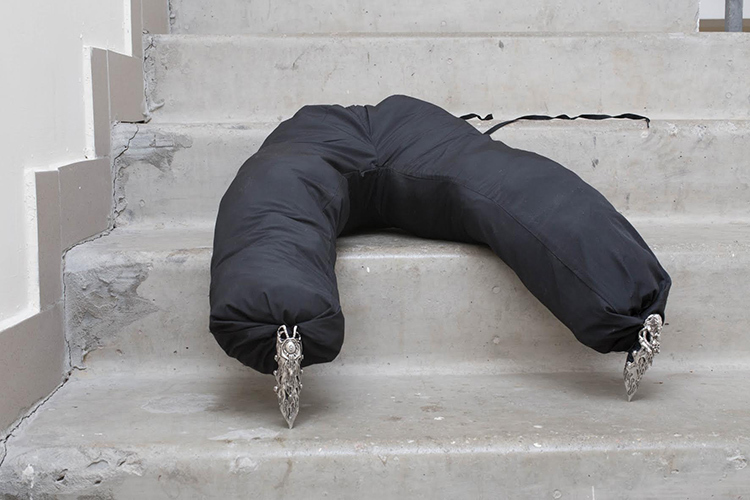
Back to this art, working taking into account the current state of affairs, seeks not to reach the object, but rather break it. Parus is to bring the object from the zone of its usual existence somewhere on the periphery of our perception. A broken object is always terrible: it is enough to turn on an ordinary hairdryer at night in the dark, so that the situation is immediately filled with ominous, it is not clear to what the reference content. In this sense, it is no longer possible to simply take the object into a conditional white cube to sharpen it: we are all used to the fact that in a White Cuba we can meet with anything, moreover, we know that its filling is only waiting for our own removal in our eyes. We are talking about the breakdown of operationalness not outside, but from the inside of the thing itself, and it is more difficult to do it than it seems at first glance. Broken as failed, we observe every day: wrappers from chocolate and peel of bananas in the garbage basket (often in our bizarre garbage weave), another cracked chair from IKEA , children's landscapes, hung on the walls in the district library-this will not become a contemporary art, even being called by someone, precisely by someone, it is possible. belonging to the first fiction described above as a reason. The only conversation about her contributes to the breakdown: after all, it is easier to describe the claim to the breakup than to make it with already a data. While explication works to accelerate semantic movements around the object, the breakdown acts strictly in reverse way: it is able to stop these movements, knocking the object out of the temporary stream, forcing us to stop with the question of “what is happening for some time?”. This will be confused not before the will of the author, but before the object shown by the will of the object to be not just useless, but dangerous in its oddity.
It is no longer the artist wants to break the object - the object itself wants to be broken.
This vague sense of danger, emanating from the object, becomes a marker of his movement away from the controlling ability of a person. It is no longer the artist wants to break the object - the object itself wants to be broken. The rights to design no longer belong to the artist, they are delegated to things, and in this sense the author’s task is only to make a breakdown that is already existing inside the thing and is already inscribed in it, which is sufficiently visible to others. It is unlikely that a thing is eager to show ourselves to us, rather, we ourselves are interested in making a whisper of other forms of its stay under a layer of familiar. We suddenly understand that we have something to learn from a thing - provided that we will not drown out her subtle sounds with our loud confidence that “we can and know” that we control these changes to the last stage of the object. Modesty and mutation of sound is the today's revolutionary artist, and only in this way it is possible to hear the whisper of an object emanating from its depth. Putting the object to the service “utterance” means to refuse to answer himself for himself and means to illustrate the statement that will remain dominant and by no means modest, which is where, according to the old habit, faith in the ability of the word to reach the perceiving consciousness is still alive.
In this sense, confusion and inconvenience are still not full of full elements of what it is customary to perceive the current state of affairs. As still using a loud voice, artists are trying to convince something from their own sincerity to their own relevance, so any shopping center or television channel, due to its maintenance, is portionedly transit the opportunity to stop and be surprised, to feel awkward or confused, however, both in the first and in the second case, the border can be perceived: any irritation of our feelings or excitement лишь до той черты, в пределах которой мы не теряем покупательной способности и равновесия уже-усвоенного. В то же время вещь, открыто заявляющая нам о выходе из-под нашего диктата, способна произвести действительно болезненную разбалансировку нашего ощущения реальности, в которой мы все еще не отказались от данного нам когда-то самим себе права быть громче безъязыких вещей. Однако это ощущение хаоса от выступающих из тени вещей неостановимо набирает обороты, заставляя говорить о массовом возврате к консервативным установкам, внутри которых можно переждать бурю. Вместе с этим и сам консерватизм, становящийся такой же точно выходящей из тени вещью, мерцает и движется, находимый не там, где мы привыкли его искать, подающий голос голосом тех, кто громогласно призывает перемены. Расслабиться и замолчать, дав вещам право научить нас собирать новые типы вымысла и новый тип разговора об этом, — вероятно, где-то здесь лежит сегодня задача художника, не повернутого к ветру лицом.
The heading "prints" is supported by the Fund for Assistance to the Study of Russian Fine Arts "Russian Art The World".