
Translated material
A shameful questions about homosexuality
What you need to know about sexual orientation and where is homophobia come from?
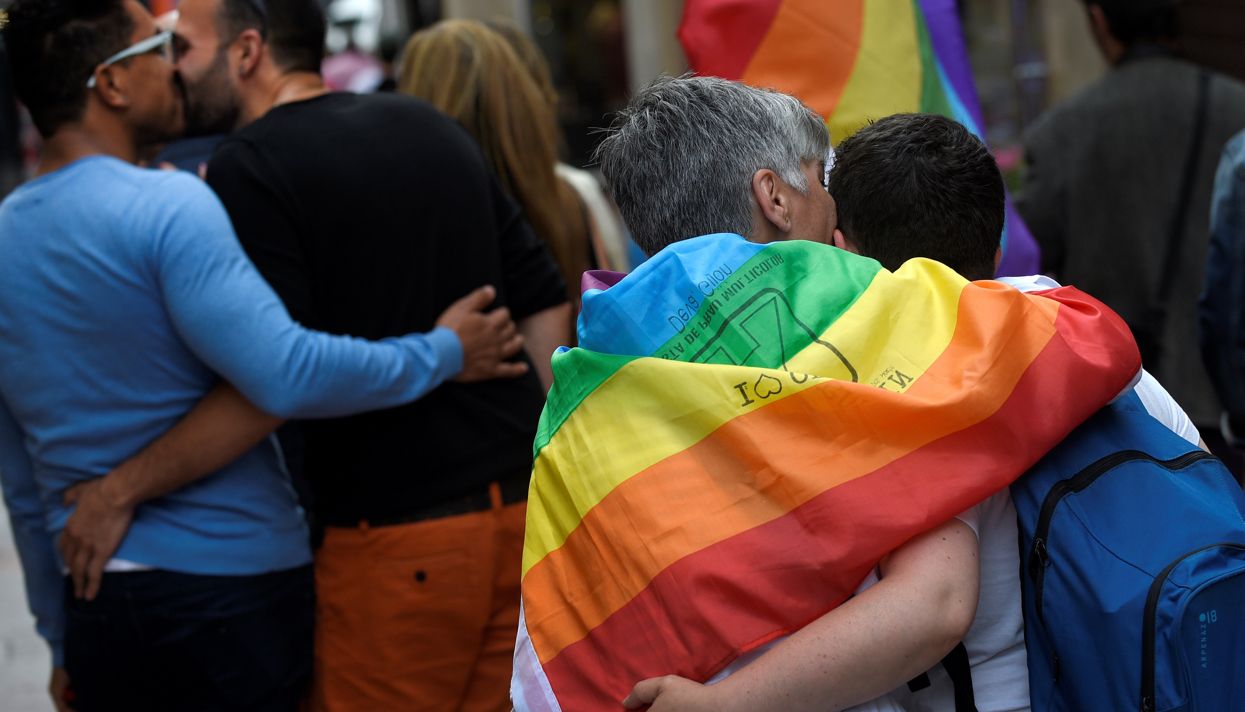
May 17 around the world celebrate International Day of Combating Homophobia, Transfobia and Bifobia. The movement for equal rights to LGBT+ began in the late 1960s, but homosexual, bisexual and transgedural people are still faced with prejudices, discrimination and persecution (in some cases, the persecution ends with physical reprisal ). Medusa says that you need to know about one of the forms of sexual orientation - homosexuality - and that science and religion think about this.
Is it possible to become gay?
In modern science (in particular, biology and medicine), it is believed that homosexuality, like any other sexual orientation, is a type of norm, not a disease. What exactly affects her, scientists cannot yet say with accuracy, but there are versions that these can be genes or hormonal features of intrauterine development . For example, it is proved that the DNA section on the X chromosome, XQ28, reliably correlates with sexual orientation, and also that heterosexual and homosexual men have a difference in brain structure. Moreover, exactly the same difference was found in the rams. Yes, homosexual rams also exist, like chimpanzees, penguins, dolphins, elephants and pigeons. Therefore, do not consider homosexuality the influence of education and environment, contradicting nature.
True, one should distinguish between homosexual orientation and acquired homosexual behavior, which do not always coincide. For example, there is “situational homosexuality”-when a person enters into same-sex contacts if heterosexual for him for some reason is not available (for example, in prison). This does not make a person a homosexual: when the situation changes, his behavior returns to the former.
In the opposite direction, this also works: homosexuals can lead a heterosexual lifestyle due to prejudices in society. It is not only about direct prohibitions-although in many countries the article “For Sodigy” was canceled not so long ago (in Russia-in 1993, in the UK-in 1967; in Iran and Saudi Arabia, homosexuality is still outlawed and can be punished even by the death penalty). In addition, during the 20th century, homosexuals tried to “treat” - with the help of medicines, electric shock or psychotherapy (which does not help , but only injures more). Living in a homophobic environment, many homosexuals hid or suppress their orientation, marry a person of another sex and led a heteronormative lifestyle. But this did not make them heterosexual. Therefore, now people of the older generation, for a long time hiding their orientation, make late camming outs .
Whatever the adherents of the law on gay propaganda or opponents of adoption of children with same-sex pairs say, it is impossible to become gay. Actually, children who grew up from parents of the same sex are homosexual no more than children from heterosexual couples. Studies of same-sex families in 30 years confirm that children do not harm children in any way, but in some ways even benefits: for example, they are less prone to stereotypes about how men and women should behave.
Short. You cannot become homosexual - they can only be born. This is not a disease or a deviation, but a variety of norms - exactly the same as heterosexuality or bisexuality.
Where does homophobia come from?
The origins of homophobia are in the idea of clearly defined and only true roles of men and women. In the patriarchal culture, a woman is laid by such features as weakness, humility, passiveness, and a man - authority, aggression, activity. This is a heteronormative model of relations that regulates behavior, including sexual: the denial of these rules is considered “abnormal” and shameful. It is enough to recall the reaction of the Chechen authorities to reports that gays are also among Chechens. This is also confirmed by the data of modern polls: the worst of all to a homosexual neighbor would be reacted to the purely patriarchal countries (Jordan, Egypt and Saudi Arabia).
An important (although not the only) basis of patriarchy and homophobia is religious traditions: the church supports conservative values. Most of the major religions of the modern world have historically treated homosexuality disapprovingly, and in Abrahamic religions (that is, primarily in Judaism, Christianity and Islam), same -sex relations - under a strict prohibition. In Christianity, as in Islam, this ban is justified primarily by links to sacred texts. For Christians, this New Testament (although Jesus in the Gospels does not say anything about homosexuality, it is condemned by the Apostle Paul in his messages), for Muslims - the Qur'an. Both traditions played an important role in the formation of household homophobia in these regions. History, however, shows that homosexual relations were widespread in both the Christian and Islamic world both in the Middle Ages and in modern times.
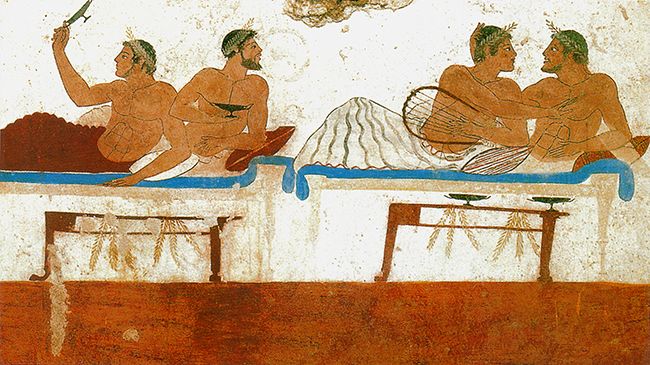
Why homosexuality fell into disgrace with different religions is not so easy to say. Most likely, this is due to the very development of society: like the patriarchal culture as a whole, religion, condemning homosexuality, dates back to the agricultural revolutions of antiquity. For tribes of hunters and gatherers, the attitude to sexual life was often far from modern conservative ideas - and even the gender could not be binary. But with the transition to agriculture, men became more influential, the ideas about their role also changed.
Probably, Judaism condemned homosexual relations as a result of the ban on earlier ancient Hebrew pagan cults; Christianity, on the other hand, was largely inherited by a negative attitude to homosexuality from Judaism. The reason could be critical to classical Greco-Roman civilization, where much was allowed that Jews and early Christians seemed immoral.
Short. Patriarchal traditions are to blame for everything. Religion is not the only cause of homophobia, but the most powerful factor supporting it.
I am a believer. I have to condemn homosexuals?
The attitude to homosexuality began to change in the second half of the 20th century, and among believers too (after all, most of them now do not live according to the canons of Levita’s book or a conservative sharia). This is especially characteristic of Protestant movements that quite radically rethink the sacred texts. Sometimes it is said that the apostle Paul condemned not so much homosexuality in the modern sense, but the characteristic pagan Roman practices. Such reasoning can cause great scientific discussions, but help to change views on homosexuality in the religious environment.
Now in the world there are many believers who are neutral related to LGBT+. Moreover, there are a lot of believers of homosexuals - and this is not only Protestants , but Jews (the popular reformist Judaism in the USA recognizes same -sex marriages), Muslims, Catholics. There are also Orthodox ones: in the summer of 2016, one of the participants in the European Forum of LGBT Christian groups sent an open letter to the Orthodox Council with a request to recognize and accept homosexuals.
Some clergymen, including Orthodox, are ready to mitigate the attitude to homosexuality. However, the official doctrine of both the Russian Orthodox Church and most other non -prostate Christian groups still consider homosexuality sin. In the best case, as in the Catholic Church, it is assumed that homosexuals are the same Christians as everyone else, but should abandon the same -sex sexual contacts.
Short. Despite the fact that the canons of Abrahamic religions condemn homosexuality strictly strictly, the believers themselves are gradually rethought.
I am not a homophobic, but I don’t understand why gay parades are needed. Why do you need to demonstrate your orientation?
Gay parades arose as part of the civil rights movement of the late 1960s, and in particular against discriminatory laws-homosexual relations even between adults and by mutual agreement in many countries were considered a criminal offense in many countries. The first gay march took place on June 28, 1970 in New York on the anniversary of the Stonevoll uprising-a rebellion against police raids on a gay bar, which resulted in mass riots and became a turning point in the history of LGBT movements. Almost half a century has passed since then, in many countries homosexuality has been decriminalized, but LGBT people still face discrimination and do not feel free. Therefore, the main goal of gay prides remains the same: to rally and support such people, to make them visible to society, to declare that they should have the same rights as the heterosexual majority.
The task of the LGBT community is not to “promote” homosexuality, but to fight for the same right to be accepted in society as heterosexuals. Simply put, for the opportunity to be yourself without hiding and not ashamed. These are the simplest things that are available to heterosexuals: hold on to people by hand, upload joint photos to Facebook, marry and adopt children, not hide your personal life and partner from colleagues or parents as something shameful.
Short. Gay parades is part of the LGBT struggle for equality. Most heterosexuals demonstrate their orientation every day; homosexuals can insult, beat or kill for this.
Why do you need same -sex marriages?
The right to enter into a marriage is enshrined in the European Convention on the Protection of Human Rights and Fundamental Freedoms: "Men and women who have reached marriage age have the right to marry and create a family in accordance with national legislation." But in many countries, including Russia, the legislation does not allow such an opportunity for same -sex couples. The point is not only that everyone can want to register relationships and play a wedding, regardless of sexual orientation. Legal aspects are much more important: in fact, Russian same -sex couples are invisible to the Family Code and are deprived of the rights and opportunities that it gives to heterosexual people. Part of the rights of homosexual couples can protect with the help of special agreements , but not all.
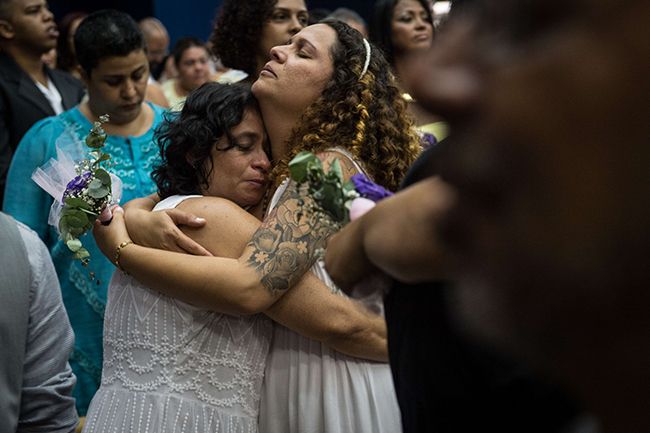
Simply put, same -sex partners are not considered family members - and, for example, they will not have the right to inherit (if there is no will), the right to not testify against the spouse or receive information about the health of the partner if he is in the hospital.
A separate question is children: under Russian legislation, parental rights and obligations in a same -sex pair can only have a biological or adoptive parent of a child. All this creates a lot of situations where homosexual people have much fewer opportunities than heterosexual.
Short. While homosexual partners cannot marry, they are not considered relatives - and therefore cannot have many rights that couples have. For example, together to be considered the parents of the child.
Is it true that HIV is a gay disease?
The HIV epidemic in the very beginning of the 1980s really most affected homosexuals. The virus was initially even called Grid-RELEET IMMUNODEFICYY (immunodeficiency associated with homosexuality). In 1978, the HIV infection was already in several thousand homosexual residents of New York and San Francisco; By 1982, they began to actively write about her in the media , panic began. By the end of the 1990s, every third American had prejudices against people with AIDS. Fear and homophobia played a not the last role: many believed that the carriers of the virus earned their illness. In turn, the carriers of the virus were afraid to contact doctors or inform partners about their status - and this is still happening .
The main risk group in the world and now LGBT+remain: according to statistics , men who enter into same -sex connections are 24 times more vulnerable to the virus than other men, and transgender men - at 49. But this does not mean that all the others does not concern the problem. According to experts, at risk now, regardless of gender, gender identity or sexual orientation. According to some reports , in almost half the cases, Russians are infected through heterosexual contacts. Experts say that in Russia the situation with HIV is close to the epidemic, which is especially noticeable in the regions . The head of the Ministry of Health, however, recently reported a decrease in the number of new cases of infection-but her words were refuted by the head of the Federal Scientific and Methodological Center for the prevention and combating of AIDS Vadim Pokrovsky.
In many ways, the reason for this situation is in the lack of information and public condemnation of HIV-positive people (only a third of the infected are addressed for help). An attack on a sex loser is added to this-such as a social campaign that claims that the protection against AIDS is given love and fidelity to the partner, and not the protection and dissemination of information about the disease (although it is proved that the promotion of family values does not help in the fight against HIV).
Short. Homosexuals, bisexuals and transgender people are most vulnerable to the virus, but this does not mean that this does not concern people with another sexual orientation. You need to know about the disease and be protected.
At what age do people understand that they are homosexual? How to understand this to yourself?
In modern psychology, it is believed that sexual orientation begins to manifest itself from 6 to 14 years old - just when children and adolescents wake up sexual interest in other people and they first fall in love. At the same time, experts note that the formation of sexual identity in adolescents is a complex and ambiguous process and sexual orientation does not necessarily coincide with sexual behavior. For example, a teenager can experiment with people of his gender, but not to consider himself (or not to be) homosexual. Or he can be aware of his homosexuality, having no sexual experience.
Unlike sexual orientation, the environment can affect sexual self -identification and sexual behavior: roughly speaking, if a homosexual child grows in a homophobic environment, he can try to suppress his desires, adapt and behave like everyone else. Therefore, it also happens that a person does not recognize for a long time in his own sexual orientation to himself.
Short. Usually, sexual orientation begins to manifest itself in childhood and early adolescence, but this scares many - therefore they try to change or begin to hide their feelings.
And the last. How to talk about gays, so as not to offend anyone?
Firstly, it is right to say precisely “homosexual” and “homosexuality”, and not “homosexual” and “homosexuality”. The second option was adopted in the USSR, when this type of sexual orientation was considered a disease, and the word itself designated “sexual perversion” - so that these terms have preserved a strong negative subtext. A man and a woman can be homosexual. The main thing is that such a person experiences sexual attraction only to representatives of his own gender.
True, in the English -speaking world, the word “homosexual” is about the same claims that in Russia to “homosexual” - it was a long time as part of homophobic rhetoric and clinical diagnosis. Therefore, activists still recommend using the term “gay” to homosexual men, and “lesbian” (in English, they can also be called the word “gay” addressed to women). In Russia, this option is also preferable. Actually, these are parts of the abbreviations of LGBT (lesbians, gays, bisexual and transgender people). Now they also began to use the expanded abbreviation of LGBTKI-all the same plus Quir , Intersex-Monks and asexual people. Another possible option is LGBT+.
There are outdated and insulting terms - “pederast”, “sodomit”, “blue” and so on. Well, you should not use the Gay epithet: there are actually nothing typical of homosexuals, and people with homosexual orientation often have nothing to do with tastes, nor in appearance, nor behavior (no matter how stereotypes convinced us of the opposite).
Short. It is most correct to call homosexual men gays, and women - lesbians. And do not joke about the "geese"!
Olga Strachovskaya
The editors thank for help in preparing the material of religious scholar Konstantin Mikhailov.