
Translated material
"David Bowie answered simply:" lol ""
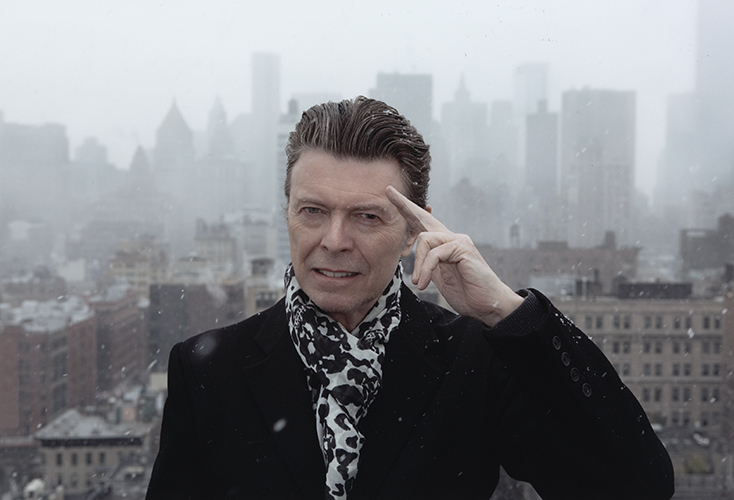
At the Beat Film Festival festival, the documentary “The last five years of David Bowie”, telling about the final period in the life of the great musician and artist. His author Francis Waitley, who had previously shot David Bowie: Five Years , talked with the hero of his films since the beginning of the 1990s. Denis Boyarinov learned from the British director why David Bowie’s wife did not appear in them, and about the stories that remained behind the scenes.
- Do you consider yourself a fan of David Bowie?
- Undoubtedly. When I was little, my older brother was his big fan, and I furtively made his way into his room and examined David Bowie's records. Gradually and I became a fan. All Britain boys in the bedroom hung a “tennis player” - a photo of a girl on a tennis court, who had lifted a skirt under which nothing was. And in mine there was a photograph of Ziggi Stardast. Now I would hang a "tennis player."
Yes, I was a very big fan. When I went to the fifth or sixth class, in my class there were only four boys who had musical preferences. One loved Led Zeppelin , the second - Siouxsee & The Banshees , the third - Genesis , and I am David Bowie. These were the 1980s, and David Bowie came out of the ultra-sting period into a not very successful one. Being his fan at that time was not very fashionable. But I was devoted to him.
- I finished the album and is very pleased with my lot. What else can I wish?
- What was the most memorable concert of David Bowie, which you had to visit?
-In 2002, he performed at the Meltdown festival at Royal Festival Hall . That year he was his curator. He sent me tickets.
- Myself?
- Yes - we were familiar. He invited to come. There were all the right guys at this concert: Robert Smith from The Cure , Madonna, Kylie Minoga, etc. It was a very good concert. He completely played the Low album, then most of the Ziggy Stardut and the last at that time album “Heathen” , which I really love.
This concert crashed most strongly to me in memory. Alas, I was too young to get to Bowie’s concerts in the 70s.
- The first film - “David Bowie: Five Years” - was your own initiative or order from the BBC ?
- For many years I tried to make a film about David Bowie. He took part in some of my projects - for example, appeared in the documentary television series "Seven Ages of Rock" . When I found out that a large exhibition dedicated to Bowie was being prepared in the Victoria and Albert Museum, I thought that this was the right time to make a film about him. I convinced the BBC . I still do not understand how I succeeded. They are very careful in the support of projects, and when they learned that David Bowie will not be directly involved in the film, they reacted very skeptical to my idea. After the film was released and everyone liked it, the BBC leadership said that they agreed instantly. But this is not so.
“Have you tried to involve David Bowie in the film?”
- I offered him this, even when we shot Seven Ages of Rock . But he refused. In general, he refused to talk about his music.
- Why?
- I believe he believed that he said everything that had to be said. He did not like to repeat himself, so he did not see the point in this. And he also did not like to be a pawn in someone else's game. Perhaps if I had offered him the idea of the film “Five Years” five years earlier, he would agree. But at that moment everything changed.
When I tried to get Brian Ino in the film, he refused me. I had to write to David and ask him to convince him. He replied that he would try, but he promises nothing. Then he answered me: “I am very sorry, Francis, but Brian does not want to. I can't force him. ” “Okay,” I answered. “Then you will have to star for him.” To which he answered simply: "Lol."
But, thank God, Brian Ino still agreed.
- How did David Bowie react to this film?
“He asked me to show him the film before someone sees him.” And I, of course, refused him. They don’t do it on BBC . The same situation was repeated with the “last five years of David Bowie” - his management wanted to see the picture before the premiere, but I refused.
But I sent David the film Fedex 'OM to his London apartment for an hour of premiere on television so that he had the opportunity to see him with everyone. And he looked at him and answered instantly: “Francis, I am very proud of you. Thank you".
- Was it difficult to work with David Bowie?
- He knew what he wanted, and collaborated only with those people whom he appreciated. Was it difficult to communicate with him? I don't know. He has always been very affably located to me and very charming. When “five years” began to collect positive reviews and awards, he wrote to me: “I follow your successes.” I answered him: "These are the successes of the hero of the film, not his author."
He was not starry at all. Just dressed - ordinary sneakers, cheerful shirts. When he first came to me on the set, I did not immediately notice it. My assistant pointed me to him.
In the last days of his life, David Bowie spent his time to support other people.
- Did you have the idea to shoot the continuation of the “five years” immediately after the film came out?
- No. I understood that I could take off the “other five years”, but it would be too cheap. When David Bowie died, BBC asked me if I would make another film. I replied - yes, about the last five years of his life. They were amazed - how is it possible? After all, there were no archives left, he did not give an interview - there is nothing to show. I said I could handle it. They did not believe me. But they never believed me.
- In the film “The last five years of David Bowie” there are no people entering his close circle - wife, son, close friends. You could not or did not want to talk to them?
- I didn't want to. His wife? I was told one terrible story about his wife. As she once told him with her beautiful Somali accent: “Take this guitar from our bedroom!” What?? She ordered Ziggi Stardast to expose his guitar?! It does not seem to me that she was interested in his music. She was not with him at the studio, she did not work with him. I do not think that she would have something to say, except that he was wonderful, and this is not very interesting. His son Dankan Jones? He admitted that he did not listen to his father’s music and he did not really like her. His youngest daughter was too small.
In addition, I do not make films about private life. And if you involve a family in the film, it is already not talking about art and profession, but about something else. I am not interested in it.
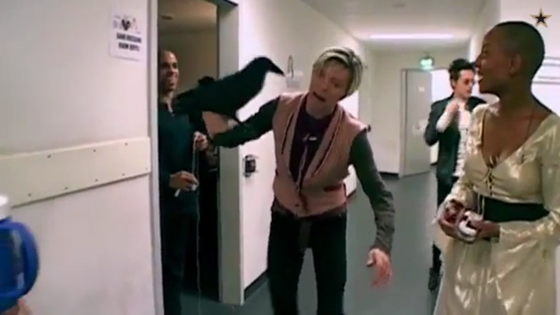 © BBC Hard from the movie "The last five years of David Bowie"
- Were there the people you wanted to talk with for this film, but did not work?
- Iggy pop. He refused to star in the first film and in the second. He was the only one who refused. I do not know what the true reason is, but I believe that it is in disagreement between him and David Bowie that arose many years ago. For him, this is a very difficult topic, he still does not want to talk about this. When David Bowie died, Iggy Pop devoted him the release of the program, which he leads weekly on the popular British radio. This is an amazing program, because he included his songs there, but he said almost nothing and did not talk about Bowie. He did not even mention the fact that they were familiar and once communicated closely. And they were very close, but at some point he changed his attitude. It is a pity, because Iggi Pop is a wonderful, observant, smart person. He could tell a lot of interesting things.
- Which of the people with whom you talked for films about Bowie surprised you with its point of view?
- Robert Fripp. He looked like an accountant in his checkered suit-not at all rock and roll-and told very funny things. And also Carlos Alomar. In the first film, he was very funny. He recalled the first meeting with Bowie: “That guy turned, and he had ... orange hair. Not red, but directly orange-orange. Tear your eyes! It was wild! This guy was Frick !! And I told him: you must come to visit me because you are too skinny. I will treat you with my mother’s cooking. ” He was incredibly charming. In general, the first film turned out to be very fun and joyful. The second for obvious reasons did not work out.
Eva Cherry - she was the girlfriend of David Bowie - told such a story not under the record that you can crazy! But I can't tell you.
Bowie often called - perhaps he was bored.
- What do you think, when David Bowie began to record Blackstar , did he know that he was dying, or not?
- Oh, this is a million dollars! I think that when he released two tracks in front of Blackstar - Sue (Or in a Season of Crime) ” and “ Tis a Pity She Was a Whore ” , he knew nothing yet. Perhaps he was sick and felt that his health was crumbling. Especially after a heart attack in 2003, when he disappeared from public life for several years. But did he know that he had cancer when he took up Blackstar ? I don't think so.
- You did not try to find out from David Bowie what he was doing at a time when he disappeared from public attention until he reappeared with the albums “ The Next Day " and " Blackstar " ?
“I knew what he was doing.” We corresponded at this time. He wrote to me what books he read, what concerts he went to and what films he watched. I knew that he was writing Blackstar , he wrote to me about it. He did not tell me the name of the album, but I knew that he was working on new songs, and I was silent about it. We were not very close with him, but talked.
- Is there a documentary video chronicle of this “missed” time, what do you think?
-There are video chronic sessions of the Blackstar record, but I do not think that she will ever see the light. David Bowie wrote down a lot for his archive. For personal purposes, not for commercial use. Maybe one day the family will decide to publicize these notes, but I hope that they will not go to it. He was sick at that time. He looked bad. Why is this necessary? David Bowie spent his life not only to music, but also to create his own image. Why destroy it to show that he was old and mortally ill?
I did not insert personnel in my film, on which he looked terrible, but I had them. I do not see the point in this.
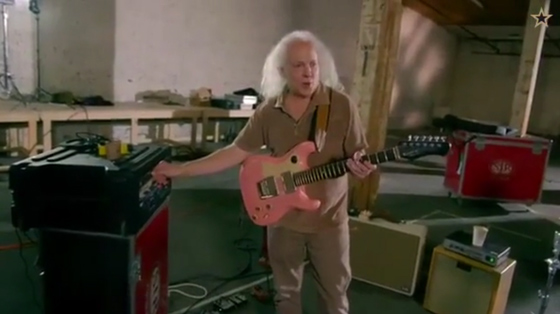 © BBC Hard from the movie "The last five years of David Bowie"
- I forgot to ask you: how did you meet David Bowie?
- When I just came to work as a director at the BBC , I was instructed to shoot a series of two -minute films about British sculpture. They made similar films about contemporary art before. In them, their attitude to art objects was expressed by ordinary people-butchers, green workers, etc. By the way, it was a great idea. But the case was in the 1990s, and then everyone was obsessed with the cult of celebrities. I was asked to make a list of their heroes and make such films with them. David Bowie was the first number on my list. I wrote him a letter. The usual, electronic then were still not in use. And he called me back: “Hello, can I talk to Francis? I will do it with pleasure. Can I choose a sculpture myself? "
He chose the work of Richard Devro. The huge stone on which was engraved: "Sacred" . I thought: "What the hell, what will I do about it?" I took this stone, took it to the forest and began to shoot. I took it off from above, from below, from the side, with an influx through the branches, with the passage along the inscription - and still it looked so -so. David Bowie wrote something like a poem on which this sculpture inspired him, and read it under the composition “Ian Fish” from the soundtrack to the film “The Buddha of Suburbia” . But, oddly enough, it turned out well together. David Bowie was very pleased with the resulting film. But the BBC management did not enter it, because it looked very strange.
After that, Bowie began to call me from time to time. In general, he often called - perhaps he was bored. He told me about the art and the books that I read. I loved to read books and go to exhibitions. We discussed what we saw and read, but did not talk about music. At this time, David Bowie was especially fond of art. He made an interview with Tracy Emin and Damien Hurst. I bought the works of British artists.
Once he invited me to see his collection of art. It was located in a factory building in the south of London. There were amazing work, some of them recently sold at the auction. But not all - the best family left itself.
Then I made a film about the wonderful British artist Stanley Spencer. Bowie had his paintings in the collection. He read the sunbeam in my film:
We continued to communicate. He knew that I was a fan of his music. At our acquaintance, we came to one of his rare song. He was surprised that I know her. Then I admitted to him that I am his old fan. “Ah,” he answered absently, and we did not return to this topic anymore.
- How did the day go to you when David Bowie died?
- I suffer from insomnia. I can get up at four in the morning and no longer go to bed. But on this day - I don’t know why - I slept tightly to nine. When I looked into my phone, there were 25 messages like “Do you know that David Bowie died?” Then they began to call and write news programs - to invite on the air to talk about it.
That day I did not feel anything. I have not yet realized the loss. Now I have emotions, but not the same as if I had lost a friend. I was not his friend - he talked, called and corresponded with many people. He meant a lot for me not because I knew him, but because of my music.
I did not go to Brikston that day. There, at the wall with a portrait of David Bowie, many people gathered to honor his memory. Including my daughter - she led the shooting there, which we used at the beginning of the "last five years." I did not want to be in the crowd and lament with everyone: "Oh, he was my hero." In my opinion, this is terrible. But, as a rule, the real fans of David Bowie behave so. Now you hear from every second: “I loved him so much. I miss him so much. ” Yes, a trait from two - you first talk about him and only try to jump into the last car.
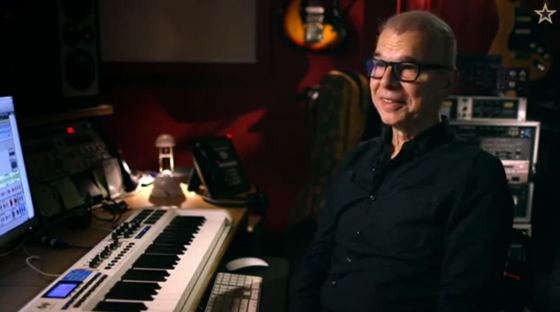 © BBC Hard from the movie "The last five years of David Bowie"
- To finish the interview not on such a sad note, can you tell the story of Eva Cherry?
- Oh no, and do not ask (laughs) .
I can tell you such a story. Three weeks before the death of David Bowie, I received a letter from him: “Hello, Francis. How are you and your family? I finished the album and is very pleased with my lot. What else can I wish? I am now reading a new book of such and such. ” A rather strange letter, but all his letters were a little strange, so I was not surprised. When you get a letter from David Bowie with the question of how you are, you do not start telling how exactly you are doing. But I did just that. And my business was not very good. Times were difficult. BBC began large -scale reductions. They ruthlessly got rid of people. I was taken out of the staff of employees. I wrote to him about it. “I probably have to leave the BBC . We must move on and blah blah blah. ” He answered me: “Dear Francis, if at least someone had a drop of common sense on BBC , they would give you a life-long work.” I was very touched by this letter.
You see - in the last days of his life, David Bowie spent his time to support other people, and no one knows about this help. His old friend, photographer Jeff McCormak, said that Bowie spent the whole night, signing photographs for him. He understood that Jeff could then sell them and live comfortably. These were portraits of a large format. The pack was thick. In the last photo, David Bowie wrote: "Dear Jeff, good night."