
Translated material
Compatibility with freedom
The performance of Lev Schlosberg at the second ceremony of the Boris Nemtsov Award on June 12, 2017
Of course, first of all, it is necessary to say that we are in solidarity with citizens who are detained today in our country at protests, who became victims of iniquity and violence, were detained and arrested, and wish them as early liberation.
A year ago, in this hall, the Boris Nemtsov Foundation held the first award ceremony for his name. From this day, the personal and public tragedy of the death of one person has become the engine of the struggle of society for freedom in Russia.
The Boris Nemtsov prize answers the question of what life can be after death, and shows a lively example of what active memory can be.
The desire for freedom was for Boris Nemtsov the oxygen of life. This desire today unites everyone for whom the current state of Russia is intolerable. The lack of freedom is torture not free.
* * *
Exactly a year passed from June 12 to June 12. How did our country live? How did the people of freedom live in the conditions of lack of freedom? What were we able to do? What did we not have to do? What will we do tomorrow to continue moving from non -freedom to freedom?
The main political result of the past year is the alienation of people and power growing before our eyes. Russian society and Russian power live in different spaces. And when these spaces collide, an alarming smell of the war of the worlds arises in the air, in a sense of the war of civilizations. This smell makes us think about the price of freedom. About the price that the authorities are ready to pay for lack of freedom, and about the price that society is ready to pay for freedom.
The question is who makes decisions and who ultimately pays. Including freedom. Including life.
A centenary of tragic and in many ways of barbaric events of 1917 reminds us that political barbarians cannot bring freedom to themselves or others.
A century later, Russian society is split and disoriented. This is an ideal nutritional environment for the revolution and civil war. For everyone who professes the ideals of freedom and value of human life, both threats are unacceptable.
The policy of lies and violence, the policy of cynical manipulation of historical myths and personal fears led to the fact that half of Russian society today sees salvation in the reincarnation of Stalin . The increase in political repression occurs, including because millions of people consider barbarism of yesterday the best example for the day of tomorrow. The authorities raised this audience, but she does not know what to do with her.
Stalin's shadow became Putin's cloak. This is a deadly political costume in which it is impossible to make a single free movement.
The bloody uniform of the Officer of the NKVD has become a carnival costume in modern Russia, which is eager to try on everyone who yearns according to the arbitrariness of the state executioner.
Russia has become a country that is looking for the meaning of its existence in the images of the eras of wars and violence, in the mass victims and the justification of the suffering of the people by the highest goals of the state, for which the value of freedom is unacceptable and which despises the value of human life.
* * *
From June 12 to June 12, we lived another year of lack of freedom.
This year, Russia continued to wage two wars - in Ukraine and in Syria: one - undeclared, the second - official. Both of these wars are united by the desire of the Russian authorities to return to the “High League” of world politics through violence and threats, through the reproduction of fear and within the country and around it.
In such an atmosphere, the struggle for peaceful Russia is an absolute condition for the struggle for freedom. Freedom and war are incompatible .
This year, Russian democrats were defeated by the Russian State Duma elections. We lost not only because we had an unsuccessful campaign, we lost, including because the Russian democratic society ceased to believe in the very opportunity to change power through the elections. In a country leading two wars on a foreign land, in a country whose authorities are waging a war against civil society, it is difficult for people to believe in a peaceful change of power.
The temptation of the revolution hangs over Russia. A quick violent action seems to be many saving exit from the infinite, as it seems, political stagnation. But freedom and violence are incompatible .
This year, a judicial investigation in the case of the murder of Boris Nemtsov ended in the Moscow District Military Court. We saw a court in which it is forbidden to talk about the main thing, ask questions about the main thing, discuss the motives of the crime. The court is investigating political murder without questions about politics. We saw a court that did everything possible so that the society did not receive answers to the main questions: who ordered and why he ordered. Such a court shows that there are people who know the answers to these questions. And they protect these answers as the military secret of the state. But freedom is impossible without justice.
The main feeling in the relations of society and the authorities in Russia was distrust. Distrust of the authorities, distrust of the elections, distrust of politicians. Russia today is a country whose most citizens do not trust the state. People and authorities became strangers.
But the lack of trust excludes social dialogue. Freedom and distrust are incompatible .
This year, many people in Russia made a personal decision on non -participation in public affairs. Because they do not believe in success, do not believe in their personal forces, do not believe in the forces of society. But also because it is difficult, dangerous, scary to participate. The action of a free person always needs personal effort. To fly, you need to wave your wings.
The action of a non -free person does not need efforts. It is enough to inactively inactive for non -participation.
But freedom and non -part are incompatible .
This year, Ildar Dadin , a desperate citizen, broke the millstone of a huge state car, designed for submissive and silent. Dadin deliberately went to personal imprisonment in order to destroy the general rule of lack of freedom. He pierced the wall with his head.
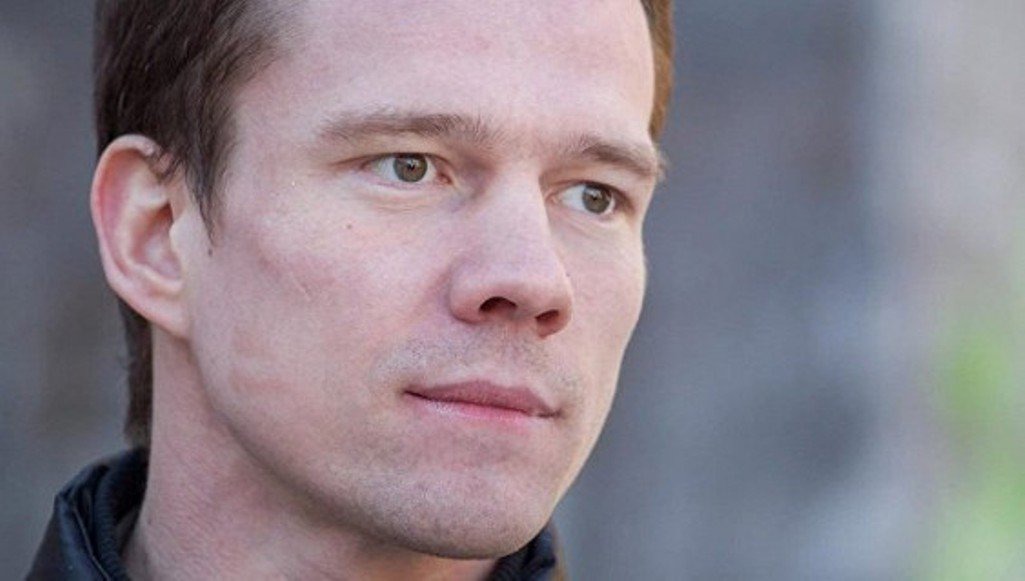 Ildar Dadin. Photo: Activatica.org
The Supreme Courts recognized Dadin's imprisonment illegal, and the norm of the law, on the basis of which he was condemned, is unconstitutional. This did not happen because the authorities were so beneficial, but because the garrison of the non -freedom fortress was not a completely free person who shaved the walls of the Russian prison with his personal desperate effort. On Ildar Dadin, the system broke. The exception destroyed the rule.
The authorities did not retreat to the people. They retreated to one person who showed that he was ready to consciously go into personal lack of freedom for the sake of general freedom. For ours and your freedom.
* * *
A year ago, in this hall, I announced that the Boris Nemtsov Prize will be donated to the “team 29” - a human rights group of young lawyers led by Ivan Pavlov .
Today I report that the “team 29” has made these funds.
Most of the funds ( 417 thousand 958 rubles) were spent on the defense of the director of the library of Ukrainian literature in Moscow Natalia Sharina , the criminal case against which was obviously fabricated for political reasons.
The investigation opened the case on the “extremist” article of the Criminal Code of the Russian Federation. Allegedly, the director of the library spread books of Ukrainian politician, previously recognized by extremist. Six months after the initiation of the first criminal case, when his futility became obvious, the second appeared - about supposedly embezzlement.
The Meshchansky District Court of Moscow has considered the case since October 2016. On June 5, 2017, the court announced the verdict according to which Sharina was found guilty with his appointment as a punishment of 4 years in prison, that is, without imprisonment. At this price, Natalya Sharina was released. In the realities of the Russian judicial system, this sentence can be considered justifying. But the assignment of guilt on an innocent person is infinity. And the lawyers of the “team 29” are preparing an appeal for the verdict.
88 thousand 99 rubles. The historian Boris Sokolov was spent on protecting the public position of the historian about the protection of honor and dignity and the recovery of non -pecuniary damage in connection with the distribution of his granddaughter , Vera Serov and politician Alexander Khinshtein , filed on the air of the Echo of the USSR on the air of the Echo of the USSR on the air of the Echo of Echo of Moscow about the possible falsification of the KGB Chairman of the KGB. On December 23, 2016, the Presnensky District Court of Moscow refused the lawsuit in full, on May 2, 2017 the Moscow City Court upheld this decision, that is, the lawyers of the “team 29” won a full victory.
According to the results of this case, firstly, it was possible to defend the right to freedom of expression and the freedom of historical and scientific discussion about the authenticity of certain historical sources, and secondly, the plaintiffs were presented with the originals of the published Diaries of Serov, due to which the interest of scientists in the issue of whether these diaries exist were satisfied.
35 thousand 856 rubles. It was spent on the appeal in the Supreme Court of Russia the forms of a lawyer's request, approved on December 14, 2016 by order of the Ministry of Justice of Russia, which appeared as a result of the adoption of the new version of the new version of the “Barry request” of the Federal Law “On Bar Affairs and Advocacy in the Russian Federation”.
Information about the client, which was supposed to be reflected in the lawyer's request according to the new requirements of the Ministry of Justice, draw up a lawyer’s secret, and the federal law prohibits the lawyer to disclose this secret. At the same time, the law also establishes liability for the submission of a lawyer request not in the approved form. These requirements were impacted by the fundamental institution of lawyer secret, which suggests that the lawyer is not entitled to disclose to anyone information about his client and his case without his consent.
On May 23, 2017, the Supreme Court of Russia fully satisfied the claims of the applicant, which was Ivan Pavlov, and recognized the points of the new form of a lawyer request, obliging to reveal a lawyer secret. This decision was a significant victory for the entire Russian law community.
9 thousand 90 rubles. It was spent on the work of Sergei Pruadovsky and Maxim Halperin on access to materials on convicted employees of the NKVD.
Relatives of the applicants were repressed at one time. They were interested in archival criminal cases against the NKVD employees who participated in mass repressions in the 1930s, and then they themselves were convicted of crimes against the investigation and justice. Prudovsky and Halperin requested archival criminal cases of the 1939-1940s in the Central Archive of the FSB on the NKVD employees who participated in mass repressions, including in relation to the relatives of the applicants. The FSB refused to provide materials with reference to the fact that these persons were not rehabilitated (rehabilitation was refused), and the legislation does not prescribe the right of non -neo -appaired persons and their relatives to get acquainted with the materials of archival criminal cases.
Lawyers of the “team 29” believe that such a refusal is unlawful, since the Federal Law “On Archival Affairs in the Russian Federation” establishes a general right to access any archival documents that do not contain secrets (the FSB confirmed that these materials are not contained in state, personal, family or other secrets).
This business was not successful for lawyers. On June 30, 2016, the Presnensky District Court of Moscow refused the requirements. On November 10, 2016, the Moscow City Court made a ruling on the refusal to satisfy the appeal. On March 22, 2017, a cassation appeal was filed against the Presidium of the Moscow City Court, but it was also denied its satisfaction. The courts fully supported the position of the FSB.
1200 rub. It was spent on the case of challenging the decision of the authorized court of St. Petersburg on the refusal to publish a special opinion of the judge in one of the affairs. The authorized court of St. Petersburg for the first time in the history of the Russian judicial system refused to introduce the case to the case file and publish a special opinion of the judge. The court decided that the special opinion of the judge Olga Gerasina is “not such”, since it contains “judgments and assessments” that are not related to the charter of controversial norms. Thus, guarantees of the independence of judges and the rights of citizens to familiarize themselves with acts of constitutional justice were violated.
Artem Kutlovsky, a student of the law faculty of St. Petersburg University, decided to challenge the actions of the authorized court related to the unpublished special opinion of the judge, since this violates the right of citizens to access information about the activities of this court.
The administrative statement of claim was filed in the Smolninsky District Court of St. Petersburg on April 26, 2017. On May 5, 2017, the court made a ruling on the refusal to accept the claim: the judge indicated that the decisions and actions of judges and judicial authorities were not subject to appeal in court. On May 22, 2017, a private complaint was filed in the St. Petersburg City Court to refuse to accept the claim, which currently expects its consideration.
All five cases , the work on which was conducted by the “team 29” using the funds of the Boris Nemtsov Foundation Prize, unites the main thing: this is the struggle for freedom in the conditions of lack of freedom, this is the struggle for rights in conditions of bloodlessness, it is a struggle for honor in dishonesty.
I believe that Boris Nemtsov would approve this work.
Such work sooner or later will lead to the fact that Russia will be free.
The Boris Nemtsov Prize brings this day.
Thank you very much.