
Translated material
Space in which you want to be
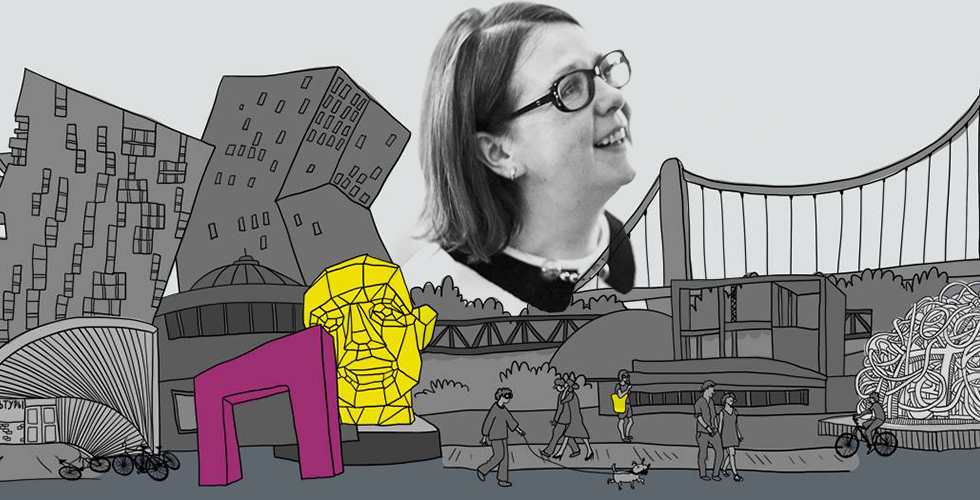
On August 1, Evgenia Shermeneva leaves the network media Culttrigger, which was launched in December 2016 as part of the program of Mikhail Khodorkovsky “Open Media” and talked about people, events, trends that determine modern culture and new language in art.
A year ago I was invited to a new project. This is not the first time in my life. But here it turned out that the work is completely new - the creation of a network media about culture. Where am I with my theatrical and organizational experience-and where is the media? My whole connection with them was previously limited to reading, listening and inviting critics to the festivals that I led. Well, sometimes I had to communicate with the media while working in the Department of Culture. In general, it was scary. And it is terrible to start making new - your own, unusual, not on the rolled rails, but, possibly, across .
“Cultrigger” is part of the large program “Open Media” , launched at the end of 2016 by Mikhail Khodorkovsky. All media are very different , and I and the Cultrigger, probably, from the very beginning, had a few out of the common company. Because I am still more connected with culture in a practical context, and not with the media about culture, and I saw all this rather from the inside of the profession.
By and large, at the very beginning, there was an idea to use my production experience. “Cultrigger” could become such a “Territory” festival - only online. And about cinema, and about the theater, and about literature, and about music, and about design. And most importantly, about people who do all this with their own hands - and they themselves talk about it.
We agreed that our heroes do not give us an interview. We are talking to them - in a relaxed atmosphere, about everything that is interesting to them in the profession and in life.
Of course, it was very difficult. From the very beginning, we decided that the project will have three components: entertaining, informational, analytical. But in the absence of your own base - the site - all this had to be adapted exclusively to network channels. We always thought about the “packaging” of complex cultural ideas into formats attractive to different audiences - what all world cultural institutions do is a very interesting task. We tried different options for content, different formats, translated and adapted something.
I am very grateful to Kirill Serebrennikov, who two months after the launch of the “Cultrigger” said - and helped me understand this: “You make the space in which you want to be. Let online. The main thing is that all this is about creation, about movement, about love. ”
With intonation, it seems to me, there was the right idea: we do not impose a super -expert opinion - we share our impressions. Why still go to theaters, museums, at exhibitions, watch movies, listen to music - if not to share your impressions with others? This can be formulated in words or visually, it can be expert assessments or just an emotional story about what they saw.
And we made serious analytical materials - after all, almost all the sites have disappeared where you can conduct a professional conversation about culture not only from the creative side. Therefore, we came up with a “professional reading” section, where producers, lawyers, economists who are working in our field write. There were complex articles that were interesting mainly to specialists - and there were also popular . Some of these texts were in demand by specialists, but there were also a lot of interesting things for visitors to theaters, museums and cinema.
It was very important for me that next to materials about successful metropolitan artists there were stories about what is happening hundreds and thousands of kilometers from the capitals. We had materials from Siberia , from the Urals , from small cities . Nestolistic Russia. How cool it was about her.
I am very grateful to Kirill Serebrennikov, who two months after the launch of the “Cultrigger” said - and helped me understand this: “You make the space in which you want to be. Let online. The main thing is that all this is about creation, about movement, about love. ”
If we talk about creation and love, I was lucky with the editors in this sense, of course. All our beauty is the merit of an incredibly talented designer Lera Shimchuk. Our chief in SMM, Olga Borodina, with a right hand, like a pilot, led the Cultrigger on all networks. Our pride is a competent and deep Russian language, for which I thank the editor Katyu Drobyazko. And what authors wrote for us, made a video, commented! Ksenia Larina, Julia Pankratova, Olga Shakina, Boris Falikov, Dina Hooder, Mikhail Borzenkov, Mikhail Durnenkov, Olga Galitskaya, Yuri Muravitsky, Elizabeth Savina, Elena Reptur. And, of course, our organizer, editor and author Natalya Poletaeva and permanent correspondent Ilya Panin.
My fundamental decision was not to get involved in any offices-dining-stools, we worked online. Gathering periodically to meetings in different coworking of Moscow. The most beloved now is on Armma: a beautiful, comfortable place, and Gogol-Center nearby, you can go to the performance after the meeting. We organized direct broadcasts of discussions. About local stories and how they are broadcast through cultural projects. About how to work with an audience, starting with very small ones. About how a modern theater or music in the village can live. These meetings-conversations may have opened to someone what a large and unknown world actually exists around us.
But, unfortunately, a conversation about culture in such a vein is, as explained to me, is too difficult and costly. Long texts and smart interlocutors, expressing their thoughts with compound sentences, are not perceived by a mass consumer and contradict the format of social networks. There is no to piece work. It is necessary to increase the audience. Our current is valuable, but too small. You need to make more affordable and popular content. So decided the new leadership of the Joint Edition of Open Media.
Since August, I have been leaving-along with part of my colleagues (someone stays-and I sincerely wish them interesting work). "Cultrigger" will become different. There will be no current author's headings, there will be no video blogs of artists of the Theater. DOC ” , there will be no thoughts of professionals about how and why certain mechanisms in the management of cultural processes work , there will be no elegant cards-to-civilian from the Nobel lecture by Joseph Brodsky , which we came up with the students of the Higher School of Design,-we publish them all in the end of July. Finally.
There is no to piece work. It is necessary to increase the audience. Our current is valuable, but too small. You need to make more affordable and popular content. So decided the new leadership of the Joint Edition of Open Media.
From now on, there will be more mainstream, high -profile names and those interesting to the wide masses. And, perhaps, it will be fascinating - but it has nothing to do with the media about culture and art that we wanted to do.
It was interesting for us to talk not only about those people and problems that everyone writes about - to break through, to persistently break through the information space clogged with loud names and mainstream topics. We wanted to find out how life is arranged in distant cities, from where and why suddenly the phenomenon of “Yakut cinema” shoots, which Vladivostok lives, which museums go there, what books are in demand there. Nobody needs it? This does not give traffic? But how can we understand each other in our huge country, how to speak to each other even if we have no idea about each other?
Where will the new Serov and Nureev come from here? If about them - not yet promoted, not loud - not to tell, then who will help them? The cultural support system in the state is also sharpened under the mainstream. Museum nights 2012-2013 attracted millions of spectators in Moscow - because they talked about them, wrote and this was part of the official policy of the Moscow authorities. In the absence of such a policy and support for the media, the audience is smaller, the cultural field is crushing, the art is marginalized or begins to flirt with the masses to survive and preserve.
Rare private initiatives in culture are also not particularly supported by media - if they are not related to the scandal. Art is truly necessary and interesting only to those who do it. Many professional achievements remain joyfully in a professional field, if you do not talk about them, no one will know about them.
So far, people who understand the importance of culture as a person forming the basis of a person forming, the salvation of culture will remain at the head of the state. A few people - and a few media. But neither the state nor private investors are ready to support such media. They, too,, as it turns out, needs mainstream and traffic.
Nothing new. Attempts to seriously talk about culture often end in this way. We are not the first. But I would so like someone to finally become the last.