
Translated material
Memory. Vera Zasulich
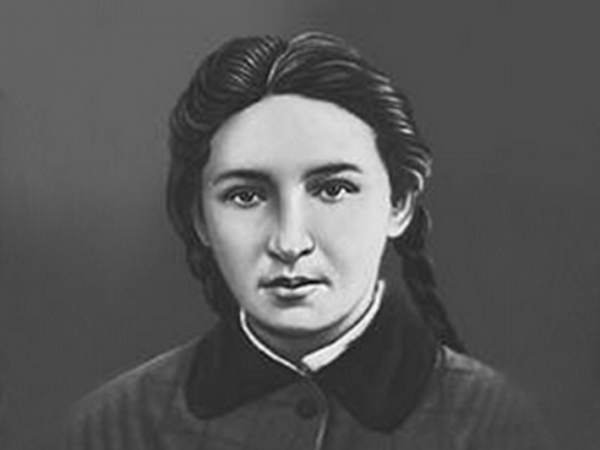
On August 8, 1849, the revolutionary Vera Zasulich was born.
Personal business
Vera Ivanovna Zasulich (1849 - 1919) was born in the village of Mikhailovka, Gzhatsky district of the Smolensk province in the family of a small noble nobleman. When the girl was three years old, her father died, and she was brought up at the aunts of the village of Byakolovo near Gzhatsk. In 1867 she graduated from a private boarding house, where they taught foreign languages and prepared governesses. After that, she worked as a writer with a justice of the peace in Serpukhov, then returned to the capital, where she began to work as a bindter. In Moscow, Vera Zasulich met Sergey Nechaev. However, she did not join the organization of Nechaev, she did not join, only gave her address to send letters to him. After the exposure, the Nechaevites were arrested, as she received one letter from abroad and sent it. She spent more than a year in prison, after which she was sent to exile to the Novgorod province, then to Tver. I was a second time arrested in Tver for the spread of illegal literature and sent to Soligalich. Since 1873 she lived in Kharkov, where she studied at obstetric courses, while participating in the work of the underground circle "Young rebels". Since 1877 - in St. Petersburg, where he became a member of the Earth and Volya society.
On February 5, 1878, the attempt on the St. Petersburg mayor Fedor Trepov. Justified by the jury by the court. Soon the court decision was protested, but Vera Zasulich managed to leave for Switzerland. In 1879, she secretly returned to Russia. Disappointed in individual terror, she became a member of the Black Redistence group, the members did not accept the terrorist tactics of the “people's will” and were supporters of wide propaganda among the masses. A year later, fleeing from the arrest, she left Russia again. In exile, she, together with George Plekhanov , Pavel Axelrod, Vasily Ignatov and Leo Deich, entered the first Marxist Social Democratic group “Labor Labor”. She was a representative of Russian Social Democrats at the Congresses of the First International in 1896, 1900 and 1904. Since 1894 she lived in London, wrote articles on the problems of modernity, literature, history, published monographs dedicated to Russo and Voltaire. Meet with London with Engels. In 1897-1898 she lived in Switzerland. From there, illegally penetrated Russia with a passport in the name of the Bulgarians of the Great Dmitrieva. I met Lenin. In 1900, she returned abroad, was elected to the editorial office of the Iskra and Zarya newspapers, published in them articles criticizing the concept of legal Marxism. In 1903 she participated in the II Congress of the RSDLP in London. After the manifesto on October 17, 1905, she was able to return to Russia, where she lived on the Grekovo farm in the Tula province, leaving for St. Petersburg for the winter. When the First World War began, Vera Zasulich, along with Plekhanov, joined the Mensheviks-defense people who considered the war on the side of the defensive, and the loss of the war was called by Russia not only by the national tragedy, but also by the blow throughout the Russian labor movement. Therefore, according to the defense schools, the Social Democrats were supposed to support the leading war of the Provisional Government. Zasulich then wrote: "Out of the powerless to stop the attack, internationalism can no longer, it should not have interfered with the defense of the country." In the last years of her life, she was seriously ill, worked on memories. Vera Zasulich died in Petrograd on May 8, 1919.
What is famous
Fame Vera Zasulich brought an attempt on the St. Petersburg mayor Fedor Trepov. In July 1877, at his order, a political prisoner, student Alexei Bogolyubov was carved in prison. The prisoner's fault was that he did not take off his hat in front of the trepy. This order was a violation of the law on the prohibition of bodily punishments of April 17, 1863. On February 5, 1878, Zasulich came to see Trepov and shot him out of the revolving. The mayor was severely wounded in the stomach. The Minister of Justice, Count Palen, promised the king that the jury verdict would be an indictment. Meanwhile, in society, the sympathy of Zasulich and a negative attitude to the role of Trepov in the case of Bogolyubov was widespread. “Opinions,” Anatoly Koni recalled, “ardently debate, they were divided: some applauded, others sympathized, others did not approve, but no one saw a“ bastard ”in Zasulich, and, reasoning differently about her crime, no one, however, did not throw mud in the criminal and did not pour out all kinds of foams of her relations about her relations about her relations about her relations to her relations. Bogolyubov. <...> his cross -section, accepted at one time quite indifferently, was again called to life before the indifferent in general, but an impressionable society in the privacy. It - this section - came to life with all the details, commented on as a gross manifestation of arbitrariness, stood before the eyes of a secretly shameful society, as a perfect yesterday, and burned on many weak, but honest strokes, as a freshly wound. ” The jury declared Vera Zasulich innocent. She was released in the courtroom. On the street, gendarmes were waiting for her and wanted to arrest her, but the crowd repelled Zasulich. Conservative circles were outraged by what had happened. The publisher of the magazine "Citizen" Prince Vladimir Meshchersky wrote: "Zasulich justification took place as if in some terrible nightmare, no one could understand how such a terrible mockery of state senior servants and such an impudent triumph of Kramola could take place in the court of the autocratic empire."
What you need to know about
Vera Zasulich extremely negatively evaluated the revolution committed by the Party of the Bolsheviks. In her opinion, the coup interrupted the normal development of the democratic revolution, and the resulting regime of the Bolsheviks was not very different from the royal. In one of the articles, she wrote: “Socialism has no more fierce enemies at the moment than the Lord from Smolny. They turn not a capitalist method of production into socialist, but exterminate capital, destroy large industry ... ” On April 1, 1918, she made a speech in the Club “Working Banner”, which honored the 40th anniversary of its excuse in court. In her, Zasulich also sharply criticized the Bolsheviks. Lenin was dissatisfied with this position Zasulich, but recognized her as a "prominent revolutionary." Old revolutionary merits defended Vera Zasulich in the last years of his life.
Direct speech
About a dozen petitioners have already gathered at the mayor.
- Does the mayor accept?
- Accept: now it will come out! -Someone for sure for me asks for me: "He accepts?" The answer is affirmative.
Some woman is poorly dressed, with tearful eyes, sits down to me and asks to look at her petition-is it written there? There is some inconsistency in the petition. I advise her to show her petition to the officer, because I saw that he had already looked at someone else. She is afraid, asks me to show. I go to the officer with her and pay his attention to the petitioner. The voice is ordinary - excitement is not manifested in anything. I'm happy. - There is no nightmare that crushed me since yesterday evening. Nothing in the soul, except for care, so that everything goes as planned.
The adjutant led us to the next room, the first one, and put me from the edge and at the same time Trepov came out of the other doors with a whole retinue of the military, and everyone went to me.
For a moment it embarrassed, alarmed me. Thinking through all the details, I found uncomfortable to shoot at the time of presentation: both he and the retinue are looking at me, the hand is busy with paper and so on, and decided to do it earlier when Trepov stops; Not reaching me, against a neighbor.
And suddenly there is no neighbor before me - I was the first ...
Is it all the same: I’ll shoot when he stops near the next of me the petitioner, ”I cried out inside, and a minute alarm immediately disappeared, as if she had not been.
What is the petition?
- On the issuance of a certificate of behavior.
He scored something with a pencil and turned to a neighbor. The revolver is already in the hand, pressed the dog ... A misfire.
The heart shouted, again, a shot, a scream ...
“Now they have to rush to beat,” it came to my picture so many times.
But there was a pause. It probably lasted only a few seconds, but I felt it.
I abandoned the revolver - it was also decided in advance, otherwise, in a landfill, he could shoot himself. She stood and waited.
From the memoirs of Vera Zasulich about the attempt on F. Trepov
Gentlemen, jurors! This is not the first time in this bench and severe mental suffering is a woman before the court of public conscience on charges of bloody crime. There were women here, taking revenge on their seducers; There were women who stained their hands in the blood of their beloved people or their happier rivals. These women came out of here justified. It was the right court, the response of the Divine court, which does not look at the external side of the acts, but also their inner meaning, to the actual crime of a person. Those women, committing a bloody reprisal, fought and revenge for themselves. For the first time, a woman here is for whom there were no personal interests, personal revenge in a crime - a woman who connected the struggle for an idea with her crime, in the name of the one who was only a fellow in the misfortune of her whole young life. If this motive of the misconduct is less difficult on the scales of social truth, if for the good of the general, for the triumph of the law, the public needs to be called legal, then - may your punishing justice be done! Do not think! Not a lot of suffering can add your sentence for this broken, broken life. Without reproach, without a bitter complaint, without resentment, she will make your decision and will be comforted by the fact that, perhaps, her suffering, her victim prevented the possibility of repeating the incident that caused her act. No matter how gloomy look at this act, in the very motives it cannot be ignored by an honest and noble impulse. Yes, she can get out of here the convicted person, but she will not be disgraced, and it remains only to wish that the reasons for such crimes that generate such criminals are not repeated.
From the speech of the defender Peter Alexandrov in the process of Zasulich
2 facts about Vera Zasulich
- Vera Zasulich translated into Russian “The development of socialism from utopia to science” by Engels and the “poverty of philosophy” by Marx. She also owns the translations of works of art, including Gerbert Wells's books “On Clos Days” and “Invisible Man”.
- Oscar Wilde devoted to Vera Zasulich the play “Vera, or Nihilists” . The plot of the play is quite naive, and Wilde clearly did not have enough knowledge of Russian realities. For example, among the characters there is Tsar Ivan and his son Alexis Ivanasevich.
Materials about Vera Zasulich
Article about Vera Zasulich in Russian Wikipedia
Selected works and translations of Vera Zasulich
Vera Zasulich in the Encyclopedia "Circumb"
Vera Zasulich in the project "Chronos"
Memories of Anatoly Koni about the process of Vera Zasulich
V.I. Smalylachuk "Process Zasulich"