
Translated material
How Crimea differs from Catalonia
The departure of territories under the influence of outside should not be confused with separatism
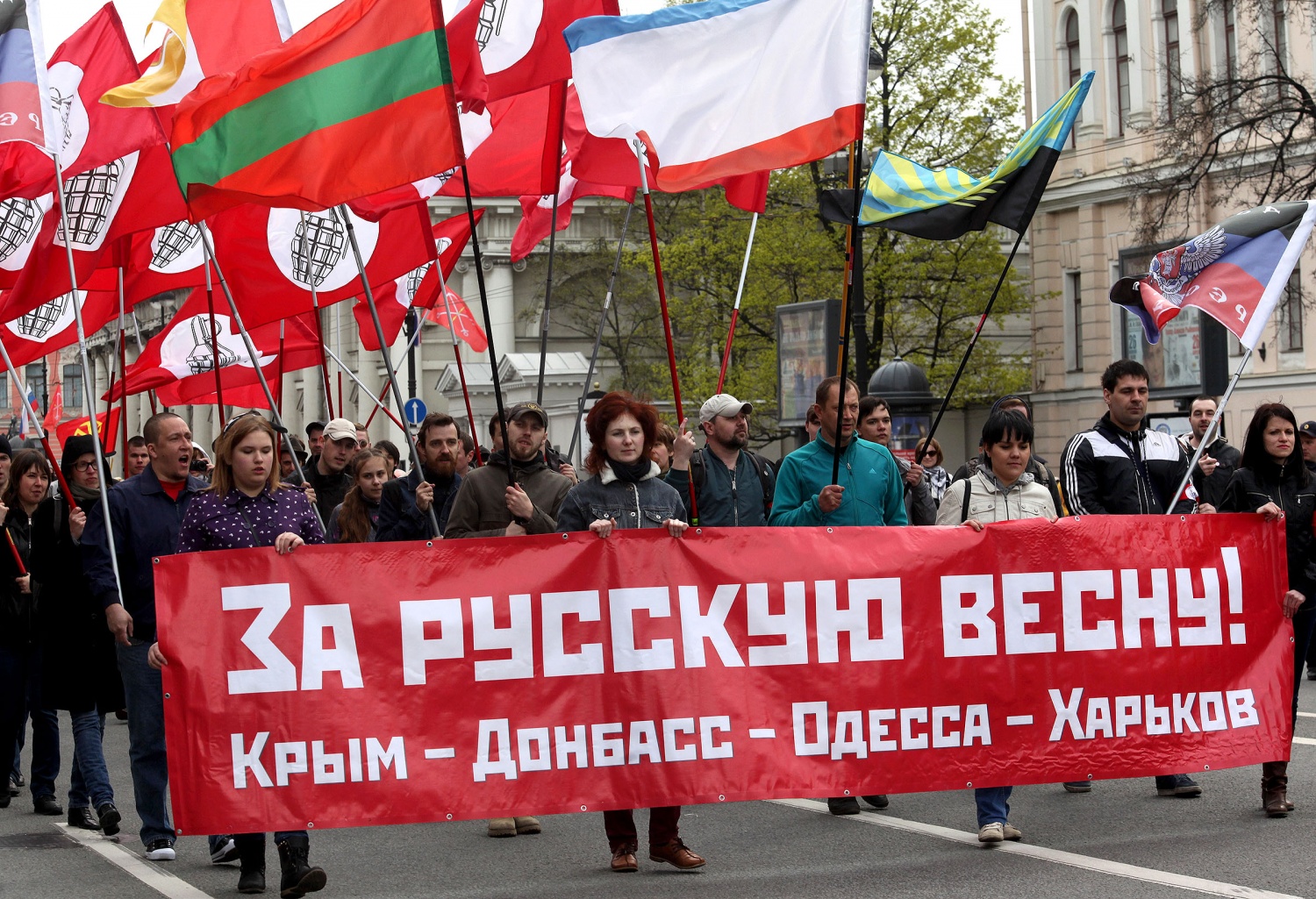
Photo: PBS.twimg.com
We will agree on the terms
Let's start with concepts. Separatism is the most common and therefore very blurry term. It is applied to movements aimed at separating and expanding the rights of the region within the state. Not too successful the formula, but it so happened. For the full compartment, there is a more accurate name - secession (department, care). The struggle for the isolation and expansion of powers within the state (without secession) is usually called autonomism. Both are called separatism from a wide soul and is not too welcomed.
Another important term is irredentism. This is not just a separation of lands and peoples for an independent life, but a way out with the aim of joining a neighbor. Irredent-the slogan of the Garibaldians who fought for the liberation of the Italusive minorities from the yoke of Austria-Hungary and reunification with a new, happy and victorious great Italy. Mussolini and Hitler rose to the yeast of irredentism.
Irredentism directly implies the interest of the external state structure, which is positioned as a native. Italy (Garibaldi and Mussolini) for Trieste; Germany (Hitler) for Danzig, the Saar region, Silesia and others; Türkiye (modern) for northern Cyprus; Russia for Abkhazia, South Ossetia, Crimea, Donbass and Transnistria. Western political culture clearly distinguishes between secessionism/autonomism as a mechanism for protecting the rights of a minority, and irredentism, as a mechanism for strengthening imperial military power. In our propaganda, everything is dumped into one pile. It is hardly by accident. Why did Kosovo recognize, but no Abkhazia?! Double standards!
In our propaganda, everything is dumped into one pile. It is hardly by accident. Why did Kosovo recognize, but no Abkhazia?! Double standards!
Kosovo or Bosnia and Herzegovin no one was going to join the US, Britain or France and strengthen their military positions at the expense of the recruits there. These are not such gifts to nurse them. It was about the forced protection of the minority from genocide - after 10 years of exhortation, warnings, sanctions and calls for restraint.
And Abkhazia, Northern Cyprus, Nagorny Karabakh and others hung and hang on a thread of military intervention from Russia, Turkey or Armenia. Therefore, the Kosovo regime (for all its shortcomings) has international recognition, and the regimes of Abkhazia, Artsakh, DPR/LPR, Transnistria, South Ossetia do not. So the point is not in Russophobia, as we are told, but in irredentism.
Restraining factor
External power can warm up the irredent (which is traditional and happened), or maybe on the contrary, extinguish (that the news of the 21st century). In the end, the long history of the showdown in Olster was able to stop only thanks to the mutual restraint of London and Dublin. The conflict was quietly blown away - no one remembers. The department of the Franco -speaking Quebec from Canada in 1995 (there was also a referendum, 49.4% for the secession, 50.6% for unity) did not take place, including thanks to the neat position of France.
The difference between the modern world lies in the fact that the leaders of the leaders (from America to Japan) came to the understanding that the stability of borders and laws is more important than the tug of a territorial blanket characteristic of the past and the centuries before last for centuries. The power redistribution of lands and resources (which means irredentism) is today the destiny of the back -for -Kamaimechniki such as Turkey, Iran, Pakistan, Syria and other heralds of freedom from Africa, Asia and Latin America. Unfortunately, even against this bazaar background, a large country, which had recently entered the G8, stands out for us, and today, thanks to a visionary domestic and foreign policy, has become a world outcast.
The difference between the modern world lies in the fact that the leaders of the leaders (from America to Japan) came to the understanding that the stability of borders and laws is more important than the tug of territorial blanket characteristic of the past and the centuries before.
For a developed world, this is a passed stage. Catalonia’s incident is an example of pure separatism with an yet unclear further trajectory of secessionist or autonomist type. Irredents definitely are not there. Not Morocco, not France or Libya inspire her. Speculation about Russia's intervention look liquid. Even if this is, it can only be a hybrid desire to weaken the European Union without taking responsibility and without claiming the inclusion of Catalonia in the Kremlin influence.
Referendum referendum
Catalans are separatists, but not irredentists. This difference is diligently masked by propaganda, imposing parallels between Ukraine and Spain.
Sorry. The Crimean referendum (not to mention Donetsk) differs from the Catalan in that he was under the control of the armed green men, politely representing a neighboring state. For the briefing of the Crimean election commissions, masters from Bashkortostan were sent, where the results of votes always coincide with the interests of the authorities - with amazing indicators of appearance and monolithic. Leaving aside the substantial part, with a purely formal and legal side, are different referenda. The Catalan purely internal (secessionist-autonomist, later it will be seen where the curve will take out), and the Crimean and Donbass are quite irredient, with obvious signs of external influence.
Now about the referendum. In the classical conservative sense of the word, this is a procedure where a decision is made by a majority of the entire number of citizens who have the right to vote. In this regard, Catalan plebiscite is flawed: out of 5.3 million voters, 2.3 million came to the plots, 43%turnout. Although 90% of the voters said “yes”, the total number of voters is only 38%. The Catalans call themselves 35% of the inhabitants of the region, and the Spaniards (Castilleys) are 45%.
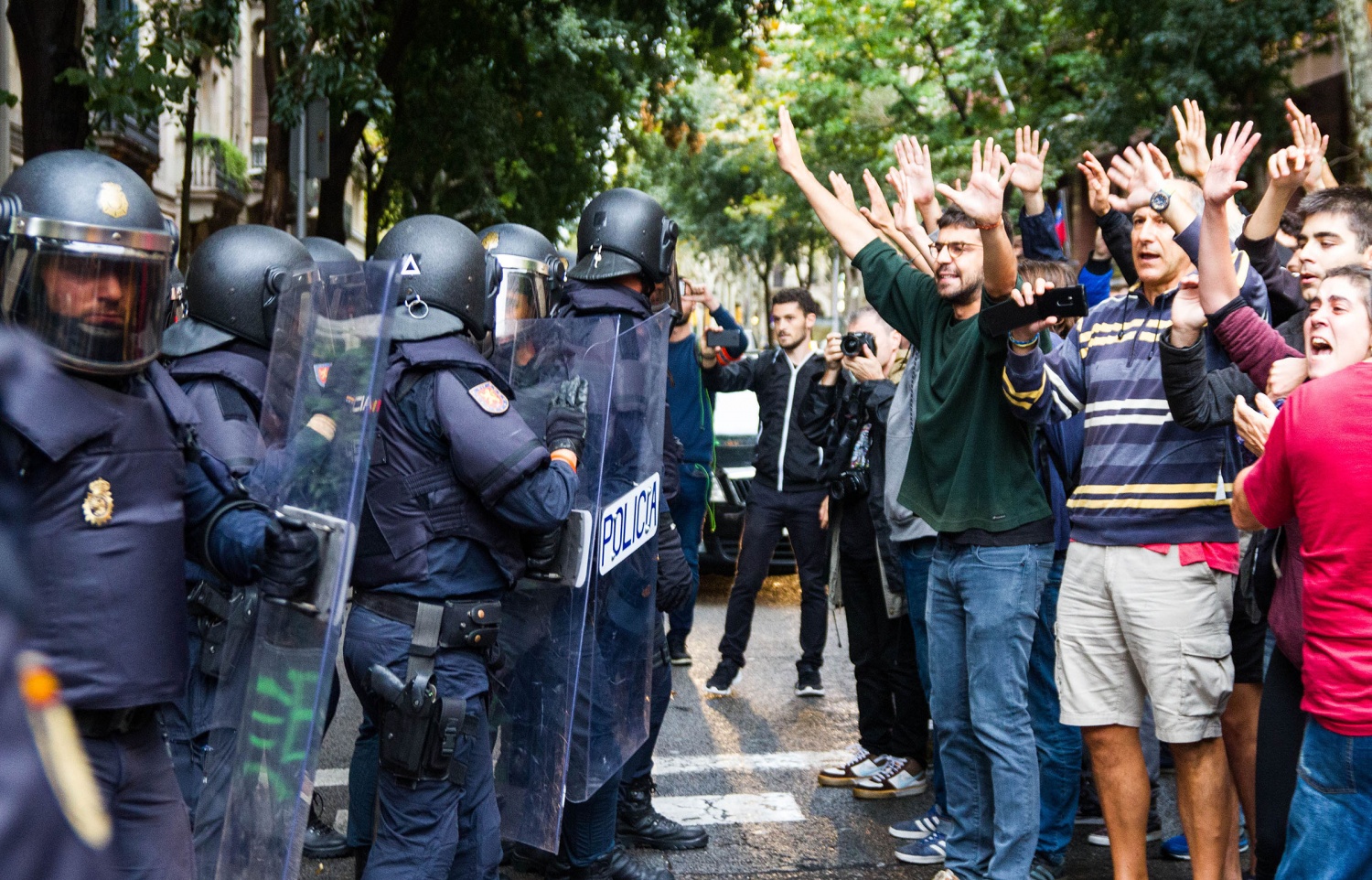
Protest shares during a referendum in Catalonia, October 1, 2017. Photo: Flickr.com/marc Ferrà
Hence the acquitted claims to the content part. Numerous opponents of the secession, considering the referendum illegal, simply did not come to him. Consequently, he cannot claim the status of a public. Not to mention legal shame. The Canadian referendum in 1995, although its results were also not considered from the list, provided a turnout of 95% and therefore looks weighty.
From a legal and substantial point of view, irredient referendums in the Crimea and Donbass look even weaker than Catalan. But this is more than compensated by the propaganda roar. “Think, violations! Everyone has a violation! The main thing is ours! "
Violation of violation of discord. It is interesting that the election commissions of Catalonia could not even occur to attribute 20 percent of the turnout and at the same time pour votes to “ours”. A slightly different attitude to laws and state institutions. Yes, and to the people too. They have a falsification - a reason for shame, resignation and judicial showdowns. We have - for fellow praise and a gold pistol.
No further than in 2010, the speaker of the Chechen parliament of Dukuvakha Abdurakhmanov is not somewhere, but within the walls of the Federation Council, he strongly promised: "If" United Russia "should be obtained in the elections of 115–120% of the vote, we can achieve this result." And they can, who would doubt it. That's what spiritual unity means! Alas, to the Chechen (as well as Tajik, Turkmen, Uzbek and a number of others) the ideal of Russia is still far away. Although the rowers on the galleys are squeezing there with all their might. In the native Aziop Harbor.
To whom the courts, to whom war
The danger and difference from Western Europe is here. Separatism is a natural trend in modern political geography. Before the First World War in Europe, there were about one and a half dozen states. Moreover, five of them are great empires. Before World War II, there were already 30 states, twice as much. Today there are more than 55 in Europe, and no one will say exactly how much. Karabakh, Northern Cyprus, Transnistria, Abkhazia - state or not? Moreover, is Abkhazia and Karabakh in Europe? Now it is customary to spend the formal border of Europe on the main Caucasian ridge, and they are behind it. 50 years ago, the border was drawn along the Kuma-Manych hollow, so that the North Caucasus was considered Asia.
So the process is coming. And he will go. Territories will be crushed. The whole question is how. In Western Europe, this kind of conflicts of this kind are already two or three generations are resolved in the press, in courts and parliaments. In the east - on the battlefield, with tanks and aviation. In the transition zone (it is called Eastern Europe), this is how it is. Czechoslovakia was divided peacefully, and Yugoslavia through great blood. The Baltic states separated peacefully (almost), and Moldova with Transnistria through the war. Ukraine received sovereignty peacefully, but is forced to defend it through a hybrid war with Russia. What until recently seemed wild and impossible. And today - thanks to the miracles of propaganda - it seems almost natural and inevitable. The backward drift in aziopus knocks down landmarks and revives barbarism.
From a legal and substantial point of view, irredient referendums in the Crimea and Donbass look even weaker than Catalan. But this is more than compensated by the propaganda roar
And do not worry about Catalonia: they will agree. Madrid, in addition to the whip, has a gingerbread for the hot guys there. The key question is taxes. Basque separatism (and terrorism) at the opposite end of Spain was the same parables back in the tongue as the North-Irish. But today, too, was blown away. After Madrid lost the country to the country of Basque the right to levy (and therefore administer) taxes on its territory. Catalonia does not have such a right yet, although it produces a fifth of the Spanish GDP. It's a shame! Pressing on an older brother is most convenient, scaring a swelling of nationalism-saparatism.
Of course, there is a risk of playing, as happened with the British Prime Minister Cameron. He was a good boy: he just wanted to insure the EU Brexit to bargain more comfortable conditions. But he overdid it, now he himself is not happy.
The difference is again in the sociocultural tradition. Cameron, reaching Brexit, was forced to resign. The end of the career. Meanwhile, the process started by him continues (or descends on the brakes?) It is quite peaceful and legally.
And our eagles, having brought the country to an inconceivable already 300 years of the war with Ukraine, giving a bunch of victorious nonsense about Novorossia, destroying and mutilating tens of thousands of compatriots and turning millions into refugees, still managed to get into the Syrian epic. Having received an economic stagnation, sanctions and international isolation in a dry residue. Not to mention the loss of the once friendly (or at least neutral) Ukraine and the deaf blockade of Transnistria. It is necessary to be able to!
And, in spite of everything, they feel wonderful. They go from victory to victory. They no longer talk about 76%, but 82% of popular support.
But for some reason they are afraid of unarmed Navalny.