
Translated material
Korean tsugzvang Donald Trump
What will happen if the threats of the US President at the DPRK come true
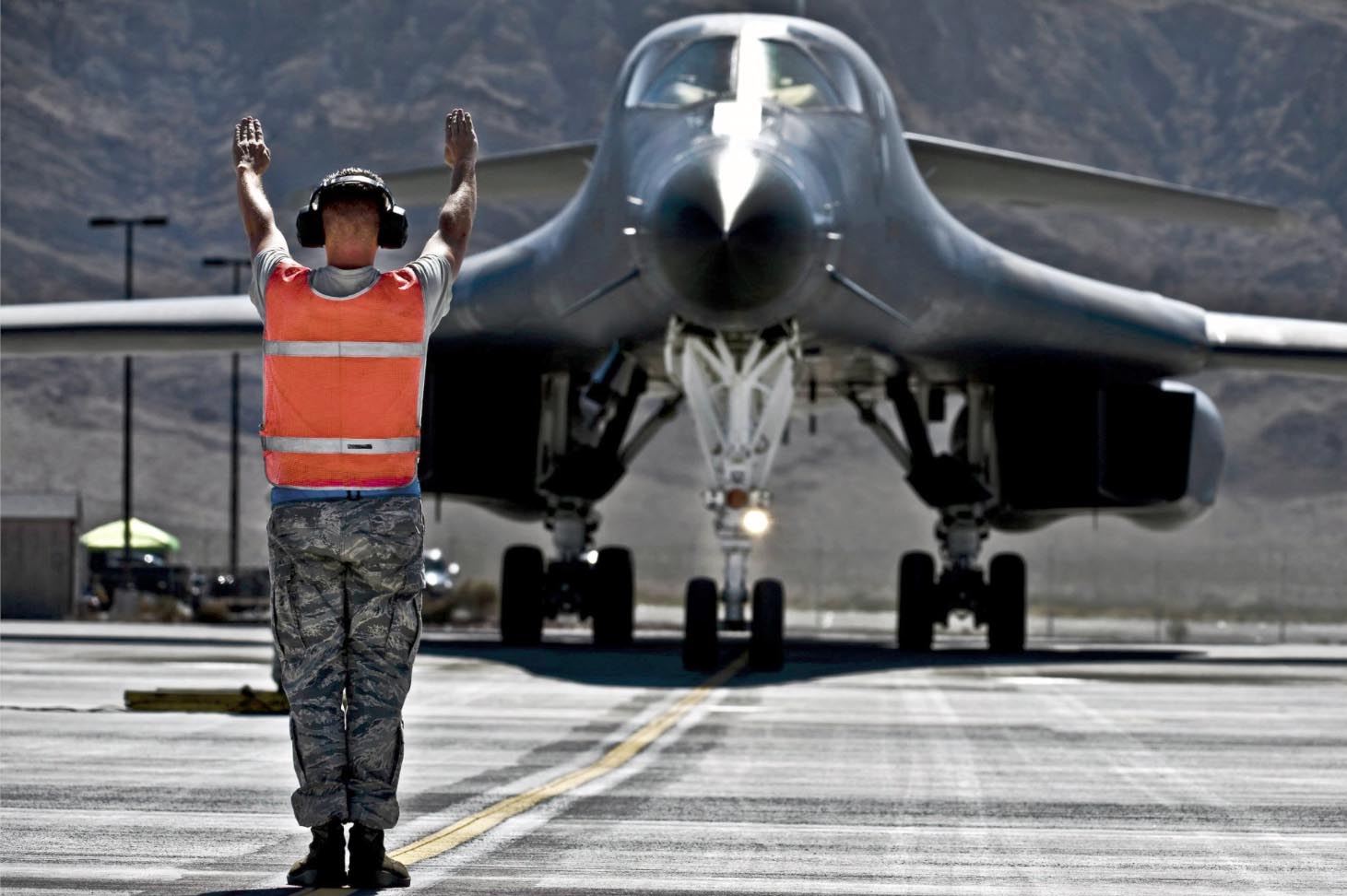
Photo: topwar.ru
On October 10, 2017, two American strategic bomber B-1B Lancel took off from the Andersen airbase on the island of the Guam in the Pacific and headed for the Korean Peninsula. After the B-1B entered the airspace of South Korea, South Korean and Japanese fighters joined them. And then the United Air Group conducted strikes on ground targets off the east coast of the Korean Peninsula.
This episode-the take-off of two bombers on Guam, the demonstrative flight over the Korean peninsula and the joint air exercises of the allied countries became one hundred percent remake of the previous one dating from July 30-then the Americans undertook a demonstration of military force in response to the testing of the Pyongyan intercontinental ballistic rocket.
On September 21, the US Pacific Command (USPACOM) went even further: B-1B made the closest flight in history at the borders of the DPRK, and one of them later landed 70 km south of Seoul. “For the first time in 20 years (since 1996), the B-1V bomber landed on the Korean peninsula,” the USPACOM said.
In July and in September, the Americans carried out the shares of intimidation directly in response to Pyongyang missile tests.
In October, it was different: on the 8th, US President Donald Trump wrote on his Twitter that “only one thing” could work in relations with the DPRK. The bombers who took off at the predawn hour on Guam with a full ammunition on board were called to show the North Korean leader Kim Jong -un, which he speaks and what specifically means the commander in chief of the American armed forces. And a couple of days before this record on Twitter Trump, talking with journalists before dinner with the American military leaders, said the phrase: "What you see now is a lull in front of the storm."
Kim Jong -un, it seems, was not afraid. After the American bomber flew as close as possible to the North Korean borders, Pyongyang threatened with the help of nuclear weapons to “wipe the earth” of the earth on guam if the B-1V continues to fly over the peninsula. And on October 10 they flew again. And the 12th Trump publicly confirmed that by “a lull in front of the storm” he meant the situation with the DPRK and its nuclear missile program: “We cannot allow this to continue. We just can't. "
War of nerves
The verbal picking between the United States and the DPRK has been going on for more than six months. It seems that the North Korean leader won her. The president of the most powerful country in the world began to speak foggy threats that regularly plunge the world into panic. In August, Trump threatened Pyongyan with “fire and rage”, now - “calm down in front of the storm”. But for some reason, these threats do not make a close denouement, and one that will calm the world. No, there is a feeling that Washington himself drove himself into a corner.
Back in May, Donald Trump painted several “red lines” for Pyongyang. He stated that the new nuclear test of the DPRK will inevitably turn into an American military response. In addition, he stated that he would not allow the situation when Pyongyang will have rockets capable of flying to the territory of the United States, with nuclear charges on board. Kim Jong -un crossed both features.
In September, a nuclear device with a capacity of about 100 kilotons was tested in the DPRK. In addition, Pyongyang twice successfully tested the Shzason-14 missile, probably capable of reaching the territory of the United States.
If you are guided by the tramp logic, then you need to attack immediately - then it will be too late: Pyongyang will improve his missiles and save nuclear warheads, of which, according to experts, from 30 to 60 pieces.
If earlier the United States intended to conduct military operations only in response to Pyongyang's aggression, now they allow the possibility of a preventive blow, if the war with the DPRK looks inevitable
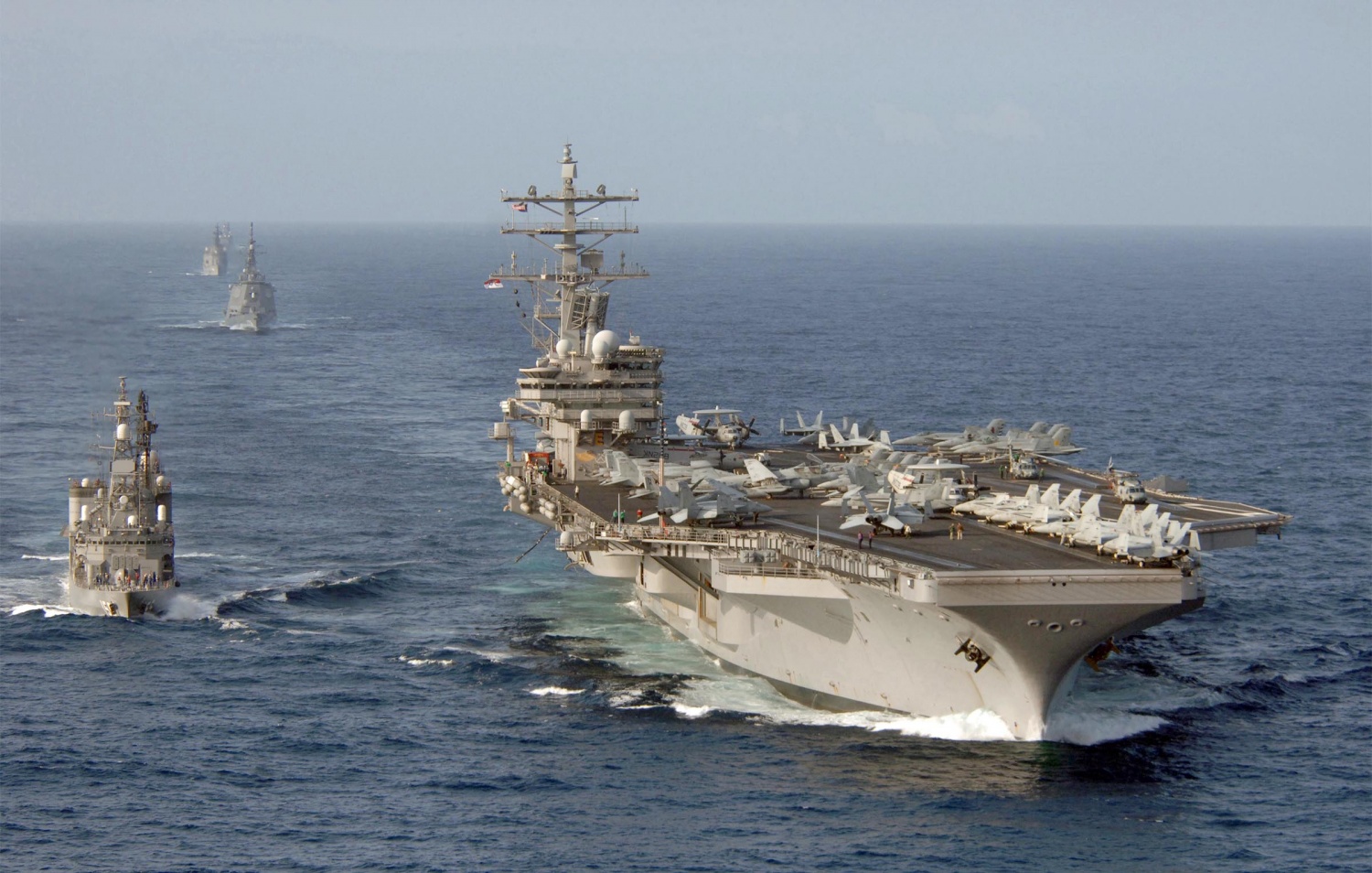
Based on this, any movement of American combat formations in the Korean Peninsula area is immediately considered by observers around the world as a preparation for a military operation. And now, the arrival of the US Air Force, headed by the Ronald Reagan aircraft carrier, on which 90 combat aircraft, and the strategic submarine “Michigan” with two hundreds of winged missiles on board, caused numerous alarming comments. Some Russian analysts have already expressed the opinion that it is the DPRK Pentagon that can now test the concept of a “quick global blow”, which is supposed to be inflicted with strategic carriers (ballistic and cruise missiles) in non -nuclear equipment. At the same time, any objective analysis of the situation leads to a sense of strategic tsugzwang: any intelligible military step from the United States leads to a disaster.
Aircraft carrier "Ronald Reagan". Photo: Combatindex.com
Scenario 1. Optimistic
This summer, in the midst of the confrontation with the DPRK, Washington made a leak in the press regarding the content of the defense plan of South Korea, the US Operations Plan (Oplan), which was adopted two years ago, the main news was that if earlier the United States intended to conduct military operations only in response to Pyongyang’s aggression, now they allow the possibility of a preventive strike if the war was from The DPRK looks inevitable.
In this case, this blow can be carried out using either ordinary weapons or nuclear.
The artillery positions of the North Korean army are equipped in the granite mountains. According to American experts, in only one salvo, these large -caliber guns can bring down 320 tons of explosives to the South Korean capital
When attacking ordinary high -precision weapons to the US armed forces, there are difficult tasks. The first disarming blow to the DPRK must destroy not only nuclear facilities and starting positions of ballistic missiles, but also submarines armed with such missiles. It is also necessary to destroy warehouses with chemical weapons, the amount of which exceeds, according to experts, 5 thousand tons, including binary poisonous substances. In addition, all command systems should be disabled, and if it turns out, and destroy the country's military-political leadership with the first blow.
But that's not all. The maximum damage to the North Korean artillery aimed at the multimillion Seoul should be caused. But the artillery positions of the North Korean army are equipped in the granite mountains. According to American experts, in only one salvo, these large -caliber guns can bring down 320 tons of explosives to the South Korean capital.
To inflict a preventive blow to the American command, 300-400 cruise missiles will be required, that is, approximately a tenth of all the expanded “tomahawks”, as well as strategic bombers B1-B Lancer and V-2 Spirit. To suppress artillery, you will have to constantly keep 30–40 combat aircraft in the airspace. To do this, it is necessary to concentrate 3-4 aircraft carrier groups off the coast of Korea.
The army of almost any totalitarian regime is built on readiness for the blind execution of orders of senior management. In the absence of such orders, the army is falling apart, which, in particular, happened with the Armed Forces of Saddam Hussein
The most important question: what will happen after such a blow? The optimistic (for the United States, of course) scenario suggests that the first attack will be able to destroy the launch rocket installations and storage of nuclear weapons (as a result of which almost inevitably radioactive infection of the area). Bombs intended to destroy fortified bunkers will be smashed by command posts where Kim Jong -un will hide with the dreams. The army of almost any totalitarian regime is built on readiness for the blind execution of orders of senior management. In the absence of such orders, the army is falling apart, which, in particular, happened with the Armed Forces of Saddam Hussein. In addition, complete dominance in the air - Pyongyang has very old airplanes and air defense systems that should be destroyed in the first minutes of the conflict - should suppress any enemy’s ability to resist. This happened, for example, with the Taliban in 2001, who were in a state of “combat schizophrenia”, when it seems to a person that the plane is hunting personally for him ...
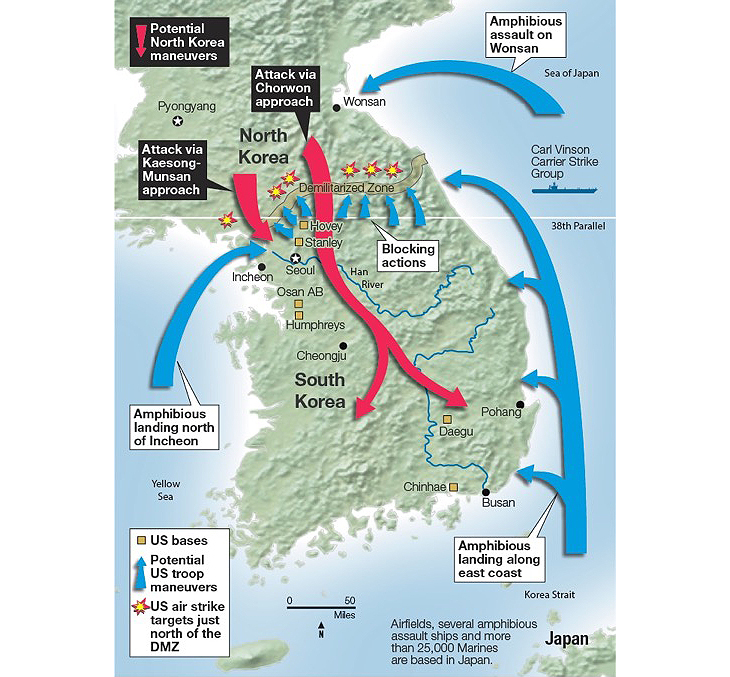
A map displaying possible fighting scenarios on the Korean Peninsula. Blue arrows are the landing places of the US sea assault and the directions of the ground forces, red arrows are the likely directions of the blows of the North Korean army, the places of explosions are the targets of US Air Force bombing. Source: The Military Times **
Scenario 2. Realistic
However, Washington has too little information about the DPRK in order to seriously count on the fact that this optimistic scenario, during which several tens of thousands of residents of South Korea will die (no one counts the North Koreans), is realized.
What if the enemy manages to save and launch at least one missile with nuclear ammunition in South Korea or Japan? And the missile defense products placed in these countries will not be able to intercept it?
That if the DPRK troops control system does not fall apart and the military Kim Jong -un will be able to carry out retaliatory asymmetric actions, which are probably already planned. For example, using underground tunnels, break into the territory of South Korea and move to Seoul. One of these tunnels, discovered by the South Korean military, provided a passage of 20 thousand soldiers per hour. In this case, the war will inevitably accept a lurid and bloody character. One and a half million Army of the DPRK will resist 600 thousand Military South Korea along with 78 thousand Americans (28 thousand are deployed on the peninsula, another 50 thousand in Japan).
Pentagon analysts believe that the losses of residents and military Korea will be about 20 thousand per day
It will not be possible to avoid a ground operation. First of all, the formations of the 8th Army of the United States will be involved in it. The 2nd American-Yuzhno-Korean division, reinforced by armored, helicopter, artillery brigades and a chemical protection battalion, will be thrown into the battle. A little later, the 3rd Division of the US Marine Corps from Okinawa will be reached.
In addition, the 82nd airborne division will be transferred from the United States, which, obviously, will have to repeat the landing in Incheon-the famous maneuver that interrupted the operation of the Kim Ir Sena troops during the previous Korean war, in September 1950. If the fighting is accepted by such a turn, the number of victims will take hundreds of thousands. According to Rob Givens, the brigade general, Pentagon analysts believe that the losses of residents and military Korea will be about 20 thousand per day. Fiona Hill, an authoritative analyst who holds a responsible post in the US National Security Council (SNB), says 1 million people will die even in a local conflict on the peninsula.
“If someone believes that it will be possible to win in thirty days, then he is damn mistaken,” adds to the pessimism another retired general, Mark Hurtling.
In addition, the inevitable difficulties of conducting a non -nuclear preventive blow should be attributed to the fact that it cannot be preserved in secret. The concentration of military power, coupled with the evacuation of tens of thousands of American citizens, will not go unnoticed by Kim Jong -un, who may decide to attack first.
Finally, the intervention of other great powers, such as China, is not excluded. Under the pretext of humanitarian assistance to the people of the DPRK, Beijing can occupy part of this state or it entirely. And this, in turn, will repeatedly strengthen the possibility of a direct military clash with the PRC.
Scenario 3. Catastrophic
Against the background of these obvious strategic problems, the likelihood of a prey nuclear strike from the United States does not look equal to zero. So, the former NATO commander in Europe James Stavridis believes that there is a 10 percent probability of a nuclear war with the DPRK: “We are closer to the exchange of nuclear blows than ever, if we exclude perhaps the Cuban crisis.”
Having made a choice in favor of a nuclear strike on the Korean peninsula, the United States will turn into world parias for decades, which even the closest allies will be rejected
A preventive nuclear blow can be delivered suddenly, limited to the task of guaranteed elimination of weapons of mass destruction, its delivery and command posts of Kim Jong -un. To do this, there is no need to collect aircraft carriers. Enough strategic bombers with Guam. The war will quickly end with a guaranteed victory. The issue with the DPRK will be completely resolved. True, several million people will die. “Standing a nuclear strike was the first to look attractive to the president (Trump), who calls out once and for all, to end the nuclear threat from North Korea, with undisguised anxiety, famous analysts David Barno and Nora Bensael write in their monthly column. “However, the political, economic and moral consequences will be so destructive that in the future it will be difficult for any American to understand why it looked like an acceptable idea.”
The authors predict that, having made a choice in favor of a nuclear strike on the Korean peninsula, the United States will turn into world parias for decades, which even the closest allies will be rejected. The balance of power and influence will shift in favor of China. And this can be the beginning of the sunset of the United States as the only superpower.
Boris Yunanov took part in the preparation of the material
See also: “How Russia saves Marshal Kim ” , “When 10 = 1500” , “Putin, SI and the mischievous Kim” , “Korean puzzle” , “Madness test” .