
Translated material
Civil defense of the pond
Residents of Yekaterinburg for a second time in 7 years achieved refusing to build the Church of St. Catherine in the territory chosen by the authorities
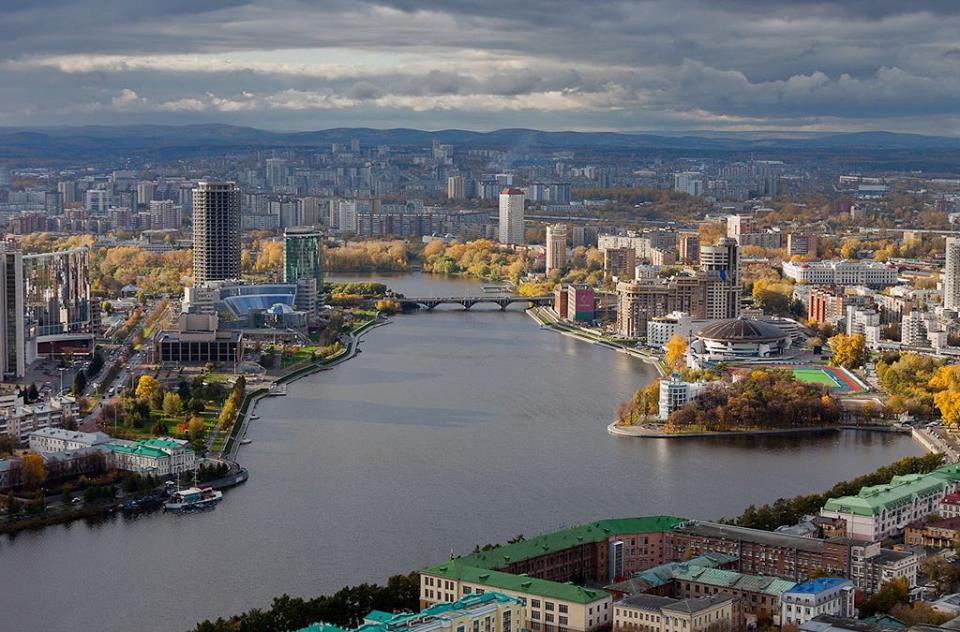
Yekaterinburg. Photo: Committee City pond in VKontakte
Kuyvashev changed his mind
The Civil Society of Yekaterinburg has been stopping the construction of the Cathedral of the Cathedral for the second time at the place chosen by officials without consultations with citizens. On October 17, the Governor of the Sverdlovsk Region Yevgeny Kuyvashev officially stated that the temple would not be built on the pond, as the authorities planned, but in another place-somewhere on the shore and, most likely, in an administrative quarter opposite the initially chosen place.
The decision of the governor was preceded by a year of struggle. The idea that the “gift to the city” (as sponsors positioned their project) should be built directly in the water area of the city pond was still in the spring of 2016. By the fall, the plan received the design. On October 17, the working group for the construction of the temple of St. Catherine in Yekaterinburg approved the concept of the construction of the cathedral in the water area of the city pond. The decision was declared final, and until the fall of 2017, officials did not allow the possibility of changing their plans.
Moreover, on August 21, during the pre -election speech, the head of the region Yevgeny Kuyvashev called opponents of the construction of the church in the water area of the city pond "public terrorists." The last major public action in defense of the city pond was held on September 3, causing another flurry of criticism and outright swearing from the authorities and the clerical lobby.

The layout of the temple of St. Catherine. Photo: Strelka.com
The history of the issue
Cathedral St. Catherine stood in the city center for almost 200 years and was destroyed in 1930.
After 1991, Yekaterinburg regained his historical name. The temples selected from believers gradually returned the communities, and a monumental temple-on-blood was built in the city center, in the place where Ipatiev’s house stood, in the basement of which former emperor Nicholas the Second, members of his family and other people were killed. On the site of the former Cathedral, a small chapel was built, and for many years the question was considered closed - in any case, no one spoke publicly on this topic.
In 2009, Alexander Misharin was appointed governor of the region. It was he who became the driver of the first concept of restoration of the temple of St. Ekaterina: It was decided to build it approximately where he stood, but with parking and other additions in the modern economy. The decision was made cell and was presented to the townspeople as final and not in need of discussions.
During the pre -election speech, the head of the region Yevgeny Kuyvashev called opponents of the construction of the church in the water area of the city pond "public terrorists"
Then it was largely possible to stop the project of destruction of the Labor Square beloved by the townspeople by the efforts of Leonid Volkov, who was a deputy of the City Duma and was not afraid not only to oppose the governor, his environment and the clerical lobby, but also to carry out a lot of work on organizing protests. In April 2010, several thousand people went to protest against construction.
Despite the fact that the officials confidently said that the issue was decided to be a temple to public protests, but in the end the topic was stalled, and in the fall of 2011, Misharin got into an accident and left his post in May 2012.
Oligarchs and priests
Subsequent years The topic of the construction of the temple ss. Catherine in the city center was not discussed in any way, and it seemed that the issue was closed. But in the spring of 2016, a new attack began: the information was published that the temple is. Catherine will be built to the 300th anniversary of the city, and at the water area of the Grodsky pond, where it was supposed to pour a special island . Such a strange decision was presented as a compromise, with an eye on the events of 2010: they say, here you have not allowed to build a cathedral where it stood, so we will build it on a “noe” pond. The idea that the city pond is not at all “nobody” and the townspeople love him and appreciate him, for some reason did not occur to officials, hierarchs and oligarchs.
The situation in 2016–2017 became not at all as vegetarian as in 2010. The balance of power in the city has changed. The main drivers of the entire project with the revival of the temple were billionaires-“copperniks”, Igor Altushkin (RMK) and Andrey Kozitsyn (UMMK), with their solid financial resources. The regional and city authorities united in pushing the project (in 2010, the administration of Yekaterinburg, although passively, opposed the governor's initiative).
In addition, the leadership of the Yekaterinburg diocese was replaced, where such a scandalous character as Bishop Eugene (in the world - Alexei Kulberg) appeared next to Metropolitan Kirill (Topic), who began his career as the defeat of the exhibition “Caution, religion!” In Moscow in 2003, when he was still an ordinary priest.
Leonid Volkov by that time had already ceased to be a deputy of the City Duma and left the city, but there were no particularly vivid opposition leaders among the new deputies. The head of Yekaterinburg, Yevgeny Roizman, took a compromise, agreeing to build a temple on a pond. It seemed that the protest was beheaded, marginal and therefore impossible or doomed to failure.
The idea that the city pond is not at all “nobody” and the townspeople love him and appreciate him, for some reason did not occur to officials, hierarchs and oligarchs
"Hugging" the pond
Nevertheless, among the townspeople there were a sufficient number of caring people who united not around a person or structure, but around a simple and clear thesis: to save the city pond from development.
The network form of work turned out to be quite effective, and the leaders of the movement appeared during the discussion. In December 2016, the Committee of the City Pond was formed, which became the point of coordination of all those who were dissatisfied with the project of the townspeople. Having neither serious means nor support from some structures, the defenders of the pond managed to conduct exhibitions, excursions, create a whole museum of the city pond, conduct research, write letters in the court and endlessly clarify their position: no, this is not a struggle against God, religion and the church, this is the struggle for the city pond.
The know-how of the protest movement was the mass “hugs of the pond”, which took place three times- in February , April and September : thousands of townspeople went to the embankment of the pond, holding hands. The abandonment of traditional forms of protest activity made it possible to avoid problems with the coordination of events and made them original and attractive to people.
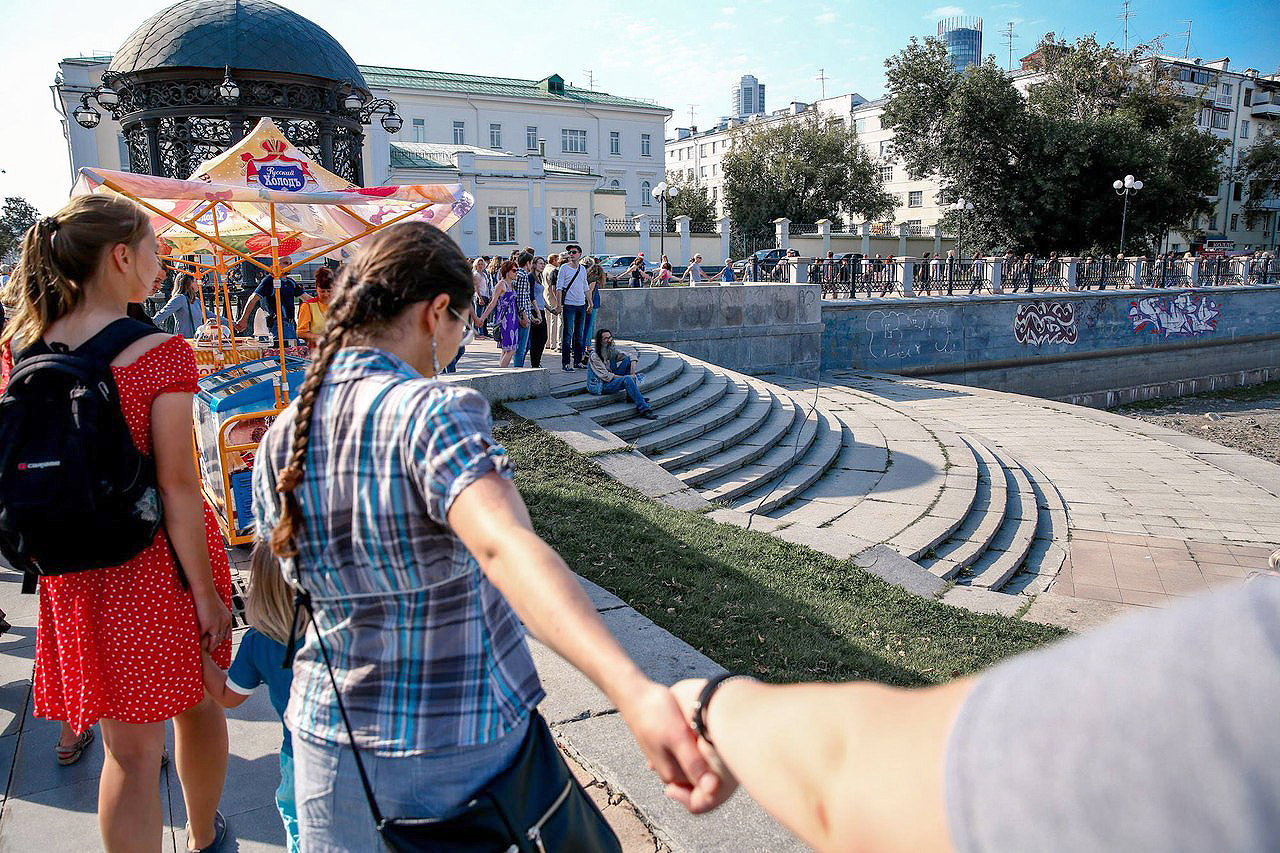
Residents of the city hug their pond, Yekaterinburg, September 3, 2017. Photo: Committee of the City Pond in VKontakte / Leonid Irkhin
The city speaks that the project for the construction of the temple on the pond was stopped from Moscow: it is ordered to minimize any protest activity for the presidential election, and a degree of civil mobilization in Yekaterinburg, and without traditionally higher, has increased significantly on this thread. So or not is a discussion question, but the fact remains: with the help of civil protests, the city pond of Yekaterinburg was saved.
What are the conclusions from this situation? No matter how difficult the atmosphere in the country is and no matter how many hopeless the idea to oppose the decisions made by the authorities, Yekaterinburg history can and should become a positive example of citizens' struggle for its rights and interests. Social networks allow you to inform citizens and unite them even contrary to the positions of the main media, but the main thing is not to be afraid to go out, it is not at all pointless, as the pessimists say. The only thing the Russian authorities are afraid of is dissatisfied and decisive people on the streets, and the story of the pond and the temple proves this again.