
Translated material
Who is afraid of Natalia Moral?
Ten years ago, December 16, 2007, the FSB did not let the New Times a journalist
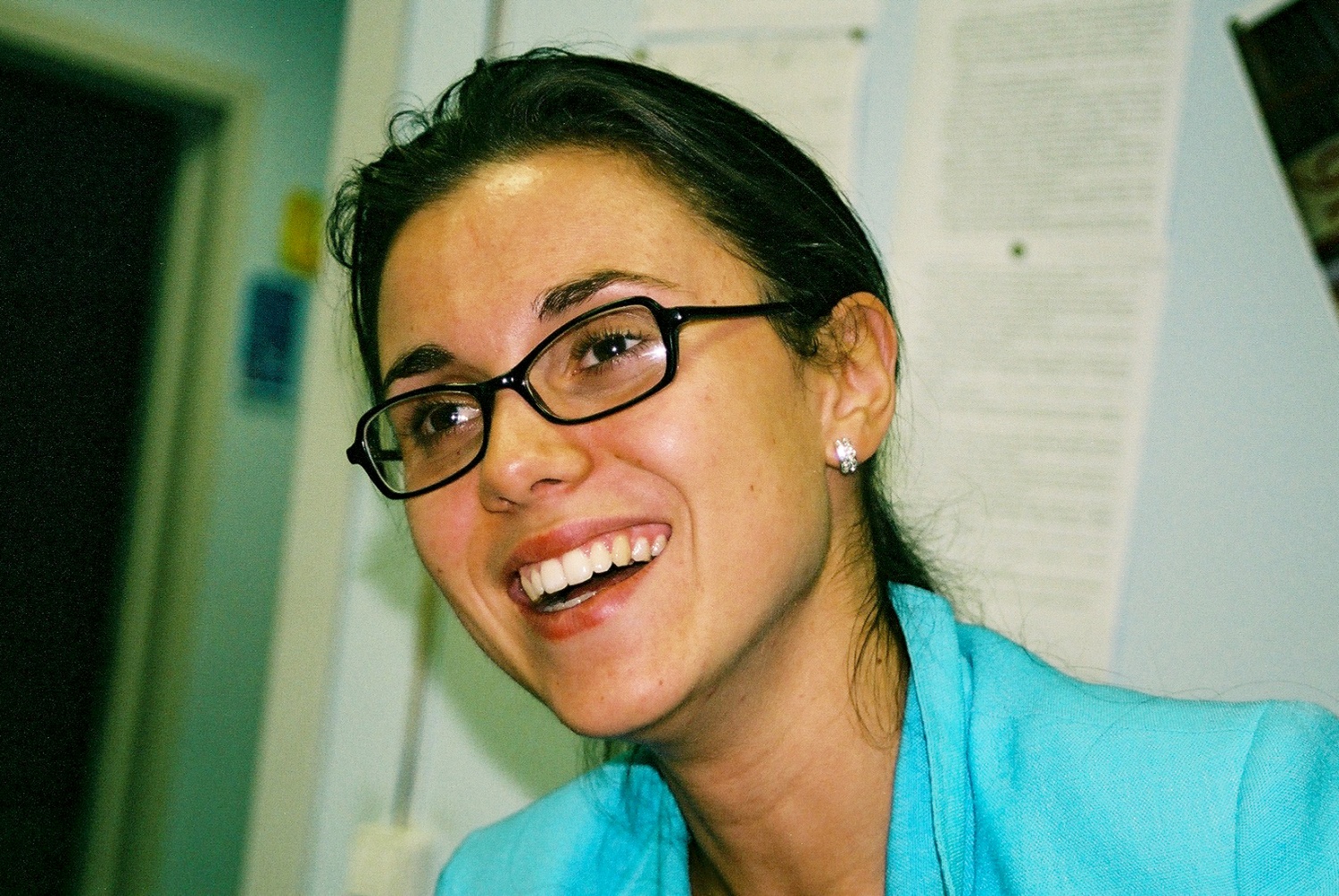
The scandal happened a few days before the professional holiday of the state security organs: so the Chekists celebrated the 90th anniversary of their corporation. From the very beginning, with the formation of the Cheka, state security in its various incarnations existed primarily as an institution of political investigation, repression, as an instrument of war with their own people. Boris Yeltsin stated in his 1993 decree: the authorities are unremovable, "the political investigation system is mothballed and can easily be recreated." The decree acting, but forgotten by everyone. Although the evidence of these lines is at every step. It was always so.
Law and Moral
The Tel Aviv-Moscow plane landed at Domodedovo’s capital's airport at the second hour of the night. An hour later, the New Times by Natalia Morar, who is a citizen of Moldova, the FSB border services said: “You are prohibited from entering the territory of Russia.” The reason is the mysterious paper received from the central apparatus of the FSB. They refused to show the document and Morar and refused to the airport to reporters. “Contact the Lubyanka for comments,” said a blondelee lieutenant colonel, which categorically refused to introduce himself, referring to a certain law*.
The lawyers of the Domodedovo airport turned to the law willingly, although somewhat peculiar. So, two employees of the FSB border services (they also refused to introduce themselves) informed The New Times that Natalya Morar did not let in Russia on the basis of articles 20 and 21 of the state border law. But Article 20 is called “Accounting, the maintenance and use of Russian small vessels (funds) and vehicles on ice”, and Article 21 is “conducting commercial, research, survey and other activities in the Russian part of the waters of border rivers, lakes and other water bodies, in the internal sea waters and in the territorial sea of the Russian Federation”. Since Morar did not conduct any research in Russian lakes, and she is not a small vessel, the editors of The New Times categorically refuse to consider the appeal to these articles of the Law. Ladies in civilian clothes also told the editorial correspondents that Morar's decision was made on the basis of documents received from the Federal Migration Service (FMS). However, this service after three days announced its non -involvement in what happened.
After the long requests (and the call to the Central Office of the FSB), Lieutenant Colonel, who was probably the head of the shift of the border post (according to customs officers, “these lieutenant colonels are changing here so often that we do not have time to remember them”), nevertheless provided the correspondents of The New Times Copies of Articles 27 and 28 already federal law on the procedure for leaving the Russian Federation and entry into the Russian Federation. According to him, it is on the basis of these two articles that Morar cannot enter the country. Analyzing them, we can say that since the correspondent of The New Times did not commit any crimes, only two paragraphs of Article 27 can be used against it, with great desire. This is paragraph No. 1, which prohibits entering Russia “in order to ensure the defense of the state, or public order, or to protect the population of the population”, and paragraph No. 7: “In relation to a foreign citizen or citizenship, a decision is made without citizenship. On the undesirable stay (residence) in the Russian Federation. ”
Road from home to house
Natalia Morahar had an invaluable experience: she now well imagines that those who are suspected of committing a crime and on this basis are expelled from the country. First, at the Domodedovo Airport, she spent 8 hours in a room of 2 by 4 meters for deported (there were also grief-gastarbaiters from Uzbekistan and Tajikistan), on a bench, hiding behind the autumn coat (flew from the country of the warm Middle East, only light things in the bag, winter-houses, in Moscow). Then Moral, under the escort of border guards, called its “deported” **, took on board the Moscow -Kishinev flight. The documents were not given in her hands - the border guards on receipt handed them to the commander of the liner. The commander asked Natalia: "For what?" - "I am a journalist." “Ah, then it’s clear: I wrote the truth about officials upstairs,” and ordered her to put her in a business class in return for the place near the toilet, which she was laid according to the ticket. At the arrival of Morar, the border guards again met Chisinau, and, according to her, very aggressively: "Everyone tried to find out the reason for the deportation, convincing that Russia was not just aiming for anyone." They were forced to write an explanatory and only after that they issued documents and handed over to the bail to the mother and brother. In the migration map, Morar was not a deportation mark.
Concepts without concepts
Who decided to refuse Natalia Morar at the entrance to the territory of Russia? Three days after the incident at the Domodedovo Airport, as the majority of Russian and foreign media wrote about, FMS director Konstantin Romodanovsky disowned his involvement in the history of Morar. At a press conference on the results of the work of his department, Mr. Romodanovsky said that he first hears about this scandal, and promised to figure it out. In the Foreign Ministry, which can also make a “decision on unwanted”, their involvement in the incident, according to our sources, is also refuted. Employees of the FSB borderpost of the Domodedovo airport promised Morar that she would receive all the explanations at the Russian Embassy in Chisinau. However, diplomats - extremely confused, by the way - told Natalia that they learned about everything from the media and did not receive any instructions or papers from Moscow to her account. Moreover, when a few days later the journalists once again called the Border of Domodedovo, they were informed that Moldova citizens did not appear in the lists of temporarily all -round. FSB, meanwhile, keeps silence. From the first day of the scandal, the Center for Public Relations (COOs) of the FSB promises “in the near future” to comment. But this time does not come in any way. To the question The New Times: "How can you find out about the FSB reaction?" - The Central Department Store attendant replied: “When it will be, you will find out. For this, we have Interfax. Finally, in the presidential administration, which, according to The New Times, could be related to the incident with Morar, the refusal to enter Russia was called nonsense. “I will not comment on nonsense,” said Alexei Chesnakov, deputy head of the domestic policy department.
Shock
Natalya Morar returned to Russia from Israel, where she flew along with a group of journalists in the world's largest museum dedicated to the memory of the Holocaust - “poison of yours”. The trip was organized by the Holocaust Foundation. The head of the fund, a member of the Public Chamber, Alla Gerber, is confident that a refusal to a journalist at the entrance to the country is a purely political action. “This is a blow to the magazine, which is not only brave, but also smart,” said Gerber. - When I found out about what had happened, I was simply shocked. I feel my responsibility for sending her on this trip. The least I thought that she might have some problems when crossing the border. ” Representatives of the Israeli side are shocked by what happened. “This incident speaks very badly about Russia,” says Dr. Helit Abramsky, who worked with Russian journalists at the Yad Vasheme. - I was sure that everything was settled for a long time and this was not happening. It is very bitter that in the new, democratic Russia there are already a lot of signs that it is inclined to the side, softly speaking, an authoritarian regime. ”
Most Russian and foreign media wrote about an unprecedented scandal. I must say that Russian journalists showed a long -forgotten professional solidarity, probably realizing that the story with Natalia Morar at any second and in various forms (they won’t send, if Russian citizens will be detained or imprisoned) can repeat with everyone today. The incident covered both opposition and quite pro -Kremlin media. For example, Komsomolskaya Pravda placed a note about this story under the eloquent section “Shock”. The first in defense of Natalia Morar was the International Federation of Journalists (IFG), who stated that what happened was a certificate of infringement of freedom of the press in Russia. Representatives of the IFG also turned to the OSCE and the Council of Europe with an appeal to investigate the incident and demand clarification from the Russian authorities. The federation is confident that the decision of the FSB is related to the professional activity of Morar. “If they treat the journalist in this way, not allowing any opportunity to defend themselves, then the freedom of the press is at risk,” said Eidan White Secretary General. A tough statement about the incident was made by such world professional organizations as “reporters without borders” and the Committee for the Protection of Journalists based in New York. The European Party of "Green" refusal of the Russian authorities to let Morary call the country to a gross violation of the freedom of the press. “The expulsion of the journalist who wrote an article criticized the government is a gross violation of the freedom of the press and another evidence of undemocratic and repressive tendencies,” said the representative of the green fraction in the European Parliament, Philippe Lamberts. The deputy of the Moscow City Duma from the Yabloko party, Sergei Mitrokhin, sent a deputy request, and the director of the Moscow Human Rights Bureau Alexander Brod as a member of the Public Chamber, a letter addressed to the FSB director Nikolai Patrushev, demanding to explain on what basis it is forbidden to enter Russia on what basis.
Hope to return
The editors of The New Times is completely convinced that the reason for the expulsion of Morar from the territory of Russia became its acute political investigations-about the “laundering office” of high officials called “discount” , about the murder of the deputy chairman of the Central Bank Andrei Kozlov , about the offshore business of the state organization of the All-Russian Central Executive Committee and, finally, the last material is “Black Casser Kremlin ” (now on the NT website) - about how, through the presidential administration, financing of a wide variety of parties, including opposition, during a parliamentary campaign, went. This material, by the way, was difficult to prepare. With a dozen sources with which Moral spoke, with their categorical condition, they set anonymity: "They are killed for this." This is not a figure of speech - this is a phrase, repeated three times different and by no means fearful people ***. The issue of the magazine (No. 44) with this sensational investigation Natalia Moral appeared in Kiosks on December 10. The day before the journalist flew on a business trip. Her return on the night of December 15 to 16 was waiting not only in the editorial office-the Federal Security Service waited and prepared <...> Forbidden Natalya Morar to enter Russia, the authorities, in fact, released the press release: “Everything stated in the article“ Black Cash desk of the Kremlin ”is considered true” <...> *****
Natalya Morary graduated from the Faculty of Sociology of Moscow State University, has been living in Russia for six years and on this basis submitted documents for citizenship, has a permission of the FMS to work in Russia, is a full -time employee of the Russian journal and has registration in Moscow - that is, everything that is called a “residence permit” in other countries and grants almost the same rights, with the exception of the right to vote and be elected. Yes, and still the difference: Moral pays 30% of the income tax to the Russian budget, while citizens are 13%. Finally, Russia has a visa -free exchange with the Republic of Moldova, that is, everything that a citizen of Moldova is required to enter Russia is to show his passport.
* Laws are adopted in our country by the State Duma. Most likely, the lieutenant colonel meant the intra -decoration of the FSB
** Deportation is possible only by court decision, therefore de jure Morar only carried out transit from Tel Aviv to Chisinau through Moscow
*** The editions are known for the names and surnames of all sources without exception that provided information
**** About the "Morar case" also read in NT: "Who takes revenge on Natalia Moral?"
First published in NT No. 46 of December 24, 2007