
Translated material
ICO is not for everyone. Telegram can do without public placement
$ 3 billion Messenger Pavel Durov will work on one closed sale of tokens to large investors
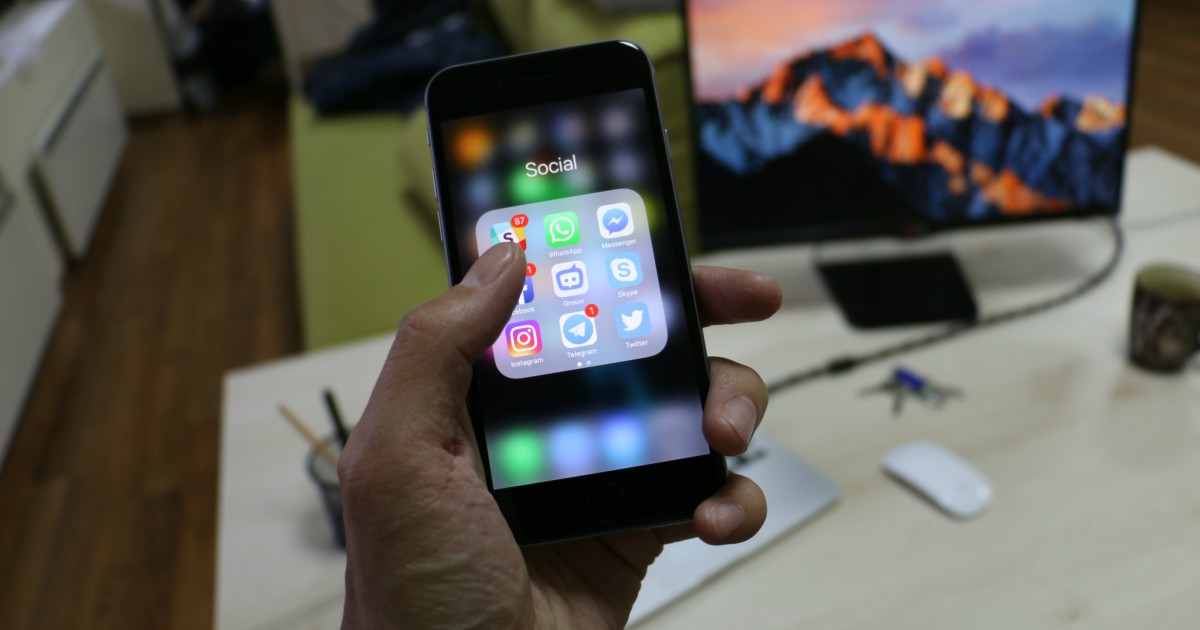
Photo: Pexels
Telegram may abandon the public stage of its ICO, follows from the materials of the placement that RBC studied . The company expects to collect up to $ 3 billion following the results of two closed rounds of placement and this will be enough for the development of the Ton blockchain project, the sources of the publication say. American investors criticized the placement of Telegram for lack of information and the absence of project details, but this does not interfere with the successful sale of tokens.
- Initially, it was assumed that the public placement of Telegram will be held in March. In January, the company conducted a closed pre -sale and attracted $ 850 million from 81 large investor .
- At the end of February, it became known that the company decided to hold a second closed round. At first, its volume was estimated at $ 850 million, then it grew to $ 1.7 billion.
- The price of one GRAM token in the first round was $ 0.38, in the second - from $ 1.1 to $ 1.45.
- The possibility of abandoning public ICO is stipulated in two recent presentations for potential investors. One of the sources of RBC explains this by the fact that the company will be able to gain the entire amount in closed rounds. In the last Whitepaper (Avenue) of the project, the total amount of funds that the company plans to attract is estimated at $ 3 billion.
- One of the arguments RBC sources call that closed placement allows Telegram to refuse unsuitable investors - with a public ICO this will not work. In the first round, Telegram chose investors on the principle of proximity to the command of the messenger and fame, and refused Russian institutional investors.
- In the first round , such large investors of Silicon Valley as Kleiner Perkins, Benchmark and Sequoia Capital - despite the criticism of the ICO, which experts call one of the most closed: there are almost no technical details and information on how the future project will work.
What am I to me?
If there is no public placement, the only chance to participate in the ICO Telegram is to raise money to participate in the second closed round. The minimum application threshold is still unknown. However, before making this decision, it is worth reading at least this article criticizing ICO.
MONEY
"One part was € 270 per kilogram, I also bought € 415"
In the "Cocaine case" - again new inconsistencies. Now in absentia arrested Andrei Kovalchuk, whom the investigation calls the owner of the cargo, gave an interview to Kommersant. He said that the suitcases were not 12, but 8, their weight was not 360 kg, but 270, but on the set of the Argentine police he recognized as his only one of the suitcases. The fact that in the suitcases was not cocaine, but coffee and cognac, Kovalchuk already stated through a lawyer. In addition, he talked about how the Ambassador Coronelli introduced him to the manager Ali Abyanov, and how he tried to pick up his cargo to Moscow. The interview is interesting, you should definitely read it.
Gazprom will pay for Ukrainian gas
Naftogaz Ukraine won a lawsuit against Gazprom in the Stockholm arbitration. The Russian monopoly will have to pay the Ukrainian penalty $ 4.6 billion for the insufficient amount of gas transit in 2009-2017. By deducting debt for the already delivered Gazprom gas, $ 2.6 billion will have to pay for $ 2.6 billion. The company has already accused the arbitration of violating Swedish law and will appeal the decision.
Exclusive
Who made the pre -election stickers "VKontakte"
You probably heard about the scandalous election stickers of VKontakte from the public of the Maxim magazine, which Pavel Durov mocked, and their creators were accused of plagiarism. We found real customers of stickers - and they turned out to be the same people who in 2010 published a calendar with half -naked students of the journalism faculty of Moscow State University for Vladimir Putin. The president liked the calendar then, and one of the girls received an apartment from a realtor, who provided the housing of Alina Kabaeva's relatives.
Signals
The sanctions reached Rosneft
The once -faithful partner of Rosneft, the American Exxonmobil, announced the exit from joint projects to search for new deposits and will write off his losses of $ 200 million. Igor Sechin has not been lucky with Western partners and consultants: at the beginning of the week, S&P has increased the rating of almost all the largest Russian state -ownedicles to the way. Investment - except for Rosneft: she has too large a short -term debt, the service of which will be too strong from state support.
PRACTICE
AliExpress for Russian bloggers
Today, the Chinese Internet giant launches in Russia the international social network "Shopogolikov Club" and AliExpress Contact bloggers. It is assumed that the social network will be integrated into the AliExpress application and users will discuss purchases on it. AliExpress Contact will work as any site of this kind - sellers will place tasks and amounts of fees on it, and bloggers will offer their services. The entrance threshold for ordinary bloggers is at least 5 thousand subscribers, and for store pages - a high user rating.
Earn in China
“There is nothing to think about,” says the choice of objects for Hinghan Lee's investments. He brought the French OFI Asset Management to the top funds of shares in the Chinese market over the past five years. In particular, Lee earned 450% on the alcohol manufacturer Kweichow Moutai Co and 300% on the Ping An Insuraance (Group) Co. insurer.
Now he definitely puts on Chinese companies to improve ecology - in particular, water purification. In the coming years, they will have an increase of 20% annually, not least - thanks to the financial participation of the state.
Fun
Frantic Xerox of the Russian Embassy
A resident of Washington discovered a inconsistency: almost the entire street near the building of the Russian embassy was covered with signs about the reservation of parking. At the same time, there were clearly more pieces of paper at times more than reserved places. The Washington Transport Department confirmed that it is: they booked four places, and the rest of the papers simply printed on a photocopy. The signs were removed, but the next day they returned - with the reserve already on a new date. The embassy, of course, denies everything: it supposedly “does not use external parking lots”, and the publication about the signs is “fake”.
Peter Mironenko