
Translated material
Roizman calls to the square
How local self -government in Yekaterinburg was able to survive until the fourth term of Putin and why they decided to finish it off
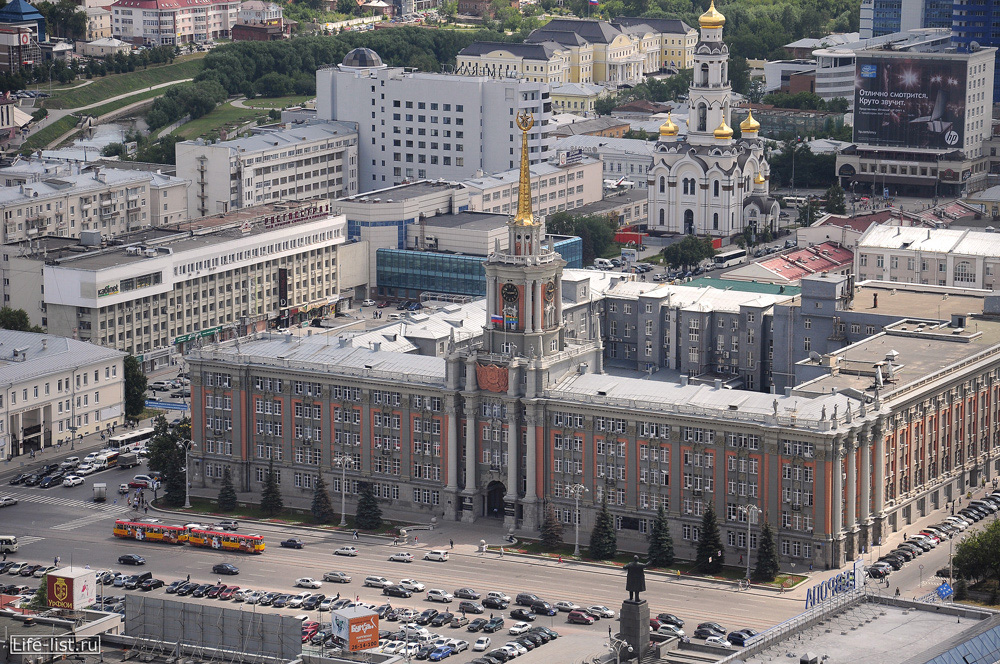
The building of the Sverdlovsk City Council of People's Deputies is an architectural monument, the building is located
The administration of the city of Yekaterinburg and the Yekaterinburg City Duma photo: Life-list.ru
April 2 in Yekaterinburg will be held by a citywide rally against the abolition of direct elections of the head of the city. One of the initiators and organizers of the rally is the current head of the city Evgeny Roizman , one of the few representatives of the opposition remaining at the head of the megacities.
The cancellation of the elections was announced immediately after the re -election of Putin for the fourth term: on March 22, the Governor of the Sverdlovsk Region submitted the appropriate bill to the Legislative Assembly of the region. According to the new law, the head of the city will be elected deputies of the City Duma from among the candidates selected by the commission. Already on March 29, the profile commission of the regional legislative assembly, for the most part of the unicorn faithful to the governor, supported the bill. The long history of the confrontation between the governor of the Sverdlovsk region and the elected head of Yekaterinburg is part of the decisive stage.
The history of the conflict
In 1991–2009, Yekaterinburg lived in the confrontation of the regional and municipal authorities, each of which was headed by a popularly elected and enjoyable official. The Sverdlovsk region was headed by Eduard Rossel for many years, Yekaterinburg - Arkady Chernetsky. By the way, both now represent the region in the Federation Council.
When Rossel was resigned, and the elections of the governors were canceled, his shiftman, the Moscow appointment Alexander Misharin, was forced to withstand Arkady Chernetsky, who was repeatedly chosen by the townspeople. Misharin undertook an attack on urban self-government: Chernetsky was forced to resign, and in the charter of the city, in fact without motivating it, it was supposed to amend, according to which direct elections of the head of Yekaterinburg were canceled, and real management passed to the sity manager's appointed Duma.
The municipal authorities were afraid to go to a direct conflict with the regional, but an unexpected obstacle was the opinion of citizens, whom a number of public and political figures mobilized to the struggle to preserve direct elections. Among them, a noticeable role was played by the deputy of the City Duma, the voltage deputy in 2008
But in 2010, the attack of Governor Misharin on local self -government stumbled upon resistance. The municipal authorities were afraid to go to a direct conflict with the regional, but an unexpected obstacle was the opinion of citizens, whom a number of public and political figures mobilized to the struggle to preserve direct elections. Among them, a noticeable role was played by the deputy of the City Duma, the deputy of the City Duma, Leonid Volkov, played. The Committee “The Right of Choice” was created, which led the struggle of the townspeople for the right to elect the head of the city. Within the framework of the public campaign, rallies and other actions were held, and its culmination was public hearings on changing the charter of the city: almost one and a half thousand participants in the hearing took part in the vote, and officials managed to win only with a slight superiority of votes. The authorities took a step back and made other amendments to the City Duma, which, on the one hand, gave all the real power to the city manager, and on the other, they left the institute of direct elections of the head of the city, which, however, did not have any more real powers, remaining only the speaker of the City Duma. At that time, Roizman did not participate in the struggle for the election of the head of the city and was rather closer to the position of the then governor.
Tribune for Roizman
By the fall of 2013, the situation has changed significantly. Misharin had no longer headed the region by that time. The new governor was a man from the team of Sergei Sobyanin Evgeny Kuyvashev. Being a stranger for local elites, he immediately came into conflict with both civil society and with the municipal authorities of Yekaterinburg.
Preparations for the elections of the head of the city and the City Duma were in a difficult environment.
Evgenia Roizman was literally forced to go to the polls by organizing pressure on him, his relatives and his projects. The bomb laid down under Misharin exploded under Kuyvashev: at the peak of a personal conflict, a man hated by the governor and his environment won the election and nominally headed the regional center, taking advantage of the chance to convert his personal popularity into the electoral triumph.
Roizman was literally forced to go to the polls, organizing pressure on him, his relatives and his projects. The bomb laid down under Misharin exploded under Kuyvashev: at the peak of personal conflict, the man who was hated by the governor and his environment won the election
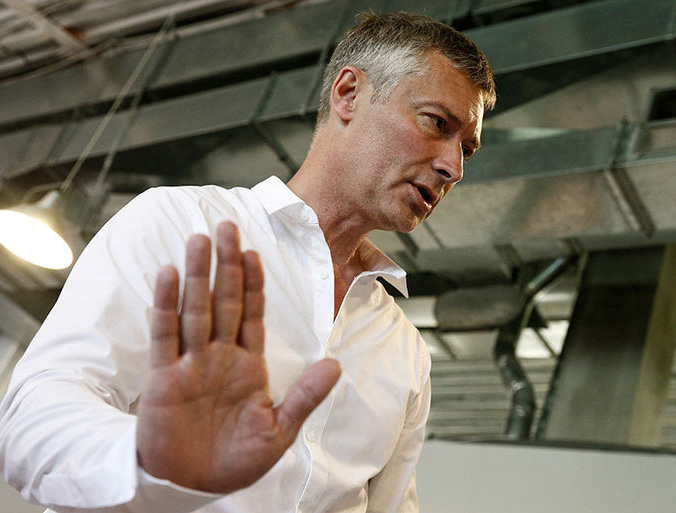
Photo: Socialego.MediaSole.ru
According to the current charter, the real powers of the head of the city are slightly exceeded the powers of the ordinary deputy of the City Duma and de facto deprive him of any administrative power over the city. But the personal qualities of Roizman and his human authority created a unique situation for which none of the officials was ready: an independent public figure received the status and high rostrum, and the lack of administrative powers brought to zero to accuse him of something and remove from the post, as it was repeatedly done with uncomfortable mayors in other cities of Russia.
At first, the victory of Roizman came to the court of the city administration remaining since the Chernetsky city administration, which waged a stubborn struggle for self -preservation and was glad for any defeat of the governor. In 2013-2016, city and regional officials continued to live in confrontation, and Roizman was at the advanced struggle, protecting the interest of local self -government. But then the situation changed radically.
Association of two evils
The governor’s elections, the first after a large break, were supposed to take place in the fall of 2017, and Kuyvashev felt extremely uncertainly in the conditions of confrontation with the administration of the regional center, which has a significant financial and personnel resource. In addition, there were elections of the State Duma, and then the president ahead. Naturally, the Kremlin required complete controllability and guarantees of the lack of surprises on all these votes. Therefore, all branches of power in the most categorical form were ordered to make peace. The long-term “Gray Cardinal” of Yekaterinburg Vladimir Tungusov became the vice-governor, the most odious participants in the confrontation were dismissed or withdrawn from the game.
And Roizman himself in 2016-2018 significantly radicalized - he began to openly support Alexei Navalny and regularly participate in protest actions held in the city. Needless to say that such behavior could not just get away with him?
Despite the fact that each of the branches of the authorities had its essential shortcomings, mutual control has largely leveled the harmfulness of each of the bureaucratic clans. Their unification was completely destroyed by the few advantages that remained: political competition finally passed away in the life of the region, the governor became inviolable for criticism and got the opportunity to finally shine personal scores with Roizman, who simply left no place in the new configuration.
I must say that Roizman himself was significantly radical in 2016-2018 - he began to openly support Alexei Navalny and regularly participate in protest promotions in the city. Needless to say that such behavior could not just get away with him?
The struggle of officials with Roizman never stopped and all these years went through several directions. Firstly, they tried to completely remove him from any media, believing that in this way his influence on society would beg.
Secondly, the team of Governor Kuyvashev did everything so that Roizman could not participate in the elections to the State Duma and the governor of the region. Thirdly, from the very beginning, ways to force Roizman to leave his post or take him off in any way, primarily through a criminal case. None of these measures led to success. As a result, the regional authorities went the most straightforward way. Rightly believing that the cancellation of the election of the head of the city will create a tense atmosphere in the capital of an important region during the presidential campaign, the environment of the governor Kuyvashev passed into a new offensive immediately after its completion.
A new stage of struggle
So, immediately after the end of the presidential election, the governor Kuyvashev introduced a bill on the elimination of the elected head of the city and the change of the entire system of city authorities: in fact, the head of the city regains the powers that he had before the reforms of 2010, only he will not be elected people, but appointed officials. The fact that the bill was personally introduced by the governor, and not one of the deputies from United Russia, can be considered signals to all local elites that the decision is made at the highest level and it is useless to resist him.
Kuyvashev tried to substantiate his initiative, but hardly his arguments can be considered convincing: “In fact, this is the second stage of changing the election scheme, which will legally consolidate the city administration that it de facto fulfills. I am sure that after the adoption of the changes, no one will have any questions who is responsible for what in the city. ”
As in 2010, in 2018, nothing happened in Yekaterinburg that would make us seriously think about the need to urgently reform the local government. Moreover, in the second largest city in the region, Nizhny Tagil, a system with direct elections of the city’s sovereign chapter is preserved, and no one is in a hurry to cancel it. The situation looks absurd: the President of the Urals choose in direct elections, the governor-also, the inhabitants of Nizhny Tagil choose the head of their city for direct choice, and only in Yekaterinburg the townspeople finally lose the right to choose the mayor-without any reasons.
It is hardly a rally of citizens, no matter how many numerous he is, is able to stop the regional deputies who are already going to adopt a bill introduced by the governor on April 3. Nevertheless, what is happening now in Yekaterinburg is an important example for the rest of Russia: in any situation, you need to fight for your rights and demonstrate the rejection of the anti -democratic policy of the authorities in all available ways.