
Translated material
For a year, Roskomnadzor has been trying to block the work of the Zello application. It came to blocking the servers Amazon and Google
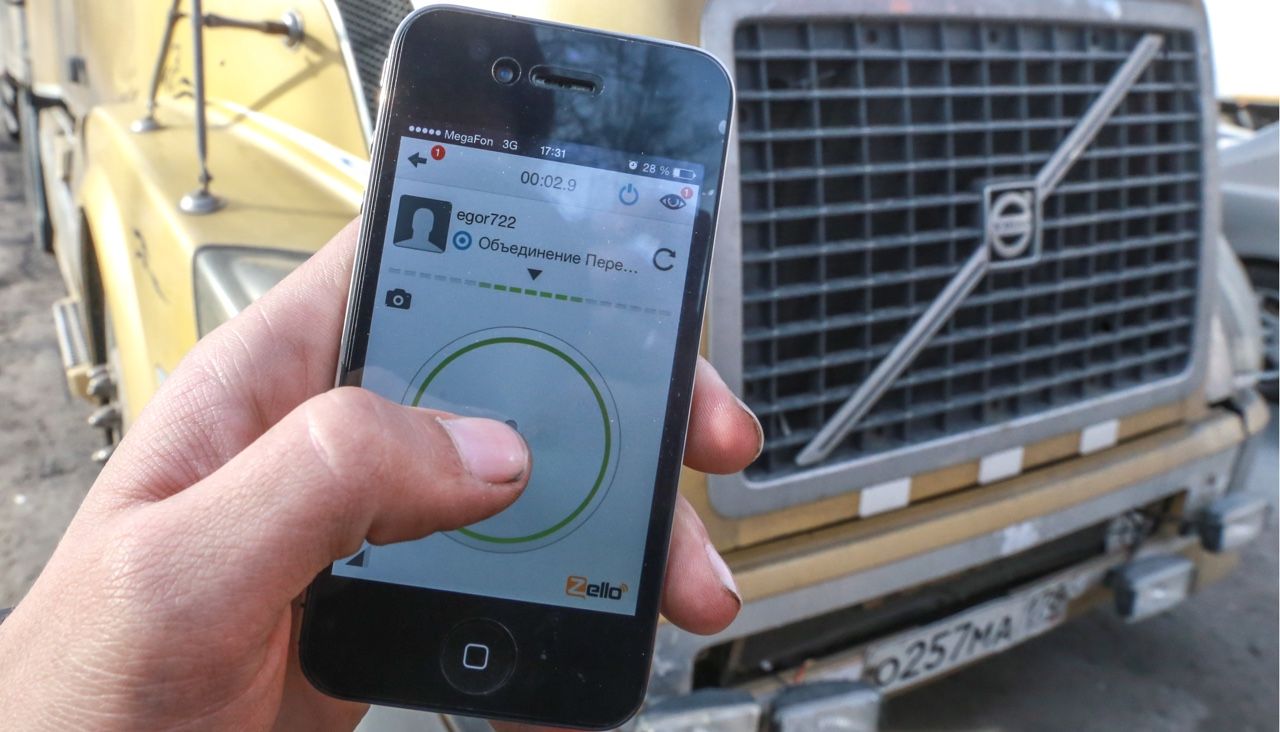
For the first time, Roskomnadzor blocked the Zello application a year ago. In April 2017, the blocking began due to the fact that Zello (like many other applications for communication and social networks) refused to implement the Federal Law “On Information, Information Technology and Information” adopted as part of the “Spring Package” . According to this law, messengers and social networks should store the login logs and personal data of users during the year and provide them at the request of law enforcement agencies along with encryption keys. The founder and technical director of Zello, Alexei Gavrilov, told Medusa that these requirements of Russian legislation in the field of information distribution are “meaningless” to him.
On April 1, 2018, Gavrilov told the Echo of Moscow radio stations that after blocking the number of users in Russia decreased by about two times. At the same time, he said that the application has built -in resources for bypassing locks. According to him, they worked so well that many users did not notice that the application was blocked.
According to Vedomosti, Roskomnadzor gave operators a new team to block Zello in March 2018. In a letter to the operators, the department called the Zello lock “Experiment” - the service decided not only to block the resource, but also the subnets - servers that need to be “turned off” to stop the service. In the list of 36 servers to block, 26 belonged to Amazon. Already on April 3, Amazon asked Zello not to use their servers to bypass Russian locks. Alexey Gavrilov then said that this requirement will be fulfilled, and the company will find other platforms for himself, he did not specify their name.
In mid -April, Roskomnadzor began blocking the domains that Zello uses on Google servers. In just on April 10 and 11, 286 IP addresses and 285 technical domains were blocked. “This amount is more than enough,” said Sarkis Derbinyan, lawyer of the Roskomnsvobod organization, Meduza. According to him, the blocking of each new IP address violates the connectivity of the entire application. The press service of Roskomnadzor told Interfax that the blocking would not affect the work of the remaining Google services.
Gavrilov on April 12 was not available for comment. Sarkis Derbinyan from Roskomvoboda did not exclude that if Zello transfer his capacities to new Google services, and Roskomnadzor will continue to block them, then “Google could be in the registry as fast as fast as a fairly fast time,” and this may lead to a malfunction in many company services.
Truckers say they used and continue to use Zello. The administrator of the website of the association of Russian carriers Mikhail Kurbatov told Medusa that, despite the locks of 2017, most truckers continued to use it. “At first, carriers tried to use alternative messengers, but it turned out that they were really very inferior to Zello. We tried Skype, and something else, but in the end, one of the guys threw the instructions into the general chat in WhatsApp, how to go around [blocking], and we began to use Zello again, ”says Kurbatov.
Irina Kravtsova