
Translated material
Moscow: Elections or protest?
Is it worth a real opposition to participate in the third federal campaign with a predictable outcome
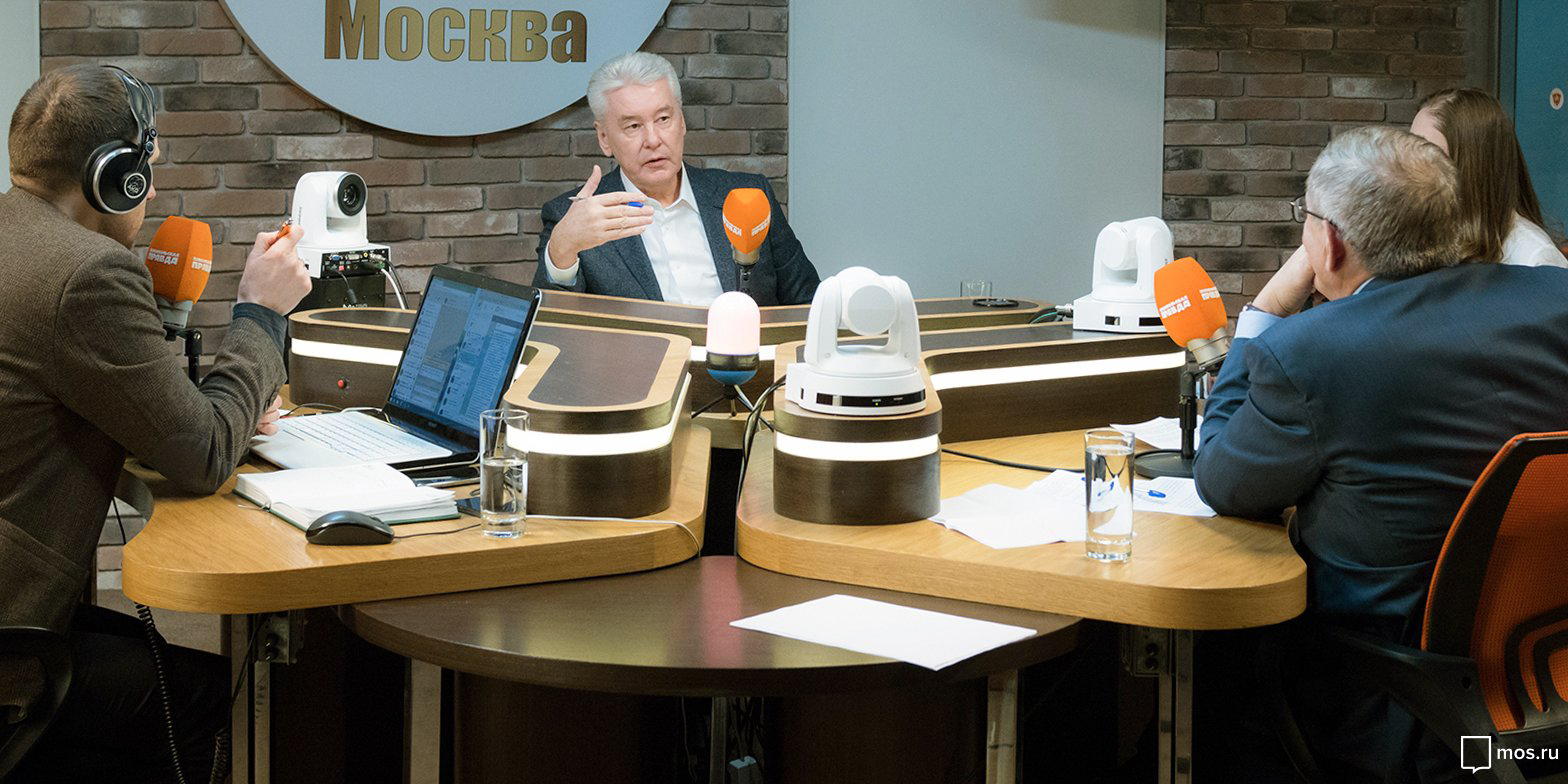
Sergey Sobyanin photo: mos.ru
The third federal campaign
Before the start of each large election campaign in the opposition camp, the struggle of common sense begins with faith in a miracle. It just so happened that the election of the Moscow Mayor is the third most important election after voting for the president and deputies of the State Duma. It makes no sense to prove that any head of Moscow is doomed to be a more important figure than the heads of all other regions of Russia. But Sergey Sobyanin is not just the mayor of Moscow. In the current system of power, he is also the head of the whole clan: his proteges lead to several regions and are present in the government of the country. Therefore, the September vote in Moscow is really the third federal campaign organized and carried out by the authorities in the interests of an extremely influential member of the ruling clan.
What tells us the common sense and practice of past federal election campaigns, and especially the elections of the President of Russia in March 2018? Only the fact that Sobyanin will be declared the winner in the first round with a high turnout and the insignificant percentage of all its competitors, who are allowed to participate in the procedure. The controversy around the primaries among opposition candidates and disputes, who should win them and how the rest should lead themselves, is more theoretical than practical significance. Since the municipal filter can be passed only with the consent of the authorities that control most of the deputies, the final selection of the admitted candidates remains with it, that is, personally for Sobyanin. Meanwhile, nothing in the biography of this person testifies that he experiences some special craving for an honest competition with a strong enemy.
September voting in Moscow is really the third federal campaign organized and carried out by power in the interests of an extremely influential member of the ruling clan
The situation of 2013, when Alexei Navalny was allowed to the elections, is perceived after five years distorted. This is now the Navalny recognized leader of the opposition, which has the current structure of headquarters and supporters, and in 2013 there was none of this, and according to the results of the protests of 2011-2012, he was one of many opposition politicians. In addition, the autumn 2013 elections took place a few months before the Crimean epic, that is, in fact, in a completely different political situation, when the highest government was still looking for methods of legitimation within Russia, and not in foreign policy.
Allowing Navalny to the elections in 2013, Sobyanin proceeded from the fact that he admits the contest of a weak and unprepared candidate to the competition. The fact that Navalny and his team then managed to effectively deploy work in Moscow and create the prerequisites for the second round is, first of all, the consequence of the miscalculations of the environment of Sobyanin, who underestimated the opponent. On the other hand, the administrative resource in any case guaranteed the receipt of Sobyanin the desired result - the question was only about the scale of its application. Therefore, there was no second round in the elections of the mayor of Moscow and could not be. Sobyanin, as planned, was declared the winner, but Navalny fixed the unique status among other opposition leaders. In general, the course and results of the 2013 elections created so many unnecessary difficulties for the leadership of Moscow and Russia that it is quite ridiculous to expect a repetition of the experiment with the admission to the elections of some kind of “dark horse”.
Again about the primaries
The idea of primaries in Russia is often understood incorrectly - as a summing up of a certain backstage bargaining through a limited and carefully controlled public vote. That is how the primaries usually pass in “United Russia”, and this scheme seems correct to many in the opposition. Meanwhile, the primaries should be competitive to all their participants and set a goal not to confirm the ambition of one of the opposition leaders, but the consolidation of activists and supporters around the one who will appeal to all the others with the inevitable recognition of voting results.
But the weakest place of the concept of primaries among the Russian opposition is the absence of any connection between their results and the participation of the applicant who defeated them in the official campaign. As already mentioned, the final selection of candidates made to participate in the elections is carried out by the future winner, so it seems obvious that in case of winning the hypothetical primaries of a promising candidate, he will be not allowed for the most ridiculous reason or without a reason.
Perhaps the authorities, as in the presidential election, will allow some character who will appoint himself a representative of the opposition and will urge everyone to unite around him and be sure to go to the elections where every voice is important
So far, everything goes to the fact that in the Moscow elections a standard script for other regions (and presidential elections) will be played in the Moscow election, when the “Yabloko” of which for some reason is still considered the “Yabloko” will be opposed to the future winner. It may well be that the democratic opposition will receive the same surprise as it received during the presidential campaign: the authorities will be allowed to participate in the elections of a character who will appoint himself a representative of the opposition and will urge everyone to unite around him and be sure to go to the elections where every voice is important.
It should be noted that the role of Yabloko in Russian politics is becoming more indecent. It is obvious that the party of Grigory Yavlinsky is not able to nominate any successful leader from his ranks or to conduct any effective campaign. In all major elections, apple candidates lose with such miserable percentages that in the normal political system this party had to self -dissolve, unable to withstand endless shame. Unfortunately, political life in Russia is built according to a perfect other logic, and the “Yabloko” has found an “ecological niche” - over and over again, putting obviously impenetrable candidates for the elections, and then call everyone to the unity around them and expose the disagreements to do it.
What to do?
What could be done and what would not be done is to conduct full -fledged primaries for the entire democratic opposition, and then an organized campaign on the streets to seek the registration of the candidate who victorly in them. Unfortunately, so far no systemic work on organizing such primaries has been conducted, although there is very little time left to build up. And to threaten power by a boycott of elections with all the forces of a democratic opposition in the event of a non-registration of their winner, first of all, because of the position of the same “apple”, which in any case will participate in the elections with his candidate who won their intra-party primaries.
The second possible strategy is the same boycott of the election that is the same for many and all -round work to discredit both themselves and their result. Unfortunately, there should also be no illusions about this either. No matter how disappointing the interest received in the presidential election by agitators for participating in them, who for some reason loser are considered those who initially refused to participate in the political booth. If we take into account how great the concentration of the critics of the boycott among the Moscow political elite, then this dispute can be considered lost in advance.
The authorities in Russia are afraid of one thing - protest on the streets. Inhibitory repressions against organizers and participants in street shares with complete indifference to the activity of most “opposition candidates” prove this in the most convincing way
Nevertheless, every honest person is obliged to ask himself unpleasant, but important questions: is it worth participating in the procedure organized by the authorities, the result of which is known to everyone before it? Is it necessary to deceive yourself further, which over and over again losing in dishonest and carefully adjustable elections in favor of the right candidate, does the opposition win something morally? How did the participation of opposition candidates improve the situation in the country and what did they achieve this participation?
Even the popular theory of elections as an important rostrum for saying alternative points of view crashed - what then is the value of participation in a meaningless procedure?
The authorities in Russia are afraid of one thing - protest on the streets. The ongoing repressions against organizers and participants in street actions with complete indifference to the activity of most “opposition candidates” prove this in the most convincing way. The unpopular decisions that will be made by the authorities in the near future will inevitably create new points of social tension. Support for political activists of socio-economic protests in such a situation should be considered a much more effective way of pressure on power than participation in the electoral procedures organized by it. This should be prepared for this.
* Political scientist, permanent Columnist NT
The author’s opinion may not coincide with the opinion of the editorial office