
Translated material
What to do if the money depends on Cyprus, the quarrel of Zuckerberg and Kuma and the first deal of the new owner of the Magnit
The accounts of Russians in Cyprus are frozen - what to do? Answers - in the evening mailing list The Bell
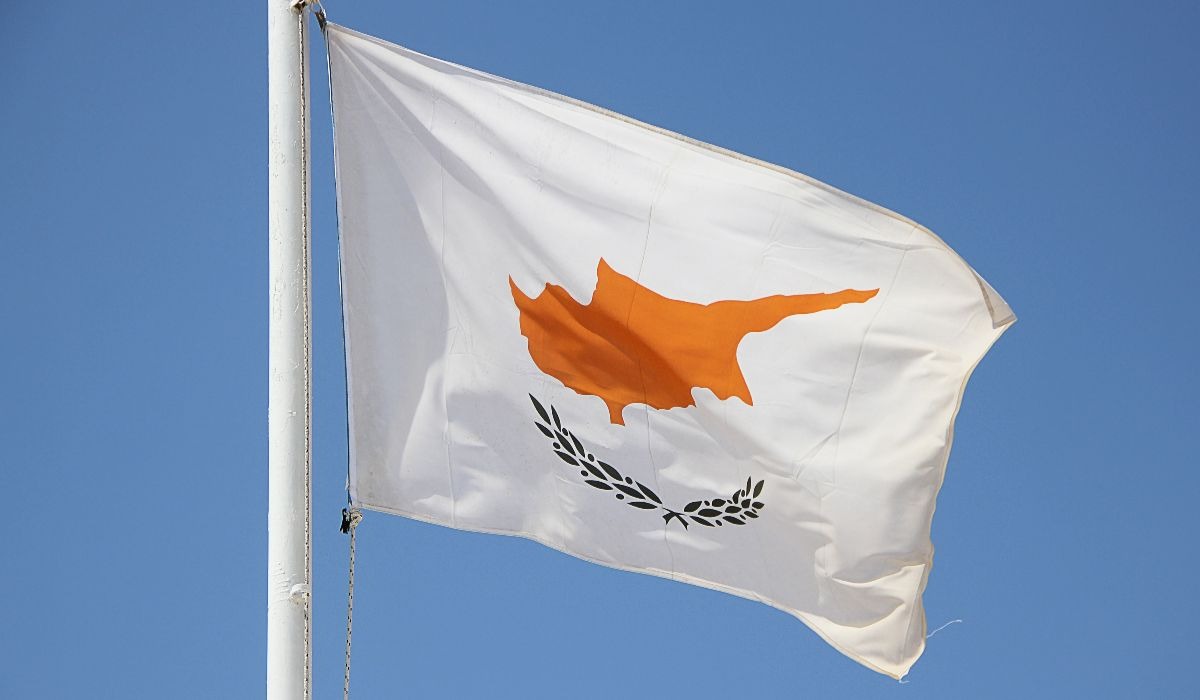
2018 can already be called the worst for Russian money in Europe. One after another, all the most beloved by Russian businessmen of jurisdiction are closed - Britain does not give a visa to Roman Abramovich and requires new confirmation of Russians' income, and Latvia actually refuses to work with Russian clients. The last blow was Cyprus, where the accounts of Russians have been frozen in May and demanded to provide obviously unrealistic list of documents for offshore. We figured out what to do in this situation to the owner of the account in the Cyprus bank.
- You can read in detail about the beginning of the problems of Russians in Cyprus here and here . Based on the Central Bank circuit, local banks compiled their lists of suspicious accounts and demanded from those who opened them additional documents. Prior to them, the invoice is frozen.
- Further two scenarios are possible, says Emkvarte CEO. Personal Advisor »Natalia Smirnova. The first - the owner of the account does not provide anything, or his documents do not satisfy the bank. Then the bank demands to withdraw money within a limited time, holding the commission at € 500-1000 for an “in-depth analysis”. The second scenario - the bank agrees to work with the account, but demands to re -register it from an offshore to an individual or a company that conducts real economic activity.
Regardless of whether your account was frozen in Cyprus or not, you can act in three ways:
- Stay in Cyprus. This is reasonable only if it is fundamentally important for you to leave funds in Cyprus: for example, you really lead your business on the island, or you constantly live
- To go to another jurisdiction is best into the one with which something really connects you: the presence of a residence permit, real estate or business. Otherwise, the escape will only delay the problem, but will not solve them/
- Return to Russia. A good option for those who are ready to tell Russian tax authorities about their foreign assets. While the amnesty looks pretty safe, but you can’t vouch that the rules of the game will not change later.
Details about the pros and cons of all three ways - in the article on our site.
What am I to me?
The tips may differ, but all the interlocutors of The Bell are unanimous: after the Baltic states and Cyprus, other jurisdictions will be pulled up-although not all at once, and for some time it will be possible to move from one country to another. As an emergency, this may work. But the situation in Cyprus is another reason to think about what to do with money in general. It is worthwhile to figure out whether you can prove their origin, if necessary, and start collecting the necessary documents.
Do not miss!
A conversation with a person who earned Tinkov a billion.
On June 13, one of the most successful financial managers in Russia will come to a closed meeting with the subscribers of The Bell in Cabinet Lounge - the chairman of the Tinkoff Bank Board Oliver Hughes. He went from the manager to the head of the Russian representative office of Visa, exchanged stable work for the financial startup of Oleg Tinkov and made it one of the most successful Russian retail banks with a capitalization of $ 3.7 billion.
Our subscribers have a rare opportunity to talk with Oliver personally and ask him the most important questions about the banking sector. The meeting is moderated by Elizabeth Ossetian. The number of places is limited. Start at 20:00. Tickets can be bought here .
We do not record our meetings and do not publish any protocols. Bellclub is a place where you can not only see, but personally get acquainted with politicians, businessmen and economists and ask them really important questions. Confidentiality and a narrow circle of invited - the key to the frankness of our guests.
For those who want to be at our events more often, we have developed a special subscription “Top 10 The Bell”. For the owners of the subscription there is a place at any closed meeting. Find out how to purchase it, Anna Kozhuhar from:
+79167144265
A.Kozhukhar@thebell.io
MONEY
Big interest transaction
The new co -owner of Magnit, Alexander Vinokurov, just two weeks ago, closed the deal to buy 12% of the shares of the retail network from VTB, but the asset is already starting to bring him considerable benefit. Today, Magnit announced that he could buy from Marathon Group Vinokurov of the Pharmic District "SIA Group". Vinokurov bought a pharmaceutical company in 2016, Kommersant suggested that the deal would be non -prophet - the company was burdened with multi -billion dollar debt.
How much “Magnit” can pay for “SIA” is unknown. The revenue of the pharmaceutical company in 2017 amounted to 54.7 billion rubles, a year ago, market participants estimated its cost at about $ 1 billion. About the same (62.5 billion rubles) was the market value of 12% of the Magnit, bought by Vinokurov at least partially due to the VTB loan.
It is not surprising that all these circumstances forced the Magnit minorityans to doubt the justification of the purchase of SIA. One of them, the Prosperity Capital Management, has distributed an application in which he noted that the wholesale pharmacy is a competitive market, and the distributor margin does not exceed 1-2%. “If there are many wholesalers who will bring you everything you need for 1% percent, why buy this wholesaler?”, The minority man asks.
Euroset is no more
After combining the networks of the Euroset and Svyaznoy Salons, the Euroset brand will cease to exist, and the salons will be rebranded under the Svyaznoy, the united company announced . The format of stores will also change, their assortment will be expanded: in addition to smartphones and tablets, the network will offer sports goods, health control devices, home goods. The founder of Euroset Evgeny Chichvarkin commented on The Bell this news in one word: “Amen”.
Sanctions will become more dangerous
The banking system of Russia is still resistant to sanctions and can survive another wave of restrictions, but its solvency will “significantly weaken” in the case of two or three rounds of sanctions, especially if several more large Russian oligarchs get into new lists, Moody's analysts say . In April, Oleg Deripaska and Viktor Vekselberg were also forced to part with assets and ask for state support, under restrictive measures of the US Department of Finance.
PRACTICE
User or product
The founders of WhatsApp - Jan Kum and Brian Eckon - sold Facebook messenger for $ 22 billion in 2014. They were not going to leave the company until they quarreled with Mark Zuckerberg and were forced to do it. The reason is in an ideological conflict: the creators of the messenger are fundamental opponents of advertising, and Facebook, on the contrary, earns billions on targeted banners. WSJ tells the details (and we translate ) how the confrontation developed, and this is an instructive story that the sale of a startup large player will definitely bring a lot of money and at the same time will exclude the opportunity to dispute the decisions that the buyer insists.
Correct PR on Instagram
To advertise your brand on Instagram, it is better to choose not celebrities with a huge audience, but niche bloggers, on which up to 100 thousand people are signed. And the point here is not only in obvious financial benefits - as the research shows, the number of subscribers is inversely proportional to the level of involvement of the audience: the niche bloggers have “homogeneous” readers who trust their words. Moreover, the Instagram algorithms love niche bloggers, and tabloids do not hunt for them - your brand will definitely not please in a scandalous story. Inc talks about the advantages of this approach and explains how to choose a blogger that suits you.
Money on the skin
The Skinninja application scans the barcodes of your cosmetics for the skin and not only shows what harmful elements or potential allergens in them are, but also explains what, in fact, the substance is harmful. Joe Osborn, the founder of the SCIAPPS application crew, made a service, including for herself, at the age of 26, the entrepreneur found out that she has skin cancer, and does not want carcinogens to be in her cosmetics. “75% of people do not know what their skin care is made of, but 69% want to find out,” says Osborn.
Peter Mironenko