
Translated material
The start of the global trade war, money transfers without taxes and methods of protection against leakage in offline
The trade war of the two largest economies in the world has officially began. Details - in the mailing of The Bell.
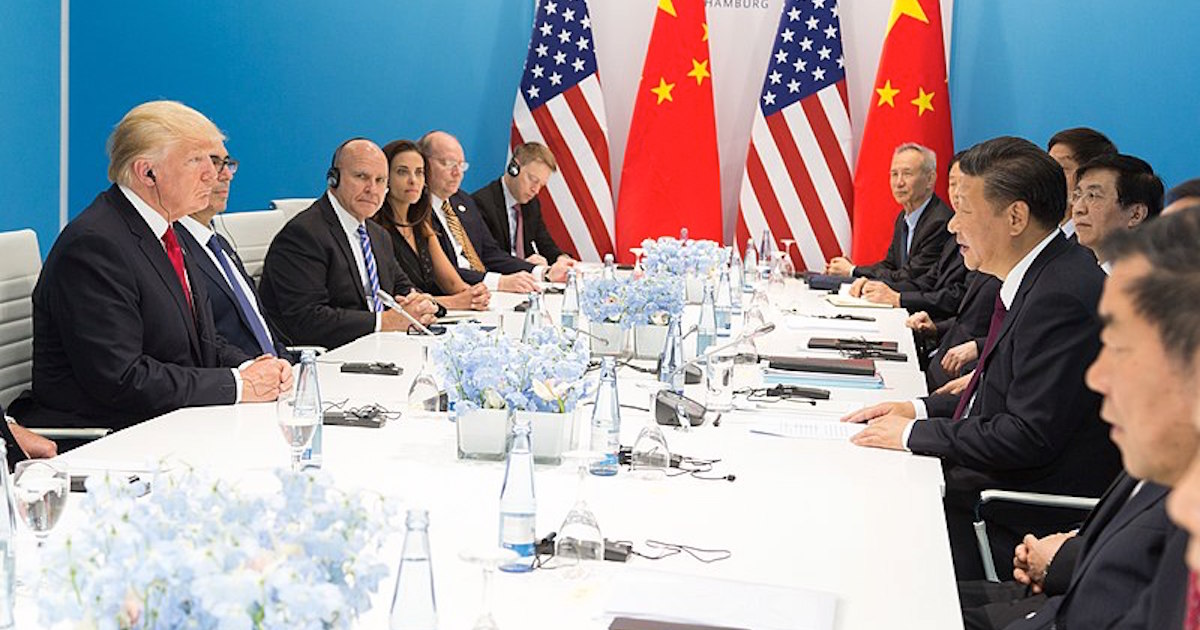
Photo: Flickr
The Pandora box is open - July 6 at 00.01 Washington time, the United States introduced the first import duties for the supply of Chinese goods. This launched a trade war, which depends on how it goes - can plunge the world economy in chaos.
- The first 25%duties of the United States for Chinese goods, the annual deliveries of which are estimated at $ 34 billion. Bloomberg even launched a live broadcast on this occasion. A minute later, China said that he would have to answer - the PRC authorities can only name the deadlines.
- Duties - a response to the illegal borrowing of China of American technologies and intellectual property; They are needed to protect the workplaces of Americans and align the trade balance between countries, Donald Trump explained.
- In total, the American list includes 1102 Chinese goods, divided into two categories. The first turned out to be a little more than 800 goods - it was on them that the duties were introduced today. Here are the most sensitive sector for the Chinese: electronics, components for the aircraft industry, industrial equipment, etc. The second category includes 284 goods by another $ 16 billion and is subject to additional public consideration. Under the return Chinese duties, goods of 545 categories from the United States will fall.
- Of the American exporters, the main target of China’s response measures has so far became manufacturers of soybeans (their supplies in 2017 amounted to about $ 14 billion). But there is at least one industry for which Trump’s decision, in fact, is an autocrat: Daimler and BMW export the crossovers that they produce in the USA (now they will be on 40%duties). In addition to them, Ford and Tesla will suffer, but China was simultaneously reduced duties on cars from other countries from 25 to 15%. Separately, China will go along the farm of the States that voted in the elections for Trump.
- The outbreak of a trade war, in which the EU, Canada and Mexico also participate and which the Republicans compare even with stabbing, will cost everyone a lot. The World Bank has already calculated that with increasing duties all over the world to the maximum possible level of the second level, global turnover can be reduced by 9%. Such a decline has not been since the crisis of 2008-2009. The Fitch agency warns that already taken measures multiplied by mutual threats can affect world trade flows by about $ 2 trillion. This will violate trading chains, reduce the real income of consumers and investments around the world. The growth of world trade almost stopped in June.
What am I to me?
So far, economists expect that the two largest economies in the world will not allow the growth of the conflict and sit down at the negotiating table. But how many victims and time will be needed for this, no one takes to predict. For Russia, any shock in the world economy is always extremely dangerous. And this despite the fact that for slowing down, she has enough “home measures” in the form of an increase in taxes.
MONEY
Calm off the citizens
The Federal Tax Service reassured the Russians by releasing an official explanation that the transfer of money from one bank card to another is not taxed by personal income tax - if this is not a fee for goods, services or work. Income from operations (not under an agreement or employment agreement) between family members or close relatives are also not taxed; If the money is donated, you also do not need to provide a declaration and pay taxes. The Federal Tax Service had to make explanations, because citizens on social networks actively discussed that money transfers would allegedly begin to tax on July 1. All this in general does not cancel the fact that since 2014, the Federal Tax Service can request information from the banks on accounts (including card transfers), but only if a tax audit is carried out in relation to this individual and with the consent of the higher tax authority.
Rostec will not miss its passengers
In 2015, when all personal data operators were obliged to store them on Russian servers, the airlines managed to fight back - otherwise they would have to abandon the Western reservation systems, and they would stop sales of tickets on the Internet, they would warn. But now the situation has changed - over three years, the NSB reservation has developed Rostec and Vnukovo Airport. The state is ready to help them: the Ministry of Transport has prepared a government decree, which will nevertheless oblige the airline from 2020 to store data in Russia. Foreign Saber, Sita and Amadeus systems will not go to such costs-which means that the airlines will have to switch to the NSB or the second Russian Siren-Travel system. This can take up to one and a half years and cost expensive: in 2004, Aeroflot, which then transported four times less passengers, spent $ 15 million on the transition to Saber. It can only be hoped that all this will not lead to failures and will not affect the safety of passengers.
The story of one collapse
The fall of the developer of the Urban Group cost all Russian developers dearly - after it, the authorities have established themselves in the idea of prohibiting shared construction. Kommersant restores history from the very beginning - how ten years ago Metallurg Alexander Dolgin wanted to build a company in Russia that would build housing according to the Western model, how his Urban Group managed to become one of the main developers in the Moscow Region and why it collapsed at once. Among the reasons are the owner of the owner with managers, dumping and ineffective expenses.
Traces of lobbyism
Victor Vekselberg became one of the most unexpected victims of the US April sanctions. He is a defendant in the investigation of Robert Muller about the alleged intervention of Russia in the American elections. Initially, Vekselberg interested the investigators in that his environment generously donated Trump, and the businessman himself was almost the only Russian who was present at all key events dedicated to the inauguration. But perhaps there were more reasons for interest in him - according to AP, Vekselberg spent about $ 1.6 million on lobbying in the USA in the USA. However, what exactly and for what time, the agency does not report.
PRACTICE
Protect from offline dumbbells
The story with the advent of thousands of private Google documents in the search for Yandex once again shows: not a single service is insured on the network from the leak. However, the drain of confidential information can occur in offline - for example, when your company with resentment or the desire to advance from a competitor leaves a manager who had access to corporate data. You always need to be prepared technically for this (there are whole systems for preventing leaks), but also not to forget about the “operational” actions - to control the outgoing employee (for example, to remind him of responsibility for the plums), and at the same time his former colleagues - they should again discuss that corporate secrets need to be protected. Forbes lists all the rules of salvation from leaks in offline.
Google in the world of fashion
The stylist of Alexander Van Houtt, like many generations of her colleagues, was constantly tormented with the search for specific clothes from various collections, stumbling endless fashion catalogs for hours - finding all the “little black dresses” over the past three seasons was very difficult. So the idea of Tagwalk appeared - a resource for finding clothes by tags (brands/colors/style, etc.). The hutt could not find investors for a long time, who believed that the idea was too niche and would not gain a sufficient audience, but one still took a chance and did not fail: now the media call Tagwalk “Google in the Fashion World”, the service successfully earns on the data of user search queries - a small audience (25 thousand people), but exclusively targeting for large brands.
Irina Malkova