
Translated material
A new attack of Russian hackers, television channels against Yandex, Nabiullin about the future of the economy
Today, the US Senate will discuss new sanctions against Russia - and he will have a new reason to talk about “Russian hackers”.
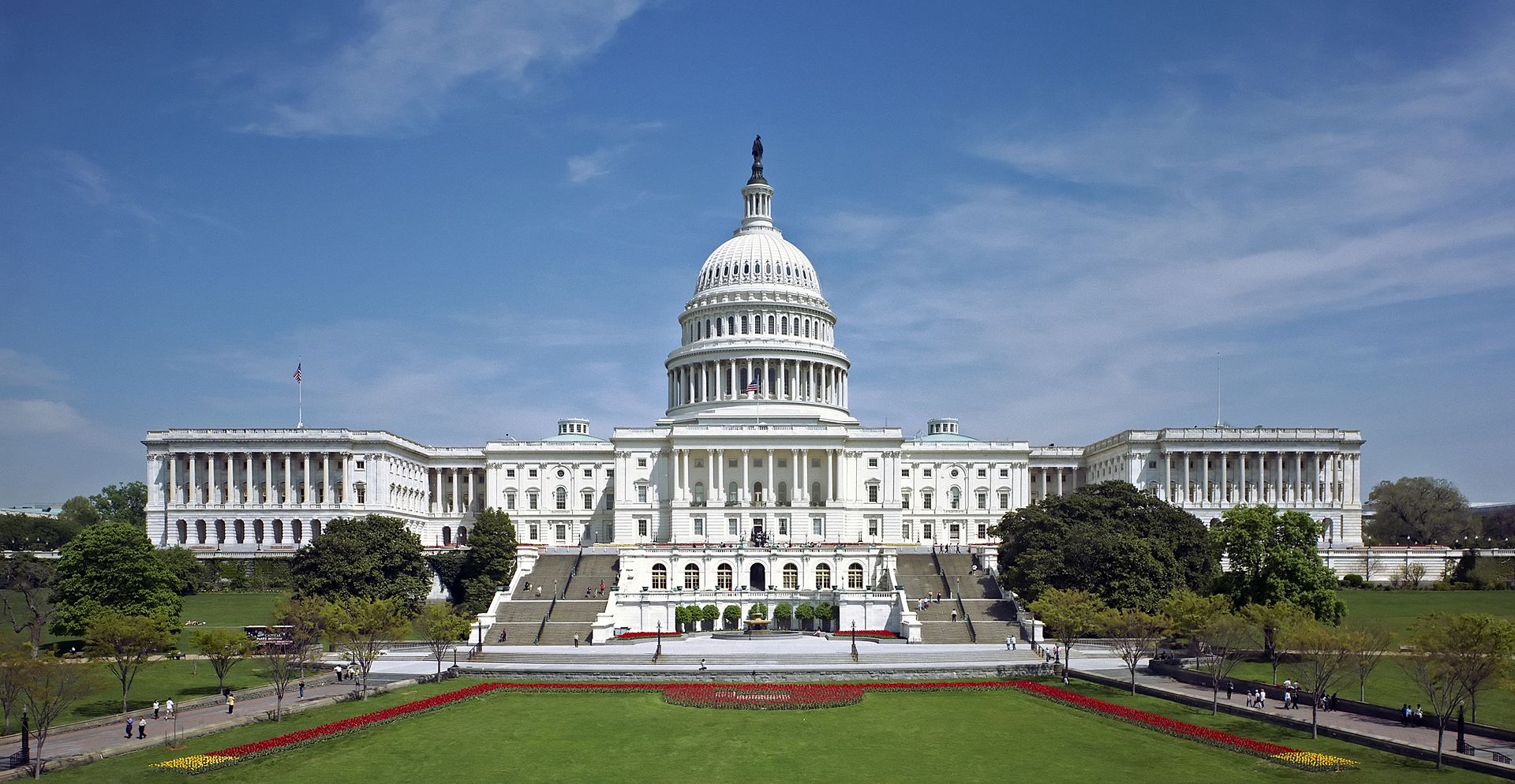
A new week of sanctions begins on the Russian market - tonight in the Senate will discuss bills on new anti -Russian measures, and tomorrow the first sanctions for the poisoning of the Skripals come into force. Today's news can give American hawks additional arguments - Microsoft announced that she convicted Russian hackers in an attempt to influence the upcoming November elections to Congress.
- As explained in Microsoft , the company discovered six domains created by the Fancy Bear group (aka Strontium, which is also APT28), which is considered associated with Russian military intelligence, GRU. One of the URL domains is similar to the web page of the International Republican Institute, whose council includes six senators from the Republican Party, the second-to the website of another major conservative political center, the Hudson Institute. Judging by the name of the domains, three more sites were supposed to imitate the pages of the structures of the US Senate, writes Microsoft.
- Whether any real attacks were made with the help of these domains, it is not known, the company admits. But the entire company discovered by the company resembles the activity of hackers before the US elections in 2016 and the elections in France in 2017 (then Russia was accused of cyber attacks at the headquarters of Emmanuel Macron).
- The Microsoft report was released very on time - today at 17:00 Moscow time in the two committees of the Senate there will be hearings on Russia. The International Committee will discuss the possibility of Russia's intervention in the coming elections to Congress in November, and banking - bills on new sanctions against our country.
- American congressmen and officials have repeatedly stated that the expansion of sanctions against Russia would be tied to possible intervention in the November elections. Therefore, Congress is in a hurry with the adoption of new anti -Russian laws. The head of the International Committee Bob Corker said yesterday that the final project of new sanctions could be ready by the end of September.
What am I to me?
A week promises a lot of news about the new US sanctions - and this, as we have already seen, can mean sharp fluctuations in the ruble. However, this news does not have to be bad - as we wrote yesterday , senators are discussing the softening of anti -Russian bills in order to avoid passing damage to the global economy and European consumers of Russian oil and gas.
MONEY
TV channels against Yandex
“National Media Group”, “Gazprom-Media” and Channel One-that is, all the largest Russian television channels, except for VGTRK- removed the online broadcast of their broadcast from the main page of Yandex. The reason they call an insufficiently active struggle of the search engine with the pirate content in their issuance. Yandex placed a player with television content on his main page in March 2017, television channels could monetize broadcasts over the advertising network. But the representative of the NMG called the income that the NMG received as part of the experiment, "insignificant compared to hundreds of millions of rubles of annual losses associated with the spread of pirate content." In Yandex, they object that they did not make any official complaints about the pirate content.
Nabiullina does not believe in growth
The head of the Russian Central Bank Elvira Nabiullina does not believe that the Russian economy will grow faster than 2% per year, even at a price of oil above $ 100. “The previous model of economic growth has exhausted itself,” said Nabiullina in an interview with The Wall Street Journal, who released a large article about her last night. The May decree of Vladimir Putin involves the growth of the Russian economy at least at the average ID level (+3.7% in 2017). It is supposed to achieve it at the expense of large -scale state -owners for infrastructure.
PRACTICE
LinkedIn will share data with economists
The rare case when the social network is openly admitted that it provides a third party with user data —Linkedin recently announced that she will open access to its base by scientists whose projects are related to studying economic capabilities in the labor market. The top manager of the company Igor Perisik emphasized that they would take measures to maintain the privacy regime for their users. To begin with, researchers will have to obtain permission from the legal department and security service of the company to access data, after which they will be able to use these anonymous data only inside a special “sandbox” (that is, it will not be possible to download them). LinkedIn calls on researchers to offer their ideas in three categories - analytics, economics and artificial intelligence. No more than 12 teams will be in parallel to participate in the experiment.
Intrigues in a non -reference environment
Any organization is a human environment, the powers in which are distributed taking into account not only the achievements of candidates, but also the subjective perception of the employee. If, in the conditions of the Openpace, it is even more or less clear how this office policy is built (for example, during the meeting you can defiantly nod your head in approval), then what happens when the whole company works in remote mode? TechCrunch spoke about this with the founders of the software companies Basecamp and Automattic Jason Frida and Matt Mullenweg: their entire staff was scattered through various continents and temporary zones. According to them, in a remote environment, employees are more focused on building purely business interaction with colleagues, do not try to comply with expectations that have nothing to do with their tasks and have more freedom of action and try to organize the work done.
Peter Mironenko