
Translated material
Cannibal metaphysics
On September 26, Moscow begins the Moscow International Experimental Film Film Festival. In his program, in addition to the experimental short meter contest, several large hits (as far as this word is generally applicable to the variety of cinema, which is shown here). First of all, this is the passage of Albert Serra “King-Solnza”-a kind of continuation of “The death of Louis XIV”: the double of Jean-Pierre Leo in the royal vestment moans in Black Vigwam. We already wrote about the second, film by Ben Russell and Ben Rivers. Inna Kushnareva talks about the third.
PS In addition, the festival will be held by the gastroperframans Peter Kubelka, who is famous not only for its avant -garde films (they will also be shown in Moscow), but also by soups.
Issay Sagawa is a fantasy of French culture, which has become a reality. Everyone with enthusiasm looked at the perversion of the Japanese in the avant -garde Japanese cinema, and then a small, smart Japanese man comes to Paris and eats a classmate in a sorbonne. True, she was not a Frenchwoman, but a Dutchman. But the aesthetic inclinations of Sagava were evident: on June 11, 1981, he lured her to himself under the pretext that he was asked to write down the reading of poems in German. And while she read the poem by Johannes Behera, his beloved, he shot her from a gun. Then he raped and slowly began to eat. (Among other things, Sagava, by the way, found a cover of Charlie Hebdo magazine: the cook cuts off the woman’s chewing part. Signature: “Cool barbecue: Ass under Provencal grasses.”) Sagava kept his blanks for three days, but he did not have a freezer. I had to somehow get rid of the remains. Having folded everything in a bag, Sagawa called a taxi and went to the Bolest Forest. I found a trolley there for my luggage. Going down the slope, stumbled, fell and rolled down. The bag broke in front of a couple in love, secluded in the forest. Sagav managed to escape, but the police quickly calculated it.
 © Norte Productions
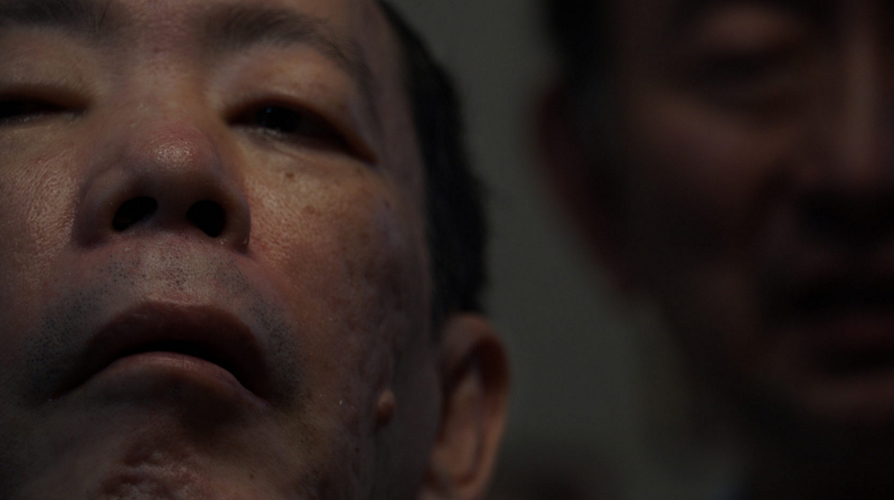
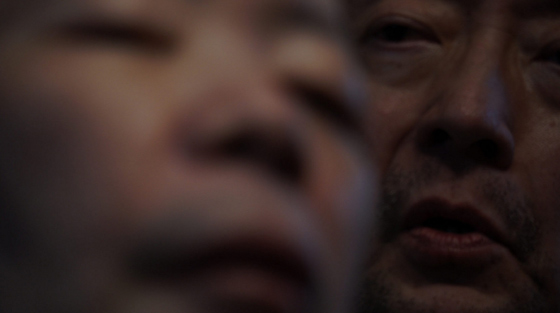
From the film Lyusienne Kasten-Taylor and Verena Parawel "Caniba" can not be found out. It has only a dry explanatory titer at the beginning. And the film itself consists of the ultra -circular plans of Sagava and his brother Jun and fragmentary conversations between them. Sagava is sick, almost blind, he has diabetes, his hands are shaking, and he hardly moves. This is not a speaking head, but a face, even rather, his fragments removed from strange angles: either the cheekbones, then pores on the skin, then a strange shape of the ears. Sometimes the focus is lost. But the face turns into a landscape, into an abstraction. According to Kasten-Taylor and Parawel, they shot a lot of different material, including the types of his room with a mass of artifacts on the walls (naked women interspersed with Bambi and Mickey Mouse), but decided to leave only faces. Sagava’s brother also turned out to be an original character. He is a masochist. He gave his amateur video for the film, in which he pierces his hand with various pricking objects and makes complex manipulations with barbed wire - quite a performance.
Unlike a dealent brother, Sagava was a real media star. In France of the 80s, everyone was obsessed with the history of the "Japanese cannibal." In Japan, Sagawa became the subject of a cult. He himself wrote about himself, in particular, he invented and painted manga, which his brother leafs through in the film, cringing with horror and disgust (possibly pretending). Sagava performed in the press, he was invited to talk shows. Artists arranged protests, claiming that the cannibalism of Sagava is a way of self -exposing his artistic nature. Sagava was shot in films and even in advertising a network of meat restaurants. In 1992, he starred in the film "Bedroom" by Hisayasa Sato. Actually, through Sato Kasten-Taylor and Parawel, they got to him. Kasten-Taylor produced the film Sato, the last director of the dying genre Pinku Eiga (Pink Film), and in exchange gained access to Sagava.
 © Norte Productions
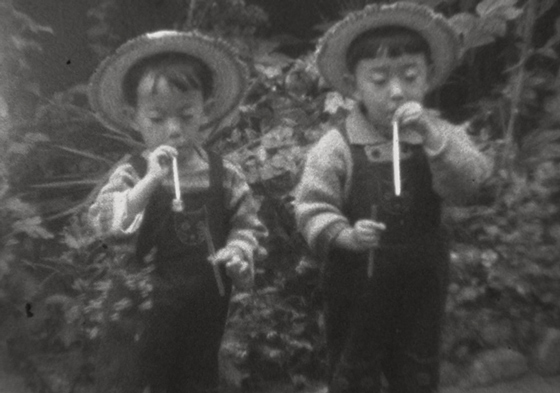
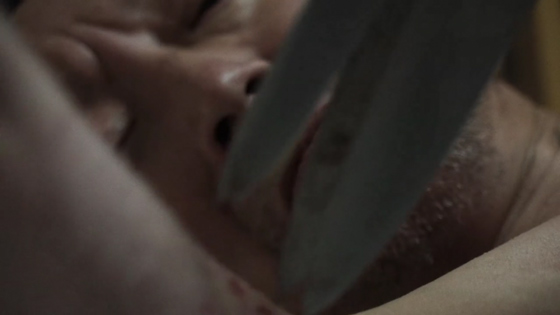
Unlike an expansive and good -natured brother, Sagava is restrained and evasive. No Bataevsky excess. It does not flaunt - the physical condition does not allow, and not only it. He says little. Sometimes he pronounces something in French or in English, and then it is noticeable that a foreign language is also in some way the continuation of the joys of the oral stage. We all the time see how Sagava drinks, and only at the very end of the film - how he eats. He has a surprisingly small mouth. It is generally small: height is less than 1.50, weight - 35 kg. In childhood, he was ill with encephalitis, he was completely weak. Mother forcibly forced him to eat. One of the powerful moments of the Kaniba, a diversifying visual series, is an amateur film that made them with Dzyun a father, a wealthy Japanese industrialist. A well -preserved old film, two kawaii children, dad in a coat and hat, harmless fun, children are examined by a doctor, the doctor makes an injection in an unimaginingly small and thin handle of the boy. Part of the chronicle, shot on a color film, resembles the film Ozu by aura. There is already a young man, fragile and painful, next to his mother in the garden. The chronicle in the film Kasten-Taylor and Parawel works because their film is arranged differently than the standard documentary with talking heads, the retelling of facts and game reconstructions. The main idea is the breeding of the body and culture: Sagava has too many cultural connotations, it is too well in Japanese culture, perversive and fetishist. It is necessary to take it out of the brackets or, in any case, not allow it to the frame. Behind the scenes, Jun can explain to his brother that the manga should not be as angry and perverted as his. Or a sagawa nurse in the form of a French maid (in fact his old friend) can project another “cultural identity” on him - zombies.
 © Norte Productions
Kasten-Taylor and Parawel return to the flesh and its impenetrability itself. Is someone else's flesh for cannibal permeable? Does he want to penetrate it by endowing all kinds of meanings? In Kanib, the meanings are either seized or only accidentally fall into the body of the film. The close -up works in the film as Detzer described in Cinema. The close -up deprives the face of all three functions - individualization, socialization and the ability to communicate: “A close -up is a face, but to the extent that it has lost three functions. Face nudity is greater than body nudity, the inhuman character of the face is more inhumanity of animals. ” And in relation to Sagava, the aesthetic choice becomes ethical. Sagava quite consciously played the role of the monster, demonized himself, but at the same time he had a feeling of resentment of the press. He has not wanted to communicate with anyone for a long time and, perhaps, did not even understand who removes him, simply trusted him because Sato, the last person to whom he believes. And Kasten-Taylor and Parawel, in turn, did not want to show his body-it is fragile and sick.
In Kaniba, the half -shy eyes of Sagava almost do not look at the lens. He was practically not shot in frontal plans. But on the other hand, Kasten-Taylor and Parawel themselves looked at him for hours, replacing each other in front of the camera and sometimes not even holding the focus (Parawel complains of his own problems with vision, with focus, which even glasses do not help). And in addition, they listened to conversations, not understanding the language. The whole project seems to be a voluntary test primarily for the authors, and not for their object. It seems that they punish themselves. If you look at the monster for a long time, something will happen to the watching. The look facing the monster is divided. But the search for an inhuman gaze is the project of these directors. In his previous film “Leviathan”, showing the industrial production of fish, they were looking for an inhuman look with the help of GOPRO cameras, fixed in the most unexpected places. Now they are working on a film filming inside the human body using medical equipment that is used for surgical operations. In Kanib, who turned out to be between these two projects, they managed to remind everyone that the good old close-up can leave a person without a face, and the viewer without a look-or with some other inhuman vision.