
Translated material
Great days of plunder and smuggling. The history of the DPRK in the essays of Andrei Lankov, part VI
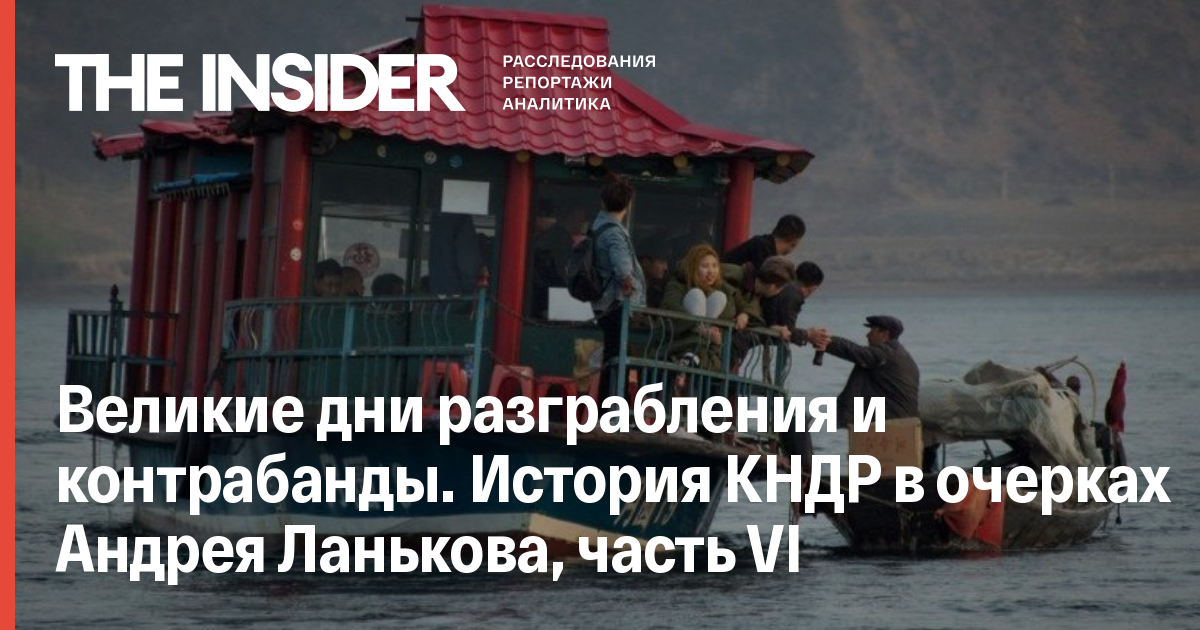
The Insider continues the series of essays at the University of Kunmin in Seoul Andrei Lankov about the history of the DPRK. This time we will talk about how, escaping from poverty, the inhabitants of North Korea for nothing sold the unique heritage of the ancient Koreo dynasty.
Previous parts: Part “It all started with great hunger” ; II“All ways to escape from hunger were capitalist” ; III Tonsu - how the rich appeared in North Korea ; IV after hunger. Why did North Korea not follow the path of China? ; H. IV "wrecking" reform and the execution of the "American spy" Pak Nam-ki .
For most residents of the DPRK, the 90s were a time of hunger and chaos. However, for a number of enterprising, rigid and purposeful people, this became somewhat “golden times”. In those years, a person who has neither special connections, nor starting capital, often in just a few years he could earn a fortune (however, with an extremely high probability he could put his violent head in one of these attempts). The most profitable - and one of the most dangerous - types of business in North Korea, the nineties and zero were the trading of antiques. Both in terms of profitability and in the level of risks, this business was quite comparable with the trade in amphetamines and opiates, which, by the way, then many were also engaged in the border region.
First of all, the attention of the smugglers was attracted by ceramics from the Koreo dynasty (X - XIV centuries), which has long been considered as one of the peaks of East Asian ceramics. During the Kuro dynasty, the main centers of production of ceramics were located in the territory that today is known as North Korea. A special role here was played by the city of Keson, which was the capital of the country in the X - XIV centuries. And which is now located on the territory of the DPRK. All this means that in the Earth of North Korea, especially in the vicinity of Keson, to this day a great many samples of ceramics of Koreo, which are very highly appreciated by collectors around the world, is buried, but is especially popular in Japan and South Korea.
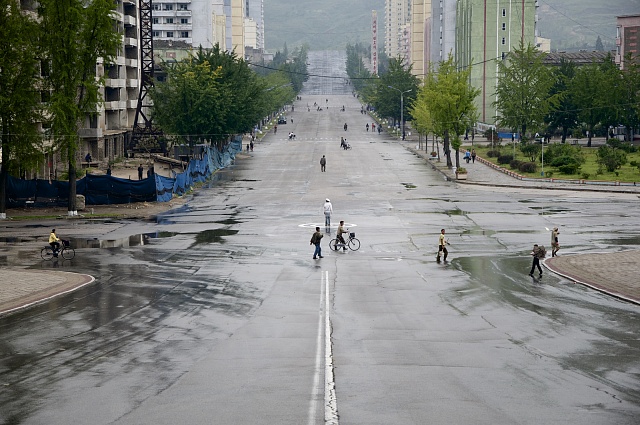
This archaeological fact until the end of the 1980s did not matter. The peasants and then, apparently, from time to time came across some ancient burials or accidentally discovered strange pots. However, in those days, North Korea was an ideal police state, whose interaction with the outside world sought to zero. This meant that neither peasants nor officials, even if desired, could not extract personal benefits from these random finds: it was almost impossible to contact the dealer who was ready to pay for such an antique object and transfer the artifact abroad. It is hoped that in those days most of the accidentally discovered things eventually found themselves in museum collections, where they were a place.
The situation began to change in the late 80s, when some of the ethnic Koreans of Japan, who moved to North Korea back in the 60s, discovered the opportunity to work well for themselves. They began to contact their relatives, whose arrival in the DPRK was permitted from time to time. Returners from Japan began to act as intermediaries, and the first antiques discovered by local residents began to appear in the Japanese and partly international market.
Peasants sold strange jugs dug up from ancient graves, and kept their families for many months
Since 1995–96 The changes went much faster. Hunger began, police supervision over the population was weakened, and partly completely collapsed, the border with China remained transparent, and law enforcement officers who themselves often had no more, became much more willing to take bribes. The peasants from the environs of Keson found that strange jugs dug up from ancient graves can be sold for the money that is enough to keep the family for several months. The peasants made this discovery - and began to actively dig. The discovered items were in different ways, but, as a rule, the peasant paid about $ 50 in the late 90s for a small bowl or jug. Then the intermediary went to the Chinese border and resold the product to a smuggler - about ten times more. Further, the subject was crossed across the border and eventually sold at auction in Seoul or Tokyo, where he went into a private collection for several thousand dollars.
We must pay tribute to the DPRK to the government: it did everything possible to stop the mass loot of the treasures of national culture. People who were caught on black excavations or attempts to realize antiques could well have come under execution (however, a long prison conclusion, given the conditions in the then North Korean prisons, in practice also often meant certain death). However, all this helped a little - some North Korean peasants, perhaps, were quite patriots, and they were all afraid of death. However, people were starving and, faced with the choice between the illegal sale of the old jug in China and the starvation of the child, they made a completely obvious choice.
The result was the mass destruction of the archaeological heritage. “Black diggers” were only interested in those objects that they could sell abroad with great benefits. They searched and took ceramics and, if they were completely lucky, jewelry. Everything else was thrown away or even intentionally destroyed for security reasons, so as not to leave unnecessary traces and evidence. Thousands of graves and other archaeological objects were destroyed in these years.
By the end of the 90s of Dantun, the largest Chinese city on the border with the DPRK, became the main center of antique trade. The role of intermediaries was mainly played by Khuago (Huatsiao): China citizens with a constant North Korean residence permit, the only group of foreigners who have the right to long -term residence in the DPRK. By virtue of their unique status, the North Korean Huatsiao constituted the only group whose members could cross the border more or less at their discretion, and they actively used this advantage for commercial purposes (of course, only a small part of their business). Although some collectors in China and in Western countries showed interest in smuggling ceramics of the Koreo dynasty, the vast majority of the end buyers were South Korean or Japanese collectors.
The stream of North Korean smuggling at the beginning of the zero reduced the prices of antique markets, but by 2005 signs of the decline of this business began to appear. The number of fakes grew, and the number of authentic objects began to fall. The reason for the changes was simple: by that time almost all archaeological monuments were found and looted, which could be easily found, so that the market entered less and fewer objects. Improving the food situation in the DPRK also played a role: while the hungry peasant was ready to risk the shooting article in order to save his family, a well -fed peasant behaved much more carefully. In the new situation, the increasingly noticeable part of the market was occupied by fakes that were produced in China, as well as in South Korea and North Korea. The crooking merchants went to a lot to sell fakes, many of which, by the way, were of high quality.
One of my contacts, for example, often organized a kind of show, trying to impress potential buyers inside North Korea (all these buyers were Huatsiao - they would not allow anyone else to move around the DPRK). At first he buried fake things somewhere in the mountains, and then invited customers to "participate in excavations" supposedly "recently discovered by local residents of the grave of the Koryo dynasty." The merchant and his friends deliberately created an atmosphere of tension, telling customers the story of police patrols and unfortunate diggers that were killed on the spot or caught and executed. Properly frightened customers then witnessed the “discovery” of the burial full of valuable - and, of course, authentic - samples of ceramics.
A certain number of objects of the time of the Koreo dynasty - both real and fake - is still entering the market, but the great days of smuggling antiques ended about ten years ago. Some of the current North Korean teenagers and young people may now be alive precisely because during the years of hunger their parents took a chance and earned enough to buy food for children. They saved their children, but at the same time contributed to the destruction of the noticeable part of the national (and world) cultural heritage.