
Translated material
Soviet Belmondo
Anton Dolin - memory of Nikolai Karachentsov
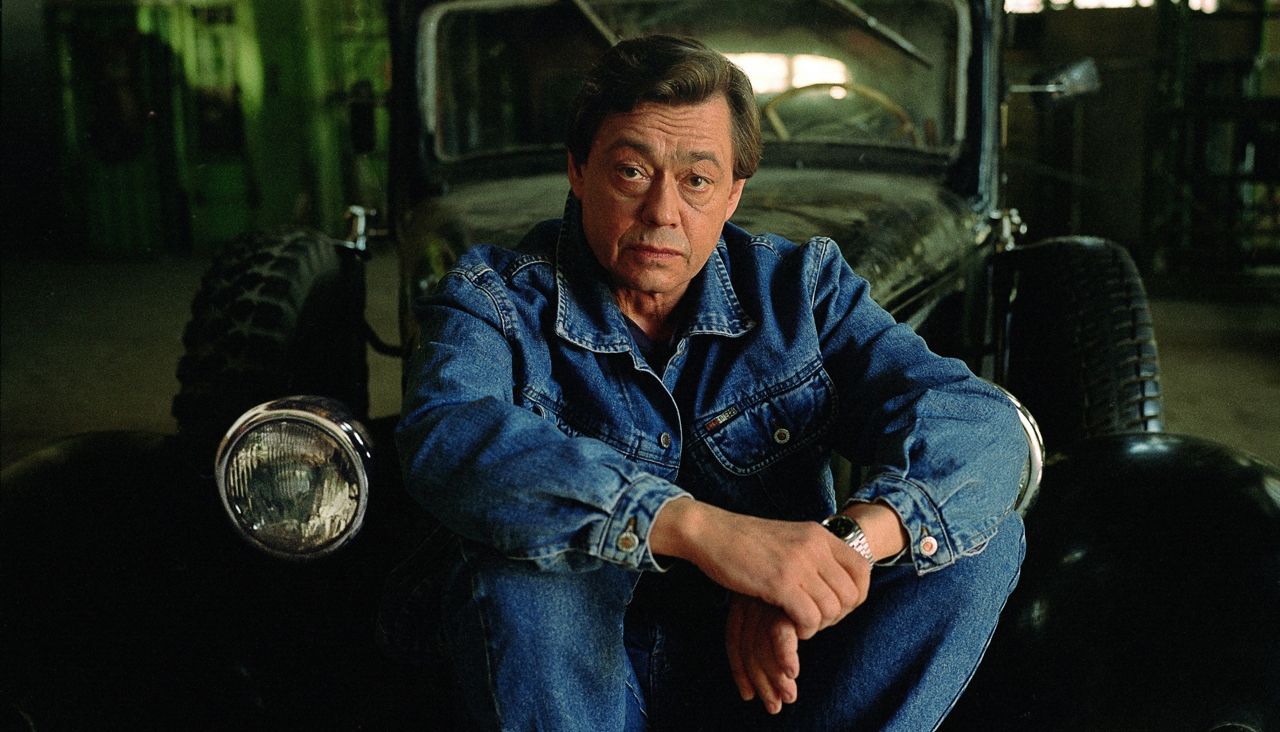
On October 26, actor Nikolai Karachentsov died. He was 73 years old; For almost 40 years he served in the Moscow Theater "Lenkom", simultaneously starring in the movies and releasing musical albums. In 2005, the artist was in a car accident and received a serious traumatic brain injury, after which he could not completely recover and return to the stage. The film critic of "Medusa" Anton Dolin recalls an outstanding artist.
Someone who, and he was certainly a national artist. Not by pieces of paper, but in the very essence. This is not a profit, with such a gift they are born. Theater, cinema; Plastic, facial expressions, body, face, voice. Nikolai Karachentsov was a phenomenon in everything, and the viewer felt it. For the energy that he generously endowed the hall, he was paid a hundredth - love. Few loved as much as him.
It is strange: if you try to renounce this feeling and look at the appearance of Karachentsov, as they say, unbiased, the word "handsome" will seem unsuitable. Such faces will not meet Raphael in the paintings - rather, with Bruegel or Goya. But it was impossible to doubt: Karachentsov is a handsome man, and also a superman. His charm and crazy energy turned any flaw into an advantage.
The artists, as a rule, earn cinema - the theater remains the privilege of the elect. With Karachentsov, it also turned out to be unusual. If you look at the list of his roles in the cinema, the abundance of husk and nonsense will be caught in the eye. Even the most favorite characters were not central. The Marquis of Ricardo in the “dog on the hay” and Passtano in “Pious March” (Karachentsov - Spaniard!), Dicky in “kings and cabbage” and Jefferson in “Trust that burst” (Karachentsov - American!), To which, it seems, closely adjoins the role in “Man from the Kapucin Bulvar”. Yes, and Jefferson Hope, another mysterious alien from the States in the fictional Soviet-British world "The Adventures of Sherlock Holmes and Dr. Watson." Everything is non -official, "not local." Like Gangster Urry from the “Electronics Adventures”, with whom Karachentsov came into the life of every Soviet schoolboy for several generations.
In general, everything is trifles. A second -time colorful actor - he might have seemed like that. And the main roles were in the theater - the only one suitable for such a specific talent as it, with his data from a real pop star: Lenkome. The head of the theater, director Mark Zakharov immediately saw a superstar in Karachentsov. In 1974, the artist played on the stage of Tila Ulenspigel ; In the version of Gregory Gorin, the Flemish jester became a tragicomic hero, a romantic mockingbird, a Hamlet and a burial ground in one person. Pepel Klaas knocked in his heart - and in the finale he did not die, because he was immortal.
Til was life itself. Therefore, the role of death itself in the “Star and Death of Hoacin Murita” (1976), the first of the two great rock opera Alexei Rybnikov, looked so natural. In the second, “Juno and Avos” (1981), Karachentsov played - and sang, this is no less important - his main role, Count Rezanov. Also dying, also immortal. The recording of this performance became a hit cleaner than any of the films in which Karachentsov lit up.
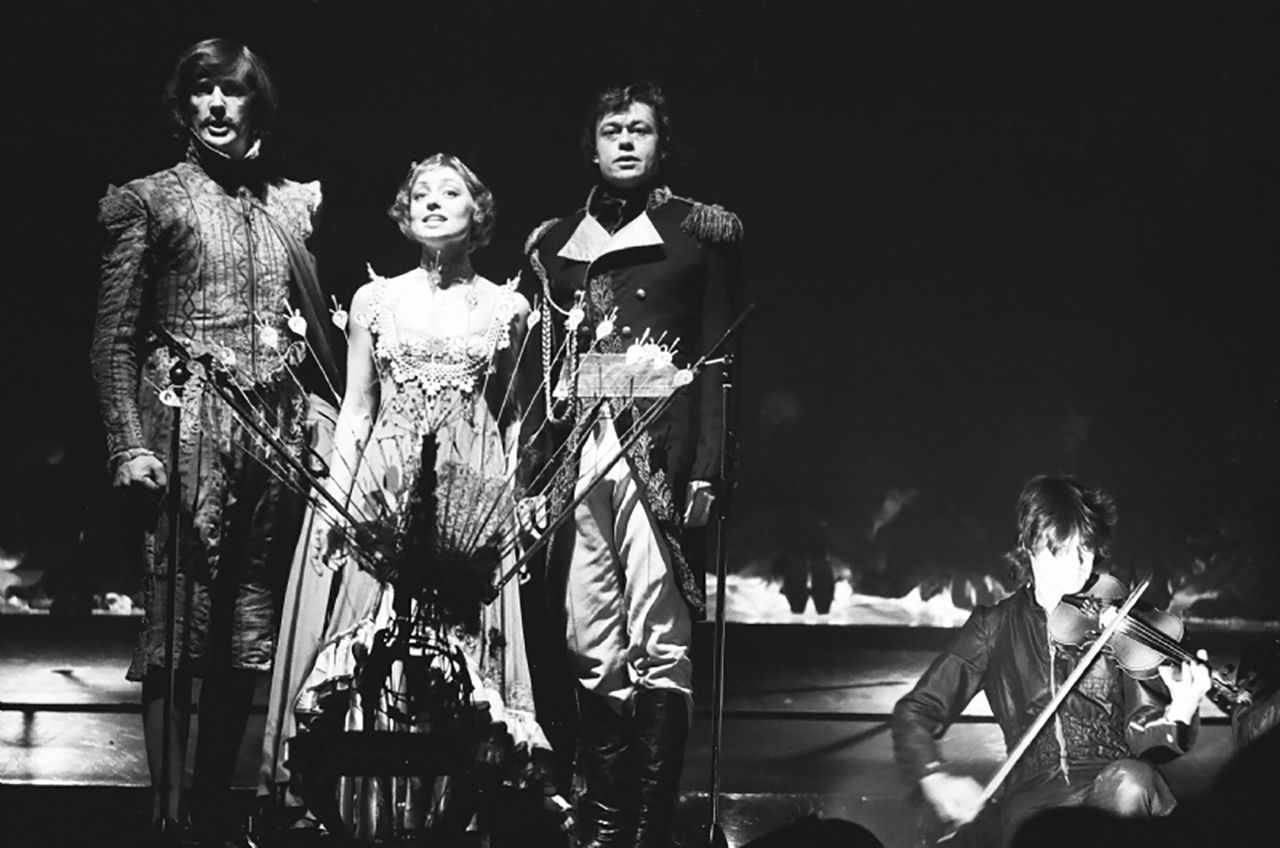
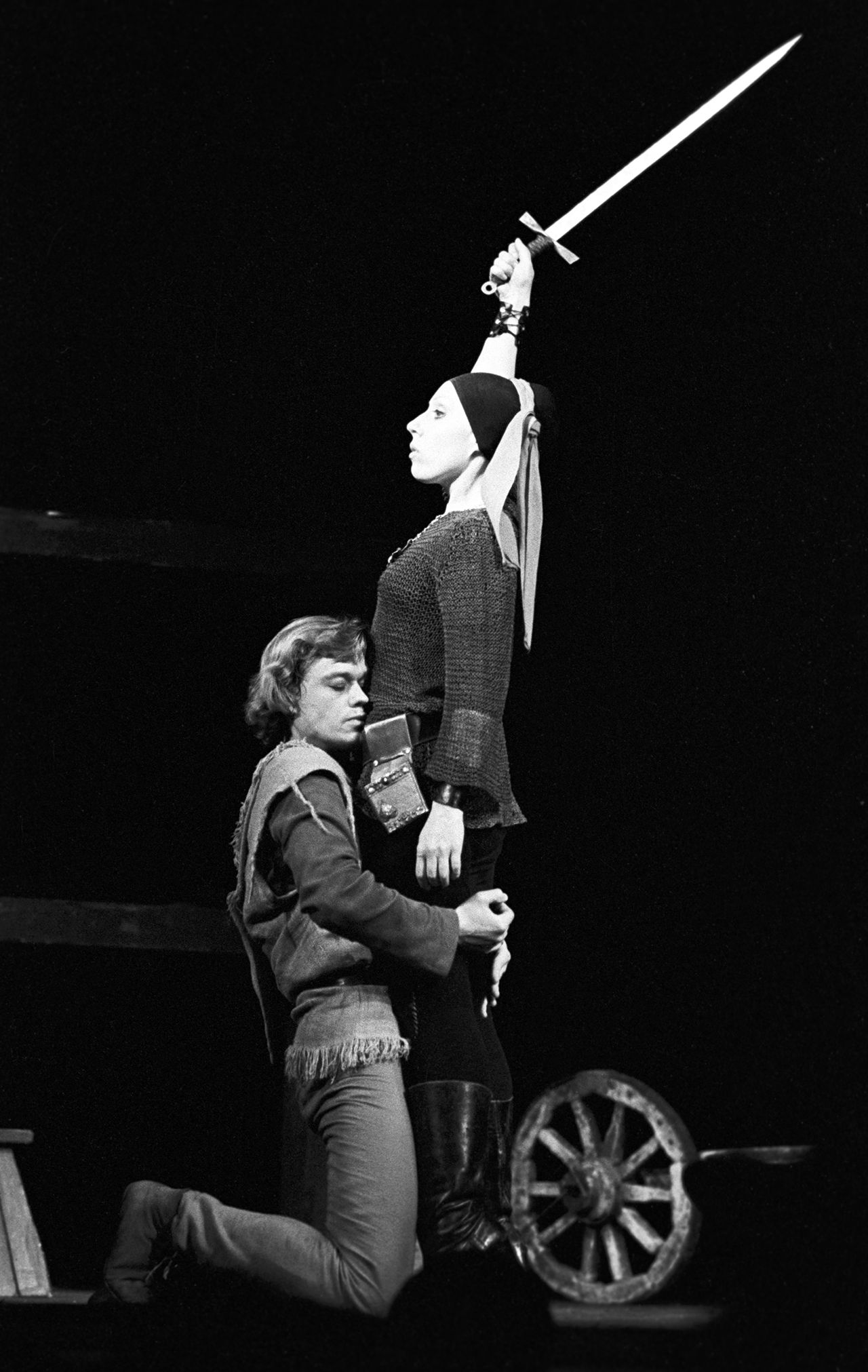
Karachentsov in a free white shirt was an embodied romantic dream of an incredible Russia. No less naturally he looked in a wide -brimmed hat with a pen and a sword. Or in a cowboy hat and with a colt on the bandage. No wonder Belmondo was entrusted to Belmondo precisely to him (although their voices were not even similar). Karachentsov, perhaps, was the Soviet Belmondo: remember the “criminal quartet” and “dossier of the detective of Dubrovsky”. Only now Godda did not happen in his life. But Mark Zakharov happened. In the cinema, he occupied him only in two episodes, albeit bright - in the “Twelve Chairs” and the “House that built Swift” - and on the stage he gave him to turn out to be all.
At the same time, it is useful to remember that Karachentsov also played with Andrei Tarkovsky. In his Lenkomovsky "Hamlet" the artist was Laert. The record of the performance has not been preserved, but the fact of cooperation is significant. And among the movie roofs there is one special one with which it all started for Karachentsov. This is Busygin in the "Elder Son", the film by Vitaly Melnikov based on the piercing play by Alexander Vampilov about loneliness and kinship between people, not like each other. The named father in that picture was played by Evgeny Leonov, another actor-phenomenon (and also from Lenkom). Many dreamed of such a sweeter dad as Leonov; But about such an older brother as Karachentsov, too.
The disaster that happened to him not only prematurely completed the career of the artist. It was as if she forced to summarize a preliminary result - to see with a short distance and fully assess its uniqueness. However, it was enough to even just hear. There was enough of one of his instantly recognizable voice, singing “you will never forget me, you will never see me” so that half the country, no less, without hesitation, hit tears.
Anton Dolin