
Translated material
“From the first person”, or ours, Russian, Trump
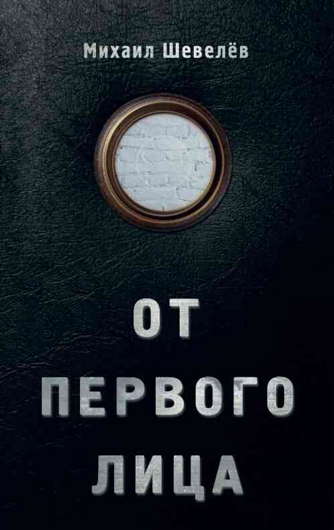
The Publishing House of Zakharov was published by a small novel of the translator and journalist Mikhail Shevelev with the provocative name “from the first person”. On the cover is a review written by Lyudmila Ulitskaya: “This book, by old standards, could be called a detective, but <...> it combines a sentimental drama, a journalistic investigation, a social essay and a parody.”
To begin with, a short summary of what is happening in the novel.
In 1984, the protagonist of the book, the student of the Language Faculty in Moscow, Vladimir Volovik was detained by the OBHSS for trying to “speculation”. He is called for a conversation by the unremarkable captain of the KGB, who, having chatted the literature and the nationality of the detainee (the Jew), under the threat of deductions, forces him to sign a paper about cooperation, which is supposedly needed exclusively for the session.
In the 1990s, the Volovik, who became a synchronist translator, is without a livelihood. Then he recalls one of his cunning acquaintances by the name of Ilya Kraynov. By that time, Kraynov was led by a Krasnaya Gorka trading house with a fashionable office and parked at the BMW porch. In a conversation with the Volovik, Kraynov boasts: "This is all my father -in -law with the roots." Along the way, it turns out that the father -in -law of Kraynov from the village of Mountain Jews in Azerbaijan (by the way, in Azerbaijan there is a mountain village called Krasnaya Sloboda). The Volovik begins to work in a new company.
At first, it is not easy for him to figure out what exactly the Red Hill is doing. Toasts in the company rise, for example, for Yuri Mikhailovich. As Vladimir finally understands, Red Gorka is engaged in laundering of dirty money from the Forbes list (the former mayor of Alma-Ata leaves the most vivid impression: he puts a cash bag into the office). Meanwhile, the company, which has become multidisciplinary, buys a hotel. In it, according to a strange coincidence, the general prosecutor of the country with prostitutes is caught. Foreigners come across among customers. One of them is an “American, a hefty blond of a habalized look”, which is worn with construction projects and a beauty contest. Once in the corridor, Vladimir meets the same inconspicuous captain of the KGB.
Meanwhile, the Volovik is an offer to move to the United States to establish a subsidiary of Red Gorka there Universal Services, but so that the companies are not legally connected: someone must accept money on the other side. Using Universal Services, cash through a “schematosis”, when “a trust on a trust and a trust is driving” is invested in the US real estate. This is convenient, because in the States do not require the disclosure of the final owners.
In order for the plan to come true, the Volovka needs American citizenship. Three rabbis in the Bronx sign documents that in the USSR and Russia of the 90s the Volovik was a victim of anti-Semitism and “Barkashovschina”, after which he was easily given citizenship, and a year later he register the company to the address of the Jewish cultural center “Khabad” .
However, soon the Volovik is called to Moscow, his mission is finished, and he is a dangerous witness. In New York, his wife and child remains to live. In the language of the employers of the Volovik, this is called a “double guarantee”. For blackmailing, the Volovik uses the same paper about cooperation with the KGB, signed by him in his youth. She is threatened to transfer to the FBI, and then his family is waiting for deportation, and he himself - criminal prosecution in the United States.
After another 17 years, we are already talking about the survival of witnesses of old deals. Former employers eliminate Kraynov and his father -in -law. The grown son of the Volovik Vladimir, through the rabbin of the Khabad Center, arranges a meeting with the “first person” in Moscow, using his last chance to agree ...
Shevelev’s actual interest is that in his heroes the prototypes of the business partner of Donald Trump-immigrants from the USSR who have settled in the United States are guessed in his heroes. It is curious that the book was published only three months after the publication of the documentary study of the New York journalist Craig Unger, the author of the biography of George Bush Jr., “Trump’s house, Putin's house. The unexplored story of Donald Trump and the Russian Mafia. ” Both books are in many ways echoing, although the authors worked separately without saying a word.
Anger restores Trump's old ties with Russia. In 1986, the young magnate Donald Trump aimed at the post of ambassador to the USSR, hiring for these purposes a lobbying company Paul Manafort (one of the current suspects in the Russian election intervention in the American elections). Since 1987, Trump tried five times to build Trump Tower in Moscow. The last time - relatively recently: in 2015-2016, through Felix Sater (nee Sheferovsky), a person convicted in the United States in the case of fraud on the exchange, who worked in Moscow with Sergey Polonsky.
In 2013, Trump organized a beauty contest in Moscow (as well as the “Hefty Blond of the Habalian Vid” from the novel Shevelev) with the support of billionaire Araz Agalarov. Agalarov himself had an export-import Soviet-American business in perestroika, he lived in the United States for some time, where his family now lives . Allegedly officially the interests of Agalarov and Trump did not intersect up to the same beauty contest .
One of Trump’s biography is how he was chosen from several bankruptcy. It is likely that Anger claims that Trump received loans from Russian partners with opaque ties in the world of organized crime groups: his tax returns have not yet been presented to the public. Anger has a hypothesis that the “Russian mafia” supposedly “de facto was a public sector serving the interests of the Russian Federation in about the same way that American intelligence serves the interests of the United States.” In confirmation, Anger mentions the incredible amounts invested in Russian emigrants, in particular, in Trump Tower , as well as their career-for example, receiving Trump's partners with Brighton Beach for oil export licenses even in the USSR, and then in Russia .
If we consider the oligarchs connected by general projects with Trump and his family, then the President of the United States is gaining “Russian contacts”, according to Anger, 59 Trump, however, claims that, having become a candidate for US presidency, he refused to business projects in Moscow.
By the way, the cultural center, which helps the hero of the novel by Shevelev, to the voltage to register his company in the United States, recalls the center of the Jewish community “Khabad”, which in reality played an important role in the elevation of Trump thanks to his son -in -law Jared Kushner, as well as Lev Levaev and Roman Abramovich .
At the same time, Trump was only one of the potential “assets” of Russians. Starting from the late 1990s, the post-Soviet emigrants were happy to invest in various US politicians (of course, after receiving American citizenship: such investments are prohibited for foreigners)-in particular, to the campaign of the mayor of the New York in 1994-2001, Rudy Juliani , who defends Trump today.
About a month later, the US special prosecutor Robert Müller on Rashagate is expected, that is, “the investigation of Russian intervention in the 2016 elections in the United States and related issues”. Müller was instructed to explore hacker attacks and the theft of Imilov Hillary Clinton, presumably committed by hackers of the GRU and strongly influenced the polls, as well as "coordination between Russia and any persons associated with the Trump's election headquarters." At the same time, Müller has already stated that he plans to interrogate the son of Araz Agalarov, the showman Emin Agalarov .
In this context, a literary attempt appeared to understand the depth of Russian influence on the US policy - Mikhail Shevelev’s novel from the first person. Anastasia Kirilenko spoke to his author.
 © Zakharov, 2018
- How did you think the idea of writing this book, at what moment?
-About a year ago, when I watched what was happening in the USA around Müller's investigation. I watched television portions and suddenly realized that I know very well those people who, let's say carefully, could be the interlocutors of the President of the United States on some rather slippery topics. I began to imagine how this plot could develop, and realized that this fits into a certain logic - the logic of the behavior of those people who remained after the collapse of the USSR.
There was an illusion that in August 1991 the Soviet Union completely disappeared. But it does not happen. The systems disappear, and the people grown by them remain. Their morality or immorality, habits, ideas about good and evil remain, and these people begin to build a new one in an empty place. Russia is a state that has been opened to the world for a long time. But people who came to power in Russia decided that the management methods natural for them are everywhere accepted, and they went along this path to the end. They began to use them for the purpose of their own enrichment, and then to realize their geopolitical fantasies.
- Did the main character have a prototype or is it a collective image?
- Any person who takes the risk of writing can see his characters only in the surrounding reality and assume how they could exist in the proposed circumstances. The protagonist of the first person, of course, had prototypes.
- Hint from which sphere. From law enforcement agencies? Or from religious? Your main character does not profess Judaism, but his Jewish roots are an important element in the narrative.
- Any writer has one main source of experience - his own biography. This book has a lot of autobiographical, and the rest is thought up-how could someone be a fate if the circumstances could have developed differently. A small accident, a fleeting meeting - and all life goes differently.
- I liked the name of the company laundering post -Soviet money, - "Red Gorka". This refers to the village of Mountain Jews-Chasoviks in Azerbaijan , which organically joined capitalism? Or is it a coincidence?
- No, this is not a coincidence.
- Laconically. And the provocative name refers to the book “From the First Person. Talking with Vladimir Putin "?
- Well, this name attracted me, because it seems to me an adequate content. Are there any coincidences with someone's real biography? I did not set such a task for myself. I wanted to show some type. If someone in this type sees a similarity, it will be a compliment. The type is good when it resembles real people.
- But the meaning of this name, it turns out that the first person in the novel controls everything, takes a certain share?
- Well, this is a work of art, not an investigation.
- This is understandable, but if you abstract from Russia, and talk about other similar systems - the Berlusconi state, for example?
- In principle, all corrupt political systems are arranged the same. The whole question is in what form the share is taken - in more or less legal states, it is charged by shares, preferences, and tax benefits. In non -legal states, this share is taken directly - with money, including cash, property.
- I liked the slang, the thugs that the heroes use. You clearly heard it somewhere, it is impossible to come up with it.
- Unfortunately, this is the language in which Russian business and elite are talking today. And this Russian becomes a worker, natural. There are no miracles. If the banditry that is happening in Russia occurs in the economy and in social life, this affects the language in which the country speaks: on criminal jargon.
“I remember how you told me that you met with Putin when he was not yet president.” If I am not mistaken, this meeting made a deep impression on you.
- Yes, we had a short meeting when he was a deputy Sobchak, and I was the deputy chief editor of Moscow News. However, she did not make any deepest impression on me. He seemed to me a very ordinary person. He was the receiving side when the journalists of the Moscow News came to Petersburg to meet with the reader.
- And he tried to please ...
- Well, yes, it was his professional task. He performed as he knew how. In my opinion, rather boring. I have not made any other impressions from this meeting. All other impressions appeared in me since 2000, from the Second Chechen War-these were really vivid impressions.
- When "the Russian army was revived in Chechnya"?
- When the “Russian army was revived in Chechnya” - according to Anatoly Chubais . Yes, they both made a deepest impression on me then.
-One of the points of view on the recent Russian history is that Putin is something separate from the 1990s, that he is a product of the 2000s. Chubais was initially perceived as one of Putin’s political fathers, and then all this supposedly turned out to be wrong ... Do you have a clear vision of what happened? Since 1991, Putin has been tuned to an alliance with liberals in order to come to power-or is it an accident?
- I think he had no far -reaching plan. He was a man who found himself in a very difficult life situation. His Soviet career, in which he put a lot of energy, collapsed. A person at forty years old - and this is a mature age - has suffered life collapse. He survived as best he could, how many people from the Soviet nomenclature survived. But he turned out to be dexterous, mobile, skilled, decisive. He was lucky to be next to Sobchak, and gradually he got a taste and began to build a post -Soviet career in the same way as he built the Soviet one. There were many circumstances, as a result of which he became what he became. Events developed in addition to his will.
- As you know, Putin is behind a whole clan.
- Of course, there is a whole clan to which he owes, and they - to him. They lived together a large, difficult life.
- The more time passes, the more difficult it is to study the past. And if we talk about Jewish emigrants in the United States, who arrived there thirty years ago, then, probably, someone is no longer alive. In the 90s, the origin of their investments in hot pursuit could be investigated. How did this topic manage to pass a wide discussion? Was a misinformation machine involved?
- This is a very good and important question. I think in the 90s this topic did not bother anyone for various reasons. In Russia, this was considered the norm of behavior. Washing money, illegal sources of income, the mafia - all this was perceived as the weather, as something natural. And at the same time, it did not worry anyone in the West: the money comes, invest. What the sources, how this money is purchased, does not matter. By the way, Russia is not the only source of dirty money. In the same way, they took money from Gaddafi, took and took from African dictators. No one was going to investigate anything. And only when it became clear that this money and these people begin to invade the basis of the foundations of Western civilization, interest arose to this topic.
- Are you talking about Trump's elections?
- Not only Trump, but also Brexit , attempts to intervene in the parliamentary elections in Germany, the presidential election in France is a long list.
- A critical point has reached? Until now, many journalists do not believe in the West, they urge not to engage in conspiracyology, they say that the West itself and its politicians are responsible for their problems, that Russia's intervention should not be exaggerated.
- I think the process will reach a critical point after a while. Journalism is quite difficult to ahead of the events. There are journalists who can think promising, but there are few of them. The most important thing in this process is the investigation of the prosecutor of Müller, when it begins to be fruit (and this has already begun). By the way, Müller appealed to the court not to charge the former National Security Advisor Flynn . And he substantiated this by the fact that Flynn collaborated with the investigation and provided him with a certain (which is still unknown) with valuable information. This, it seems to me, is one of the turning point.
- What else in the investigation around the Russian ties of Trump seems significant to you?
- Now the most important thing is that the new composition of Congress has begun work, where the Democrats have a majority. The Law Committee of the House of Representatives was also headed by a democrat. The lower house of the Congress and its Law Committee on the powers prescribed in the law have much more opportunities to conduct investigations than any special prosecutor, including Muller. And so they began to act. Very important events are the call of the personal lawyer of Trump Michael Cohen to hear the Congress committee , which will be held in early February, and the statement of one of the congressmen that the law committee will necessarily take care of Trump's tax returns that were never presented to the public. Will there be zeros there?
All this together greatly accelerates the course of events. Under what circumstances Trump left his six bankruptcies, who his creditors were - all this acquires fundamental importance, because it can explain its real motives. For everything about everything, less than a month is left: it is promised that Müller will present the results of his work in mid -February. Everything can happen a little later, but it is clear that this drama is approaching the denouement.
- Let me a little skepticism. This is the question of whether the rule of law can effectively fight the wrong. Удастся ли Мюллеру получить убедительные, неопровержимые доказательства и показания, признания граждан России или выходцев из России, необходимые для стандартов правового государства?
— Солидные доказательства будут получены, в первую очередь, за счет того, что в этом деле действовали халтурщики, непрофессионалы, люди, развращенные собственными ошибками. На протяжении десятков лет коррупционные деньги из республик бывшего СССР свободно перекачивались и инвестировались, прежде всего, в США и Великобританию (а также в Испанию и Италию). И эта безнаказанность абсолютно развратила людей, у которых слабые представления о том, что такое правовое государство, как оно реагирует на те или иные вызовы. Им показалось, что их деньги принимают свободно, не проверяя источники, что ими не занимаются. То есть прав был Ленин, когда описывал капитализм как абсолютно аморальное политическое устройство. Но Ленин ошибался, и они ошиблись. Беспринципности в капитализме хватает, но есть граница, после которой правовое государство начинает реагировать.
— Если доказательств будет достаточно, Трампа надо наказывать просто из принципа равенства всех перед законом. Но американцы, вероятно, побоятся это делать — неприятно будет признавать такое глобальное влияние России на США.
— Если говорить о том, кто над кем получает контроль, то пока контроль над алюминиевой отраслью России получили США и Великобритания в результате санкций американского Минфина, на которые Россия согласилась . Контроль над алюминиевой отраслью от Российской Федерации уплыл.
А ставить вопрос таким образом — «побоятся американцы или не побоятся» — означает отрицать саму природу правового государства. Америка не монолитна. Одни заинтересованы в одном, другие — в другом, третьи — в третьем. И в тот момент, когда начинают действовать правовые принципы, очень многие пойдут против сиюминутных интересов. Думаю, самая главная угроза для Трампа — его собственная Республиканская партия. Он сегодня и завтра — президент, а послезавтра — в отставке или в тюрьме. А Республиканская партия хочет быть на этой площадке всегда. В тот момент, когда они захотят остаться действующим игроком, они сдадут Трампа. Осталось это проделать только в сенате. Как только республиканцы поймут, что поддержка Трампа — не актив, а пассив, процесс начнет развиваться намного динамичнее.
Subscribe to the COLTA.RU channel in Yandex.Zen to miss nothing