
Translated material
The time of the moon
... the time of the moon is the time of the moon;
We have a chance, we have a chance,
In which there are no rules.
Boris Grebenshchikov. The time of the moon
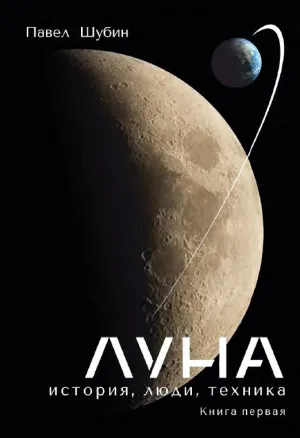 The 2020s will undoubtedly become for our civilization the "time of the Moon." In the anniversary year of the first landing on the surface of our natural satellite (Neil Armstrong and Edwin Oldrin Jr., Apollo 11) and at the moment when the private Israeli automatic station “Bereshit” flies to the moon, it is important to realize the beginning of the second “lunar race”. And there are much more players in it than it was half a century ago.
China very seriously began its path “in a thousand Lee” on the moon, designing the super-heavy carrier-carrier “Changzhen-9”.
The member countries of the project of the International Space Station are jointly working on the next step-the creation of a near-moon visited Gateway station, which then by the end of the decade will become a transshipment point for landing people on the moon.
Several private space companies in the United States received the first contracts from NASA to study the issues of delivery of goods and people to the surface of our satellite.
The Japanese billionaire Yusaku Maedzawa signed a contract with SpaceX to fly around the moon in the area of 2025 with the creative project #DEARMOON, called, according to him, to unite the whole world.
Now in the Russian media and in the statements of the leadership of the Roscosmos we often hear words about the possible start of the national manned lunar program in the event of the adoption by the Government of the Russian Federation of the Federal Target Program “Creation of the Super -General Class Rocket Complex for 2020–2030”.
The timing and appearance of the Russian lunar program so far raise big questions, especially when comparing these plans with a real lunar program, implemented, albeit not in full, in the USSR in the 1960s. In Russia, they still know little about the Soviet program “H1 L3”, the purpose of which was to deliver to the surface of the moon of the astronaut, and specifically Alexei Arkhipovich Leonov, who was already undergoing appropriate training. There are extremely few books comprehensively describing our lunar program.
Meanwhile, Pavel Shubin, the author of Venus: the indomitable planet 1 , continues to work on the cycle of books on the study of the Moon, Venus and Mars, and his next work is the Moon. History, people, technology. Book One ” - will go out of the press in May of this year.
In total, four volumes about the moon are planned, which cover the entire history of the study of the moon, from the first flights to the present day.
The first volume that I read in the manuscript includes history from 1953 to 1965.
The point that laid the beginning of the first “lunar race”, the author chose the first companion, noting that the book could be started from the first fantasies about flights to the moon. But in reality, the trigger for deploying so many large-scale and unprecedented at that time scientific and technical programs in the USA and the USSR was the launch of the first satellite on October 4, 1957.
This event caused fear and anxiety in America, which led to the concentration of efforts both on the “military space” and on the lunar program, the purpose of which was to strengthen the reputation of the United States with a shaken reputation.
Both countries, despite all the difficulties and failures, persistently advanced to the goal, clearly realizing that the achievement of our natural satellite is not far off. It was a real space race where the rivals went to the nostril in the nostril!
From all previously published popular science books “Moon. History, people, technology ”is distinguished by the presence of a large number of recently declassified materials that Pavel bought up in the Russian State Archive of Scientific and Technical Documentation (RGAntd) 2 . This required certain funds that were raised by crowdfunding, that is, folk financing. The publication is also carried out at the expense of readers - at pre -order 3 .
The author managed to find a balance between the desire to put as much data as possible in the book as possible (previously secret) and liveliness of the presentation. An unprepared reader will probably perceive the fascinating thriller about the struggle of the two nations for another victory in space, and the sophisticated will find a lot for himself a new one, not yet published anywhere in the world.
For Russians, surprises will also be in the unequal American part of flights, because few know about the role of AMS Ranger 7, 8, 9, who photographed the moon in the fall to the surface. It was these devices that determined the future of the ambitious program of the Apollo.
It is interesting to know how the teams of the American laboratory of reactive movement (JPL) and the Soviet NGO named after the first experience. S. A. Lavochkina, who adopted the baton of interplanetary automatic astronautics from OKB-1. It was these organizations then played a significant role in the study of the solar system.
In the narrative, Paul managed to show the impact on the programs of political circumstances, specific personalities in the leadership of enterprises, ministries and countries. Competition, personal ambitions, and sometimes even jealousy seriously affected the implementation of cosmic plans.
A lot of the book would be useful to the current leadership of our country, Roscosmos and enterprises that voiced the desire to again conquer the moon. For a modern person, it will be surprising to learn about the dedication with which scientists, specialists and workers worked in the 1960s.
The whole book is richly illustrated by both the rarest photographs and images of the famous Russian modelist of space technology Alexander Gennadievich Shoidinsky.
The first volume of the AMS “Luna-8” ends with the first volume of the AMS, which could make the first soft landing on the moon in history, but a small marriage destroyed the station during the adjustment.
Luna-8 is the last station launched during the life of Sergei Pavlovich Korolev. A small mistake in production did not allow the great organizer and the designer to find out that he was right by drawing a red pencil on the resolution “Planting should count on a fairly solid soil like pumza”, which is still stored in the Museum of the RCK “Energia” to them. S.P. Korolev.
The success of the first volume will determine the future of the next three books that will talk about other plans for the study and development of the Moon implemented or failed. I would like to believe that these projects will inspire young readers to new achievements, and the dream of the last close associate of Korolev - Boris Evseevich Chertok - will become a reality: the moon will turn into the seventh continent of the Earth 4 .
Alexander Khokhlov,
Cosmonautics popularizer, member of the North-West Organization of the Cosmonautics Federation of the Russian Federation
1 TRV-SCIENCE.ru/2014/07/29/neUKROTIMAYA-VENERA/
4 TRV-SCIENCE.ru/2011/12/20/luna-stanet-eshhe-odnojj-chestyu-sveta-zemli/