
Translated material
"I came out thanks to corruption." The history of the emigration of businessman Alexei Shmatko
How many passports do you need to escape from Russia, how Ephesians decide to squeeze out a successful business and why can you thank them for the criminal case? Businessman Alexei Shmatko talks about how he turned into a political emigrant.
Discourse continues the cycle of materials " Velkom Tu Grat Britney »About Russian citizens who have left for the UK - in search of a better life or out of fear for their safety. IN Previous release Historian Ilya Yablokov from the University of Lids told About academic life, about why, having once left the country, it is very difficult for a scientist to return, about national stereotypes, about what attracts foreigners in Russia, as well as the joy of immunity and lack of feeling of home. This time, a businessman from Penza Alexei Shmatko tells the story of his emigration.
Shmatko’s life changed dramatically after the Penza security forces asked him to give in half the business. Having refused to cooperate with the security forces, he spent several months in a pre -trial detention center, and after that he was hiding in Northern Cyprus. In an interview with Discourse, he told how he was put on the international wanted list, kept in a migration prison and tried to extradite to his homeland.
During the interview, the Shmatko case was still considered in the British court, but at the time of publication of the text, Shmatko won the Russian law on extradition.
About youth, 90s, first salary and first business
I was born in Kuznetsk, this is a city near Penza. He began to engage in business at school . When I studied in high school, there was a flowering of cooperative movement. In the ONCE of the 80s, early 90s, we had a cooperative who produced foamed washcloths, and I was there as a simple worker-for two days a week I packaged these washcloths .
I remember my first salary, it was such a buzz! It was a hundred Soviet rubles! A pack of small bills. It was some wild money for the student at the end of the scoop. Then, already being a student at PSU , I took up the transportation of reinforced concrete from Penza and Kuznetsk to Moscow.
In a few days I could earn $ 1,500–2000. Then it was colossal money. I had a driver, I organized loading and unloading, bought reinforced concrete, several cars went to the markets, they sold it, transported it in dachas.
At the first stage, we drove only from Penza and Kuznetsk, it is far away - 600-800 km. At some stage, we began to travel to Kaluga or Smolensk, take reinforced concrete there and carry it to Moscow, so the shoulder was smaller and went faster.
And during my studies, I studied programming.
About Gazprom, its company and the first call from the FSB
After my studies, I went to work at Gazprom. It sounds loudly, but in fact I was a metrologist and was engaged in pure science-gas measurement-and did not have access to any finances, budgets. From the height of the past years, and I am now almost 42, I understand that I was then a stupid snotty child. I sailed with the flow, poked like a puppy, where I could. On the one hand, I killed 7 years of life in this company, on the other hand, I received experience and organization. But then I did not think about it. Experience began to manifest much later.
After some time, I was not interested in working in Gazprom. Promotion went slowly, there were no opportunities to achieve something. It seemed unacceptable to me.
I left and created my company, Volgogazproekt. He began to engage in the construction of boiler rooms, gas facilities and at the same time develop an automated commercial gas accounting system. Such a system allows you to combine data from many gas meters to show information in abstract. When we started, in 2006-2008, this was not in the country, no one counted the gas.
Then the gas accounting was like in the Soviet Union: antediluvian methods were used, the error was around 30 percent. The gas was worth a penny, and during the calculation they could neglect thousands of cubic meters.
Prices began to be lifted later, when the head of Gazprom Alexey] Miller and his team came. They started ... if honestly, to plunder Gazprom: to create an imitation of violent activity, to do all kinds of idiotic projects-to deliberately inflate the cost of gas in order to lay it into the tariff. It was evident that they were doing it purposefully. But then I did not really go into politics - I was doing my job as an ordinary businessman.
Soon after I went into a private business, my company began to bring a lot of money.
About a year later, I was invited to the conversation by the deputy head of the local FSB. He demanded that I rewrite half of the company to him. Normal practice.
I was offered to take the deputy - a former FSB officer. At all large enterprises, some security deputy from the FSB is sure to sit. He or some of his proxies own part of the company. The bet in Penza was fifty percent. Everything was organized under the local governor. Then it was [Vasily] Bochkarev. And the FSBSHNIK was Nikolai Antonov.
Then I found out that they organized such a topic: if you bought a car more than two million rubles, then Bochkarev laid a certificate on the table - either from the traffic police, or from the FSB. He thus revealed who had loot. And they came to this person.
I then had a car for three million.
About the views of the governor on business and a sense of justice
Who are the businessmen for the governor? These are people who can politically compete with you. To sponsor your opponents, put his deputy in the Legislative Assembly. This can be seen that directors of large factories, businessmen are sitting in any regional parliament. They want to influence politics, write laws for themselves. And for any governor, the main thing is political stability. What is political stability in this country? Either they let you grow if you pay money, or they mow it if you do not agree. Here is such a consensus in any region. And now we are not talking about taxes, but about bribes.
In 1998, when this governor, Bochkarev, came to power, a wave of division swept through the region. At that time, there were two large brewers in the region: one in Kuznetsk, the second in Penza. The owners of these plants simultaneously sat in a pre -trial detention center, and at that moment the plants squeezed.
The owners of alcohol plants were sitting, sitting ... Who just did not sit! Stupidly squeezed the business. So life is arranged in Russia.
I always had some heightened sense of justice. I remember in my childhood a sister and I had a showdown, and my mother, instead of understanding, punished everyone - they say, this is fair. And I was terribly offended - I was not to blame! And here was the same inner line: injustice and punishment ...
The meeting with Antonov was wonderful. I was called to the building of the Penza garrison military court. This military court, he is the only one that may judge the FSB officers. There, they very politely, culturally, without collision explained how many pluses from the fact that I will put their person into business. I politely moved out of the topic, left the meeting. And dumped into Moscow. I decided that for some time I simply would not appear in Penza.
About the methods of the FSB, criminal case, settings and arrest
Sometimes I still had to appear in the city - I ran between Moscow, Nizhny and Penza. After some time, problems rained down.
Once I was going to drive my wife’s car at the maintenance station, called our lawyer, asked me to pick me up by car. And at the last moment everything changed and I scored dad: "Well, dad, let's not go, but will you take the car?"
Dad drove the car, and she was suddenly stopped in a place where the traffic cops usually did not stand. The cop realized that in the car it is not me, but dad. But they had to do something! As a result, the dad was allegedly found a fake certificate. The examination then showed that the certificate was present.
Later it turned out that our lawyer was a recruited employee of the FSB. He was recruited during his studies.
The next problem was much more fun. In January 2010, they came to me with a search of the office and opened a case against my company. Classics of the genre, fraud. There was such a story there: we built a time plant in Penza a boiler room, it cost about 15 million rubles. The company, for which we built, reimbursed 800 thousand rubles of VAT from the budget, with payments from a series of 200 thousand rubles, then another 50-60 thousand-that is, in small amounts. Everything passed completely according to the law, according to all checks, and we did not compensate for anything from the budget. The FSBSHNI came up with a brilliant story: supposedly this building was fictitious, although there is a photograph of this boiler room in the criminal case, and it still stands and works. That is, our intent was that we built a boiler room for 15 million in order to steal 800 thousand. This is the nonsense of the blue mare.
When the case was opened, I went to the investigator for a very long time, and they scared me there for a long time. The most interesting thing is that at the same time Article 108 of the Code of Criminal Procedure was adopted , according to which it was impossible to arrest businessmen.
But the FSB arrested me, spitting on this article. The judge who arrested me also in the past was an FSB officer.
I could then dump, but at first I did not understand that it was necessary to blame before. I was arrested, deliberately preparing for a pre -trial detention center, wanted to fight, win, and be sure to prove that I was not to blame for anything. Only then, already in the pre -trial detention center, I realized that there was no sense in this.
I spent more than two months in a pre -trial detention center, but I had enough for realization of reality. It was the most famous pre -trial detention center where the anti -fascists later tortured in the “network case”, and the investigator is the same famous [Valery] Tokarev. All the same, now famous.
About life in pre -trial detention centers and the benefits of corruption
A pre -trial detention center is a very unpleasant place. This is a place where you can see who you are: a person or cattle. Many people's ideas about prisons, about the pre -trial detention center arise from films. I can say that in any film I have not seen this authenticity. Everything is absolutely wrong. The films show that the convicts begin to beat each other in a pre-trial detention center, or some violence to apply to each other. I have never seen this. There were conflicts, they came out almost to the brink of a breakdown, but everyone restrained themselves. When people are in a closed room, their nature changes.
Another moment when the administration, which beats you constantly against you, tries to cripple, do not feed, mock you, all that ... Then in this small team there is a feeling of resistance and help to each other. Many times it was so that I came, they took me to investigative actions, and I did not eat all day. And they would definitely leave me food so that I, as I arrive, ate. Everything is not as shown in the cinema.
Different people sat with me: housekeepers, killers, drug dealers, hijackers. In principle, I cannot speak for everyone, but in my case there was some respect and understanding, adequate perception. There was solidarity, there was support.
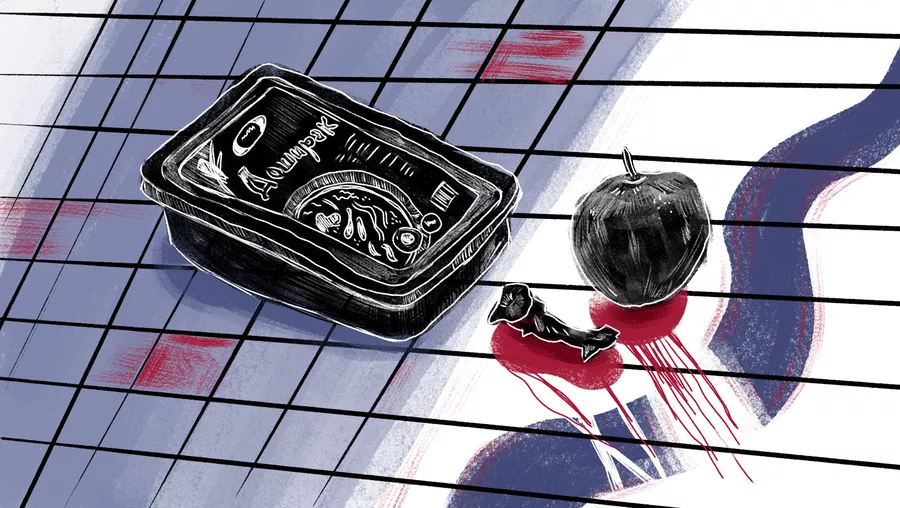
These were ordinary Russian village guys, without any embellishment there. I remember such a moment. We had food from the series - stew, apples and noodles. I remember I ordered a grille chicken from a prison store. And this chicken-grille turned out to be the most tasty of what you can eat there.
We sit with the guys, eat absolutely beggarly dinners, and one gives me: "I have never seen food at home." And on the table are stew, apples and "Doshirak".
My tears almost did not pour. For us now, the Gril chicken is a heavenly pleasure, and this person says that he had not seen so much food at home. That is, people came from a state of absolutely poor: from villages, workers, became drug addicts. Not from a good life ... horror.
I was beaten in a pre -trial detention center. I will not fantasize, in my case there were no electric shockers, there were no suspension. The trivial was beaten with their hands, batons. Well, they looked, some kind of intellectual there, we will break him anyway. It was an absolute pragmatist. Their main task is to get confessions. They still have recognition - the queen of evidence. Somewhere, probably in the first year, investigators say this-and it settles in their heads. Everything else does not settle, but that the recognition must be knocked out by any means ... and because of the stick system for them, apparently, if the case fell apart, or the judges justified-the jamb is strong, they punish for it. Therefore, they understand that it is necessary to knock out the testimony in order to confess. And then the grass is not to grow further.
I came out thanks to corruption. The investigator is money, the judge is money, I sign the configuration, they give me conditionally - I go out. In Russia, in my opinion, such a practice is that if you are in a pre-trial detention center, you can no longer get out of it, only to the zone. We then made the impossible.
We came to the investigator Tokarev in the office, he gave me my phone and said: "Here, call to bring the money." Banal absolutely undisguised extortion.
They paid 500 thousand rubles to the judge, 500 thousand rubles to investigators, and I was released. And they could take money and send, there were no guarantees.
We sat with Tokarev in the office, and I called my friends. They are: "Ahhh!" - I called from my phone, they were shocked. After all, they knew that I was arrested and where I was. The people are very frightened. They think that if I call them, it means that the FSBshniks are listening. That is, maybe I'm trying to substitute them like that ...
Arrest, by the way, is a useful thing. Any cork falls instantly. A lot of extra acquaintances are eliminated.
When I went out, I went to the empty field. Almost all friends turned away. Business partners did not take phones, well, further on the list ... At that time, there was no business at that time-everyone was taken away, destroyed.
There were several people who supported me very much - and when I left, they helped a lot.
About the protection of witnesses in Russian and influential Abkhaz taxi drivers
I went free and, since I am stubborn, I immediately went to the police, wrote a statement to the FSB. When we ran into me, we began to collect incriminating evidence for the FSBSHNOV. It turned out that there this gang roofed everyone: cashes, raiders ... There is such a topic as a return of VAT, this is such a fraudulent scheme when, according to fictitious documents, the state pays VAT. Remember the story with the [William] Brauder and with the "untouchable" ? This happened at about the same time, only in a smaller volume.
Here I am the same as Magnitsky, wrote, the same statement on the same ghouls in uniform, who also stole the money.
The police arose a criminal case there, and I got into the program for protecting witnesses. They were too lazy to come up with something, I just lived in an apartment in Moscow, which I rented. When I came to Penza, they accompanied me in Penza, and when I left, they did not follow me. I was simply in another city, not in Penza. This is enough. The only thing was that my parents had alarm at home, that's it.
Then the case from the police investigation fell into the TFR. And then the TFR took into the operational support of those FSBSHNOV on which I wrote a statement. They had to put the head of the regional tax, the deputy governor, several more people - as a result, only one lawyer and one tax authority sat down. The rest everyone went calmly, and they put me on the international wanted list. Then the operas literally warned me that he was taken away from him.
- They take the matter from me, the FSB is conveyed, you see, what will it be?
- Understand.
- Well, draw conclusions.
I flew from Sheremetyevo. The first flight is to Istanbul, the second - to the northern Cyprus. He flew through the Abkhaz passport. I prudently bought it in advance, in March - April 2011. It costed around 500 thousand rubles.
I did it like that. I arrived in Sochi, went to the border, I went to find the first taxi driver who came across, asked him to bring him to Sukhum. During the time of the sentry to Sukhum, I agreed with him that they would organize a passport to me. And he found the right people. If you do not know what to do - ask the taxi driver. When I arrived in Sochi, the taxi drivers told me when Putin arrives at them, when Putin flies away, that they now have Lukashenko there and so on. Taxi drivers know everything.
You can not fly to Turkey on the Abkhaz passport, but you can go to the northern Cyprus. So we flew to northern Cyprus in transit. It was September 13, 2011. There we got into a trap for about three years for more than three years, because at the beginning of 2012 I was put on the international wanted list on the line of Interpol .
About life in another country and Cypriots that are not prepared
There was no Interpol in Cyprus, but it was impossible to leave from there anywhere, there you can either rest or sell real estate to Russians. And while I was sitting there, I ended up in a trap. I flew there in September 2011, and in early 2012 I was put on an international wanted list. From there I had nowhere to go .
We lived in Cyrian. There I warmed the belly, bathed, ate, slept. So I can not go on vacation before retirement. I had savings, fifty thousand euros that were with me personally. Plus they sold something when we left. Everything was modest.
At first I thought that I would stay there for several months, everything would stand up, the case will be sent to court, they will forget about me. But everything turned out to be more fun. After some time, I realized that one should somehow set my life, go somewhere and ask for asylum. I decided to America - my sister lives there.
First a hotel, then they rented a house. There was a wife with me. The daughter remained in Russia with her grandparents.
They came to the school in Penza, threatened their daughter. FSB came. They tried to find out where I am, what am I. But there the heroic class teacher did not make it possible to chat with her.
In Cyprus, I realized what it is to live in another country. Раньше я приезжал в какую-то страну, и либо в отеле развлекался, либо, если хотел пожрать, шел в ресторан. Когда начинаешь жить в стране, понимаешь, что не каждый день там развлечение. Ты должен ходить в муниципалитет, платить за воду, взять в аренду машину, оформить вид на жительство. Вместо того, чтобы сходить в ресторан, покупаешь еду — потому что так дешевле и вкуснее.
Парадоксально звучит, но киприоты готовить не умеют. У них потрясающие продукты, но когда заходишь на кухню к ним, у них овощи-фрукты в заморозке. Меня это коробило.
Ты приходишь на рынок, а там куча артишоков, баклажанов, стоит всё копейки. Тебя подмывает — времени-то много — взять артишок, сварить и приготовить салат. Или взять помидоры и приготовить. Совсем другая жизнь. Ты находишься на территории и понимаешь, что ты не один-два дня там, чтоб быстрее-быстрее. Ты начинаешь изучать местность, пешком ходишь больше — или наоборот больше ездить на машине. На Кипре нет такого места, где бы мы не были. Южный, Северный, весь. На Кипре за три года вождения я привык к левостороннему движению.
Но там тоже была сложная ситуация. Они начали выдавать русских — видимо, с Эрдоганом договорились. Знаю несколько случаев, когда полицейские просто забирали русских по заказу и депортировали в Стамбул, а из Стамбула сразу в Москву.
Улететь по российскому загранпаспорту тоже не выходило. Он был просрочен, а когда дело началось, получить новый не удалось.
Тогда я купил себе поддельный латвийский паспорт. Тысячи две долларов или евро он стоил. Северный Кипр — такая территория, где можно найти все.
Но поддельный паспорт чем-то не понравился офицеру, который сажал меня на рейс в Нью-Йорк из Стамбула. Американские рейсы сильно защищены, им что-то не понравилось и они сказали мне: «Звездуй». Стамбул такое место, где сирийские беженцы норовят запрыгнуть в самолет. И, видимо, поэтому такие жесткие проверки. Я должен был пойти зачекиниться, пойти туда, пойти сюда… В итоге времени не хватило, и мой багаж сняли с рейса…
Жена должна была лететь в Москву за ребенком, а я должен был лететь в Америку, куда бы она потом прилетела с дочкой. В итоге я оказываюсь в такой ситуации: меня не пустили на самолет, она улетает, в слезах-соплях, рыдает, а я не знаю, что делать. И я решил сесть на лондонский рейс. Когда она прилетела в Москву, я был уже в воздухе на пути в Л ондон. Всю дорогу она летела на нервах и, только приземлившись, узнала, что я нормально улетел в Лондон.
О беженстве и хорошем тюремном микроклимате
Самолет приземлился. Я, идиот, думал: сейчас буду искать, где сдаваться британским властям. Думал, я буду там один такой. Ага, хрен там! Там прямо на границе большое табло: «Если вы хотите запросить политическое убежище, идите туда». Я подхожу. Queue. Там был я, еще двое человек и семья. Люди — из Ближнего Востока и Черной Африки. А семья была то ли из Румынии, то ли молдаване. Возможно, сирийцы. Честно говоря, начал немного подзабывать, на самом деле. И это хорошо. Значит, я перестал этим жить.
Процедура происходит очень прикольно. Опрашивают, снимают отпечатки, фотографируют. Потом отводят в комнатушку, ты там ждешь, пока они решат, что будут с тобой делать.
Так как я сказал, что я в Интерполе, да и Рождество было на днях, они меня решили закрыть в миграционную тюрьму. Пришлось посидеть три недели. Там прикольная тюрьма, мне очень понравилось. Она прям рядышком с Хитроу.
Потом берут первое интервью. Это твой первый рассказ, по нему англичане будут делать первые выводы… Это называется скриннинг-интервью.
В тюрьме у нас была Playstation. Но самое поразительное отличие, которое лично я ощутил, — это то, как идеально у них организован микроклимат в камерах. Там комфортно находиться: ни холодно, ни жарко. По крайней мере, мне показалось, что в камере, где я находился, были идеальные температурные условия.
Там можно было выбирать себе еду: хочешь мясо, хочешь рыбу, в этот день такую, в этот день другую. Там была библиотека, был компьютерный класс, был выход в интернет, была возможность звонить по телефону — можно было пользоваться телефонами без фотокамеры, не смартфонами . Интернет был с небольшими ограничениями: можно было писать письма по электронной почте и без проблем отправлять жалобы, но нельзя было пользоваться соцсетями и Skype. Очень доброжелательная атмосфера была.
Сначала я жил с парнем-христианином из Нигерии, который сбежал от Боко Харам, а потом сидел с мусульманином, который сбежал из Гамбии от какого-то тирана.
Это был угар: я все время лежал, смотрел телек, а они все время — что христианин, который бежал от Боко Харам, что мусульманин, — молились в один и тот же угол, где телевизор. Одинаково на коленях и били поклоны.
Потом с твоим скринниг-интервью будут сравнивать все остальные интервью. Будут проверять, почему ты свалил и в чем твоя проблема, от чего ты просишь себя защитить. А потом будет второе интервью. У меня второе интервью было два полноценных дня, это бывает очень редко. Два дня по 4 часа. Потом мне отказали в убежище. Я подал в суд, и до сих пор судимся. Подал я на убежище в декабре 2014 года.
Когда ты подаешь на убежище, во-первых, тебе дают возможность встретиться с адвокатом. Это legal aid , это бесплатно. Если у тебя нет средств, то совершенно свободно можно получить такого же адвоката, как миллиардер. Им удалось это сделать, добиться равенства перед законом — например, моим делом занимается тот же адвокат, который занимается делом Джулиана Ассанджа.
И за это не плачу ни копейки.
О воссоединении с семьей
Я вышел 8 января. Меня отпустили из миграционной тюрьмы и поселили в гостиницу. Мне сняли номер и забыли на несколько недель. У меня было время пошататься по Лондону. Я первый раз туда попал: ходил по музеям, было очень здорово. Посмотрел на Биг Бен, сходил на Трафальгарскую площадь.
После этого мне сказали: «Ого, ты у нас беженец, давай тебя поместим в центр, где живут мигранты». Условно говоря, это такие общежития или гостиницы, где живут мигранты. Меня отвезли в Кардифф, и я какое-то время там жил. Гостиница была вполне приятная.
Недели три я тусовался в этой гостинице, и они переселили меня в дом — вот тебе ключи, вот тебе квартира, живи здесь, не надо платить.
Через год ко мне приехала жена. Когда жена приехала, стало намного веселее. Они уже знали, что я буду её встречать. Она объяснила, что муж здесь и ждет в аэропорту — ей сказали, ладно, давай мы дочку отдадим ему, а тебя арестуем в тюрягу. Прикольный момент был: я сижу в Хитроу, они идут с офицером, и меня дочь увидела. Она бегом ко мне бежит, прыгает, обнимает — офицер даже документы мои не стал спрашивать: увидел, что дочь ломанулась ко мне обнимать. Сказал, мол, вот, держите дочь, жену и езжайте.
Приехали в Кардифф. Потом нас переселили в Суонси. Выделили нам целый дом, большой двухэтажный, и здесь у нас родилась вторая дочка.
О пользе лени и английском стартапе
Но сидеть без дела дальше я не мог. Во-первых, я программист в той жизни. Во-вторых, мой диплом был — распознавание рукописного текста: нейросети и все такое. И, в-третьих, в кардиффском центре беженцев, куда я попал, столовка находилась в другом здании и там же было общежитие, где жили сирийцы — а я жил отдельно, в гостинице, метрах в 200-300 от этого места. Мне нужно было ходить туда каждый день, чтобы покушать. А мне не хотелось куда-то ходить, расписываться, жрать. Можно было в город сходить поесть, денег с собой немножко было. А я постоянно хожу расписываться, чтобы потом свалить из этого центра [в гостиницу]. Я подумал: «Блин, какая архаика! Вот были бы щас какие-то камеры наблюдения, которые распознают лица людей — и не нужно будет никаких подписей!»
Я подумал, что надо сделать систему, которая упростит жизнь человека, все эти пинкоды-пароли-логины: которая позволит ему попадать в свой аккаунт, в свою систему, получать доступ к какой-то информации или просто регистрироваться — по лицу, по отпечаткам пальцев, по скану ладони. Вот что называется лень!
Мне просто было лень ходить и расписываться — и так родилась идея стартапа, которую я подал своим знакомым в Лондоне, и они решили вложить в нее деньги.
Сейчас мы готовимся получить инвестиции, чтобы сделать из этого поистине глобальную историю и заменить Visa и Mastercard. Сделать так, чтобы люди забыли, что такое банковская карта. Сделать такие средства платежа, чтобы ваши деньги никто у вас не мог украсть.
Вместо логина и пароля мы будем использовать как логин ваше имя и лицо. То есть, когда система видит ваше лицо, вы залогиниваетесь. И пароль, то есть подтверждение действия — это отпечаток пальцев или скан ладони. Что в комбинации даст вам большую безопасность. Например, у вас есть почта. Мы позволим человеку не помнить название почты, не помнить пароль от этой почты — причем будем делать так, что украсть её или перехватить будет невозможно. Не буду углубляться в математические истории, но мы научились хранить биометрические данные в облаке, но внутри данных как бы нет. Звучит абсолютно по-идиотски, но скоро все поймут.
О разрушенных стереотипах
Все мои стереотипы о Британии не подтвердились. Начиная с туманов, заканчивая чопорными англичанами. Все тут абсолютно доброжелательные, открытые. Помню, пришли первый раз в школу: приехали в Суонси, — это был, условно, четверг, зачислили нашу в школу, — и дальше началось волшебство. Приходим к директору, а директор достает коробку со школьной формой: сделано все так, чтобы ни ребенок, ни родители не чувствовали себя ущемленными в чем-то. Каждый раз, когда общаюсь с англичанином, возникает какая-то радость.
У нас есть рядом железнодорожная станция, под железнодорожными путями тоннель. А там сидят алкаши, которые вечно бухают. Мы с женой говорили на эту тему, она говорит, что у нее не возникает стресса — здесь даже алкаши какие-то добродушные, не агрессивные, радостные. Видят женщину с коляской, с ребенком и такие: «Ой-ой-ой, здрасти-здрасти!»
Тут металлических дверей нет. Когда я вижу полицейского на улице, я его не боюсь. Меня здесь для экстрадиции арестовывали, когда РФ прислала запрос. Дали позвонить. Своим знакомым, адвокатам, юристам позвонил. Они меня привели в участок, там закрыли в камеру, сняли отпечатки пальцев, фотки… Говорю, щас жена придет, вещи мне передать какие-то. У меня карточка с собой, я ей карточку отдам. Они говорят, ну, не вопрос. Пришла в участок жена с ребенком, дали поговорить сколько я хочу. Я ей передал документы, все рассказал, никакого стресса.
Суд рассматривал всё это дело в Лондоне. Меня отвезли в Лондон, там меня отпустили под залог. И, когда меня отпустили из тюрьмы, мне дали такой квиточек, по которому я бесплатно приехал домой в Суонси.
Эта история еще тянется, и раз в месяц я хожу отмечаться в хоум-офис . Это идиотизм, но так они проверяют — что я не свалил из Британии, что здесь живу, жду убежища.
Сумасшедшие! Они не понимают: ну куда валить?
О двойственном отношении к России
Понятно, что старшая дочь не забудет русский язык, она уже в сознательном возрасте уехала. Младшей почему-то удобнее говорить на английском. Ей ещё двух лет нет, совсем маленькая ещё, но она считает до десяти на английском, животных называет по-английски — ей так удобнее. Единственное слово ей нравится по-русски, «шайя» — это шарик. А все остальное по-английски.
Я не связываю свою дальнейшую жизнь с Россией. Я сам бы не только русский язык забыл, я бы еще половину мозга себе вырезал, чтобы не помнить, что там было со мной, всего того, что у меня осталось на лице после пребывания в СИЗО.
Если честно, как бы это ни звучало дико, но я даже отчасти благодарен господам из ФСБ за то, что они позволили начать новую жизнь. У меня иногда возникает чувство, что до этого я и не жил, а это было какое-то барахтанье в дерьме. Потому что Россия — это бассейн с дерьмом.
Я отлично отношусь к России, я патриот России — но мне все время что-то не нравится, потому что я истинный патриот. А все, кому здесь всё нравится, наверно, шпионы немецкие, как сказал Сергей Шнуров. Я когда критикую свою страну — это не значит, что я хочу ей чего-то плохого. Это значит, что я хочу для нее демократии, свободы, процветающего бизнеса, выборов и так далее.
Это как американский патриотизм, как прописано у них в Декларации о независимости, корни которой растут из Хартии вольностей. Они имеют право с оружием сопротивляться тирании или вооруженным захватчикам. И в России сейчас настал такой момент, когда можно констатировать, что у нас репрессивная тирания.
Любое сотрудничество с этой властью значит, что ты не патриот.
Над материалом работали: Ян Потарский, Ира Щепетильникова и Вика Каткова
Иллюстрации : Екатерина Заславская