
Translated material
Memory. Yuri Levada
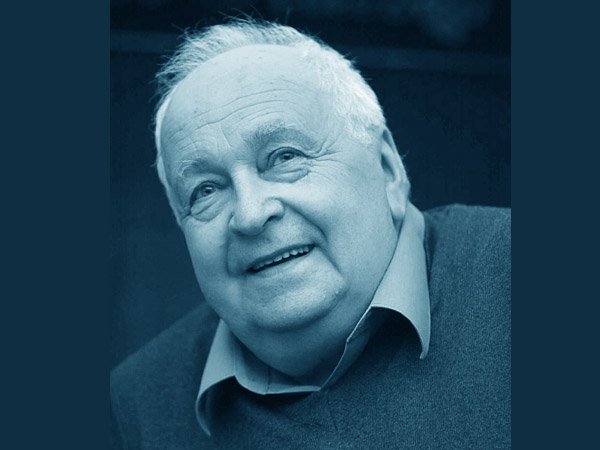
On April 24, 1930, Yuri Levada was born, the founder of theoretical sociology in the USSR
Personal business
Yuri Alexandrovich Levada (1930–2006) was born in Ukraine, in Vinnitsa. His mother was the journalist of the Vinnitsa regional newspaper Bolshevik Pravda Natalya Lvovna Seainis, the father was a medical historian Moses Alexandrovich Kogan, a professor, and then the dean of the History Faculty of the Leningrad Pedagogical Institute.
In the mid-1930s, the mother of the sociologist married the novice writer Alexander Stepanovich Levad, who adopted the child and gave him his last name.
During the Great Patriotic War, the Levada family (by this time his brother was born) was evacuated to Tyumen, but he graduated with honors from his homeland. In 1952 he graduated from the Faculty of Philosophy of Moscow State University, in 1955 - graduate school. At the end of the study, he became interested in the situation in China, where there were then coups, half learned his language and wrote a diploma and a dissertation about the features of Chinese society and the Chinese revolution.
Later he worked at the Chinese Institute, went to China and for the first time tried to do sociological research there. When further research on China became impossible due to the circumstances of the foreign policy, in 1960 he moved to the Institute of Philosophy, where he was at first engaged in the sociology of religion. In 1965, he published the book “Social Nature of Religion”, on the same topic in 1966 he defended his dissertation for the title of Doctor of Philosophy.
In 1968, the secret resolution of the Politburo, signed by Leonid Brezhnev, on the proposal of President of the USSR Academy of Sciences, Mstislav Keldysh, created the Institute of Specific Social Research (ICSI) - the words “sociology” should not even appear in the name. “It was meant that there is already historical materialism as a theory, but it is possible to deal with specific research,” Boris Yudin, a specialist in bioethics, comments on the creation of the Institute. In Ixi, Levada headed the sector of theory and methodology and headed the party bureau. According to Yudin, "the sector from the very beginning was across the trend, as he was purely theoretical."
At the same time, a regular seminar began on social, theoretical, economic, semiotic, cultural and historical topics. “It was not a kind of“ shadow ”seminar, but quite ordinary, normal. Rather, it was the main form of the sector’s life - weekly, sometimes and more often to gather to discuss certain problems. The seminar had a fairly great authority, because we had almost everyone who was considered the most vivid people in those years. Say, Pyatigorsk, Averintsev, Gurevich, Batkin, Ivanov, Shlyapentokh, Shchedrovitsky ... ”, Levada recalled.
In 1966 he was invited to give lectures on sociology at the Faculty of Journalism of Moscow State University. (They have not given more such lectures anywhere). “For about four years, I gave a course of lectures of my own invention there - quite primitive, popular. So, apparently, this would have continued if it had not occurred to the thought of it to publish it. From afar in the form of two books with the help of ICSI (already in 1969). And very soon (in the same summer) it caused a scandal, in fact, it became a formal beginning of noise, ”said Yuri Levada. According to the then first secretary of the CPSU MGK Viktor Grishin, Levada lectures “are not based on the fundamental theory and methodology of Marxist-Leninist sociology-historical and dialectical materialism. They do not have a class, party approach to the disclosure of the phenomena of Soviet reality, the role of classes and class struggle as the decisive force of the development of society is not highlighted, significant aspects of the ideological struggle did not have properly reflected, and there is no criticism of bourgeois sociological theories. ” As a result, Levada “for ideological errors in lectures” was deprived of the title of professor, and the work of employees of the ICSI theory sector ceased to be published. In 1972, Levada left Ixi, those who worked with him also parted into different places.
After the defeat, ICSI, Yuri Levada moved to the Central Economic and Mathematics Institute (CEMI) of the Academy of Sciences, where he worked for 16 years, engaged in the sociology of economic development.
In 1988, Yuri Levada and a number of employees of the ICSI sector, members of his seminar came to work in the All -Union Center for the Study of Public Opinion (VTsIOM) created shortly before that was led by Tatyana Zaslavskaya. Here he led the theoretical research department, and in 1992 he headed the organization. Since 1991, VTsIOM began regular research on the eve of the presidential election, State Duma deputies and representatives of regional authorities. The results of these studies were always close to the official one.
In August 2003, the Ministry of Property Relations of the Russian Federation decided to transform the FSUE VTsIOM into OJSC “All -Russian Center for the Study of Public Opinion”, which put the Center's activities under the control of state structures. In these conditions, all VTsIOM employees in full force transferred to work in the analytical service of the VTsIOM (VTsIOM-A). Since March 2004, the company continued to work under the new name-the analytical center of Yuri Levada (Levada Center). It was from the VTIOME Levada that many other sociological structures of modern Russia came out.
Yuri Levada died in his office on November 16, 2006. His heart refused. He was buried in the Troekurovsky cemetery.
What is famous
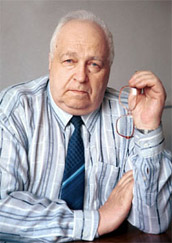 Yuri Levada
Yuri Levada is one of the largest sociologists of Russia and the world. He was among those who created Soviet sociology in the early 1960s, and then recreated it after the defeat of the 1970s already in perestroika years. The VTsIOM created by Levada has become one of the most authoritative sociological organizations, the data of which are listened to both politicians and the press.
“He was a great man. An outstanding sociologist who is not like any sociologist of the world who has done a lot for the Russian sociological community. He became his standard, with which everyone correlated in one way or another, including his direct opponents and opponents. He defended the honor of Russia in many cases when no one was doing this, ”says Alexei Levinson, head of the department of sociocultural research of the Levada Center.
According to Boris Yudin, theoretical sociology in the USSR began precisely with Yuri Levada; Yudin ascribes a special role in its formation to Levada at the journalism department of Moscow State University.
Yuri Levada is the author of numerous scientific articles on the theory and methodology of sociology, on the sociology of religion, social anthropology, the author of the first in the USSR, a course of lectures on sociology (Moscow State University, 1967-69), books: “Articles on Sociology” (1993), “There is an opinion” (1990), “Soviet simple man” (1993), “From opinions to understanding” (2000), “We are looking for a person”. (2006).
Yuri Levada performed at the Bingua club with public lectures on the topics: “Soviet man” and “what sociology can and what can and cannot.”
What you need to know about
After the actual defeat of Ixi, the seminar created by Levada for a long time existed in a semi -legal position. “Every two weeks we gathered somewhere,” Levada recalled. - The seminar was narrow (placed in one room), then a person grew up to several hundred people. Then there was some scandal, I had to change the place. In Tsemi we were tortured or afraid. Fedorenko once said: "One institute was almost dispersed because of you. Please, careful" ""
Despite the fact that the seminar was “for its own” and usually existed in the “chamber” format, ”it periodically gathered up to 300 people: economists, historians, technicians, even physicists.
“I think that we collected everyone who tried to think on their own to know the state of affairs in the social sciences. There were those who came simply out of curiosity. This is inevitable - our doors were open. And I look at this, as you say, skeptical, because something original and serious was not created. And the whole circle of ideas is mainly educational ideas in the field of sociology, cultural studies. I think that it was interesting not as a discovery, but as a movement, as a way of communication, organization, inspiration of people, ”Yuri Levada himself later appreciated these seminars.
In various hypostasis - with periodic breaks - the seminar lasted more than 20 years, gathering once every two weeks and attracting the most authoritative thinkers of his time - Alexander Pyatigorsky, George Shchedrovitsky, Sergey Averintsev and others.
Direct speech
About the choice of science: “If we talk about my way to science, then I had no special training, I had no school. And I'm not sure that the initial data is illuminating something. I am a provincial, came from Vinnitsa to study at Moscow University. He came with the naive hope that at the Faculty of Philosophy you will really become a philosopher. ”
About the beginning of education at the university: “In our time, approximately half of the set consisted of demobilized from the army. They had their own style, their attitude to life. It influenced me. I was delighted with simple direct guys who passed the front and somewhere carried away by what was then called the philosophy of Marxism. This prevented me from thinking on my own and doubting what others doubted for a long time. ”
About the tasks of sociology: “When I began to engage in this science, I had the following idea: our task is to put a mirror in front of society so that it looked in it. And I think we performed it as far as possible. When people look in the mirror, they better understand how they look. This is the main social function of sociology. ”
Sociologist Boris Dubin on the methodology of the work of the VTIMOM: “The leadership of the center, and then more and more Levada and we, a group of people closest to it, began to develop a model that connect high-quality polls, focus groups, marketing, large representative national polls with conceptual work and, nevertheless, with an analysis, a generalization of the data on a whole series of things. What kind of economic relations in this country, what kind of political culture and how do the main institutions work? What is the attitude of people to power, how are the everyday relations of people with each other are built? What are the ideas about the past, what are the views and forebodings regarding the future? And so on".
5 facts about Yuri Levada
- The first wife of Yuri Levada was a classmate of Raisa Gorbacheva at the Philosophy Faculty of Moscow State University Liya Rusinov. In total, he was married twice, two sons were born in two different marriages.
- In 1986, along with the Merab Mamardashvili, Rolan Bykov and Roem Medvedev Yuri Levada took part in the Moscow -Boston television and Boston television between M.V. Lomonosov and the Taffa University on the topic “Nuclear Age. Culture and bomb. " The American side, in particular, was represented by writers Kurt Vonnegut and Edgar Doctorou.
- In 2004, Yuri Levada was awarded the “Man of the Year” award in the Analytics nomination according to Rambler.ru.
- Peru Yuri Levada belongs to several books and more than 200 articles on the problems of sociology, public opinion, theory and methodology of sociology, sociology of religion, social anthropology.
Materials about Yuri Levada
Article about Yuri Levada on Wikipedia
Interview with Yuri Levada
Official website "Levada Center"
From VTIOM to Levada Center. Conversation with sociologist Boris Dubin