
Translated material
Cyber is without rules
Natalia Gevorkyan - about the book of Daniel Turovsky “The invasion. Brief history of Russian hackers "
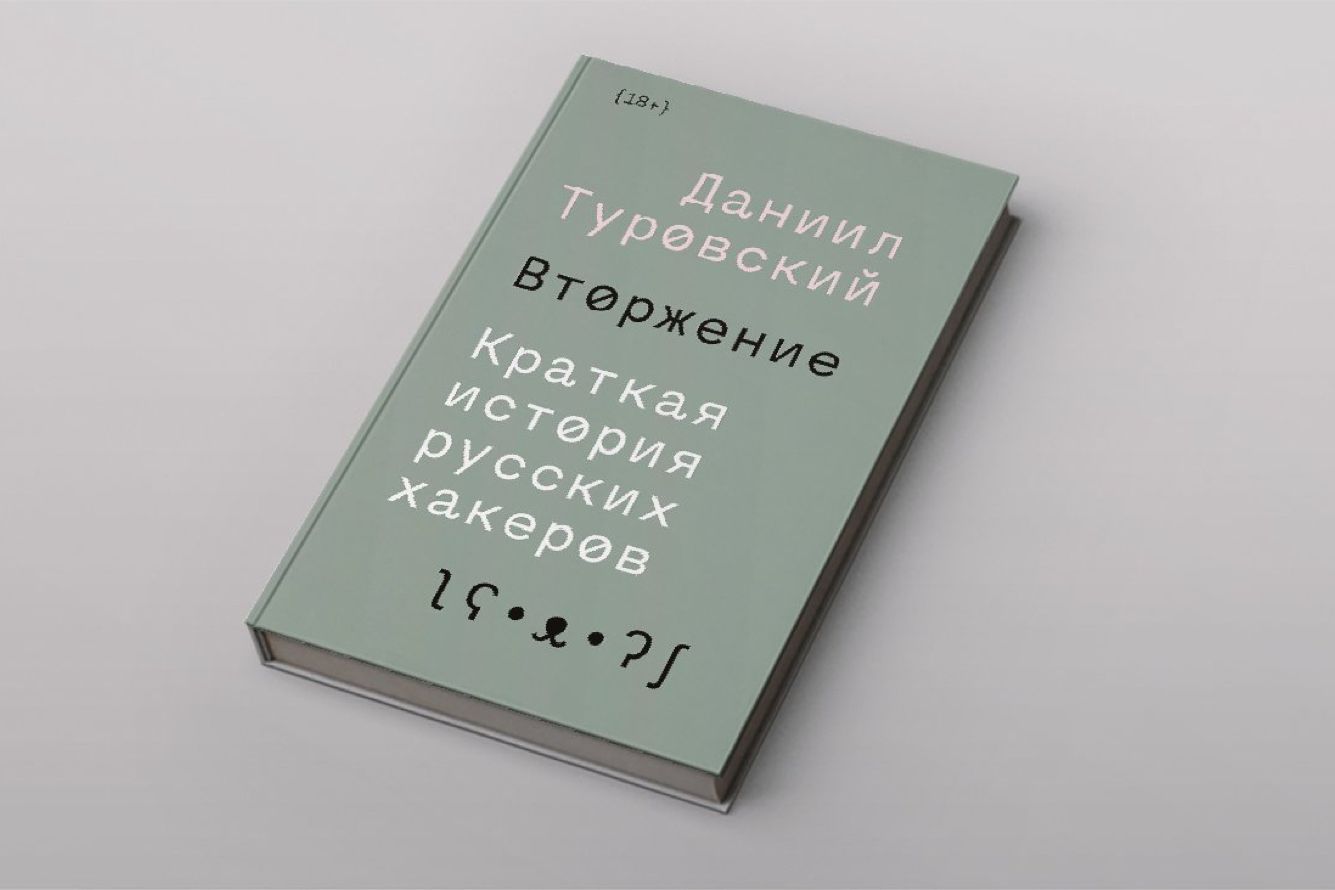
At the end of May, the book of the special correspondent of Medusa Daniil Turovsky “Invasion” was published in the publishing house of Individuum. A brief story of Russian hackers. " The book tells about the generation of adolescents from the countries of the former USSR, which in the 1990s learned about the Internet-and in 25 years they turned into serious political and military power. For several years, Turovsky has been studying hackers for several years and began to write about them long before they turned into an international topic under discussion. At the request of Medusa, Natalia Gevorkyan, a journalist and co -author of the books “From the First Person, tells about his book. Talks with Vladimir Putin ”and“ Prison and Volya ”(the latter was written together with Mikhail Khodorkovsky).
Having read the book of Daniel Turovsky “Invasion. A brief story of Russian hackers, ”I looked joylessly at the computer. This is a weak link: a friend who can at any moment become a traitor. This is a convenient, beloved, storing a bunch of files that gives access to any accessible information, connecting you with the world, which ruled the time and simplified contacts and communication - and there is Achilles heel of the world. It is quite difficult to fit in the head that the world can be blown up (in a figurative sense, but it is possible that literally), even if the guns are silent. Just from someone's keyboard.
I wanted to write that the main thing was not to show the book by the Turovsky President Putin, because with his fixation on self -defense from all external danger he would accept a bunch of prohibitive laws about the Internet, however, he would, however, will never touch him the mobile phone. Then she thought that he had already put on the table so many completely secret pieces of paper about cyber, exploit and zero vulnerability, that paranoia was completely formed and widespread at the state level. Cover with a protective cap everything that can and should be, and even what is not necessary. Protection is our everything. However, the attack by this without color and smell (as radiation) with tools can also amuse it.
I must admit, I also felt uneasy when I began to understand what exactly and approximately exactly how hackers could. Daniil wrote a guide to the teapot on the secrets of this underground (which sometimes sprouts to the establishment), a kind of literary processed reference book of the other world and its heroes, who have personal stories, motivation, habits, problems, appetites, political addictions, characters, talents, interests, ambition.
Turovsky himself was passionate about informatics at the age of 14-15, the study of this world was the answer to his personal question: how life would have if he had not left this hobby. It is interesting for him to study people with some second bottom, he says: “And because of this, I was interested in for many years and wrote first about labor migrants in Moscow, and then about them, but already leaving for terrorist organizations. Hackers are interesting for the same reason. It seems to be geeks and fans of Lukyanenko, but they can be hidden millionaires or turn operations that will quarrel states for years. It is still not clear to me how you can live with such parallel lives. ”
In the stories of these young people, an echo of the history of information technology in Russia, which could not get ahead of the United States in this area, then at least walk with them. But the USSR did not use its chance, did not understand the prospects of new science beyond the scope of the military-industrial complex. Or, conversely, scared them.
It turned out that the founder of Soviet military informatics Anatoly Kitov in the late 1950s offered the Secretary General of Khrushchev “to create a computer network to manage the country, in fact the world's first state network, the prototype of the Internet,” writes Turovsky. The scientist called his project “Red Book” and believed that it “would allow the USSR to overtake America in the field of computing machines, and the network itself will be able to solve both economic and defense problems.” The letter did not reach Khrushchev. And party bosses saw in the idea of the threat of the leading role of the CPSU, excluded Kitov from the party and sent to the Research Institute to engage in software for the military. Later, an attempt to return to this topic was made by Kitov’s student, he went to the highest leadership with his proposals in the 1970s and further until Gorbachev’s power. Equally to no avail.
The heyday of the Russian Internet is a leaf -upheld for decades. Russian hackers are pleased with quite young people. Self -taught or guys with a good mathematical education, traditionally strong in the USSR and Russia. The former went to this in the hungry for the majority of the 1990s, which coincided with the advent of computers and the Internet in the Russian market. That is, they are approximately, plus minus, peers of the Russian market system. And it is no accident that one of the first chapters of the book is called “Money”: at first they were the goal. The next chapter is logically called "power."
The Russian government understood about hackers, when it was no longer possible to understand about them. I appreciated what they are capable of, how their skill can be used; I was convinced that it is better to control these guys - inside the system or at a distance, but at a short leash; I realized that any system is vulnerable, including political, both in the West and in Russia; I came to the conclusion that the intractable and dangerous should be cut off, for example, to prison, accommodating and also dangerous - to use, including in special services. Russian hackers (with rare exceptions) accepted a kind of vow: not to work in the .ru zone. Actually, at the initial stage, this is understandable - in the Russian zone it was poor, but in a foreigner rich. Over time, according to the book, many hackers became patriots, sincere or forced. And the authorities learned not only to attract talented hackers to their tasks, but also to cultivate them.
I think they behave about the same with their hackers and in the West. It may be more pragmatic and less ideologically. Americans hunt Russian hackers and plant them for a long time. Russia covers Snowden, sympathizes with Assange and sometimes uses it. And also attacks at the external level and receives retaliatory blows. À la Guerrere Comme à la Guerrere. So the last chapter of Daniel’s book is named - “War”. Here, not only about phishing, opening the mail of politicians, fake-nuis-but the names and appearance of those who do this, as well as those who are trying to outwit the system and acts against it, paying for this freedom or fleeing from the homeland.
I learned a lot of new words. It is good that Daniil Turovsky gave a dictionary at the end of the book, which, perhaps, would be better to place in the beginning. I admit that my life did not become more carefree after everything that I found out. But it is better to know what not to know. I realized that we are in the phase of the cyberum, which is still being carried out without rules, so everything is possible. I do not really understand whether it is possible to develop the rules and how they can observe those who initially put themselves outside the rules. It is amazing me at how many Russian hackers who have gone to the network in search of freedom, including outside the laws, ultimately agrees to a big lack of freedom than many of those who do not understand anything about the network.
Some heroes of the “invasion” responded to the book, there are satisfied and displeased, as is usually the case. Dissatisfied believe that they can also tell and tell - there is a lot outside the framework of the narrative. But this is a “brief story”. If we take into account that after the release of the book, those with whom, as the author said, he did not even dream of getting to know each other, then sooner or later a more complete story will appear. Turovsky did not close this book for himself, so there is still a lot of interesting things ahead.
Natalia Gevorkyan