
Translated material
Who owns Moscow cemeteries
In May 2016, a mass fight occurred at the Khovansky cemetery in Moscow. From 200 to 400 people participated in the conflict, which was accompanied by a shootout; Three died. This event completed the redistribution of the Moscow Ritual Services Market: instead of immigrants from the Khimki near Moscow, whose attempts to gain a foothold in the capital led to a clash in Khovansky, at the head of almost all the Moscow cemeteries, businessmen from the Stavropol, associated with the capital's department of the FSB. The correspondent of the Medusa investigation department Ivan Kolunov tells where the new beneficiaries of the Moscow funeral market came from - and who can stand behind them. The investigation was prepared for several months. After the arrest of Golunov, in June 2019, journalists from leading Russian publications-Forbes, The Bell, Vedomosti, Novaya Gazeta, RBC, the Russian BBC Service and Fontanka connected to work on his text.

The Bell publishes the text of the Medusa investigation with minor reductions.
Mass graves: how ritual business was captured by people from Khimki
In November 2008, unknown people brutally beat the Khimki journalist Mikhail Beketov. For about a year and a half, the journalist spent in hospitals, where he was removed the remains of fragmented bones that touched the brain, amputated his right leg and three fingers on his left hand. After the attempt, he moved in a wheelchair, almost could not speak. Five years later, Beketov died.
They did not find guilty of attacking a journalist. Beketov himself suggested that the leaders of the Himok administration could stand behind this crime: a few months before beating he began to act, in 2007, unknown people burned his car. The journalist associated all this with critical publications against the city authorities.
From 1994 to 2001, Beketov worked as the press secretary of the mayor of Khimki Yuri Korubnin, and after his resignation was founded by the Khimkinskaya Pravda newspaper, the opposition new mayor Vladimir Strelchenko. Since 2007, Khimkinskaya Pravda has written about various conflict situations, including the struggle to preserve the Khimki forest. Among other things, a series of articles on the reburial of the remains of six military pilots from the mass grave, located in the square near the Leningradsky highway, was released in the newspaper.
Beketov wrote that the graves of the soldiers were torn by tractors, the bones were put into garbage bags, and some were completely lost. On the air of the central TV, Beketov demonstrated the photographs of the bone he took, which looks like human - it was found at the site of the mass grave after the completion of the work.
Now, in the place of the square, during which the journalist fought 12 years ago, there are business centers-after the scandal of the scandal, the Khimki authorities did not dare to build it entirely (although the land was already destroyed in the cadastral map), limiting themselves only to roadside sections. A year after the reburial of a few hundred meters from the former mass grave, an office center belonging to Evgeny Golovkin, the son of the then head of the Main Directorate of the Moscow Region (2001–2014) Nikolai Golovkin, was built. In addition to others, the companies entered the business center, at that time belonging to the wife of Vyacheslav Nyrkov, the director of the funeral service of Khimki and the person, who managed the work to reburial the remains from the mass grave.
About Dnokashniki
Military builder by education, Vyacheslav Nyrkov fit well of the Himki City Hall. The head of the city Vladimir Strelchenko, who served in the past, served as deputy commander of the Kantemirovsky division, willingly recruited the former military.
The scandal with the transfer of the mass grave was for Nyrkov the first experience of solving conflict situations with local residents. Before heading the municipal funeral enterprise, Nyrkov was the head of the course at the Academy of Civil Protection of the Ministry of Emergencies, located on the outskirts of Himitsa. Then he gave his first interview, telling reporters that he had coped with his grandfather with the help of the Board of Honor.
During the conflict around the mass grave, Divers talked a lot with journalists: he explained that the remains were packed in pathoanatomical bags, which could seem garbage due to black, the surgeons of the local hospital were monitored, and the bone that Beketov wrote about, probably, the activists themselves were brought by.
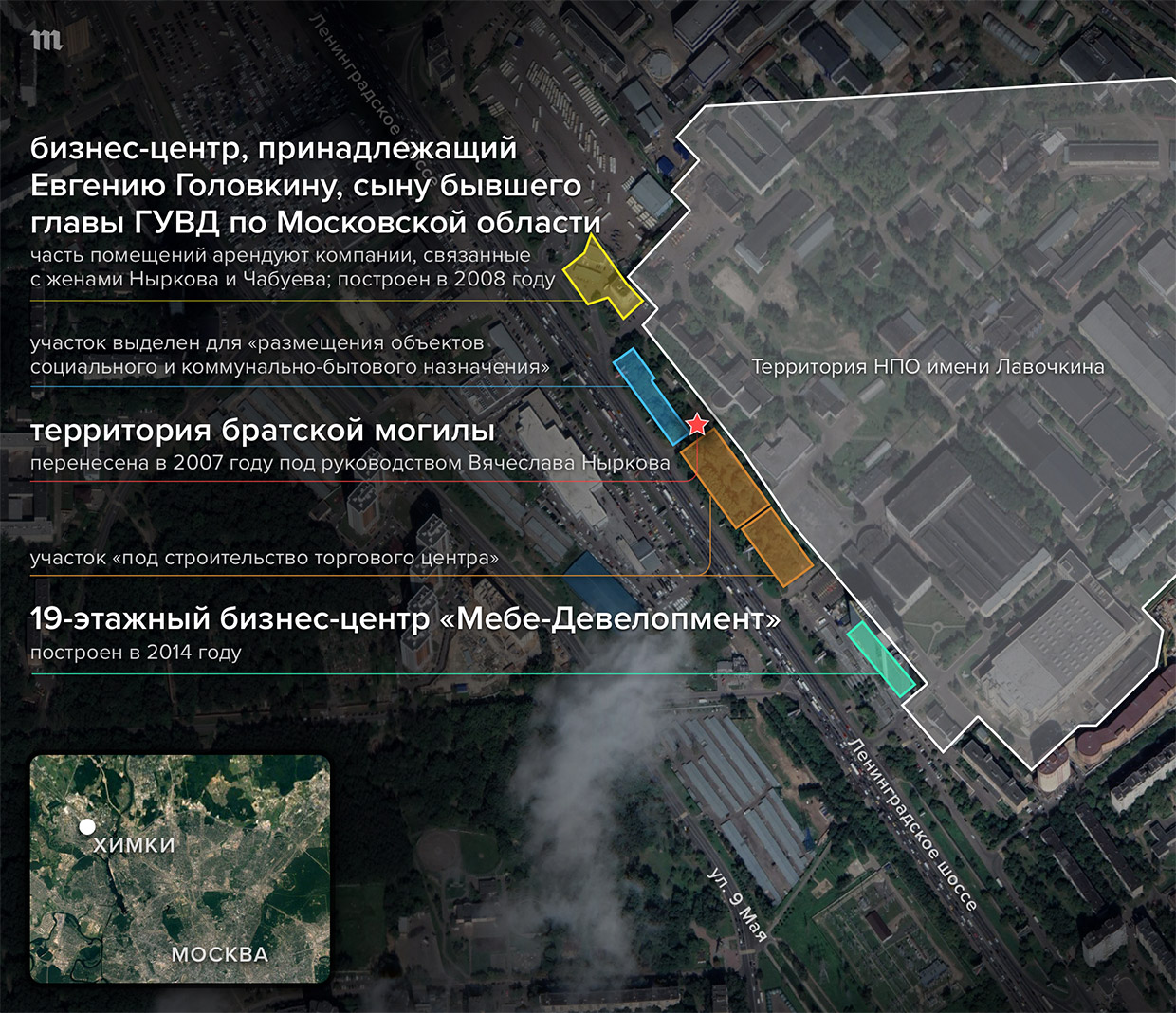
Vyacheslav Nyrkova, who successfully completed the reburial, was eventually sent for a promotion: in 2009, he headed one of the Khimki -Resurekovo districts, and soon became the curator of the construction industry in the Khimki administration. Most of all, in this role, he was remembered by efforts to legalize the spocked buildings. These projects often came across opposition to the inhabitants, and Nyrkov invariably had to resolve conflicts.
The construction business in Khimki has the same advantages as ritual: almost Moscow, only cheaper. Getting to the construction site, Nirkov retained the influence in the market of ritual services. In 2009, he invited the head of the city funeral service of his classmate at the Kamyshinsky Military Construction School (Volgograd Region) Yuri Kabuev. Together they created several companies that earned on funeral services, construction and garbage collection. Meanwhile, small shopping centers and shops that belonged to Zhenya Zayrkov appeared in Zaporezkovo.
The work scheme of the ritual business of Nyrkov and Chabuev was simple: representatives of the municipal Khimki funeral service sat in all morgues, but the documents entered into a private company related to officials. In his native village in the Penza region, Chabuev established the production of coffins and ritual supplies. In addition, the company of the wife of Nyrkova built a columbarium at the Novoluzhinsky cemetery (it was there in 2013 that Beketov was buried) and planned to build a crematorium with a new cemetery on the site of the Levoberezhny garbage training ground in Khimki.
With the wife of another classmate at the Kamyshinsky Military Construction School-Yuri Schneider-they founded the company "Clean City", which was engaged in garbage collection from the Khimki enterprises.
Since the beginning of the 2010s, representatives of public organizations “Healthy Nation” and “Night Wolves of Khimki” that supported construction companies and sometimes dispersed the protesters beganto appear at rallies against point development in Khimki. Vyacheslav Nyrkov was a co -owner of a local branch of a motorcycle club; "Night Wolves" received a residence permit in one of the Khimki shopping centers belonging to the Chabuevo and Zagnova. The “Healthy Nation” was registered in the office of the Khimkinsky funeral service - in the premises where the pharmacy belonging to the deputy of the Khimkinsky City Council, heading the construction commission and housing and communal services.
In 2010, after the next conflict of developers with local residents, the ecologist Konstantin Fetisov was beaten in Khimki. The police detained the performers and the organizer - it was the head of the municipal property department, Khimki Andrei Chernyshev, a colleague of Zadirkov and subordinate to Alexei Valov, one of the deputies of the mayor Vladimir Strelchenko (before he arrived in the Strelchenko team, Valov headed a military unit next to the Kantemirovsky division). Chernyshev received six years of colony. The defendants said that they carried out Valov’s order, but these statements did not receive any development.
In 2012, shortly after the conflict due to the construction of the highway through the Khimkinsky forest, Vladimir Strelchenko was resigned. Alexey Valov in 2014 headed the Shchelkovo district of the Moscow Region.
From Himmok - to Khovanskoye
In 2013, the head of the Khimkinsky funeral service, Yuri Kabuev, went to work in Moscow, heading the territorial department of ritual services No. 3 of the Moscow GBU “Ritual”, which included the Khovanskoye, Vostryakovskoye and some other cemeteries (Khimkinsky funeral service after Chabuev was headed by Peter Levchenko-another one-rod from the Kamyshinsky military construction building schools).
Two years later, Toro No. 3 expanded - a number of famous Moscow cemeteries, including Troekurovskoye, Vagankovskoye and Novodevichye, were included in it - and became the largest division of the GBU Ritual. Under the control of Chabuev, there were 31 cemeteries, including the most prestigious. The classmate of Chabuev and the business partner in the “Clean City” Yuri Schneider soon headed Toro No. 5, including several more large cemeteries in the south of Moscow-Shcherbinskoye, Domodedovo, Kotlyakovskoye.
Partners' income grew. The production of ritual goods in the homeland of Chabuev also increased. Toro No. 3 began to rent equipment from the wife of Chabuev. The wife herself opened the Serbia restaurant in one of the most expensive business centers of the capital of the “Romanes of the Dvor”-it is located a few hundred meters from the Kremlin.
One of the most noticeable episodes associated with how Yuri Kabuev was influenced by ritual services in the Moscow market, was the famous conflict in the Khovansky cemetery. Representatives of the “healthy nation” participated in the fight - organizations whose members dispersed the Khimki rallies against point development. This structure consisted of natives of Chechnya and police officers, and one of the leaders of the organization was Alexander Bocharnikov - a son -in -law of the former deputy head of the Moscow traffic police Mikhail Portashnikov.
The conflict, according to numerous evidence, began after Chabuev tried to increase the requisitions from Tajiks who worked at the cemetery.
Visitors from Tajikistan make up a significant part of the labor force in Moscow cemeteries - they are engaged in cleaning and caring for graves. As Medusa found out, almost all of them are immigrants from one “village council” (unification of several villages) - an dumb, located in the Rogun district of Tajikistan. Some are officially employed, others work without documents - but everyone, in their own words, pay unofficial deductions to the cemetery administration. For a long time, this article of income remained too insignificant to lead the cemeteries, and it was not paid attention to it. This allowed migrants to accumulate funds and start expanding the areas of activity: they had official granite workshops in the Khovansky and Perepechinsk cemeteries. Chabuev decided to take control of this business.
As they said, including in court, who worked at the Khovansky cemetery of the migrants, Yuri Kabuev invited them to rewrite the official and unofficial business to their people and continue to work for the salary. Tajiks refused, and Chabuev used the Khimki methods, connecting the fighters from the "healthy nation".
Young people from the “healthy nation” appeared in the Khovansky cemetery in the spring of 2016-at this time of the year, the ritualists who are engaged in the installation of monuments and maintenance of graves have the peak of the season. Moving on the scooters, they took up the “inspecting” the cemetery, following which the Tajiks were kicked out of the territory.
On May 14, this weekend after the holidays, a massive fight occurred between members of the “Healthy Nation” and Tajiks. It participated in it from 200 to 400 people. The migrants greatly exceeded the number, so their opponents fired, which soon stopped: riot police arrived at the cemetery. As a result of the collision, three people died, more than 30 were serious injuries. Among the victims were visitors to the cemetery.
In November 2018, the court found Yuri Kabuev guilty of organizing unrest and sentenced to 11 years in a maximum security colony. Another organizer of the fight, the co -founder of the healthy nation sports organization, Alexander Bocharnikov received nine years in prison. Another 13 participants in the fight were sentenced to terms from three and a half to 11 and a half years of a general regime colony. More than a hundred natives of Tajikistan were also detained - some of them were deported. 22 detainees received 15 days of administrative arrest, five more participants in the fight were sentenced to three years in prison.
During the court hearings, Yuri Kabuev said that he had repeatedly warned about the upcoming fight of the then deputy director for the security of the GBU Ritual Alexander Garakoev, but he did not take any actions to prevent the conflict, and the employees of Chopov, guarding the cemeteries, gave the order not to intervene. In the 1990s, Garakoev served in Tajikistan, and at the GBU “Ritual” he came from the post of head of the base of the material and technical supply of the FSB of Russia, stationed in Stavropol.
After the arrest of Chabuev and the dismissal of his friends from the GBU “Ritual”, almost all Moscow cemeteries were headed by immigrants from the Stavropol Territory.
Stavropol: new beneficiaries of ritual business in Moscow
According to the Department of Trade and Services of Moscow, the volume of the capital's funeral market is approximately 14-15 billion rubles a year. At the same time, according to official reporting over the past three years, the income of the GBU “Ritual” from paid services annually amounted to from 1.7 to 3 billion rubles.
A ritual business is a reliable cash source, says the interlocutor of Medusa in the funeral industry. The source of the “black” cash can be the preparation of bodies for burial, the sale of plots in cemeteries, the Packe and the improvement of graves, the organization of the funeral. The volume of shadow cash on the Moscow market of ritual services of the Medusa sources is estimated in the range from 12 to 14 billion rubles a year.
The redistribution of this market began even before the shootout at the Khovansky cemetery that happened in May 2016, from the appointment of Artyom Weekimov from the appointment of the Ritual GBU. The former senior operative officer of the Main Directorate of Economic Security and Combating Corruption of the Ministry of Internal Affairs (GubipK) Ekimov headed the enterprise in 2015. According to sources in the Moscow government, the appointment of Wekimov was submitted as a way to restore order in the ritual market, and experience in the Ministry of Internal Affairs had to help the new director solve this problem.
The appointment was preceded by a series of operations against the influential leaders of the GBU “Ritual” - several people started cases of bribes. Just a few weeks before the transition of Ekimov to a new job, employees of the Department of Economic Security of the Main Directorate of the Ministry of Internal Affairs in Moscow detained the former deputy of the Samara Provincial Duma Dmitry Anishchenko, who allegedly promised one businessman to help in the appointment of the head of Ritual for a reward of 2 million euros. Anishchenko was imprisoned for a year and a half for attempted fraud. Ekimov participated in the operational development in this case, a former employee of the Guerbipk told Medusa.
Having headed the GBU “Ritual”, Ekimov began to change the heads of cemeteries, appointing his people. At the same time, the zones of influence of Yuri Kabuev - that is, the most prestigious cemeteries in Moscow - these permutations almost did not affect. But after the conflict at Khovansky, their turn also came. The people whom Ekimov appointed often had no experience in the ritual business. In addition to the lack of experience, the appointments combined the origin - almost all of them were immigrants from the Stavropol Territory.
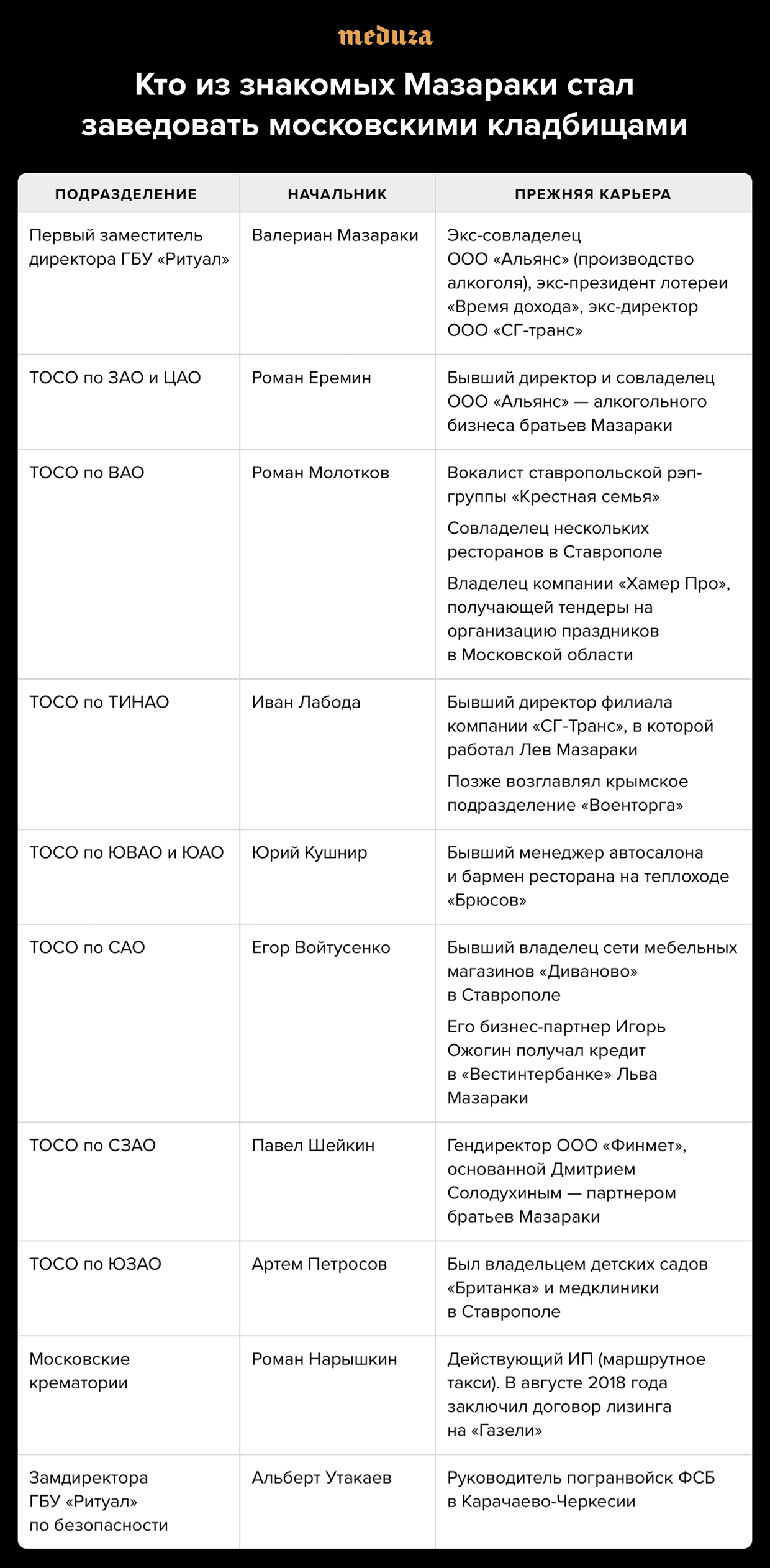
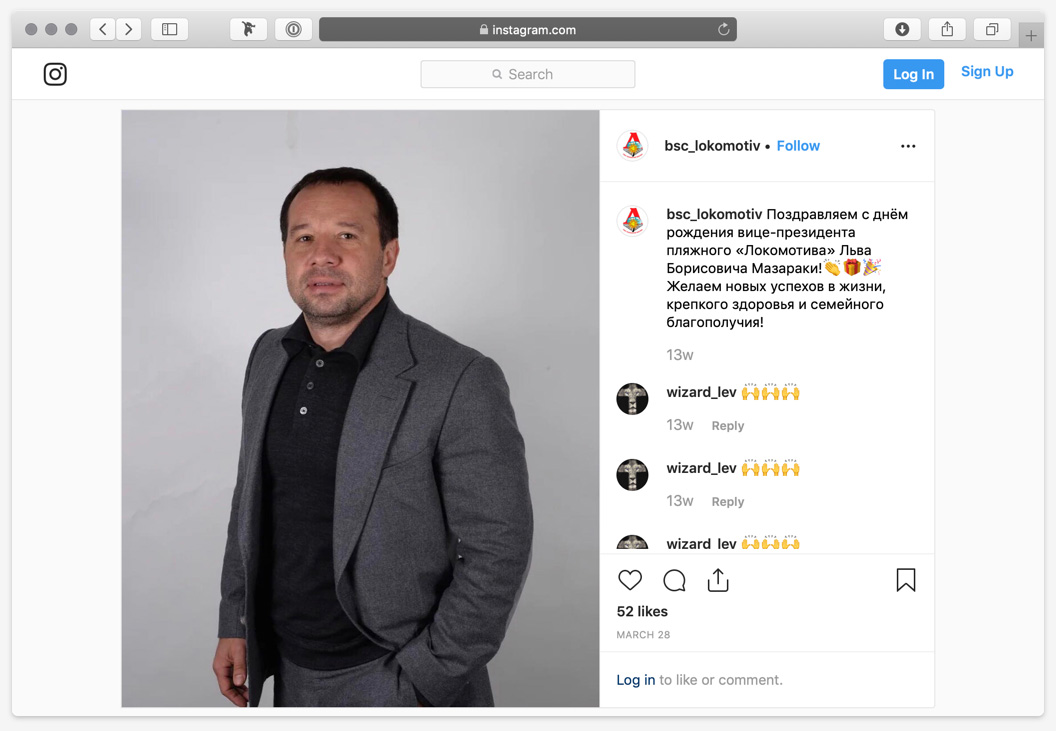
As a result of personnel permutations and structural changes to the State Budgetary Institution, the main units of the “ritual” were subordinated to one person - the first deputy director. Valerian Mazaraki was appointed to this position, in the past - the owner of the alcohol business. Among the chapters of the territorial divisions of the capital's “Ritual”, Roman Molotkov appeared-the vocalist of the Stavropol rap group “The Cross Family” and the co-owner of several restaurants in Stavropol; Albert Utakaev is a former head of the FSB border troops in Karachay-Cherkessia, and later-deputy director of the GBU Ritual; Yuri Kushnir, who previously worked as a car dealership manager and a bartender in a restaurant on the ship "Bryusov" - and others (only 12 people).
After the change in the leadership of the Moscow cemeteries, changes took place in their protection-instead of several companies, the contract received one COP “Alfa-Horse”. Its main owner is 28-year-old Emilia Leshkevich, who also owns a needlework salon in Perm. Leshkevich is a relative of Anastasia Mazaraki, the wife of Leo Mazaraki, the brother of the first deputy general director of the GBU Ritual (appointed by Ekimov).
Six months after the clash at the Khovansky cemetery, Emilia Leshkevich established the first ritual company (PC). She purchased several dozen cataphals and subsequently won several contracts for the provision of transport services from the GBU Ritual. Partner Leshkevich in PRK - Sardal Madalatov; In January 2019, he became the owner of another Moscow funeral company - Grail.
Sardal Umalatov - the son of the head of the oil industry committee in the parliament of Chechnya from the times of Johar Dudaev. In 2009, the 23-year-old Umalatov fell into a criminal chronicle as the owner of a burned Bentley car. In 2017, Brother Samalatov was killed during the conflict between employees of route taxi companies competing on the same route. The authorities of the Moscow region appointed Trans-Road carrier, which the media is associated with Alexander Kolokoltsev, the son of the Minister of Internal Affairs of Russia Vladimir Kolokoltsev, on this problematic route. Sardal Umalatov owns several companies with Alexander Kolokoltsev. Earlier, the Vedomosti newspaper connected the son of the Minister of the Interior with several minibus operators who received multibillion -dollar contracts for the transportation of passengers from the Moscow Department.
Assistant Minister Irina Wolf told Medusa in writing on behalf of Vladimir Kolokoltsev that the minister’s son was never connected with the ritual business; The minister is also unknown about any illegal commercial activity of his son. Emilia Leshkevich told Medusa that she would not give any comments. Alexander Kolokoltsev replied that "he had and had nothing to do with the ritual (funeral) business." The Moscow Department of Trade and Services also did not respond to a request.
Bankers
In the 1990–2000s, the Lev and Valerian Mazaraki brothers lived and engaged in business at Stavropol, in Bashkiria and the Krasnodar Territory. It belonged to the Stavropol producer of alcohol - the company "Alliance", which Rosalkogolregulilation has repeatedly convicted of the use of alcohol of unknown origin. The brothers also owned shops and entertainment institutions , in which, according to the Stavropol media, they also found dubious alcohol. In 2007, Valerian Mazaraki founded the “income time” lottery: it did not last long-due to the fact that the image of Prime Minister Dmitry Medvedev was used in advertising.
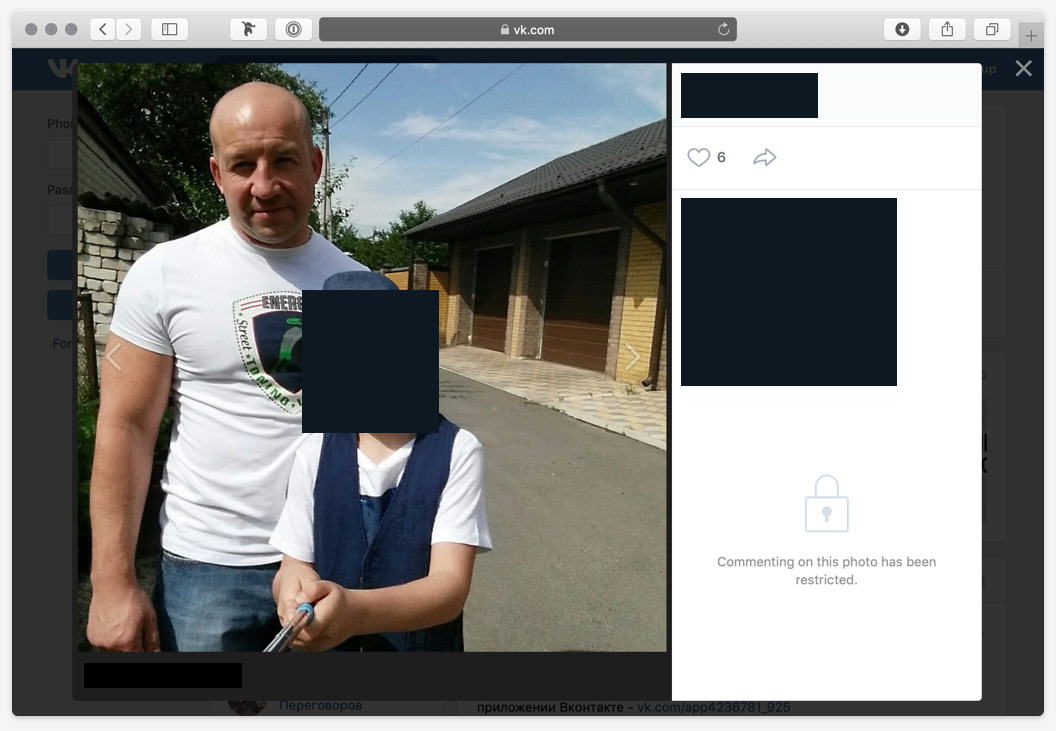
Lev Mazaraki from 2007 to 2012 headed the North Caucasus branch of SG-Trans, one of the largest railway operators for the transportation of oil and gas goods. In parallel, he owned the company "SG-Trade", which provided various SG-Transu services. For example, the railway operator transferred railway tanks for storage, and a few years later it turned out that they were gone. At the same time, SG-Trade posted on the Internet an announcement of the sale of tanks from tanks. In history with missing tanks, several current heads of cemeteries appear.
In the early 2010s, the Mazaraki brothers sold the Alliance company and moved to Moscow, changing the alcohol business to the financial one. Mazaraki and some of their acquaintances became the owners and managers of several banks-“Social-Bank”, the National Bank of Business Development, “Mast-Bank”, “Westanterbank” ( see table ).
All these institutions are united by a common feature: shortly after the emergence of a team of managers related to Mazaraki, the Central Bank responded to the bank’s license for “violations of the legislation in the field of counteracting the legalization of income”, and later it was found that assets were withdrawn from the bank. According to the Central Bank, 1.1 billion rubles were missing in the Stavropol Soconkonbank, after a license, in the National Business Development Bank- 13 billion, 6.8 billion in a small “Westernerbank”-only 386 million rubles. The co -owner of the Vesterbank, together with Lev Mazaraki, was a former state security officer Nikolai Dorofeev. Two sources in the funeral industry believe that he is a relative of the head of the FSB department in Moscow and the Moscow Region Alexei Dorofeev, but Medusa failed to detect documentary evidence of this information. Nikolai Dorofeev did not answer the letter, he could not get through. Alexey Dorofeev did not answer the numerous requests of the authors of the investigation.
According to the Central Bank, funds from banks were withdrawn through the issuance of loans to one-day companies-but in some cases the money received money. So, shortly before the recall of a license from the National Business Development Bank, a loan of 30 million rubles was received by Lev Mazaraki SG-Trade (the one that has lost the tanks). Soon she ceased her activities.
Most of the employees moved from the bank to the bank. For example, a native of Stavropol Sergey Selyukov was a shareholder of SotoConkonbank, and later headed additional offices of the National Business Bank for Business and Mast-Bank. In 2015–2016, he turned out to be the head of one of the territorial units of the Moscow State Budgetary Institution “Ritual”, and in the spring of 2017 he headed the Moscow office of the small bank “Sputnik”, registered in Samara.
In 2017, the Samara “satellite” was acquired by a group of people who previously worked in the “social bank” and other bursting banks. Soon after, the Moscow branch and operating rooms in the Dubrovka, Fudsiti and the Moscow Commerce and Yarmaroma complex appeared at the “satellite”. Despite the large flow of cash, few banks work in clothing markets-before the recall of licenses, one of the largest players here was Mast-Bank, also associated with a group of Stavropol financiers. As Medusa was convinced, the satellite operating rooms in the markets opened in the same rooms that Mast-Bank previously occupied.
In March 2019, police officers conducted searches on the territory of the Sadovod, Fudsiti markets and the plug Moscow, completely blocking their work. Soon after, the operating rooms of the "satellite" in the duffel markets closed.
It was not possible to get through to Valerian and Leo Mazaraki Medusa. Valerian did not respond to a letter sent to his name through the post of the press service of the GBU "Ritual". Leo did not answer the questions sent to him on Facebook.
Friends from "Children's World"
Artem Ekimov, a man who appointed Valerian Mazaraki and who at the head of the Moscow Toro of his Stavropol fellow countrymen, who appointed his deputy, began to work in the GBU “Ritual” shortly after the special operation at his former place of work. As a result of it, the entire leadership of the Main Directorate of Economic Security and Anti -Corruption of the Ministry of Internal Affairs (GubipK) was in prison.
The reason for the operation was the investigative experiment arranged by the employees of the GubipK: they tried to provoke Igor Demin, deputy head of the 6th Security Office of the FSB, deputy chief of the 6th security department of the FSB. After this seven Guemic State Employees, led by the head of the department, General Denis Sugrobov, was accused of provocation of a bribe and abuse of authority, and subsequently an article on the organization of a criminal community was added to the case. In 2017, Svugrobov was sentenced to 22 years in prison (later the deadline was reduced to 12 years).
It is believed that the Sugroobov case became a milestone in the struggle of several groups of security forces for control over the banking sphere, which was traditionally oversaw the banking unit (management "K") of the FSB economic security service.
Denis Sugrobov knew about the upcoming departure of Artem Weekimov from his department to the GBU "Ritual", a source surrounded by Sugropov told Medusa. Back in 2013, Sugrobov suggested that the interlocutor of the publication notes that Ekimov would lead the Moscow funeral service, as he is a friend of Marat Medoev, assistant to the head of the FSB department in Moscow and the Moscow Region. Moreover, his acquaintances from the presidential administration reported that the appointment of Ekimov allegedly lobbied the head of the Moscow FSB Alexei Dorofeev.
FSB Colonel General Alexei Dorofeev (now he is 58 years old) graduated from the Leningrad Mechanical Institute, then went to the service of the KGB and worked in the city structures of the state security department of Leningrad and St. Petersburg. In 2005, he headed the FSB Office in Karelia. According to media reports, he was removed from this position after the riots in Kondopog in 2006, but soon moved to Moscow. In 2010–2012, Dorofeev headed the FSB Office, which later was engaged in the operation to accelerate the guinubipk. Then, in 2012, he headed the head of the FSB in the metropolitan region.
Information that it was General Dorofeev who stood at the appointment of Artem Ekimov by the head of the Moscow State Budgetary Institution “Ritual” was confirmed by the source of “Medusa” in law enforcement agencies. The officer of one of the special services, personally familiar with Marat Medev, also told Medusa that Ekimov was considered the “man of Dorofeev”.
The same interlocutor of Medusa characterizes Dorofeev as a “celestial”: “Colonel General, Cabinet, Winter Garden. Not every boss from the Children's World can get to him ”(I mean the headquarters of the FSB of Russia on Lubyanka, located opposite the Children's World store).
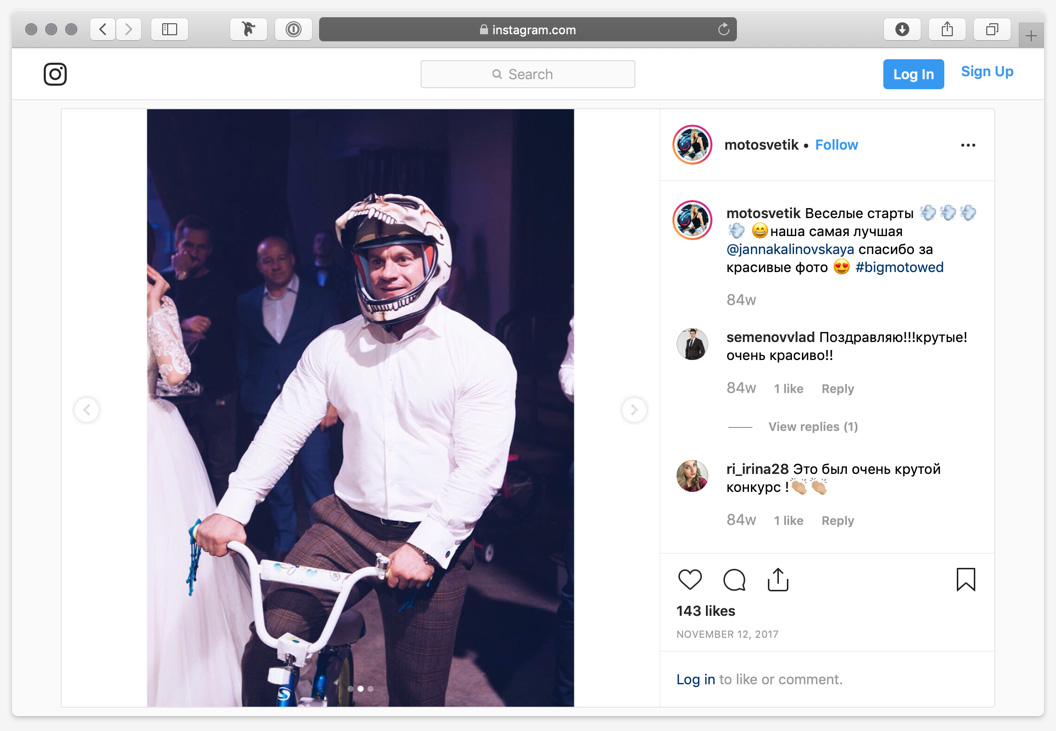
The 37-year-old Marat Medoev (whom the source surrounded by Svugrobov called Artyom Ekimov’s friend)-personal assistant to Alexei Dorofeev. Medoev was born in Leningrad, but at least since the beginning of the 2000s he has been living in Moscow, until 2012 he worked in the Investigative Department of the FSB. Officially, he never engaged in business, but was used to buying expensive cars and motorcycles. So, in 2012, he acquired the new BMW X5 Drive, and two years later-the BMW R1 motorcycle. The car, as the founder of the Corruption Fund Alexei Navalny, wrote , Medoev then sold Valery Bolshakov; As Medusa found out, Bolshakov is the head of the transport service department of the GBU Ritual. Valery Bolshakov refused to comment and hung up. The son of Bolshakov, Alexander said that his father did not know Marat Medoev, and bought the car on an ad. At the same time, Alexander Bolshakov is a close friend of the Medyov and Mazaraki families and often conducts leisure with them. So, for example, at the wedding of Bolshakov Jr. at the Soho Rooms club, Valerian Mazaraki and the wife of Marat Medoev Natalya were present.
Marat Medoev has been familiar with Dorofeev at least since the 2010s. According to the source in the Moscow FSB, personally familiar with Medov, Dorofeev took it to his beginning, heading the department in 2012. The source of Medusa in the power departments, also familiar with Medev, calls him “right hand” Dorofeev and the “performer of all his assignments”: “If the assignment comes from him, it means that it comes from the chef and must be fulfilled, no one doubts.” He confirms that the FSB officers are directly connected with the GBU “Ritual”: the same Marat Medoev, according to the interlocutor of the “Medusa”, sometimes “raises unpleasant situations from the side of the“ ritual ”that arise among the employees of the department.
The director of the GBU “Ritual” Artem Ekimov proposed to meet one of the authors of the investigation, but at the last moment he transferred the meeting for an indefinite time “due to the complexity of the topic” and at the time of the text output could not provide an operational commentary.
"Hang-league"
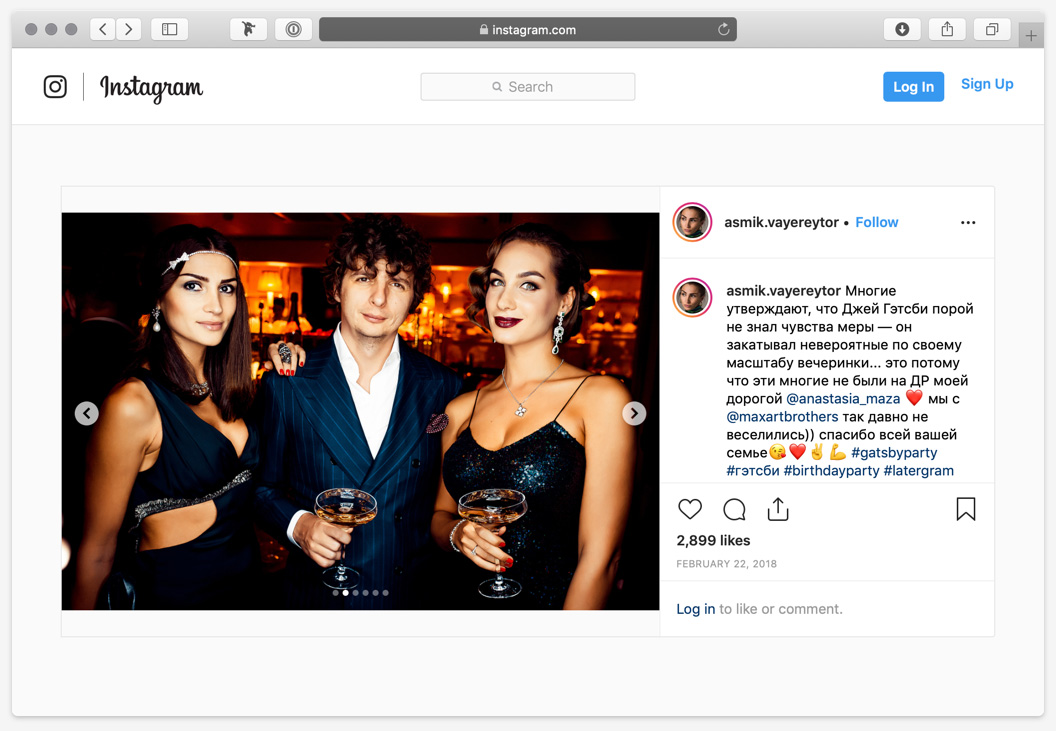
In February 2018, Anastasia Mazaraki, the wife of Leo Mazaraki, was celebrated at the Moscow Club of Soho Rooms (she is known as the owner of one of the most expensive cars in the capital-Orange Sportsman Lamborghini Aventador LP 700-4 worth from 23.7 million rubles). The party was held in the style of "Great Gatsby." Among the guests was the director of the GBU "Ritual" Artem Ekimov.
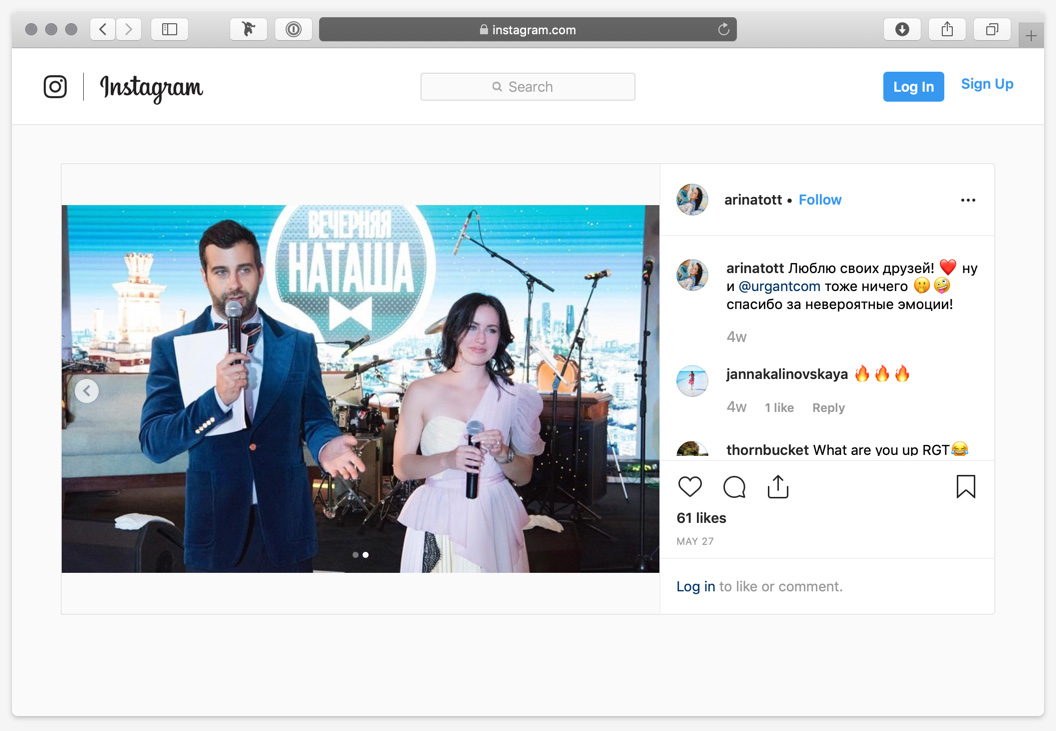
The Mazaraki family often spends free time in the company of the Medovy family. So, in May 2019, in the restaurant “Moscow Regions”, the birthday of Natalia Medeva, the wife of Marat Medoeva, was celebrated on Rublevka. Among the guests - Anastasia Mazaraki and Maya Ovsyannikova, in the girlishness of Medoev, are the younger sister of Marat Medeva. The event called "Evening Natasha" was conducted by Ivan Urgant, the guests entertained "Disco" accident "."
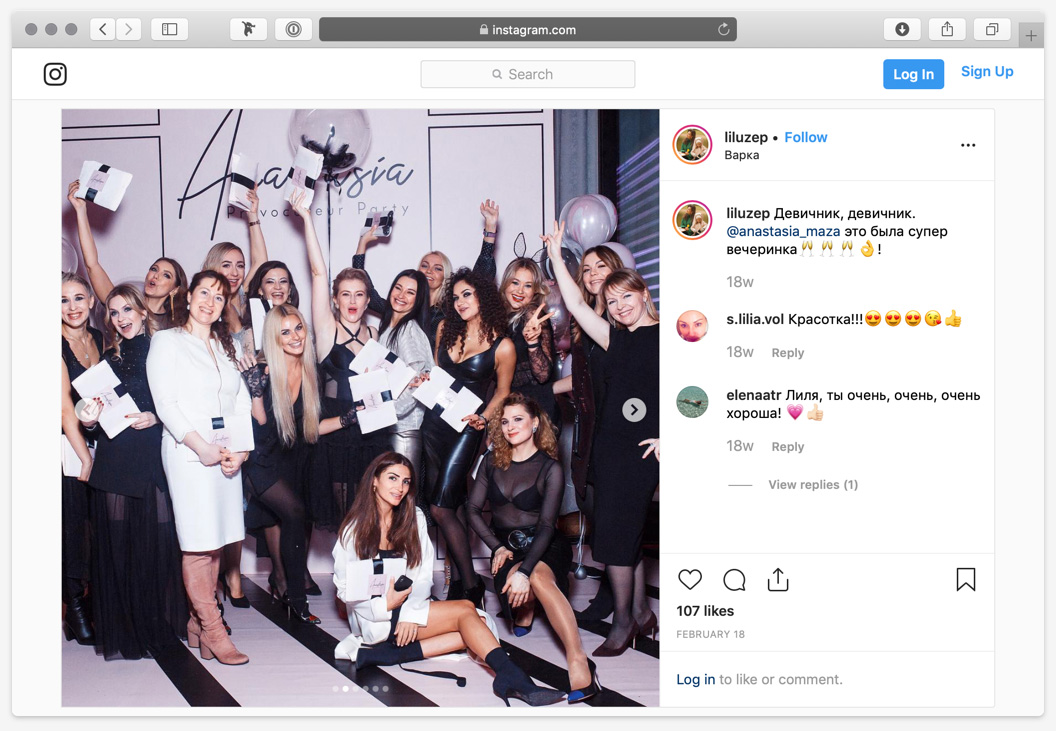
According to the sources of Medusa, the cost of the event amounted to 18-20 million rubles. The Safit Event event arranged the holiday-it also organized a thematic party in the style of Agent Provocateur in honor of the birthday of Anastasia Mazaraki in February 2019, which was among the guests Marat Medoev Eld.
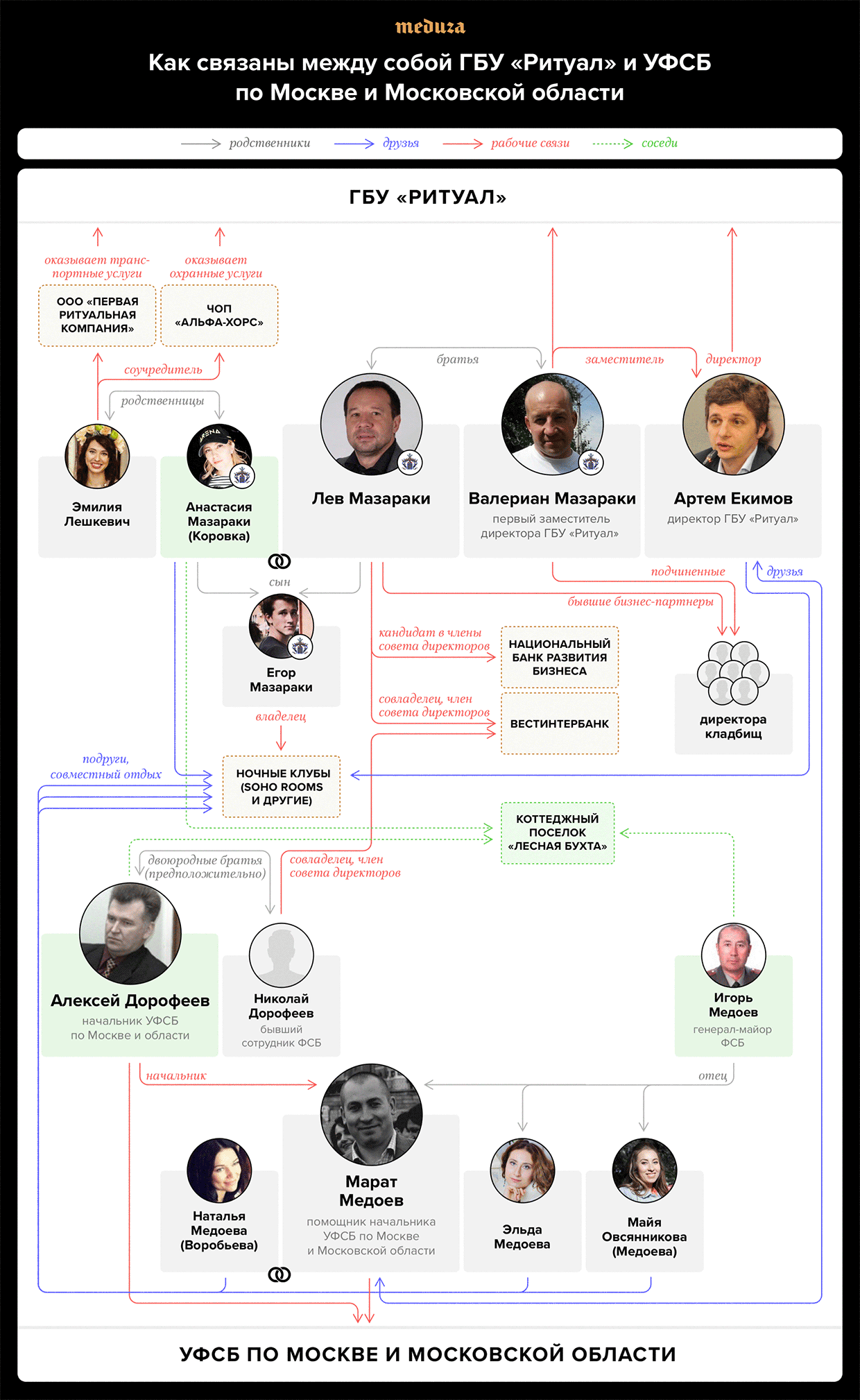
The SOHO ROOoms club belongs to the son of Anastasia and Leo Mazaraki-the 19-year-old Yegor. Egor Mazaraki came to the club-restaurant business, having bought several establishments at the Trekhgorenoye Manufactory in Moscow, including the HoolIigan Moscow club (previously belonged to Denis Simachev and Andrei Kobzon), the Irish pub Blacksmith and the Jagger Hall banquet hall. In addition, Yegor Mazaraki belongs to the Barbershop “20/15” and the Banny Complex “G shack-Leo”.
The entertainment business of the Mazaraki family is managed by Igor Nlyubov-earlier he led the Red Red Red Hat strip club, and then was the general director of the first ritual company. Nelubov is also headed by several companies that the acquaintance of Mazaraki owns - Vyacheslav Martynenko, co -owner of the Constructor and Mix clubs, as well as the banquet hall "Mir", which is located in the building of the cinema of the same name.
At the end of 2018, Martynenko had a new business - he won a tender for the right to trade at the metro stations located in the center of Moscow. Shortly before this, the deputy head of the Moscow Transport Department, which is in charge of the metro, was the former deputy director of the Ritual GBU Alexander Garakoev, Colonel of the FSB in stock and the same former head of the Ritual Security Service, who refused to support the Khimkinets Yuri Kabuev during a fight at the Khovansky cemetery.
A relative of the Medovy, Yuri Ovsyannikov, who headed the Moscow Administrative Traffic Inspectorate (MADI), also worked in the transport complex of the capital. Under the office of MADI, she rented a premises on Kazakova Street, belonging to Marat Marat Marat Igor.
Pensioner Igor Medoev, the father of the influential security forces of Marat Medoev, is a close friend of the defendant of the “Magnitsky List”, the General of the FSB Viktor Voronin, who headed the “K” management by the banking sector until 2016, say two “Medusa” sources familiar with Igor Mediev. Bank owners repeatedly accused Voronin of attempts by raider seizure of their assets. In May 2011, the banker Alexander Lebedev published an open letter in which he noted that some subordinates Voronin "confuse their own wool with the state." Voronin is well acquainted with Dorofeev: from 2010 to 2012, the SEB FSB was simultaneously headed.
Prior to retirement, Igor Medoev served in the Office of the FSB of North Ossetia, and since 2001 he was assistant to Anatoly Serdyukov in the Federal Tax Service and the Ministry of Defense of the Russian Federation (Serdyukov consistently headed both departments). During the service in the Ministry of Defense, Medoev was awarded the title “Hero of Russia”, but in 2010 he was dismissed by the order of Russian Prime Minister Dmitry Medvedev. Now Igor Medoev lives in Slovakia. Next to him were the people associated with the company Faraday - the main supplier of shoes in the FSB, the Ministry of Internal Affairs, the Ministry of Emergencies and the Russian Guard.
Another former assistant to Serdyukov is Sergey Korolev, who was appointed in 2016 by the head of the economic security service of the FSB of Russia. The New Gazeta calls him the godfather of Marat Medoev (this is confirmed by the sources of Medusa, close to the Ministry of Internal Affairs). According to the interlocutor of the Medusa in the FSB, the assistant to Alexei Dorofeev Marat Medev became the patronage of his father.
Igor Medoev did not respond to calls and messages in Wottsap. In the Center for Public Relations of the FSB of Russia and the press service of the FSB in Moscow and the Moscow Region, requests for comments in the name of Marat Medoev and Alexei Dorofeev were left unanswered.
Neighbors: real estate and land of colleagues from the FSB
In the early 2010s, Marat Medoev received a plot in the country non-profit partnership “Daching Island”, located in the Istra district of the Moscow Region. In addition to the head of the Moscow FSB, Alexei Dorofeev, in this village, own land: the head of the FSB control service Vladimir Kryuchkov, the former first deputy head of the Federal Customs Service Igor Zavrazhnov and Konstantin Gavrikov, deputy head of the management service of the FSB, who oversees the banking market. In addition, the FSB General Oleg Feoktistov is in the neighborhood (in 2016, working as the Rosneft vice president, he oversaw the detention of the head of the Ministry of Economic Development Alexei Ulyukaev).
Medoevs and Dorofeev are adjacent to another cottage village - “Forest Bay”, located on the shore of the Istrinsky reservoir (40 minutes by car from the “summer island”). According to the USRN, Igor Medoev received a loan worth 119 million rubles in the Strategy Bank in April 2012 to buy a land plot in the Forest Bay.
A month before receiving the loan, law enforcement agencies carried out searches and seizures of documents in the bank in the case of the withdrawal of 20–25 billion rubles abroad. The bank’s leadership avoided punishment, although subsequently it was repeatedly convicted of non -fulfillment of laws on countering money laundering, and later deprived of a license.
In 2015, Alexei Dorofeev acquired the land in the Lesnaya Bay next to Medev (now the owner is indicated in the discharge-“Russian Federation”). Cottages Medoev and Dorofeev issued themselves one day in 2017. As the aerial photography conducted by the New Gazeta in June 2019 testifies, there is no fence between the sections of Dorofeev and Medoev.
https://www.youtube.com/watch?v=5AKVVC9L6LQ&FEATURE=YOUTU.BE
In the spring of 2018, Anastasia Mazaraki, the wife of Leo Mazaraki, bought a plot of Alexei Dorofeev and Igor Medoeva near the possessions of Alexei Dorofeev and Igor Medoev.
On June 21, 2019, Pasmi reported that the Mazaraki family is also building an estate in Barvikha, Moscow Region. The cost of construction, according to the publication, is approaching 3 billion rubles.
The families of Mazaraki and Dorofeev can also be familiar. The sections of Dorofeev, Medoev and Mazaraki are adjacent to each other and actually form a separate street. It is located on it, until recently, belonging to the daughter of Igor Medoev (and sister Marat Medoev) Elde, but in 2018 she sold it. According to the extract from Rosreestr received on June 12, 2019, the “Russian Federation” became the buyer of the site. However, in earlier extracts it is indicated that the buyer was Boris Sergeyevich Korolev. His name, patronymic and surname completely coincide with the data of the son of the chief Sergei Korolev, the head of the SEB of the FSB of Russia. Like Alexey Dorofeev, Sergey Korolev began his career in the St. Petersburg State Security Department; Like Igor Medoev, he worked as an assistant to the Minister of Defense Serdyukov. The acquaintance of the Medoyevs claims that the buyer of the site was really the son of a senior FSB officer. Elda Medoeva refused to answer the questions of Medusa.
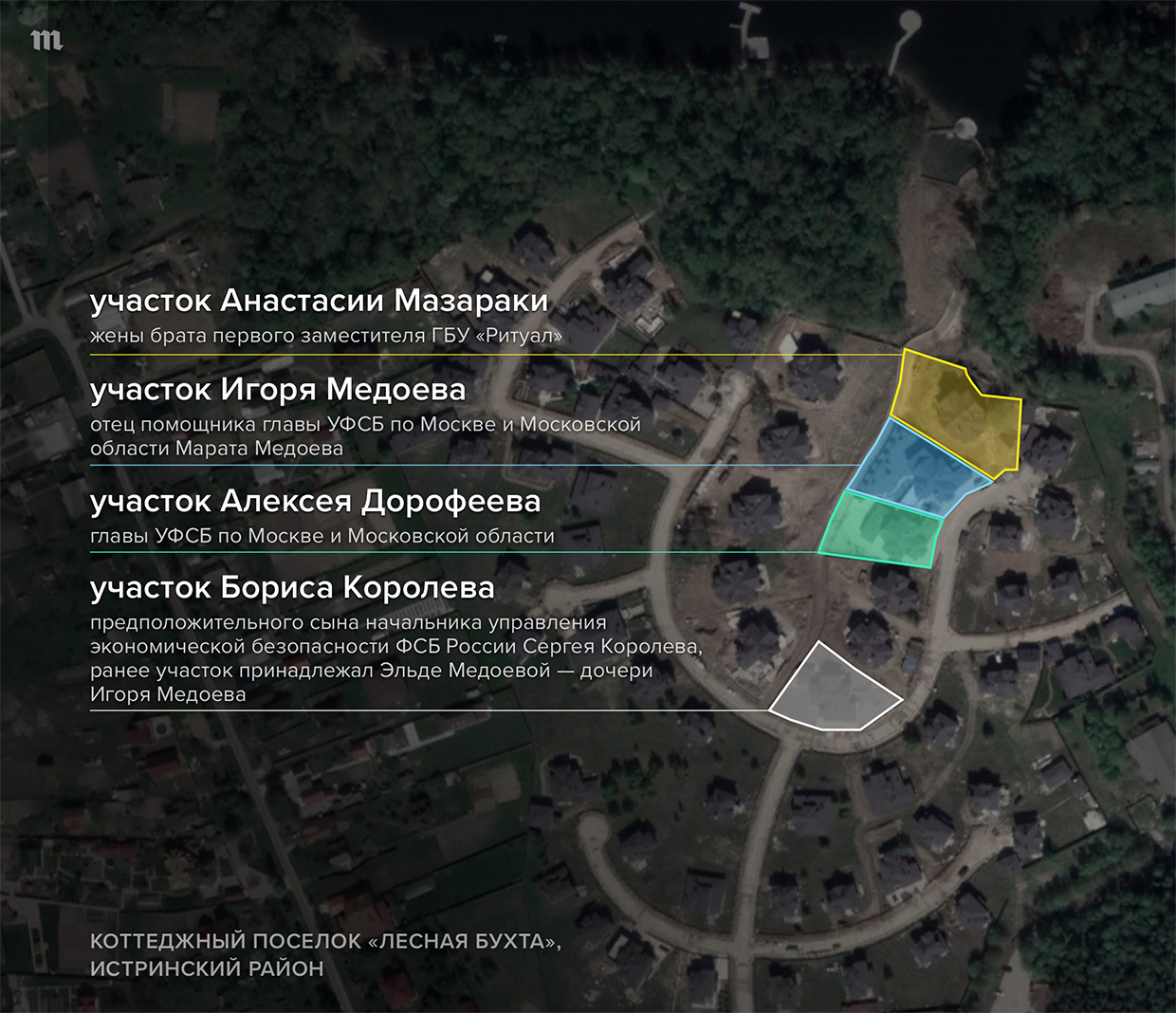
The story with the sections of Alexei Dorofeev and Elds Medova is not the only example when real estate previously recorded on the family of officials is owned by the Russian Federation. Since the beginning of the 1990s, the family of the head of the FSB SEB Sergey Korolev has been registered in a state apartment in St. Petersburg. The extract from Rosreestr states that in July 2018 the apartment was transferred "to the property of citizens." However, the next owner is not indicated by individuals, but the same “Russian Federation”, and in shared ownership with himself.
In June 2019, the Russian Federation also became the owner of the mansion of Alexei Dorofeev in the Forest Bay.
Epilogue: where the ritual business partners will go further
At the end of 2018, the Governor of the Moscow Region Andrei Vorobyov replaced the department in charge of the funeral business. Instead of the Ministry of Consumer Market, supervision of ritualists was handed over to the Main Directorate of Regional Security (GURB), which is headed by Roman Karataev. Before arriving in the Moscow region, Karataev worked in the Office of “M” of the FSB of Russia. He headed the Office "M" at that time Alexei Dorofeev.
Dmitry Yevtushenko, deputy Karataev, who oversees the funeral industry in the State Health and Science. In the past, he worked in the government of the Stavropol Territory, in the homeland of the Mazaraki brothers. In addition, Yevtushenko led the Voentorg-Yug company, in which Sergey Selyukov worked, the director of one of the units of the GBU Ritual, noticed in the schemes for the withdrawal of money from several Moscow banks. Roman Karataev refused to answer the questions of Medusa by phone, suggesting instead to make an appointment with him.
In December 2018, the authorities of the Moscow Region established a structure similar to the Moscow GBU “Ritual” - GBU “Center for Memorial Services”, which will be controlled by the funeral business in the region (now in each municipality - its own ritual company). The new enterprise was headed by the co -founder of the All -Russian Cyrlling Federation Nikolai Kazakov - since 2017, he led the funeral service of Khimki. Now, judging by public procurement, the new GBU buys furniture, stationery and rents premises for offices in cities of the Moscow region.
A source in the funeral industry of the region told Medusa that new people have already taken control of the funeral business in four districts of the Moscow Region, bordering the capital - Krasnogorsk, Leninsky, Domodedovo and Khimki. According to the source, most cemeteries in these areas are transferred to closed status, prohibiting new burials on them, which "creates a deficit and can increase the size of a bribe for allocating a place for a grave."
Author: Ivan Golunov
The text also worked on the text: Andrei Zakharov, Svetlana Reuters (“Russian BBC Service”), Maxim Solopov (RBC), Anastasia Yakreva (Vedomosti), Julia Nikitina (Fontanka.ru), Irina Pancopenko, Anastasia Stogn, Irina Mallova (The Bell), Maria Abakumova (Forbes), Roman Shleinov, Irina Dolinina, Alesa Marokhovskaya, Olesya Shmagun (OCCRP/"New Gazeta", OCCRP), Alexander Gorbachev (Lorem IPSUM)
Editors: Konstantin Benyumov, Alexey Kovalev ("Medusa")
Aerial survey: "New Gazeta"
Infographics: Nastya Yarovaya, Nastya Grigoryeva ("Medusa")