
Translated material
On the nervous ground
We continue to introduce readers with books included in the long list of the annual Enlightener Prize . In October, eight publications will be selected from among them, among which the winners in two nominations will later be determined: “Natural and exact sciences” and “humanitarian sciences”.
Neurologist, candidate of medical sciences, Pavel Brand, devoted the book “On the Nervous Surveillance” (AST Publishing House) to widespread myths about neurology, which believe in both those who are treated, and, often, those who treat. Some chapters of the book are devoted to headache, dizziness, back pain, strokes, epilepsy - with each of these disorders, numerous common misconceptions are associated. A special section talks about evidence -based medicine.
We invite readers to get acquainted with an excerpt from the book “On Nervous Survey”, which refers to vegetovascular dystonia.
Earlier, in the heading “Slow Reading”, the following books were presented, included in the long list of the 2019 Enlightener Award:
- Evgeny Anisimov “Power and ax. Tsarist power, political investigation and Russian society in the XVIII century ”(new literary review)
- Mikhail Levitsky. “Carnival of molecules. Chemistry is unusual and funny "(Alpina non-fiction)
- Elena Osokina "Alchemy of Soviet Industrialization. Torgsin time ”(new literary review)
- Pavel Rudnev “Drama of memory. Essays on the history of Russian drama. 1950-2010 ”(New literary viewing)
- Lev Simkin. "Sobibor / afterword" (AST, Corpus)
Vegetes -vascular dystonia (VSD).
The ubiquitous diagnosis
Before talking about this extremely common diagnosis, it is necessary to figure out what is at all in question.
So let's start from the very beginning. There are many different systems in the human body: digestive, skeletal-muscle, genitourinary, cardiovascular, etc. All this is a difficultly interconnected and fine -handing farm is controlled and used by us with the help of the nervous system.
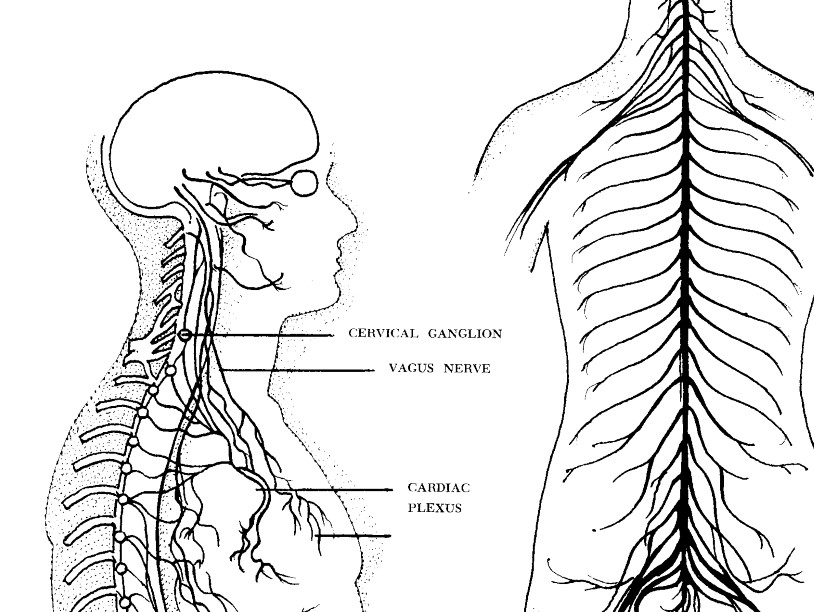
The nervous system is arranged at the same time extremely complicated and very simple. Roughly speaking, this is a computer, the control center - the brain and spinal cord - and many wires - peripheral nerves. With the help of the nervous system, we can, for example, make movements: walk, run, jump, dance, speak, write, read, smile ... We control all these actions to one degree or another, and therefore they are called arbitrary. That is, we ourselves, by our own command and desire, we can influence them and control them (with varying degrees of success). At the same time, our body performs a huge amount of actions completely automatically, and we don’t even think about them while everything is in order: the heart beats, the blood pressure is regulated, the ceiling and salivation, the release of gastric juice occurs, the pupil is expanded and narrowed, etc. A special part of the nervous system is responsible for all these automatic actions, which was once called vegetative, that is, plant (we can find the closest one-root word in English: Vegetable-“Vegetable”). The term has firmly entered the medical dictionary and for many years was used to designate both the system itself and problems with it.
There were such derivatives as the autonomic nervous system, autonomic dystonia, vegetovascular dystonia, autonomic failure syndrome, psycho -vegetative syndrome, and autonomic state. However, with the development of medicine, the term itself is outdated and today is used only in the vastness of the former USSR. In the English literature, as, indeed, in other languages, the system that is responsible for automatic actions began to be called autonomous, which is much more precise to reflect the essence of the processes and removes a number of terminological issues.
Are there real diseases of the autonomous nervous system? Of course, exist. The autonomous nervous system can suffer both in isolation and due to other diseases, for example, diabetes mellitus, Parkinson's disease, alcoholism. This can be a systemic pathology, when an autonomous system is damaged as a whole (for example, with orthostatic hypotension), and only part of the system can be affected, for example, with a complex regional pain syndrome or with a gorner syndrome.
In order not to leave questions, I will explain what the named diseases are. Complex-regional pain syndrome is a damage to the peripheral nerve leading from the “center” to a certain area of the body and the human body. How does it appear? In this zone there is a violation of sensitivity, motor function, damage to vegetative nerve fibers. For example, in the hand. Usually, doctors face the regional syndrome of the limbs - arms or legs. As a result of a local impaired autonomic functions, pain occurs, hair growth, skin color, and sweating are disturbed - this is a sign of damage to the very peripheral nervous system. Moreover, these manifestations are associated with a violation of trophics (blood and lymph circulation in the affected area) and, accordingly, nutrition. Therefore, hair begins to fall out here, the skin acquires a bluish tint, decreases and even sweating disappears - that is, the functions are “disconnected”, which is responsible for the autonomic nervous system. All this is together plus pain - called a complex regional pain syndrome (KRBS).
Gorner’s syndrome, which I mentioned as a disease of the autonomous nervous system, is associated with damage to the cervical sympathetic chain, when, if explained simplifiedly, the connection between the “control center” in the brain and the facial muscles on the damaged side is disturbed. These manifestations are very noticeable: the prolapse of the century (ptosis), narrowing of the pupil (myosa), the sinking of the eyeball (enophthalmus), the weakening of sweating on the affected side of the face (hypohydrosis). Despite the frightening manifestations, Gorner's syndrome is most often relatively benign and is not a sign of some terrible diseases, with the exception of two: firstly, pankost tumors. This is a tumor of the top of the lung, and Gorner's syndrome is often one of its first evidence. Another danger that can be associated with this syndrome is the beginning of aneurysm (expansion and deformation) of aorta.
Some pathologies of the autonomous nervous system take place over time, sometimes the condition improves in the treatment of the underlying disease. For example, if you safely remove the punkosta tumor, Gorner's syndrome will obviously pass.
Unfortunately, some diseases of the autonomous nervous system do not have treatment, and the only thing that remains is to affect the symptoms, improving the quality of life of patients. The same complex regional pain syndrome involves only symptomatic treatment - the maximum decrease in pain sensitivity. So far, this is all that medicine today can offer such patients. Fortunately, diseases that affect the autonomous nervous system occur quite rarely.
So why is her disease, albeit under the obsolete name “vegetovascular dystonia”) is found in an outpatient map of almost every woman and half of men in our country?
The thing is that in the middle of the twentieth century, German scientists discovered the relationship between psychological problems and the reaction of the autonomous nervous system. This connection was that with severe alarm, people showed symptoms of damage to the autonomous nervous system: the pulse became more frequent, sweating intensified, the pupil expanded, a feeling of lack of air arose, a feeling of fear of death - up to a panic attack. This relationship was designated as a psycho -vegetative syndrome. It was in such a hypostasis that the autonomous nervous system appeared before Soviet doctors.
In the USSR, the theory was developed and gradually gave to neurologists, and they found that some reactions were accompanied by a change in blood pressure, which in turn depends on the tone of the vessels. So psycho -vegetative syndrome transformed into vegetovascular dystonia (VSD).
Entire scientific departments were created, which were engaged in the "new" pathology. Classifications, methods of treatment and prevention were developed. Cardiologists, who often observed such symptoms, naturally somewhat deviated somewhat from the neurological vision of the problem and designated the same complex of symptoms as neurocirculatory dystonia and also began in -depth study of the problem, but, in fact, “the same rake, only on the side”. Thus, vegetovascular dystonia and neurocirculatory dystonia, “discovered” by cardiologists, are one and the same, the same complex of symptoms with an accent, perhaps more on manifestations from the cardiovascular system: rapid palpitations, a feeling of a jumping heart, etc. After all, about just such states, people turn primarily to a cardiologist, not a neurologist. And cardiologists have defined the same complex of symptoms precisely as neuro-cycle dystonia. A classic and very indicative example of harm from the isolation of medical disciplines: when all this happened, an active exchange of data between specialties, an interdisciplinary approach, as it is now, did not exist in principle. So it turned out that they called the old symptom complex in a new way. And they still continue to call him as well. Someone will consider this a tribute to tradition, and someone-ignorance.
In any case, these diagnoses firmly entered the medical heads, becoming a fashionable medical trend for some time. However, due to the lack of clear diagnostic criteria, they gradually turned into “garbage dumps” for any symptoms in which the doctors could not or did not want to figure it out.
Here, headaches and dizziness, fainting and tremor, tachycardia and hypotension, insomnia and shortness of breath, and much more, including nausea, general weakness, frequent acute respiratory viral infections, chronic fatigue, etc. came here. Almost any symptom, especially in adolescents, was interpreted as a manifestation of vegetovascular dystonia.
If the manifestations concerned the rapid heartbeat or the sensation of interruptions in the work of the heart, then the diagnosis sounded like neurocirculatory dystonia or, for example, cardiourosis. This theory has so densely settled in the heads of Russian doctors that many still continue to act in the same spirit, without thinking for a second, without doubting the existence of this pathology.
Nevertheless, our Western colleagues many years ago realized that everything is far from as simple as it seems at first glance. They revealed a very simple pattern - with all the fullness and possible severity of the clinical manifestations of the disease, the autonomous system itself did not suffer in any way. That is, the disorder of the function (rapid heartbeat, and a sense of air lack, and lump in the throat, and slightly elevated temperature, and weakness, and everything in the world, called vegetovascular dystonia) was not accompanied by a disorder of the structure itself - in the autonomous nervous system, no damage was observed, despite the presence of such symptoms. When the autonomic nervous system is affected, it occurs exclusively either the Gorner syndrome, or the complex regional pain syndrome (KRBS), not nausea, dizziness, bad mood or general lethargy.
So, it was decided to divide the true diseases of the autonomous nervous system and the state, in which only the listed disorders of its functions were manifested without damage to the system itself. As a result, the term “functional disorder of the nervous system” was adopted around the world, which allowed more accurately to draw borders. Symptoms of the famous vegetovascular or neurocirculatory dystonia are laid in it.
Unfortunately, on this disputes about the nature, diagnosis and treatment of these disorders did not fade away, but only flared up with renewed vigor. This time, psychiatrists were contributed, revealing the conditions that were caused by purely psychological problems, but were disguised as lesions of the organism organs and systems.
If before that there were two types of diseases - mental (mental illness, such as schizophrenia or clinical depression) and somatic (diseases of organs, such as heart or stomach), then psychiatrists identify the third species: psychosomatic, that is, diseases in which psychological discomfort is realized through physical discomfort. At the same time, the organs themselves do not suffer, fortunately, but their functions can be impaired. Such states include, for example, today's “medical hits”: irritable bowel syndrome or headache of tension. They really exist and can really make a person very seriously, and if in a simple tongue, to knock him out of the rut.
Thus, a whole bouquet of problems appeared both with the diagnosis itself and with those who should identify and treat similar psychosomatic pathologies that force people to seek help. And this is a huge pool of patients, and they are not unanimous, unnecessary even in words, unnecessary, and often harmful examinations, up to computer, magnetic resonance tomography, ultrasonic pre-Poplerography (UZDG), and reincephalography, all possible methods that are invented by man can be assigned. Some doctors consider it necessary to be used to be used ... At the same time, it is necessary to check, and at the same time conduct all kinds of blood tests and other body fluids.
The result of this approach is inadequate and unreasonable treatment. If the patient turned to the cardiologist for help, he will be appointed cardioprotectors: “Wrong”, “Cardiomagnil”, “Aspars”, “Riboxin” and another endless list. Neurologists also have a whole arsenal of neuroprotectors in this case: Mexol, Aktovegin, Cerebrolysin. But in this case, all this is a senseless treatment, it's like taking vitamins, poultices to do or drink kefir. Because it does not solve the problem. It is very important to understand the fundamental moment: although the diagnosis is “non -existent”, the problem is real, existing. This is a functional disorder of the autonomous nervous system. And psychiatrists or psychotherapists should treat it. And the listed pills are a waste of time and money, meaningless drugs from non -existent illness.
Resume
What to do to people with a diagnosis of “vegetovascular dystonia”?
Yes, what to do if you have a fictional diagnosis, but completely real symptoms? In fact, patients with the above complaints need to undergo a full examination to exclude the organic nature of the disease. Indeed, under the mask of vegetovascular dystonia, completely different diseases can be hidden. Unfortunately, having such a convenient diagnosis as VSD, the doctor runs the risk of missing them. Most often, these patients suffer from anxiety, depression, but similar symptoms can speak of bronchial asthma, chronic obstructive lung disease (COPD), which, by the way, suffer from about 15% of Russians, often not even knowing about it. Also, iron deficiency and hypothyroidism can easily be hidden under the mask of vegetovascular dystonia, because they appear in the same way. Accordingly, all these things that can and should be cured are left without attention.
After real causes of organs and systems of the cause of suffering are completely excluded, such patients can be directed to a neurologist or psychiatrist/psychotherapist to correct functional disorders. In modern foreign practice, such patients are treated mainly in psychotherapists. In Russia, there are still historical fear and rejection for any specialties with the prefix “psycho” in the name and, of course, to the relevant specialists. The neurologist for our person is not so “scary”, so for a long time such patients turned and continue to contact their problems to neurologists. But, unfortunately, a neurologist cannot fully help a person with a functional disorder and, with the right approach, is forced to connect psychologists or psychotherapists to the treatment, convincing patients of the need for such help. It is very important to understand: these patients are not “with greetings”, very often these are people who are not able to cope with stress or are characterized by increased sensitivity, are in physical or emotional overload mode. They can and need help.
Unfortunately, the myth is very common, including among doctors, that everyone who suffers from such functional disorders is either pretending or invent a disease for themselves. Such patients are often treated as simulators (those who come up with their illness) or aggravants (those who enhance the symptoms of an existing disease). This myth arose due to the lack of an organic cause of the disease-understandable damage to a particular organ or system. Nevertheless, these patients are actually sick and require qualified and often long treatment using anti-aisles, antidepressants, psychotherapeutic techniques, for example, cognitive-behavioral therapy.