
Translated material
Counter mobilization
Than the Kremlin responds to protests: expert report
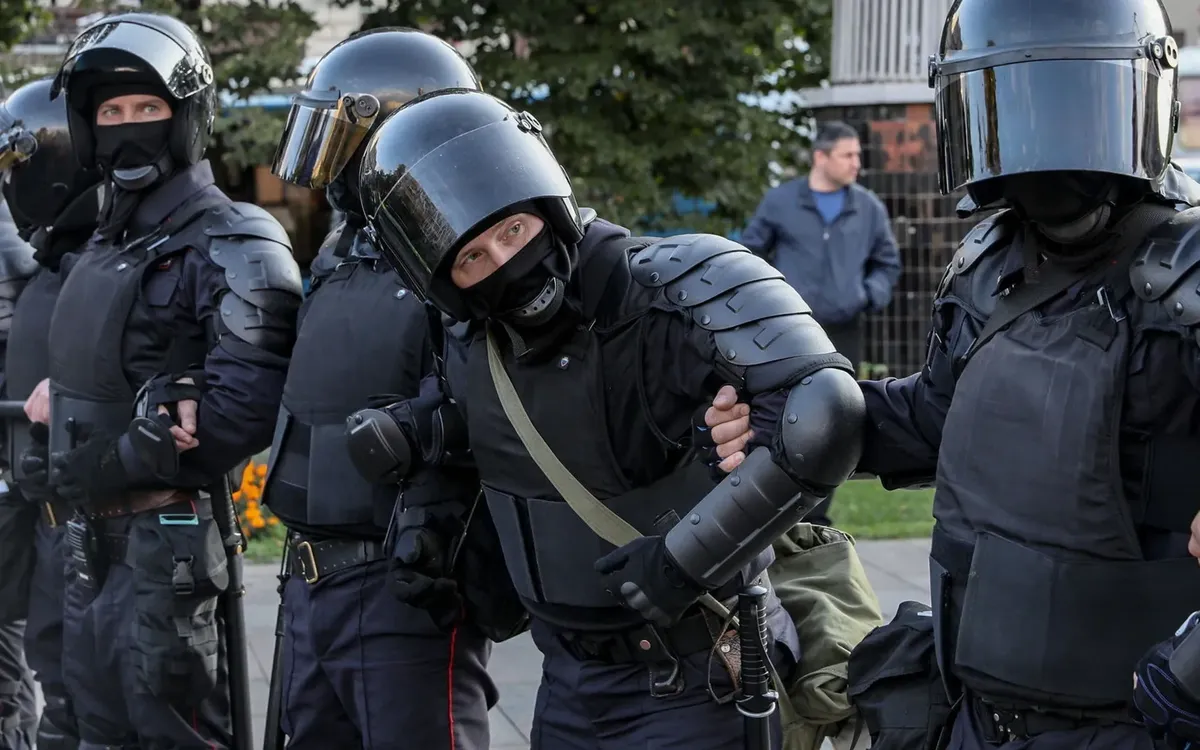
The Liberal Mission Foundation prepared a report on the assessment of the political and social situation that has developed in the country after summer protests and criminal cases against activists. "New" publishes the main theses of the report. Read the full text on the fund's website.
ANNOTATION
& Nbsp
The “Moscow business” continues, after some hesitation, the Russian authorities made a certain choice in favor of the repressive politicians and suppress the legal bridgeheads of human rights, and the protest wave in Moscow came to naught. It is more important today to look at the events of this summer from some distance and understand what and what they are talking about to us.The main conclusion of the Great Report of the Liberal Mission Foundation entitled “Oncoming Mobilization. Moscow protests and regional elections in 2019 " It consists in the fact that in the dynamics of public moods new factors have proven themselves that will have long -term consequences.
The report was attended by Alexander Kynev, Alexei Zakharov, Alexander Arkhipov, Denis Volkov, Kirill Rogov and others, and Tatyana Vorozheikina, Grigory Yudin, Alexander Morozov, Lev Gudkov and Konstantin Sonin participate in the discussion about Moscow protests.
Administrative mobilization and its limits
Each year in early September, regional and local elections are held on a single voting day, even their main campaigns-the elections of governors and regional evidence-cover territories from 30 % to 45 % of voters, which turns them into a kind of electoral stress tests that demonstrate how confident the Russian authoritarian power to control the will and manipulate them.
In 2018, the administrative “Vertical” unexpectedly defeated in 7 regional campaigns out of 39 (in 4 governor and 3 “legislative”). And the main question of this year was whether it would be possible to cope with the protest wave, which showed itself in connection with the pension reform in the past elections. It was mainly managed to cope, nowhere in the governor’s elections was not allowed a second round. The average official result of the governors was 72 % and almost returned to the average level of 2015–2017. After failure last year, up to 64 %. With the exception of a total defeat in the Khabarovsk Territory, I did not allow obvious failures and United Russia. Its average result in the “list” elections is 52 %, although by 16 points and lower than the result in the same regions in 2014 (68 %), and 11 points worse than in the Duma elections of 2016, but significantly better than the average result in last year’s regional elections - 37.5 %. Apparently, in the Kremlin they were preparing for the worst scenario and are quite satisfied with the achieved.
Of course, these figures very poorly reflect the real preferences of citizens. But they testify that the protest wave that led the Kremlin last year to a number of painful lesions did not have a development and quite along the teeth of the Kremlin electoral management. Several factors contributed to success, as Alexander Kynev notes.
Firstly, the unprecedented thorough “sterilization” of ballots, the “opposition” LDPR, the Communist Party and SR themselves mercilessly cut off their party candidates if they had at least some chance to become a focus of protest voting.
The second is a preventive renewal of the governor’s corps (heads of 12 out of 16 regions were replaced in advance).
The third factor is the mobilization of electoral machines and powerful pressure on the regional elites (the heavyweight of the Far Eastern Policy, the former Governor of the Khabarovsk Territory and the representative of the president of the Far Eastern District Viktor Ishaev, whom the Kremlin secretly accuses in his last year in Khabarovsk, was demonstratively taken under house arrest).
And finally, the set of regions of this year was easier for the Kremlin than in the past (on average, “United Russia” usually has 10-12 points higher than the national average).
These are, however, official figures. If, using the method of Sergei Spilkin, to cleanse the official results of the artificial allowance obtained using the protozoa of electoral falsifications, then the average result of governors falls to a level of just above 60 %, and the average result of United Russia is in the region of 35 %. Given that the real turnout for the governor's choice, apparently, was about 35 %, and about 30 %on legislative, we can say that
The regional authorities need to mobilize a little more than 20 % of the loyal electorate in the case of governor and a little more than 10 % in the case of “parliamentary” in order to demonstrate confident electoral dominance and “reliability” of the regime in this region.
This is a more or less real assessment of the scale of administrative mobilization, which allowed us to prevent the repetition of last year's excesses. (It should be remembered that the “Spilkin method” does not determine some types of falsifications, which, apparently, had a fairly wide application in some regions, for example in St. Petersburg).
At the same time, it is worth noting that more than a third of the governors were forced to distance themselves from the United Russia brand, in large cities even the official result of the Party of Power falls up to 40 %, in conservative Tatarstan, as the results in areas with independent observers showed all the same 35 %, and not 80–90 %, as there are no observers, and finally there are no observers, and, finally, in Khabarovsk The region where the EP had almost no administrative support, it received a little more than 10 % of the votes of voters who came to the polls.
In general, it can be said that although the Kremlin’s regional campaign was more likely to be the success of this year, this system of electoral control in conditions of protracted economic stagnation has a small margin of strength. It requires maintaining a sufficient amount and competitiveness of budget workplaces, the lack of significant reasons for irritation, constant power pressure on local elites and conservation of the degraded party system. At the same time, the brand of “United Russia” is so non -stitch that it carries significant risks: with a significant surge in discontent, it is able to turn into a “red rag” - a focus of negative mobilization.
VS protests: system call
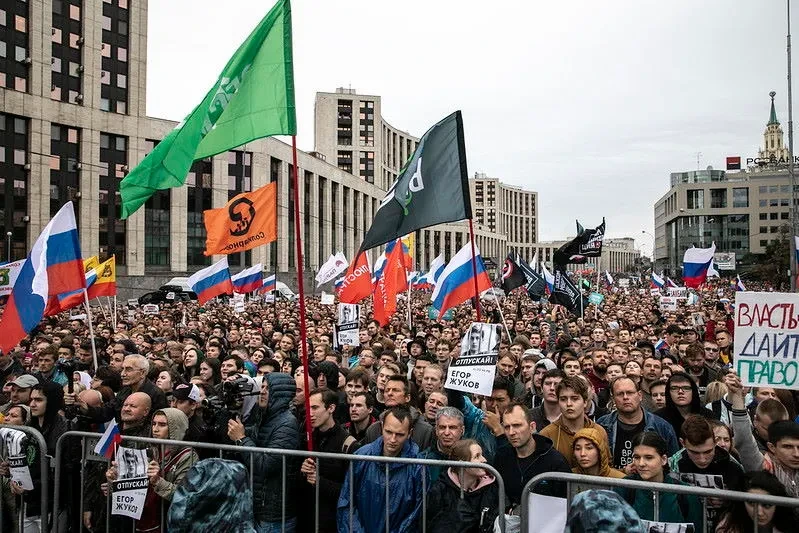
However, the Kremlin’s relative successes in the regions were crossed out by the crisis that erupted around the elections to the Moscow Duma. Here, the opposition managed to undermine the legitimacy of barriers to the “tolerance” for the elections, organize (despite the summer) the most massive wave of street protests since 2012, and then cast doubt on the electoral dominance of United Russia during the voting of September 8.
At the first stage (an attempt to register non -systemic candidates), the opposition managed to draw wide attention to the very problem of the inadmissibility to the elections and for the first time to turn it into the reason for the protest street campaign (protests 2011–2012 were focused on the falsifications of voting results). At the second stage, the response wave of police terror and repression against the opposition provoked additional mobilization of protest. As Denis Volkov notes,
The wave of this violence made even a more severe impression on society (including the completely loyal power of the contingents) than the lack of independent candidates for the elections .
It was this “human rights” phase of the protest rally that ensured the involvement in the protest activity of Strat and groups that previously cultivated apolitics as the norm of the mainstream: representatives of the youth subculture, top commercial bloggers, professional communities, etc. As expressed by express survey, a quarter of 60 thousand participants in the action on August 10 on Sakharov Avenue (the largest since 2012) first entered the rally either on this day or during the previous month. New forms of protest-serial pickets, corporate applications, flash mobs, volunteering-Demarginalized Human Rights Acadiquies, A. wrote A. Arkhipova, A. Zakharov and their co -authors who conducted polls.
Back in 2017, the rigid dispersal by the police of unauthorized shares on March 24 and on June 12 caused a completely loyal reaction: then 30 % of the Russian Levada Center surveyed sympathized with the protesters, and 40 % justified the actions of the police. Now these numbers have changed places, and
In younger ages (18–39 years), Moscow and large cities sympathize with protesters and condemn the police about 50 %.
A higher level of sympathy and involvement in protest activity in these contingents correlates with changes in the structure of sources of information, from which citizens draw information about what has been happening in recent years. The role of the TV and trust in it falls at all ages, but in the younger (up to 40 years), its share in the information picture decreased to 25 %, and the share of social networks and blogs reached 35 % (the share of the references of this source of information from all references of various sources). At the oldest ages, the TV still dominates the information picture, and the share of social networks is marginal. This leads to differentiation and even polarization in the perception of protests.
The explosive growth of the significance of social networks and video blogs as a source of information observed over the past three years against the backdrop of a TV wither, explains the general growth of Russians tendency to protests:
social networks not only reduce the costs of their organization, but also sharply increase their place in the information picture, strengthening the idea of their “normality” and their effectiveness.
The same factor explains the growth of public mobilization on the basis of rejection of state violence. While the TV “hides” and silence it, social networks are filled with certificates of police violence distributed by the participants in the events.
One way or another, referring to the exceptional role that the TV played in maintaining the loyalty of the population to the political regime over the past two decades, this new trend threatens to turn into a fundamental challenge to the stability of the regime, comparable in its significance with a factor in long -term economic stagnation. This challenge proved itself in the dynamics of the Moscow protest campaign of the summer of 2019, which was actually almost its main outcome.
Two protests and strategic potential of "smart voting"
The idea of “smart voting” put forward by A. Navalny is a type of protest voting in a majority system, the purpose of which is to add the votes of two protests - the agenda of “economic protest”, which usually brings additional votes of the Communist Party or LDPR, and the agenda of “political protest”, which is characteristic mainly for large cities.
According to our estimates, in comparison with the results of 2014, the total contribution of protest mobilization of 2019 in Moscow amounted to 260 thousand votes. However, it is not possible to determine what share of this mobilization was directly related to the initiative of Navalny. It can be assumed that this is about 200 thousand people. When evaluating this contribution, it is necessary to keep in mind both the brevity of the campaign, and in general, the low interest of Muscovites in the elections to the Moscow City Duma (the turnout was 22 %).
As shown above, administrative mobilization (quite successful in the absence of a significant protest wave in the regional elections of this year) implies the need for the authorities to bring about 11 % of loyal voters (from their total number) in the elections to the Legislative Assembly. In Moscow, in the absence of significant falsifications and the United Russia majority system, he received 8.2 % of the vote in 2014 (38 % of those who came to the polls) and won all 39 districts where she exhibited candidates. This year, the City Hall received 7.2 % of the votes in 43 districts and as a result of 18 of them were lost by Smart Voting candidates, which took the aggregate of 7.5 % of the votes (this occurs due to a high concentration of protest votes in the limited set of districts).
The protest mobilization against the mobilization of administrative - this has become the central plot of the regional elections of this year. If Navalny managed to mobilize the additional 50–70 thousand “democratic” votes (about 1 % of the list of voters) or the level of “economic protest” in the city turned out to be slightly higher, bringing additional votes to the Communists, “United Russia” would most likely threaten a total defeat (as happened in the elections in majority districts in Khabarovsk).
Thus, the strategy of “smart voting” implements the tactics of unnecessary democratic candidates for elections:
Their participation will again lead to the erosion of protest votes and increase the chances of administrative candidates. And although this year the contribution of the “smart voting” turned out to be quite limited and did not allow the city hall to even deprive the formal majority in the Moscow City Duma, its symbolic effect made a strong impression on the population, the elites and, undoubtedly, will force the Kremlin to adjust the tactics of electoral manipulations.
In general, the regime, on the one hand, managed to stop the consequences of discontent related to socio-economic factors that showed itself in a number of regions last year, but it was not possible to stop the crisis related to discontent of the other kind-the “crisis of representation”, the source of which is large cities and especially Moscow. The scale of dissatisfaction with both the first and second kinds at this stage are insufficient to inflict a significant defeat and jeopardize its managerial unity. At the same time
The regime does not have enough organizational, political and material resources to stop both calls and demonstrate the degree of control characteristic of authoritarian hegemony.

Moreover, the strategic threat of the cumulative effect, in the event that two types of discontent enter the resonance, not only persist, but also increases. As the experience of this year showed, the changes in the structure of the sources of information of Russians, on the one hand, increase the significance of the “protests” and the whole threats associated with the electorate of large cities, and on the other hand, create costs for the authorities when using force (sympathy of citizens is on the side of the protesters). At the same time, the second fundamental challenge of the stability of the regime - long -term economic stagnation - will not only not be stopped in the next two years, but, according to most experts, can acquire additional acuteness.
As the latest events show, in these conditions the Kremlin decided to focus on undermining the organizational potential of the opposition (attack on the FBC) and increasing the costs of citizens to participate in protests (second wave of Moscow case). The third direction of his efforts will most likely be attempts to increase the level of informational and ideological influence in social networks and Rebranding “United Russia”.