
Translated material
Cheka against Schvambrania. The history of underground and unofficial youth organizations in the USSR
Due to the “Moscow business”, the processes of the participants of the “network” and “new greatness”, who are accused of creating an extremist community and the preparation of the coup, have faded into the background. A year ago, Vladimir Putin called their activity “gapovisina”, since then the efforts of human rights activists and the public, indicating provocations, falsification and torture during the investigation, have not led to significant results.
All these matters are actually blinded by the templates of the Soviet NKVD/KGB. Even in the darkest times of Stalinism, young people tried to create “unauthorized” organizations, many of which were generally apolitical. However, adults in blue uniform at the slightest signs of unresolved activity “sewed affairs” about anti -Soviet activities, the threat of the Soviet system and treason to the Motherland. Many of these materials are still closed. Historian Dmitry Kozlov recalls the brightest youth political processes of the Soviet era, documents on which are now available in archives.
Everyone who read the story of Leo Cassil, of course, remembers the moment when the city Emergency Commission became interested in the country invented by two brothers, gymnasium and preschool. “Secret Documents” and the cards of the kingdom accidentally fell into the hands of the security organs, and the young heroes of the book had to testify. More precisely, to tell the Chekists the story of the Swambrania. Those listened to the boys and, having reached out of their fantasies, drove home, allowing the youngest axle to blow in the Clares of the car. The prototype of the OSKA, the brother of Leo Kassil Joseph, will really be arrested for adults in 1937 and was shot six months later. The history of the Swabbrain did not have an attitude towards his death, but for many peers Loli and the axes of the game in “Secret Societies”, “Secret Documents” and “Political Parties” became the cause of serious problems with the authorities throughout almost the entire history of the Soviet Union.
Children and adolescents began to come up with imaginary states and create their own “political organizations” long before the events described in the “Schwambrania”. From the end of the XIX century, we can talk about them as a mass phenomenon, widespread among young citizens of most European countries. This was facilitated by early literacy among educated layers, the popularity of adventure literature, and a violent political life of the turn of the century. Secret societies and parties, created by analogy with adult organizations, not only satisfied the desire for game and romance, but also became parallel to the family and school institutions of socialization. Including the socialization of the political - inside their own organizations, children and adolescents studied solidarity, mastered the modern political language.
The global political crisis of the beginning of the twentieth century contributed to the unprecedented emancipation of adolescents, especially in societies that experienced revolutionary upheavals. The first Russian revolution of 1905 turned into, among other things, the strikes of students of gymnasiums and shots of young single terrorists, inspired by the heroic biographies of the Socialist-Revolutionaries and Anarchists. After the October Revolution, adolescents fought on both sides of the Front of the Civil War. The reaction of adults to a radical desire for independence was the first mass children's and youth organizations designed to give an acceptable form to romance, uncompromising, faith in justice and the desire to act. In Soviet Russia, the Communist Youth Union and its younger sister - a pioneer organization were responsible for the political socialization of the new generation. Other associations were placed, if not outside the law, then under suspicion. Archival documents and memoirs indicate that the actual reasons that encouraged adolescents to unite in “secret organizations” were not primarily interested in the Soviet government. For a long time reprehensible was the very desire to act inpressed by established institutions.
Iron wolves and young communists
The first decades of Soviet power, state security agencies practically did not make the difference between adults and adolescent secret organizations. They arrested - it means there is nothing. What was the real reason for the arrest: real opposition activity, false denunciation or self -negotiation - now it is not always clear. So, in October 1929, the “Party of Intellectuals” was disclosed in Leningrad, at the head of which the schoolboy Viktor Kharodchinsky stood. On the one hand, the young man at the age of 15 was a convinced Social Democrat and opponent of the Stalinist USSR (his uncle is one of the leaders of the Mensheviks, political emigrant Julius Martov). On the other hand, the manuscript leaflet, in which Khaodchinsky called “boldly to open all the mistakes of the party apparatus and demand the cleansing of the Soviet and party bodies based on the widest participation of the working masses,” spread exclusively among his classmates. Nothing is known about other acts of the Party of Intellectuals. Nevertheless, Khaodchinsky was sentenced to five years of Solovetsky special purpose camp, but due to his minority, the term was reduced to three years. Soon after returning from the camp, he was again arrested, re -convicted, and shot at the age of 24.

The category of the age of responsibility was fuzzy in the Soviet criminal law of the 1920-1930s. The age bar itself changed several times: 17 years-in 1918, 14-in 1919, 16-in 1930, again 14-since May 1941, and the use of a particular punishment depended on many factors. The minors mainly should be applied to “measures of medical and pedagogical impact”, however, the choice between them and the conclusion in the forced labor camp remained with specific investigative and judicial authorities. Violations and arbitrariness, especially during the years of “big terror”, made it possible to send any teenager to the camp, introducing him to a “especially dangerous state criminal”.
During the years of “Great Terror”, it was possible to send any teenager to the camp as a “especially dangerous state criminal”
One of the most famous "children's affairs" of the Stalinist time was fabricated by Novosibirsk Chekists in 1938. In Leninsk-Kuznetsk, the counter-revolutionary organization of children and adolescents was “disclosed”, in which, according to investigators of the NKVD, there were about 60 participants. The affairs of the eleven of them, including seven minors, were brought to court. The Siberian historian Alexei Teplyakov, who studied the circumstances of this process, gives quotes from the NKVD documents in his study. According to them, the arrested adolescents were charged with the desire to “campaign” for disruption of classes in schools and leaving studies, to terrorize young people loyal to power, to carry out moral decomposition of youth “by drawing into booze, sexual cohabitation and committing theft”, ... to introduce fascist slogans into its ranks, to popularize the “Trotskyism methods” and slander the Leaders. "
There were no evidence of the implementation of these intentions, in addition to several portraits of Lenin with chopped eyes in the case. It is not even known that the name of the “counter -revolutionary organization” - like adult “groups of pests of the national economy”, created in the investigator’s office, it remained anonymous. The arrests of schoolchildren were supposed to serve as the beginning of cleaning among public education workers, the sanction to conduct a demonstration process was already ready, but, fortunately for the arrested, the organizers of the investigation appeared before the court. According to the results of the open court hearing on February 22, 1939, three NKVD investigators and the city prosecutor, which issued arrest sanctions, were sentenced to various terms. Initially accused, adolescents were released.

After the demonstration process over the Siberian Chekists, adolescents were not ceased to be condemned by political articles. A new wave of arrests in "children's affairs" fell on the end of the 1940s-early 1950s. A significant part of them occurs in the Baltic republics attached to the USSR before the war and Western Ukraine. With armed resistance in new Soviet territories, this is only partly connected. Although some young underground workers in the “forest brothers” detachments or units of the UPA fought distant relatives, most of the Ukrainian and Baltic adolescents acted on their own initiative. The testimony of the arrested participant in the Kaunas youth group “Iron Wolf” is characteristic, which only in the investigation only found out that in Lithuania a few years before was an “adult” partisan detachment with the same name. For the young man, the Iron Wolf is an obvious symbol of the independence of the native country, associated with the medieval legend about the founding of Vilnius.

In those regions where the nationalist underground did not operate, anti -Soviet teenage organizations stood on other ideological positions. After the war, famous youth anti -Stalinist groups arose, such as the Voronezh “Communist Party of Youth” (1948–1949) and the Moscow “Union of the struggle for the cause of the revolution” (1950–1951). Serious political circles of younger students and schoolchildren who left behind the manifestos and program documents who denounced the Stalinist production of socialism and in many ways anticipating the exposure of the cult of personality at the twentieth Congress of the CPSU. The punishment for young socialists was also serious: the minimum deadlines to the participants of the "Union of the Struggle for the Revolution" - 10 years of camps, and three of its adult members were shot.
However, it was at this time that the attention of the MGB-KGB, Komsomol and schools begin to attract completely different organizations.
Organizations of innocent hearts
In 1954, the auditors from the Central Committee of the Komsomol checked the Lithuanian Republican Komsomol and, noting the numerous shortcomings of educational work, paid special attention to the prevalence of unauthorized youth associations in Lithuania schools. Together with the Black Legion hooligan gang and nationalist groups like the “young partisans of Lithuania” and the “Freedom of Lithuania” by the Central Committee workers and the existence of organizations, the ideological basis of which they were able to define only as “false and romantic”:
“In a duset high school, there was an NCU organization (<apparently, from the Lithuanian“ Nekalti ŠIRIRDIS Organizavimo ”,“ Organization of innocent hearts ” - The Insider>, whose members secretly learned songs, went to walks. In the Yurbark orphanage, the pupils secretly convened their collections of their organization on which We discussed issues ... about improving the quality of study and discipline in the lessons, about the struggle for cleanliness in the orphanage and school. "
Similar associations were found in other regions of the country. So, back in 1946, in Troitsk, the Chelyabinsk region, there was an “Italian Republic”, “citizens” of which were tenth graders of a local school. The girls appropriated the noble titles to each other - among them were the “Viscounts”, “Duchess” and “Consuls”, at the head of the republic stood (more precisely, “stood” - the school was female) “Papa”, which rewarded its friends with orders, for example, for a successful hint in the lesson. When asked why schoolgirls founded the republic, one of them answered:
“We all liked these romantic names. They were so sonorous, beautiful, romantic. There was nothing everyday in them. We played with pleasure in the republic. It was so exciting that I did not want to leave school. We were sometimes kicked out of school, since the second shift had to be engaged. ”
Participants of such organizations were not persecuted as criminals, limiting themselves to the exception to pioneers or the Komsomol and strict reprimands of both adolescents and teachers who allowed this. From the point of view of the Komsomol functionaries, the “false romantic organizations” were no different from associations like the “Society of Sharp Simulants” (1953), whose members, four-graders of one of the schools of the Kirov region, organized lessons. Both those and others testified to the serious shortcomings in the work of the school and the local Komsomol, which means they had to be dissolved. Although it would seem that such initiatives testified to precisely the high degree of self -organization of schoolchildren, which was required of an ideal Soviet citizen.
Participants in the "romantic" organizations were excluded from pioneers or Komsomol and made a strict reprimand for their teachers
Many of these associations were inspired by Timur and his team - the heroes of Arkady Gaidar of the same name, schoolchildren near Moscow, who, without the help and control of adults, organizedly and secretly helped the elderly and families of the military. Soon after the release of the story, the Timurov teams began to be created throughout the country, but, unlike the book, they acted under the leadership of Pioneer and the Komsomol. Independent Timurovites were not needed. So, in 1950, in the Yaran orphanage, the Commission of the Komsomol Central Committee revealed the Sea Stone organization operating within two years, uniting pupils and teachers. Its participants called each other the names of the heroes of the Great Patriotic War, and "the organization’s activities consisted in helping the orphanage in resolving economic issues, in strengthening the discipline, in improving the academic performance of pupils." Despite the fact that the group did not contradict the Soviet values in neither in form nor in content, the “secret Timurov team” (as the sea stone was indicated in the memorandum) was closed, and the director of the orphanage was dismissed for “neglect of educational work”.
Krasnodon young Guards Lithuania
The main source of inspiration for post -war and thawing youth was not the story of Gaidar, but Alexander Fadeev’s novel “Young Guard”. The romanticized story of the youth underground organization actually operating on the territory of the occupied Donbass became superpopular immediately after the publication. When, at the direction of Stalin, Fadeev corrected the novel and introduced into the book the figure of the head of the underground party card, who oversees the activities of the young Guards (not only living young men and girls, but also fictional characters), the “young Guard” entered the school program of literature. Executed by the Nazis, Ulyana Gromov, Oleg Kosheva and their comrades had to educate a new generation of real people with their example. However, this upbringing soon found side effects.
When an adult “curator” appeared in the “Young Guard”, the book entered the school curriculum
The secret certificate received by the Komsomol Central Committee from the Yakut Komsomol in April 1951 reported how, under the influence of the “Young Guard” and other books about the war, several students of the Neryuactean high school created the Secret Organization “Seagull”:
“After the school conference on Fadeev’s novel“ Young Guard ”was organized at the school, a number of scenes were set up from this work where these students were directly involved, they read the books“ Chaika ”and“ My dear boys ”, the girls decided to arrange their friends with organizedly: introduce tickets, badges, membership fees.”
For girls, the “Young Guard” performed the same function as “Renaissance” images for their peers from the “Italian Republic” - helped create their own romantic world, fenced off from boring everyday life. In general, they succeeded. Classmates accused them of arrogance, and teachers and Komsomol workers “in contrasting themselves to the team”.
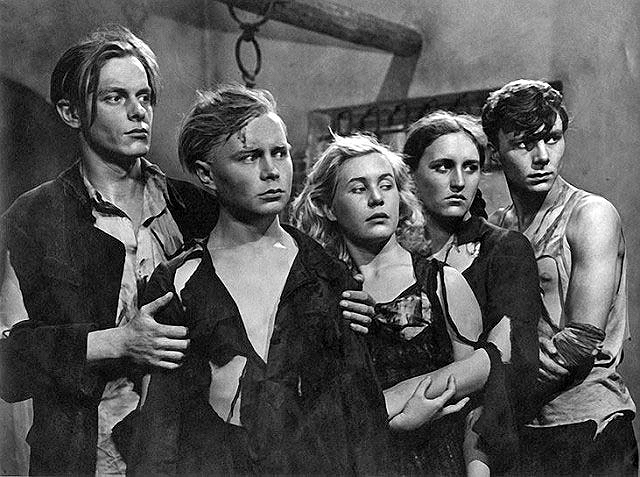
More often, the images of underground from Krasnodon were inspired not to escape from the injustice of the world around him, but to radical attempts to overcome it. One of the participants of the already mentioned Lithuanian underground group “Iron Wolf” described the reading circle that prompted him to enter the organization: “From fiction, I read the classics. I also read Soviet literature: Fadeeva “Damn” <Apparently, I mean the “defeat” - The Insider>, “Young Guard”. The basis for creating the organization was the banner, since we really liked it. ” Paradoxically, the scene of the book, in which the young Guards hoisted the red banner over the German commandant’s office, inspired young Lithuanian patriots to hang the pre -Soviet state flag over the village church. The scene was reproduced as according to the textbook - the “wolves” even repeated the signs “mined” so that the authorities were afraid to remove the flag.
The influence of Fadeeva was also spoke of the 17-year-old resident of Latvia Lydia P.: “I read the books“ Young Guard ”, Gorky“ Mother ”, and so I also planned to write anti-Soviet leaflets arrested in 1956. When I wrote these leaflets, I had no goal <...> Soviet power did nothing bad to me. Я правильно поняла книги «Молодая гвардия» и Горького «Мать», когда их прочла». Поводом к ее аресту стало то, что она и ее подруги расклеили по Тукумсу листовки «Вся власть — народу!» Совсем как Ульяна Громова. Смягчающим обстоятельством прочтение советской классики, увы, не стало. Латвийские листовочницы получили по три года условно. Литовские подпольщики — от двух до десяти лет заключения.
Подростковая оттепель
Отношение властей к подростковым политическим инициативам несколько изменилось в самом конце 1950-х годов. После всплеска арестов в 1957–1958 годах, связанного с закручиванием гаек после подавления Венгерского восстания, (власти опасались, что молодежь, как в Будапеште, перейдет от дискуссий на литературные и политические темы к линчеванию коммунистов), с 1959 года КГБ предпочитало «профилактическую работу» судебным процессам. На скамье подсудимых оказывались самые упрямые и последовательные. Так, политическая биография диссидента Владимира Буковского начинается, строго говоря, не на уличных собраниях у памятника Маяковскому, за которые он был арестован в первый раз, а еще в школе. Четырнадцатилетним он вступил в тайную организацию, вся деятельность которой по его словам «состояла в конспирации и вовлечении новых членов». В семнадцать был исключен из школы за издание рукописного журнала «М-Ученик», который распространялся среди одноклассников. Новые формы протеста осваивались им по мере взросления.
С другой стороны, только в это время в СССР публикуются первые работы о психологии подростков — уже не детей, но еще не полностью взрослых. Игра и романтика описываются как норма, а не отклонение. В 1961 году на экраны выходит фильм Александра Митты «Друг мой Колька», герои которого в числе прочего организовали «Тайную организацию троечников». It's OK! Не они, а бюрократы и подлизы из совета пионерской дружины, по мнению авторов фильма — настоящие отрицательные персонажи.

Перестали ли подростки после 1950-х создавать тайные организации? Of course not. Но серьезного внимания удостаивались теперь лишь те из них, которые в своих программных документах четко формулировали политические цели. По мере развития диссидентского движения наряду с социалистическими и националистическими программами начали появляться и либерально-демократические. Так, в 1970-м в Туапсе был раскрыт «Союз борьбы за демократию», состоявший из старшеклассников местной школы. Их кумирами были уже не молодогвардейцы, а Солженицын, Синявский и Даниэль. Поскольку многим членам клуба не исполнилось и 16 лет, управление КГБ направило их дело в комиссию по делам несовершеннолетних, а юношу, которому 18 исполнилось во время следствия, передали на поруки педагогическому коллективу школы.
Написать подробную историю советских подростковых тайных организаций удастся еще не скоро. Многие источники — например, следственные дела 1940–1980-х, содержащие уставы и манифесты, «партийные» издания молодых подпольщиков, а также их показания — недоступны исследователям. Но даже по косвенным данным из архивов школ и комсомола ясно, что в истории каждой такой организации по-своему смешивались политические переживания, подростковый протест, тяга к игре и романтике. Советская власть, исключая бунтующих подростков из школ и комсомола, отправляя их в лагеря, стращая на «профилактических беседах», причесывала все под одну гребенку политического протеста. И каждое новое «детское дело» выставляло ее тем более глупой, трусливой и мелочной, чем громче до того она призывала к искренности, смелости и самопожертвованию.